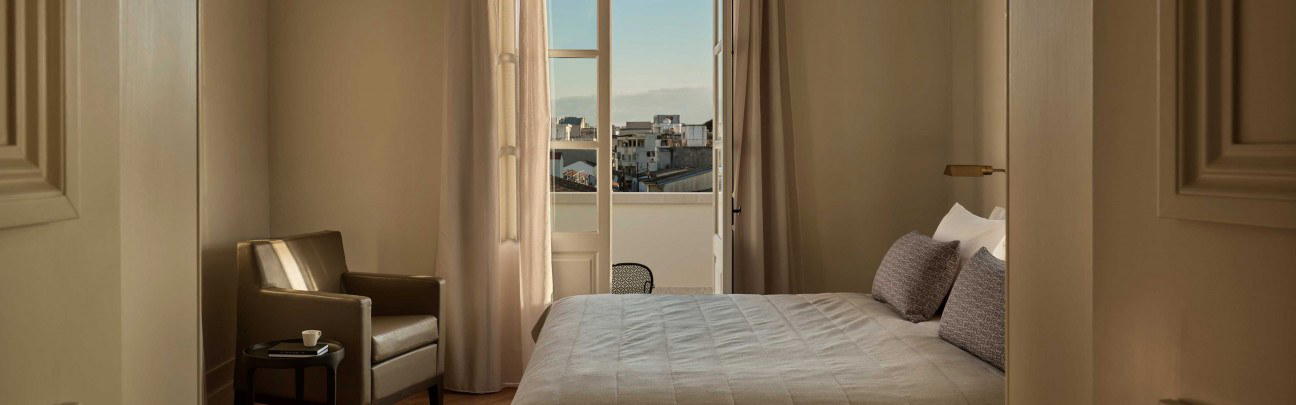
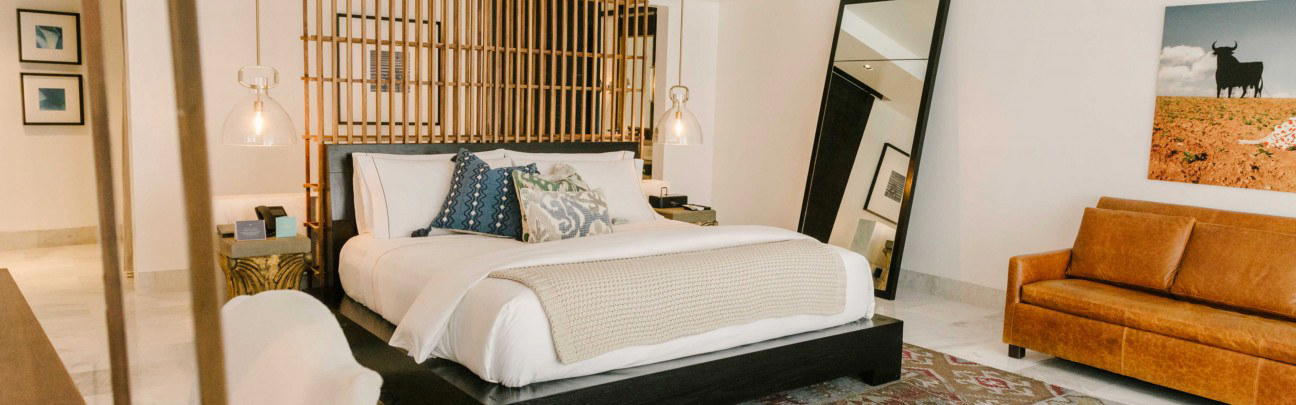
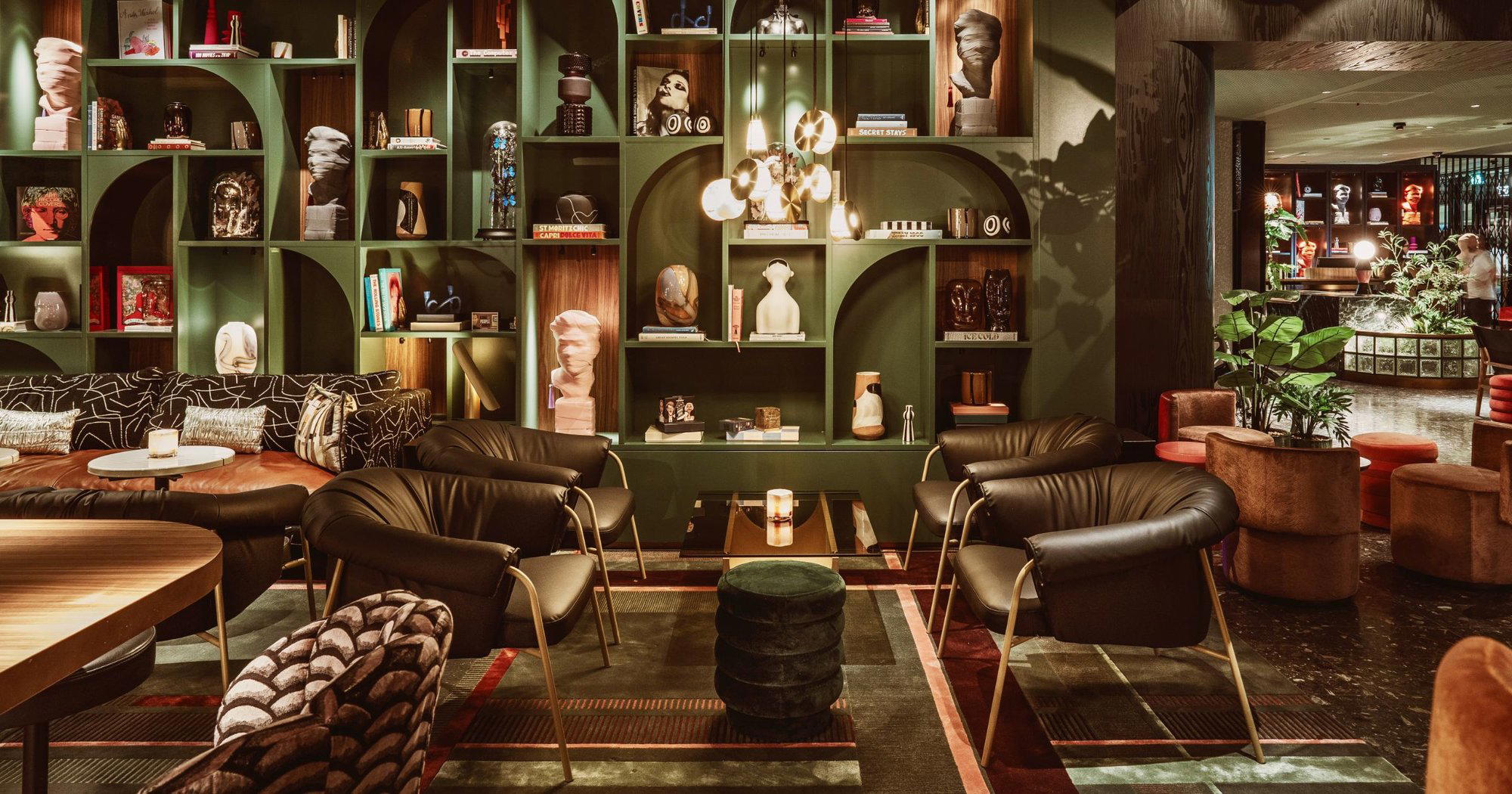
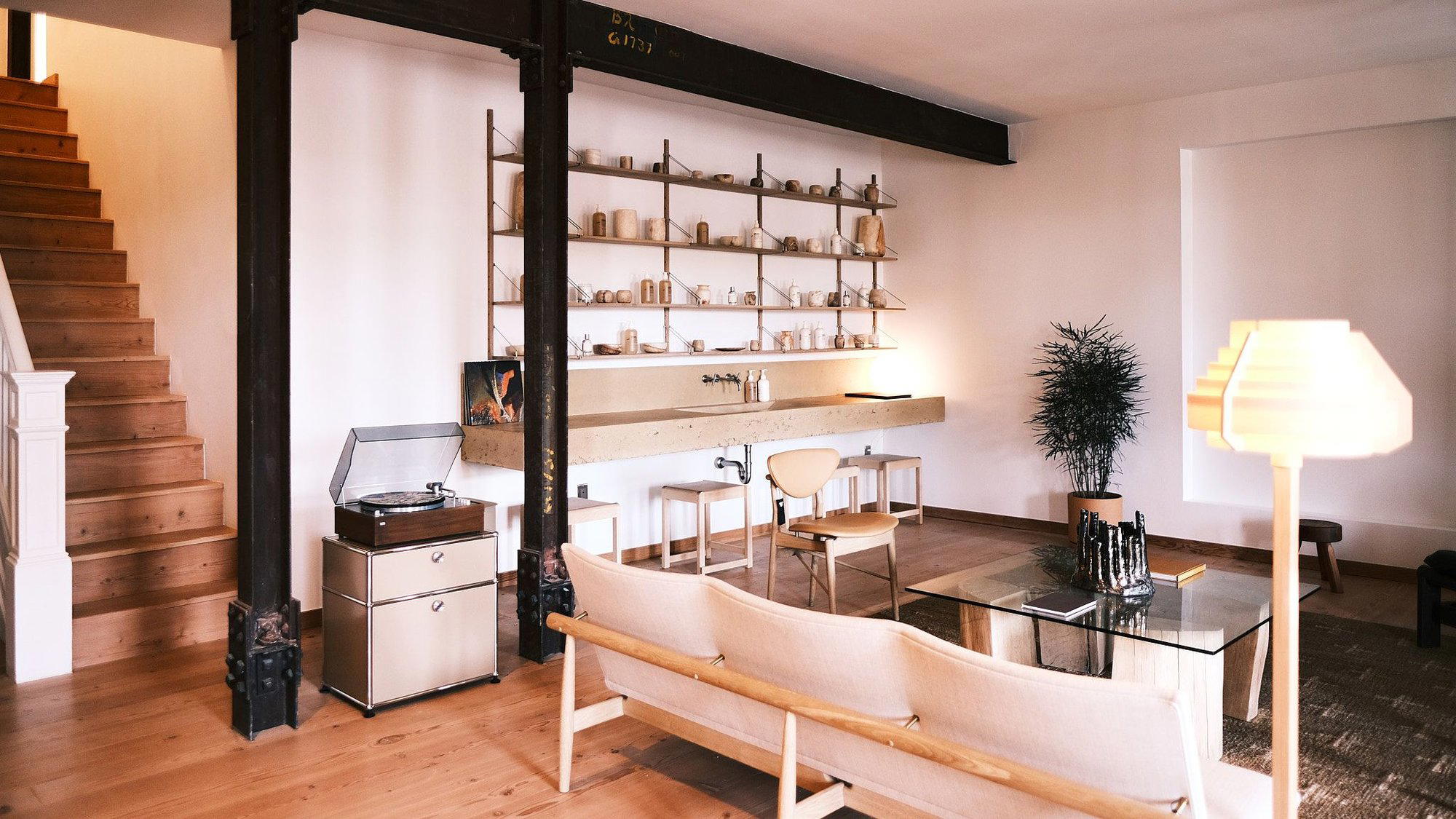
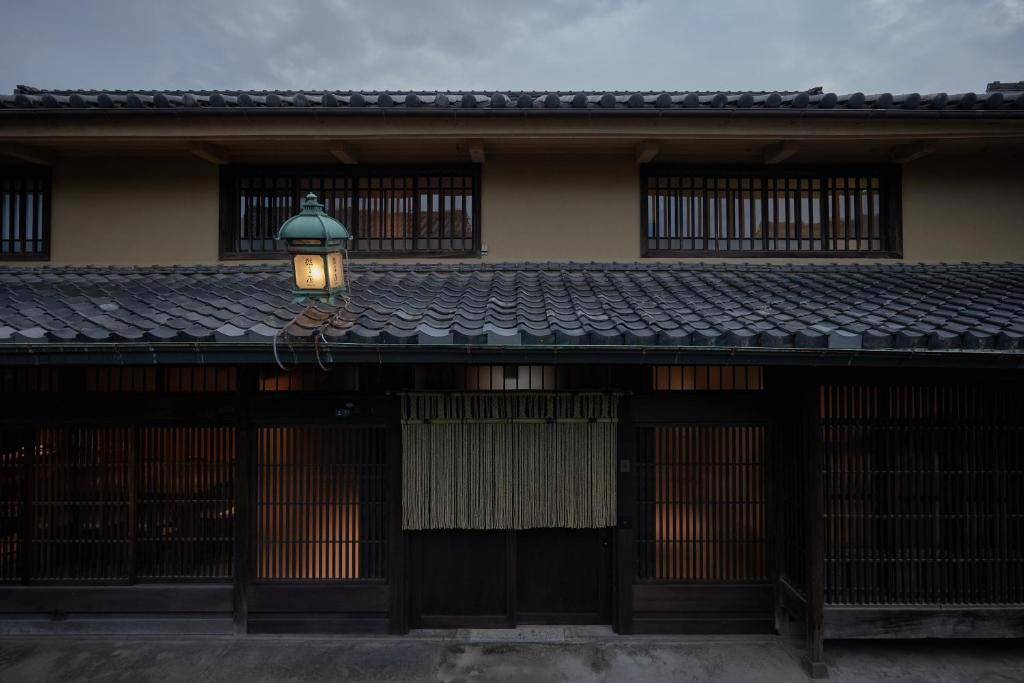
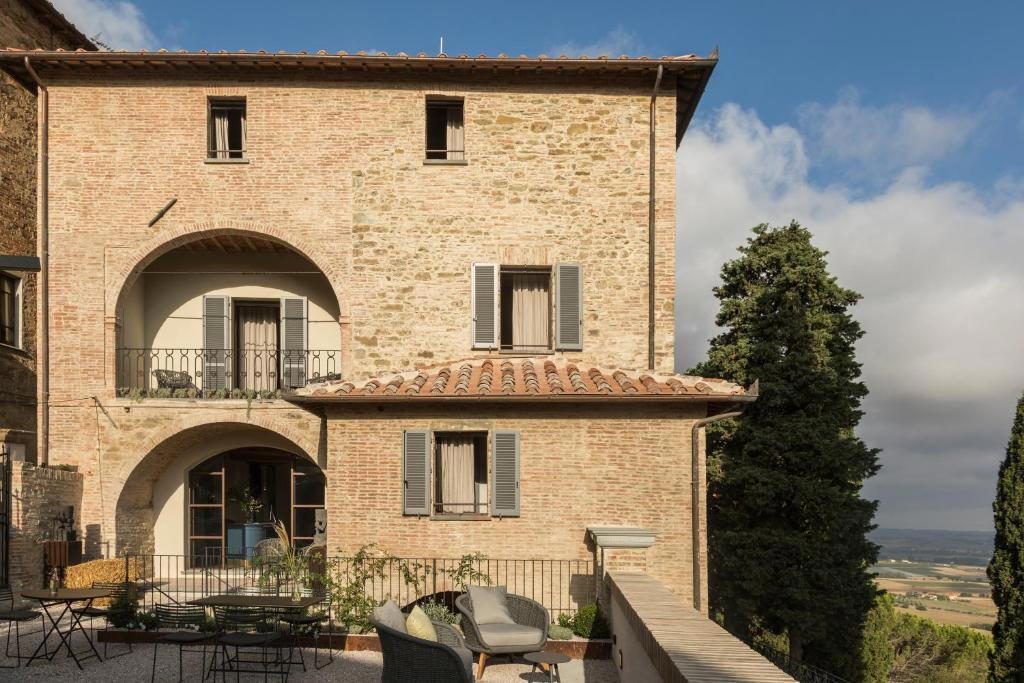
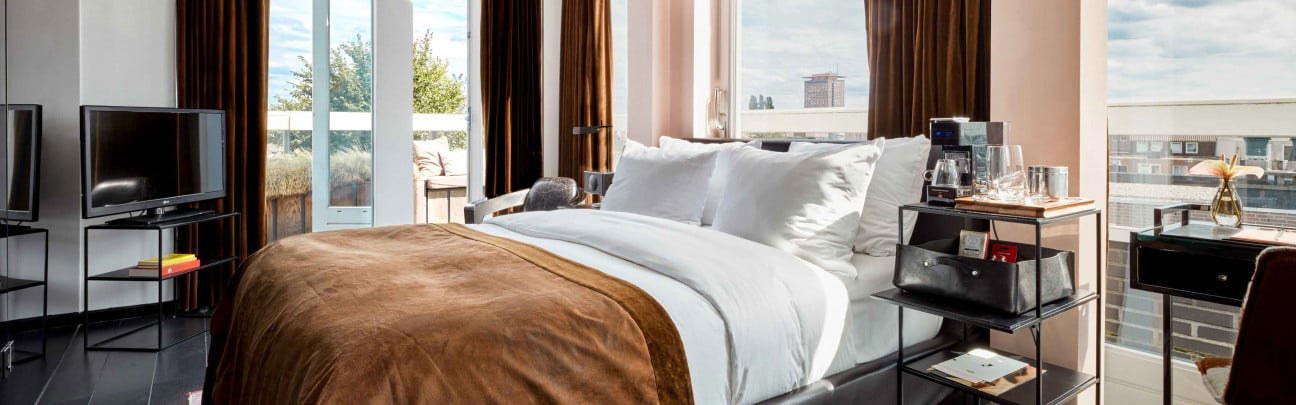
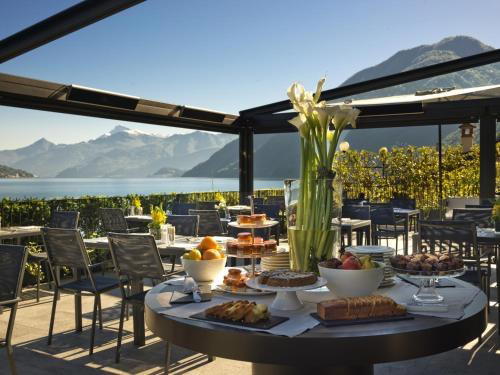
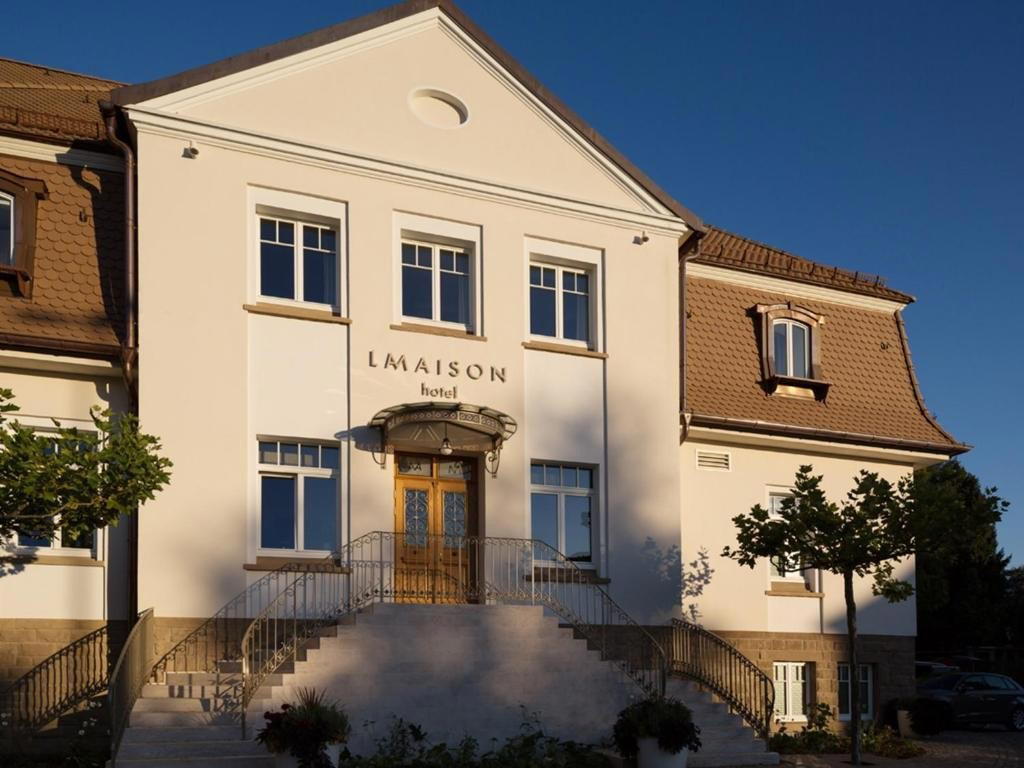
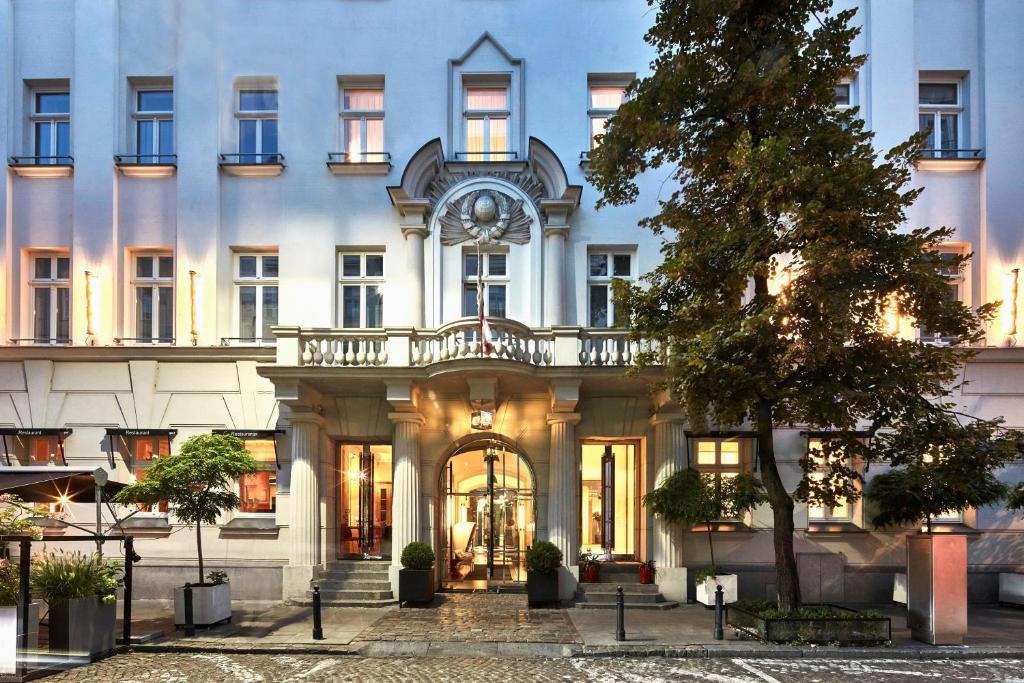
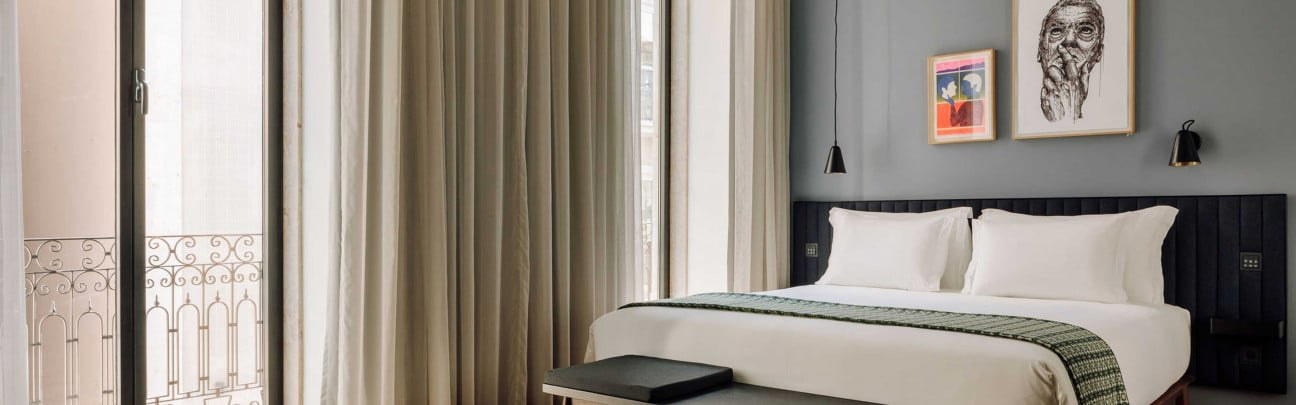
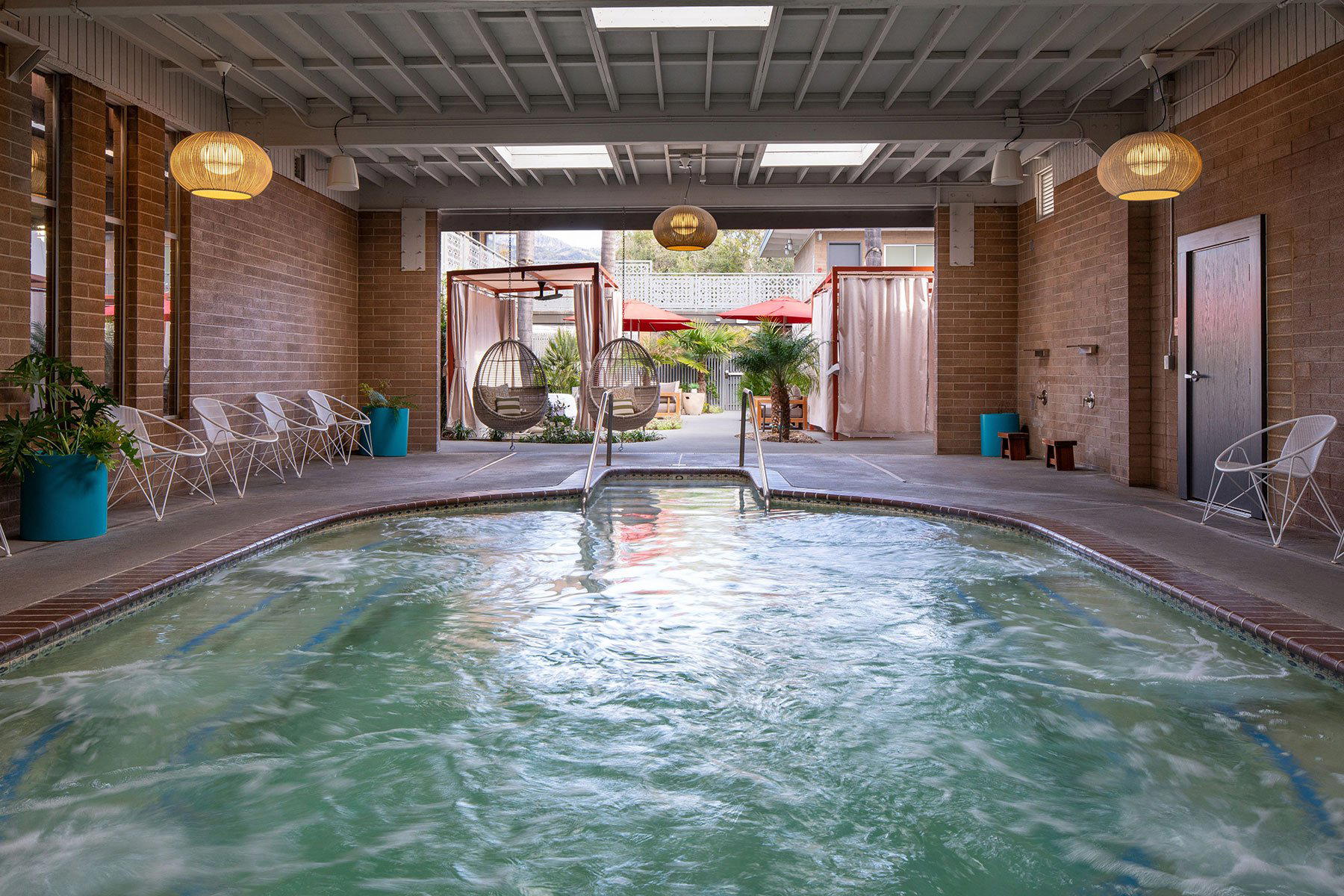
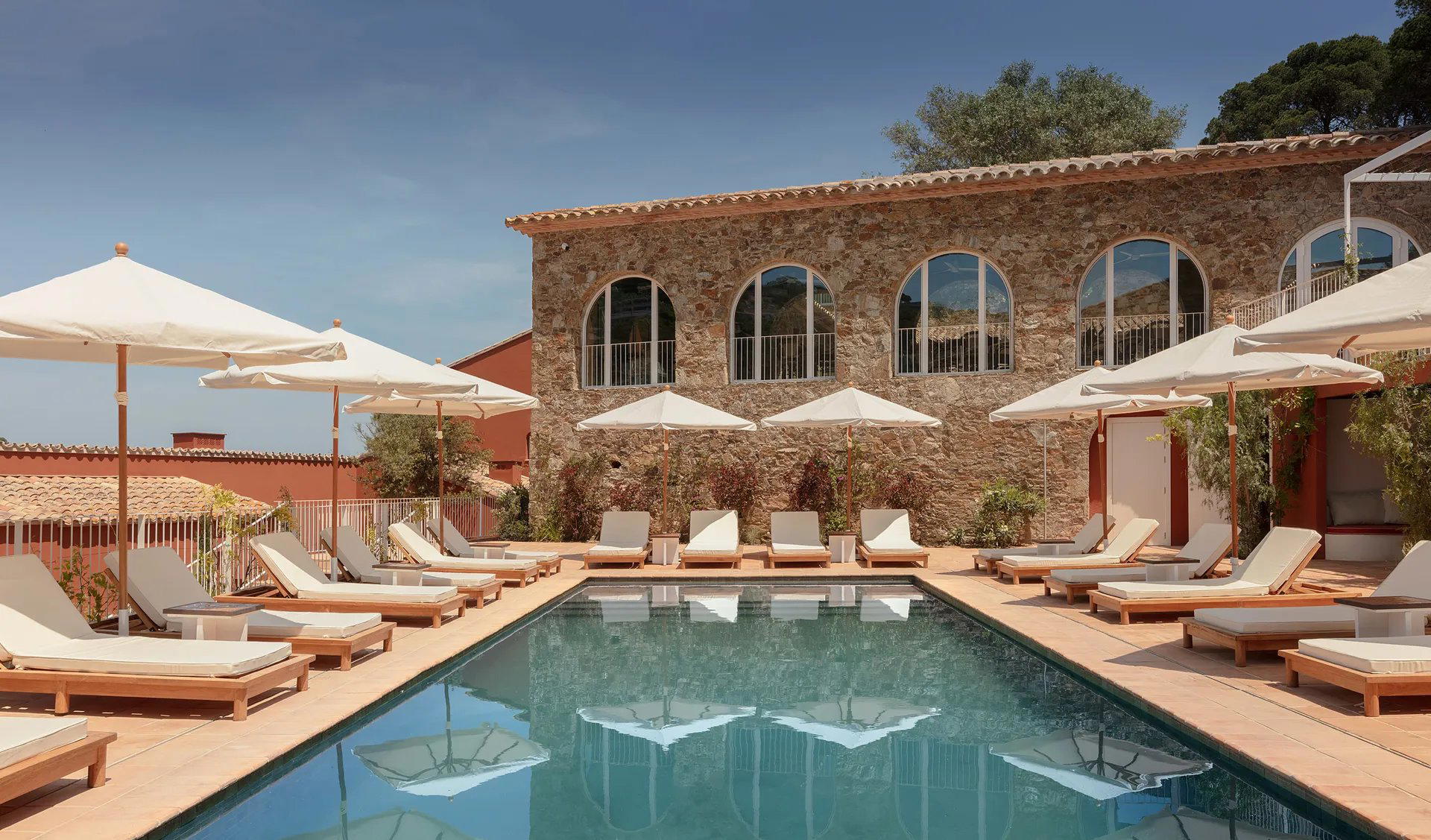
The 2026 Design Hotels Collection is a curated global portfolio of over 300 independent boutique and luxury hotels recognized for their exceptional design and original hospitality concepts. Managed by Design Hotels, a subsidiary of Marriott International, the collection spans more than 60 countries and emphasizes the visionary "Originals" behind each property. Each member hotel is hand-selected based on its unique concept, architectural excellence, and the individual spirit of its hotelier.

How many of these have you visited?
Discover on Pearl
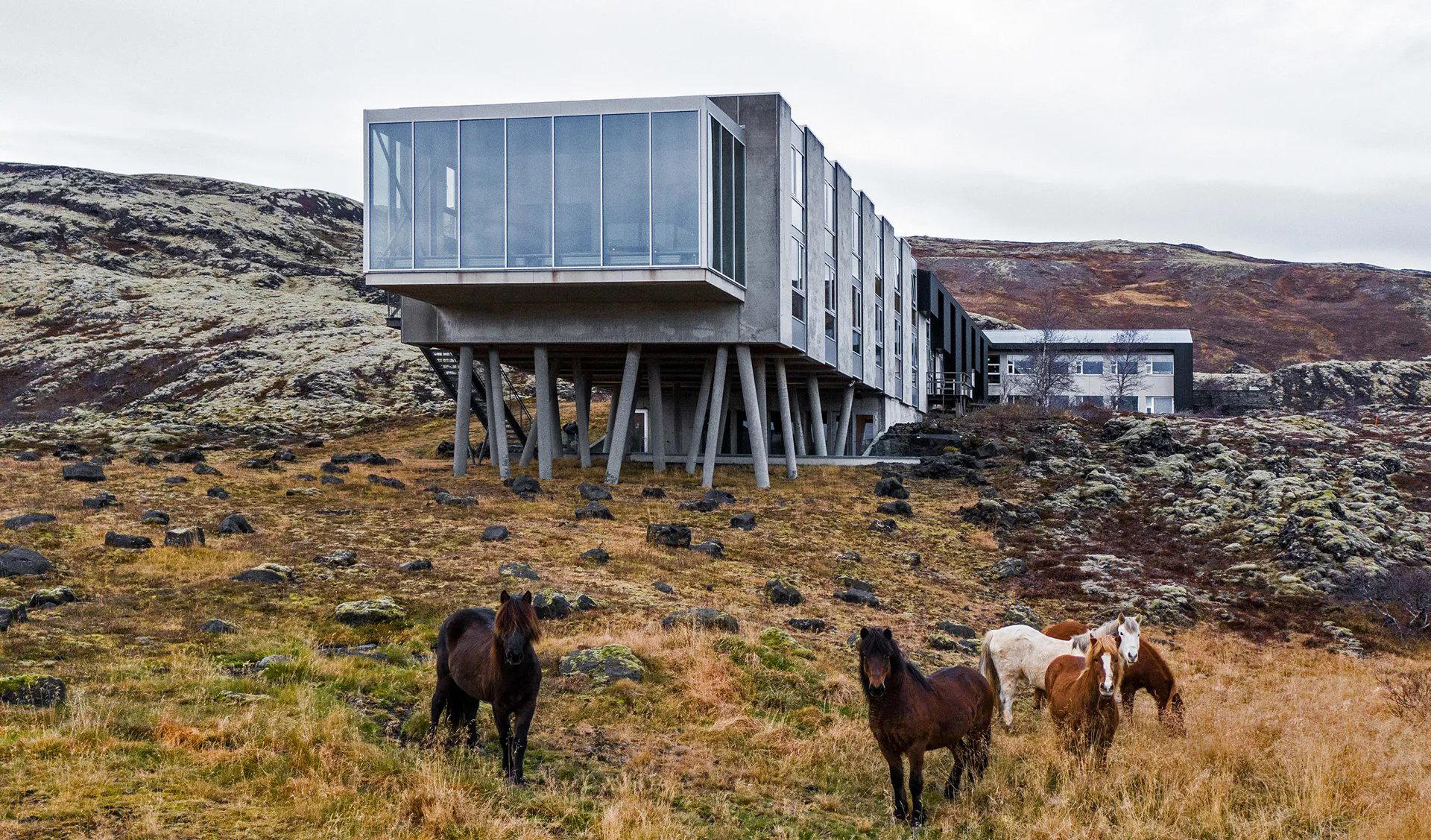
Selfoss, Iceland
A former workers' inn for a geothermal power plant on the Nesjavellir geothermal fields, Ion Adventure Hotel occupies one of Iceland's more architecturally deliberate conversions. The building's industrial past is worn as a design feature rather than concealed, placing it firmly within Iceland's smaller cohort of properties that trade on austere authenticity over polished resort convention.

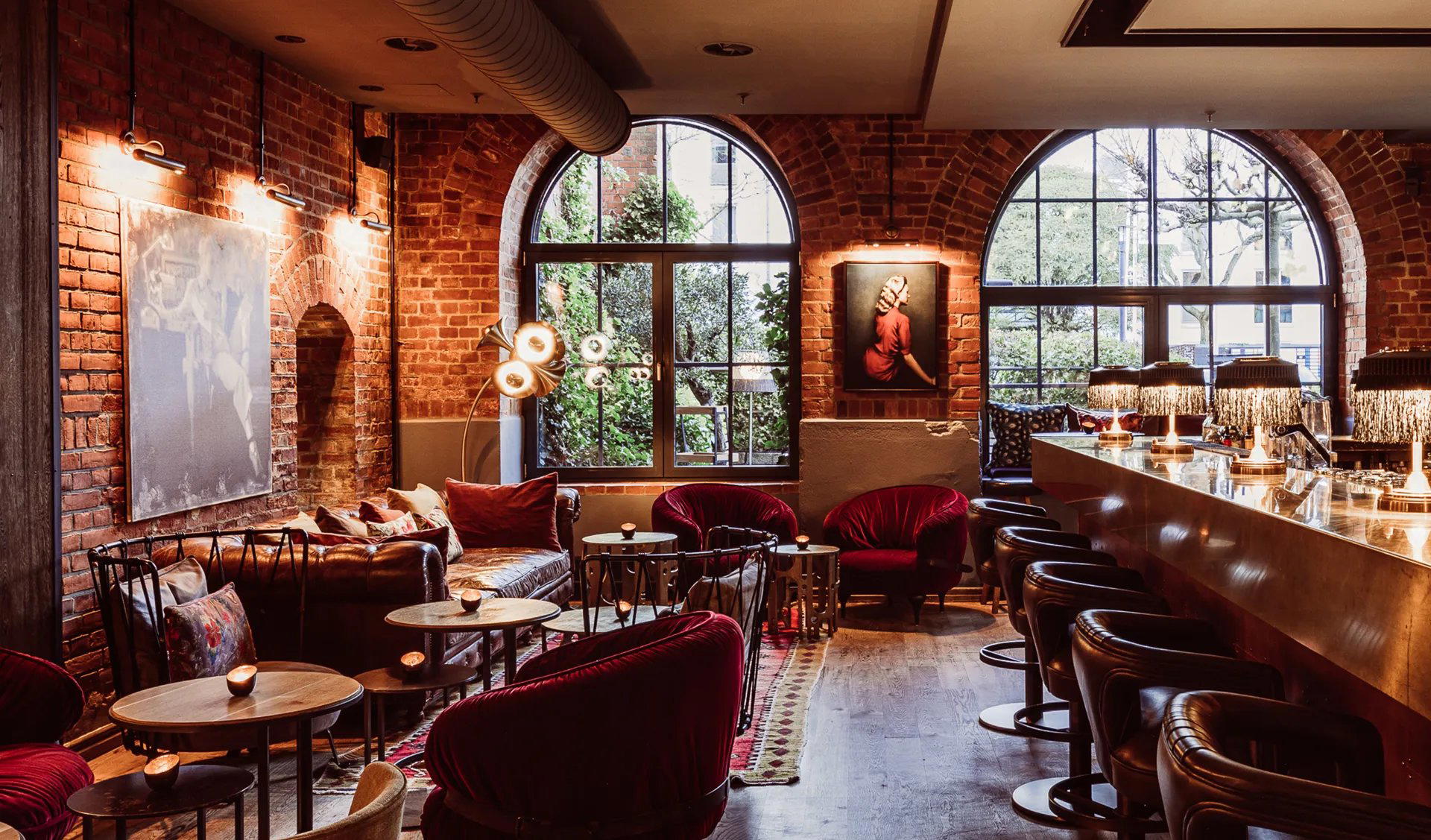
Hamburg, Germany
A converted 19th-century gas works in Hamburg's Altona district, Gastwerk Hotel occupies one of the city's most architecturally considered adaptive reuse projects. Exposed brick, raw steel, and the original industrial skeleton define the interior atmosphere — a rare case where preservation is the design statement. For travellers drawn to Hamburg's creative west, it sits in a distinct tier from the harbour-facing grand hotels.

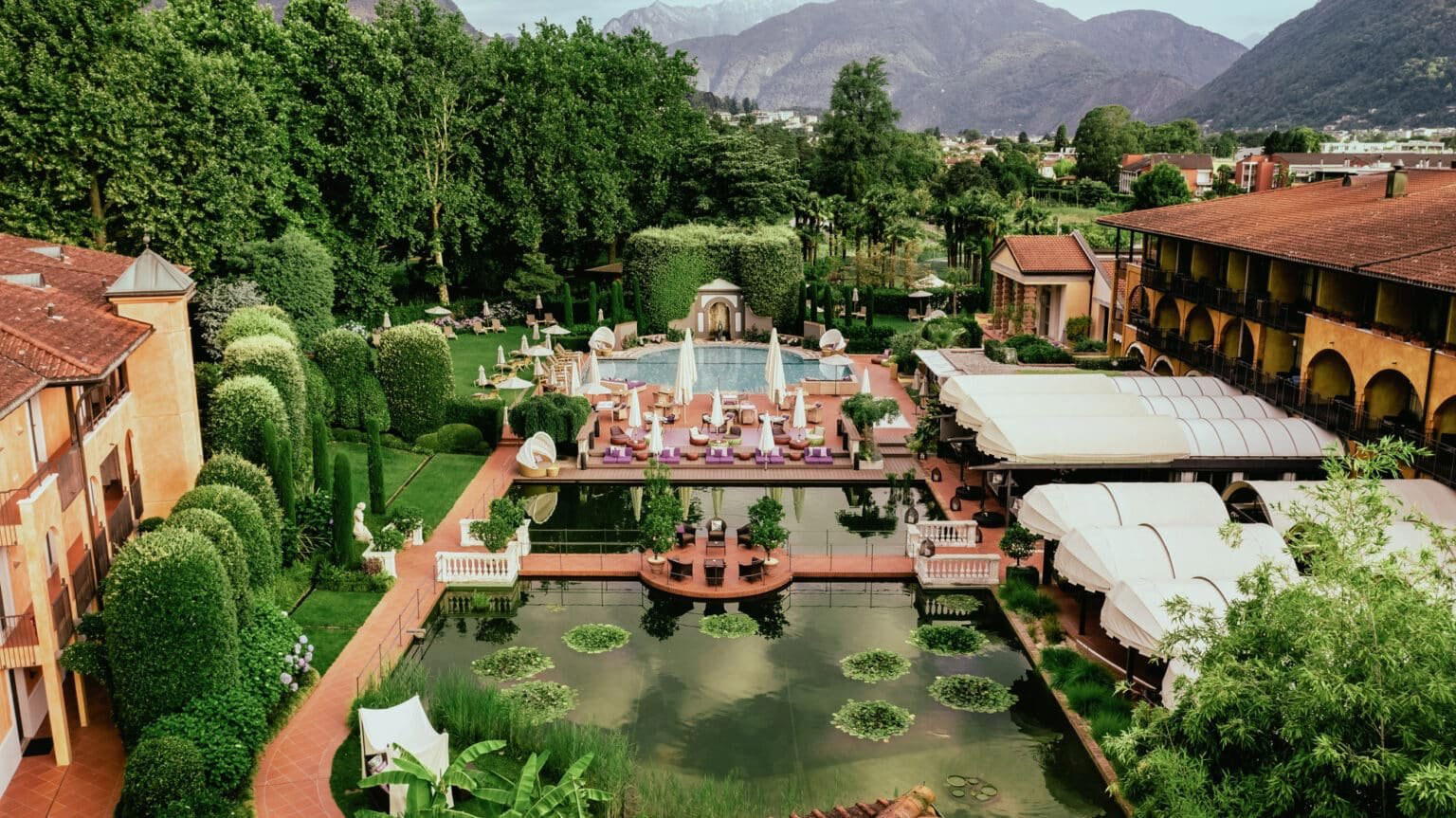
Ascona, Switzerland
Giardino Ascona earns 93.5 points in the 2026 La Liste Top Hotels ranking and houses Ecco Ascona, a two-Michelin-star restaurant, alongside the more casual Hide & Seek beside the lily pond. Set on the Swiss shores of Lake Maggiore in Ticino, the 72-room villa property pairs classic Alpine lakeside architecture with the Mediterranean ease that defines the region.

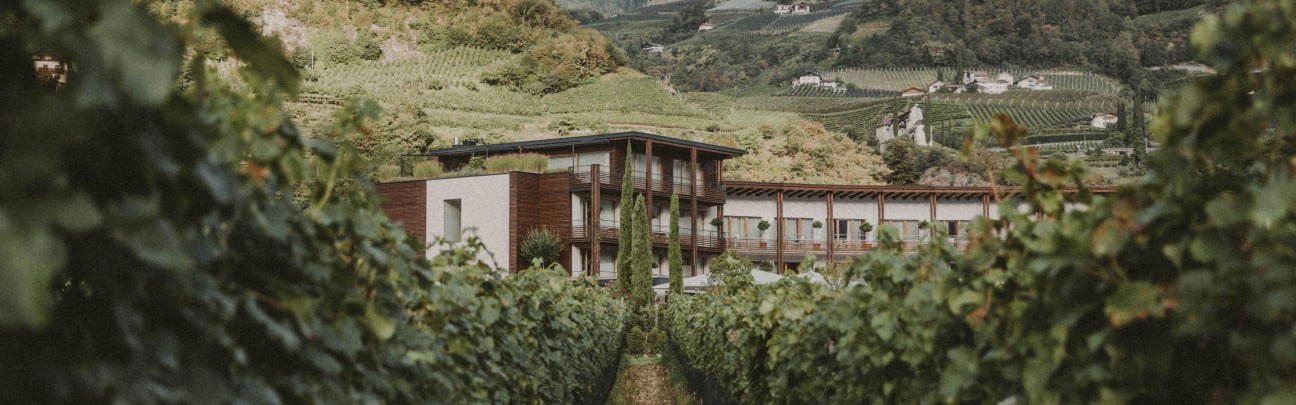
Lana, Italy
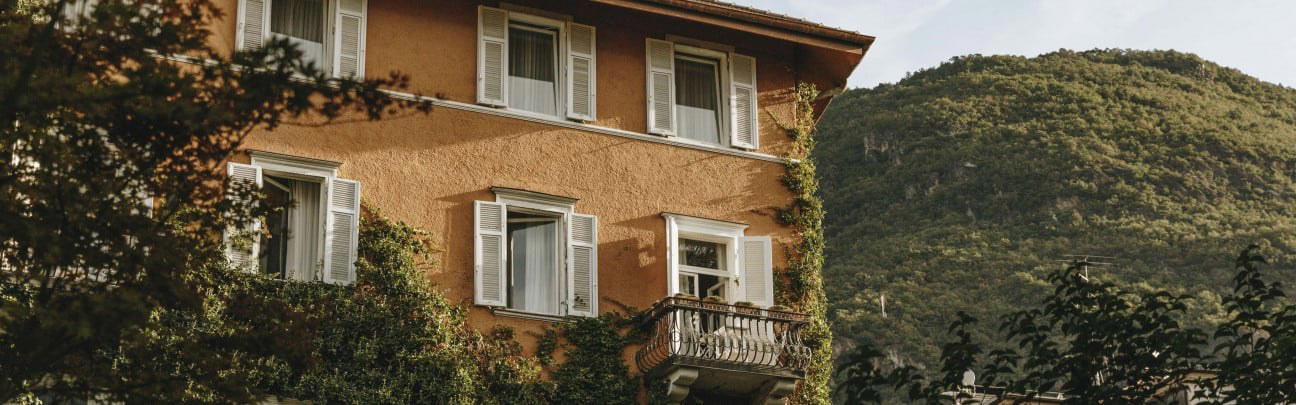
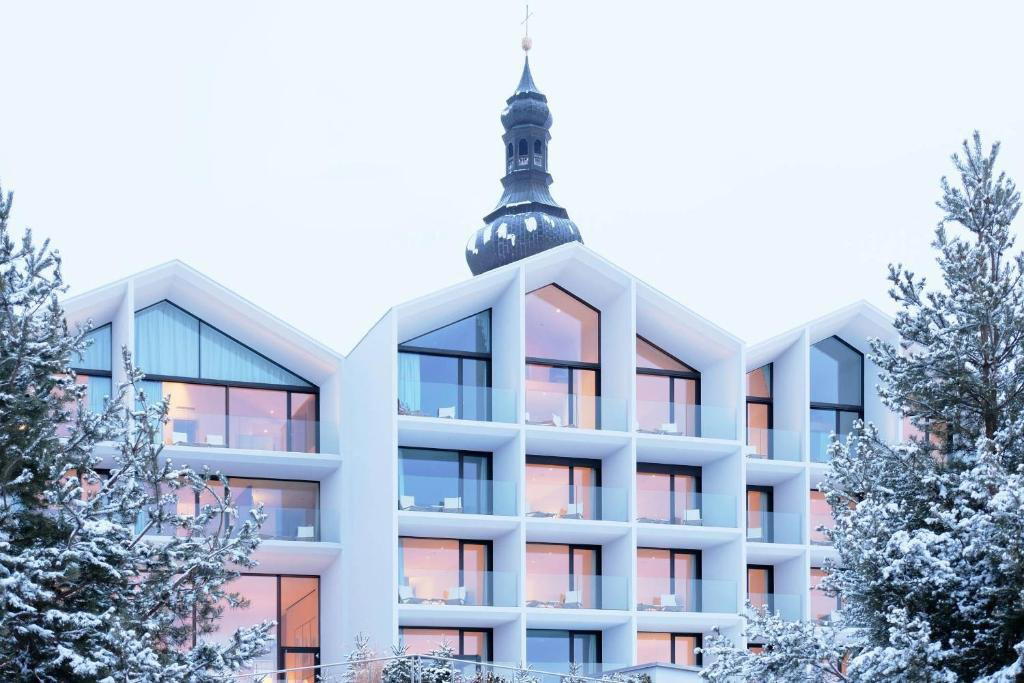
A design-led wellness hotel in the South Tyrolean village of Lana, Hotel Schwarzschmied traces its roots to 1981 and has since been thoroughly modernized into a property that pairs holistic well-being programming with considered architecture, art curation, and a slow-food dining approach. The surrounding Adige Valley sets the context: apple orchards, vine terraces, and a mild Alpine-Mediterranean climate that shapes both the landscape and the plate.

Kuala Lumpur, Malaysia
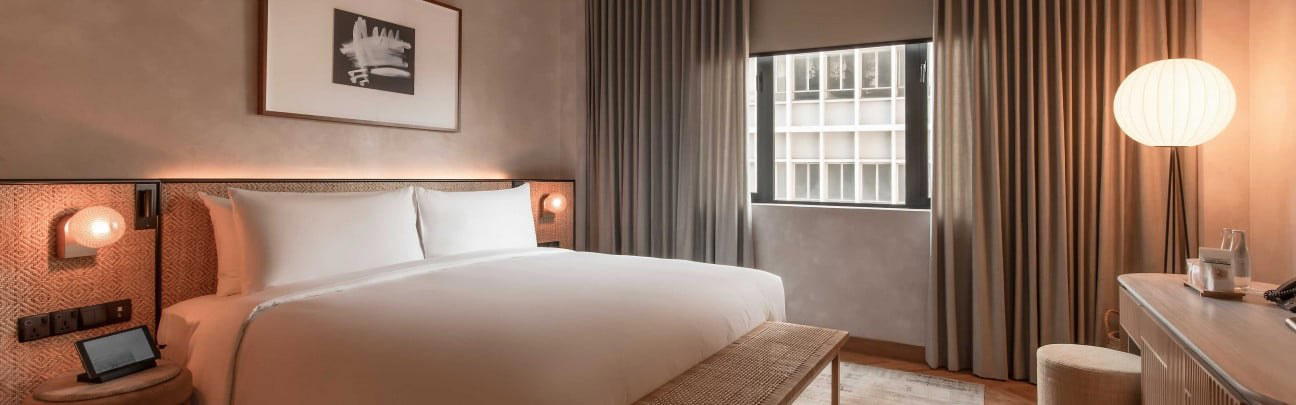
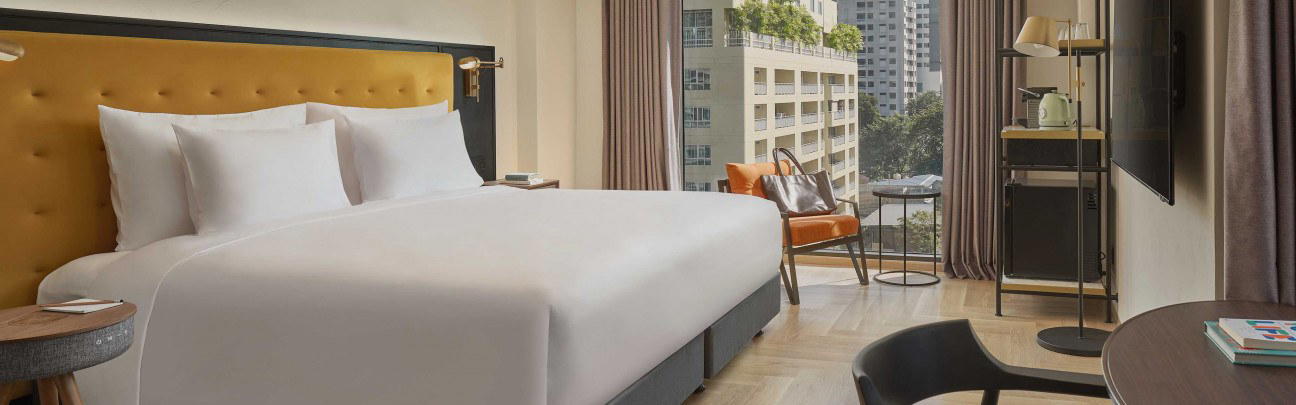
Else Kuala Lumpur occupies a restored 1930s heritage building on Jalan Tun H S Lee, placing it squarely in the city's emerging cultural corridor downtown. The property connects international sensibilities with a deep sense of local context, making it a reference point for design-led hospitality in a city where that tier is still taking shape. For travellers who read neighbourhood character as a feature rather than an inconvenience, Else rewards that preference.

San Pedro Garza Garcia, Mexico
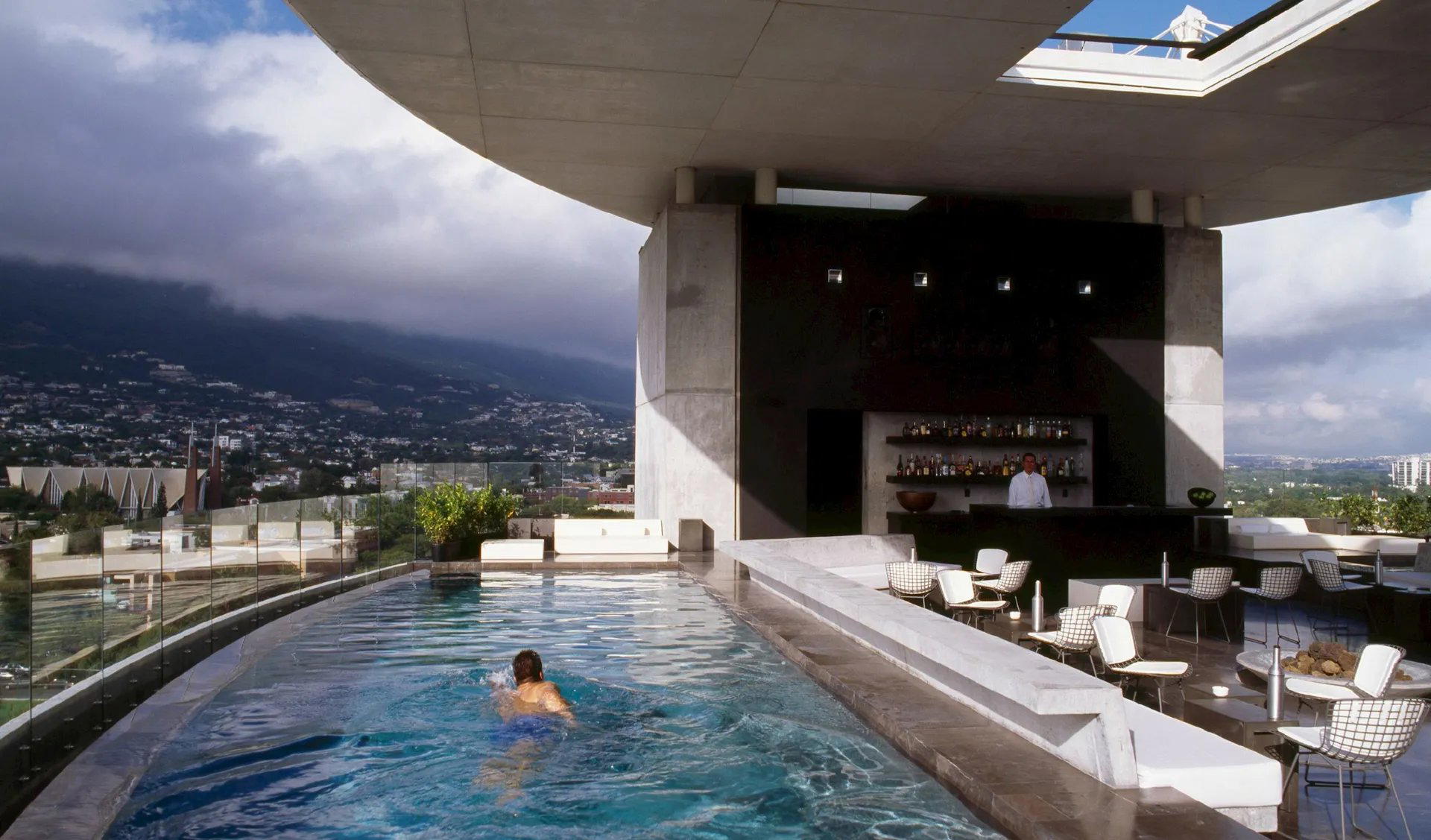
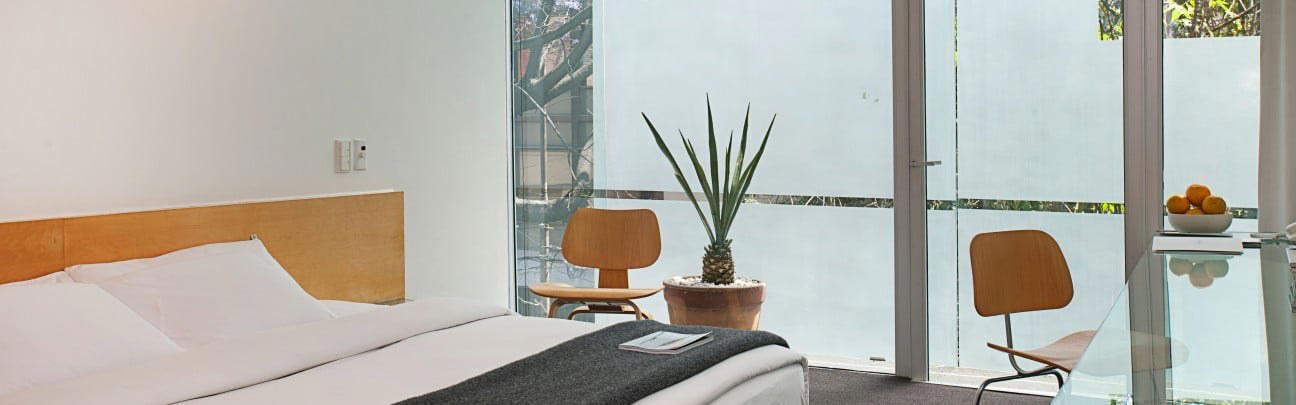
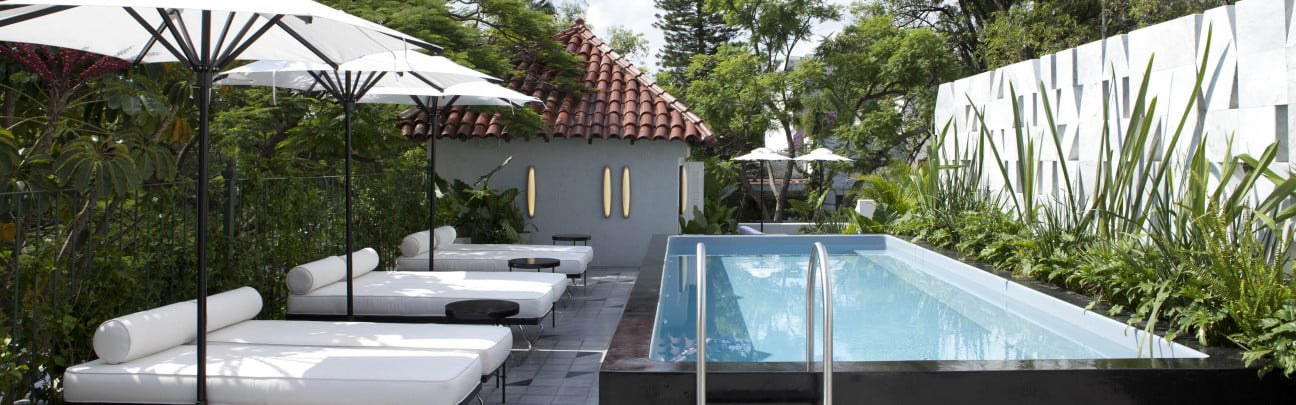
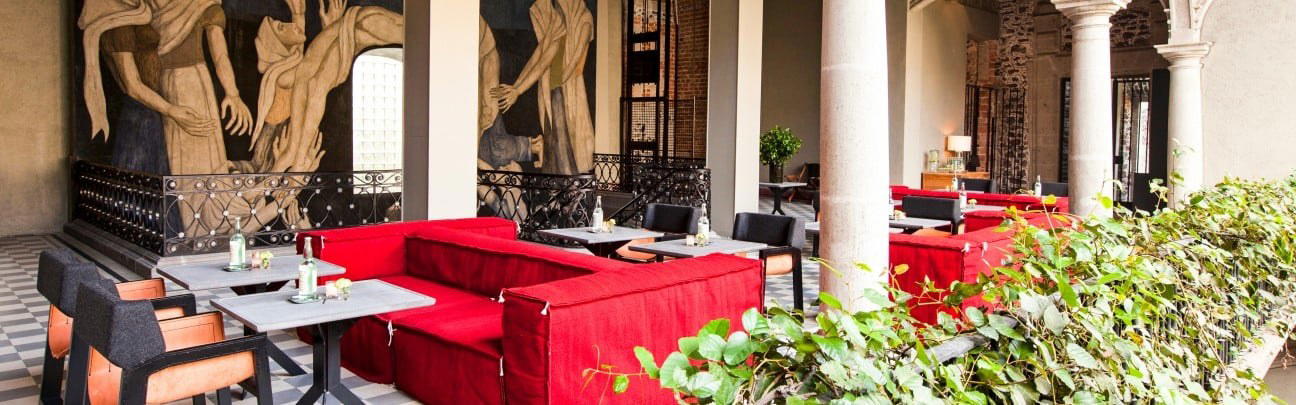
Habita Monterrey occupies a sharp midcentury-modern building on Vasconcelos in San Pedro Garza García, the affluent municipality that functions as Monterrey's design and dining quarter. The property trades on clean curved architecture and unobstructed sightlines toward the Sierra Madre, positioning itself within Mexico's design-hotel tier rather than its international-chain category. For travellers treating the city as more than a business stopover, it offers a considered base with genuine architectural identity.

Göttingen, Germany
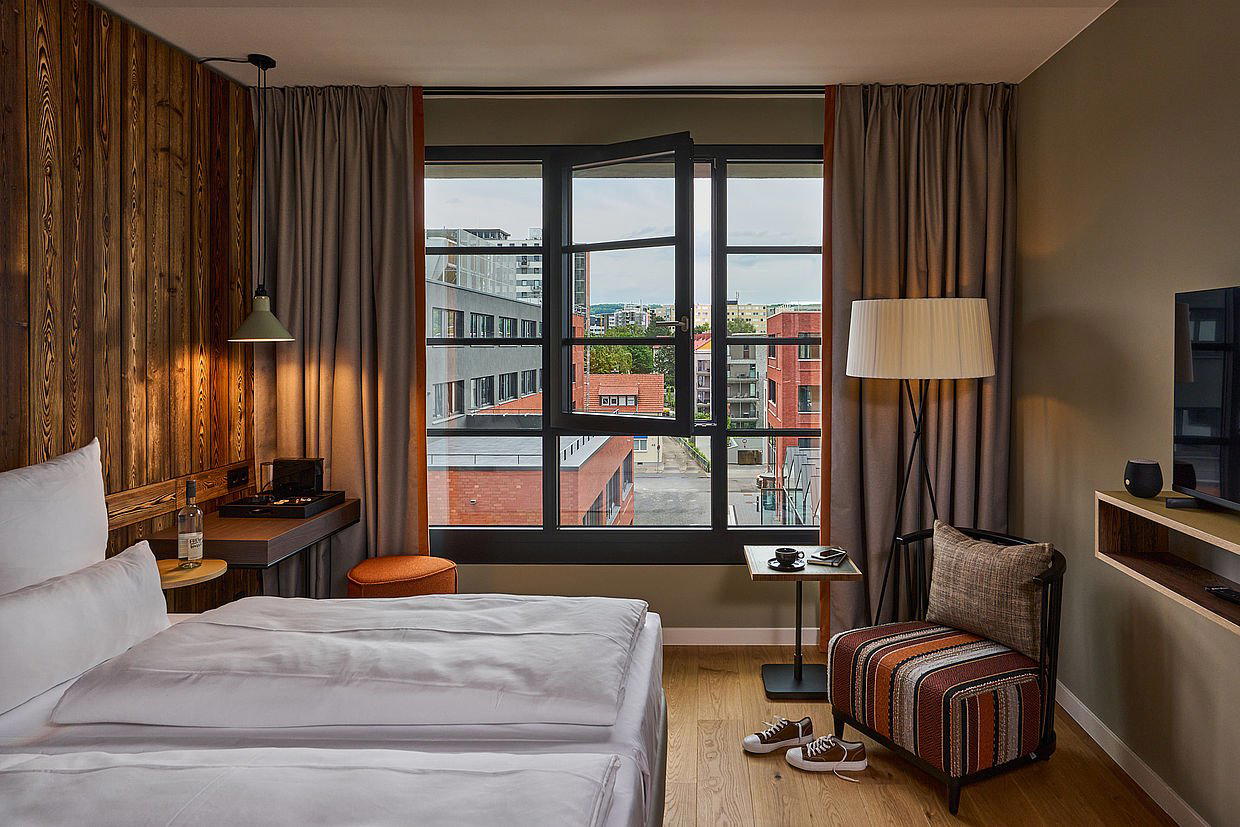
Set within Göttingen's emerging Sartorius Quarter, FREIgeist Göttingen Nordstadt occupies a specific position in how the university city organises its social life: as a contemporary gathering point where the residential north meets a new development corridor. The property draws a cross-section of locals, students, and professionals for whom design-conscious surroundings and a relaxed pace matter more than formality.

Vienna, Austria
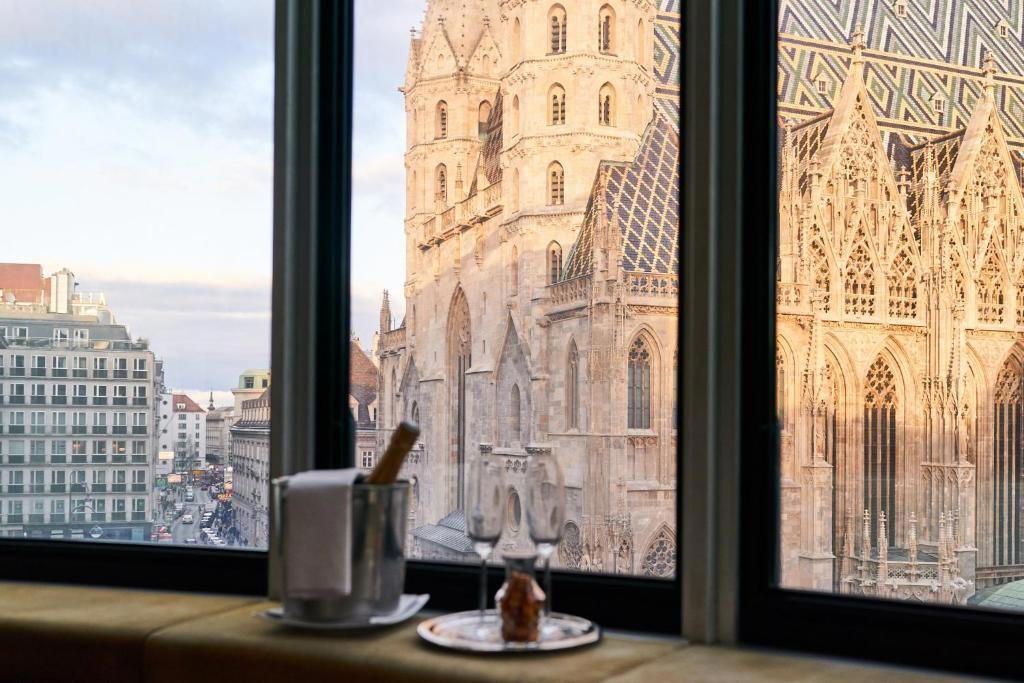
Positioned directly on Stephansplatz, Do&Co Hotel Vienna sits at the geographic and social centre of the city, with the Gothic spire of the Stephansdom as its immediate backdrop. Recognised by La Liste's 2026 Top Hotels ranking with 94 points, the property operates in Vienna's uppermost accommodation tier, where address precision and architectural drama carry as much weight as room specification.

Granada, Spain
A 19th-century palace in Granada's historical centre, Hospes Palacio de los Patos occupies a Cultural Heritage-listed building metres from the Cathedral and Capilla Real. The hotel's 42 rooms occupy two architecturally distinct buildings, while Los Patos Restaurant received a finalist nomination at the Madrid Fusión Gourmet Contest. For Granada, this is the condensed argument for staying inside the history rather than beside it.

London, United Kingdom
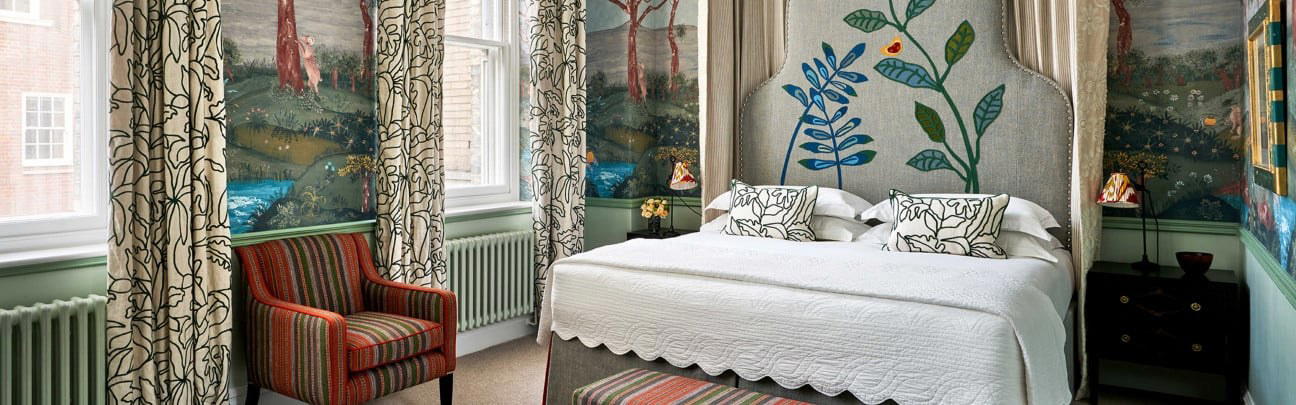
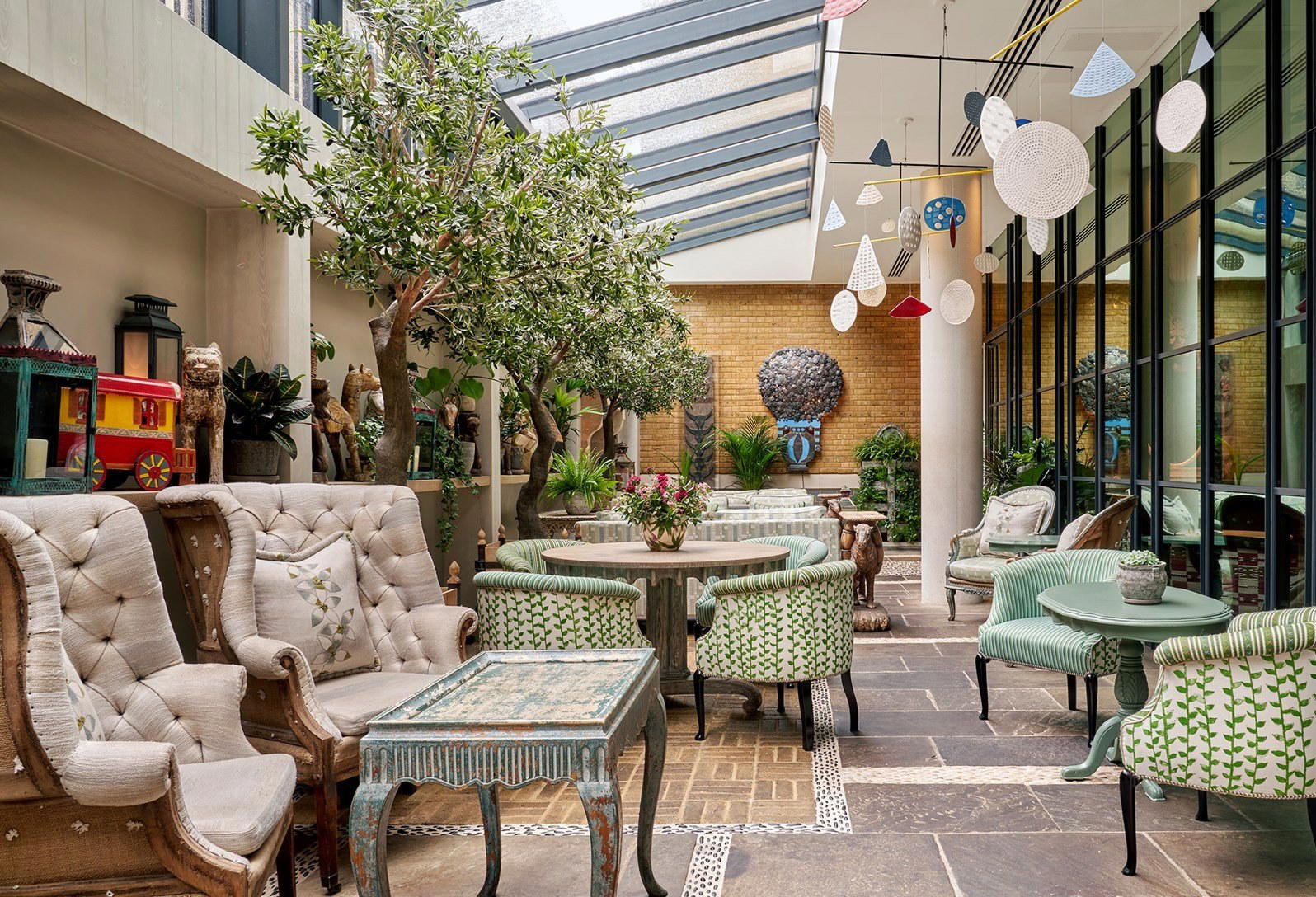
A 58-room converted 1880s hospital on Monmouth Street, Covent Garden Hotel sits at the junction of London's theatre district and its most concentrated stretch of independent retail. Rates from $676 per night position it within a peer set of design-led small hotels rather than grand palace properties. The Firmdale group's signature interior approach, developed by Kit Kemp, runs consistently across all rooms and public spaces.

Nagatoyumoto, Japan
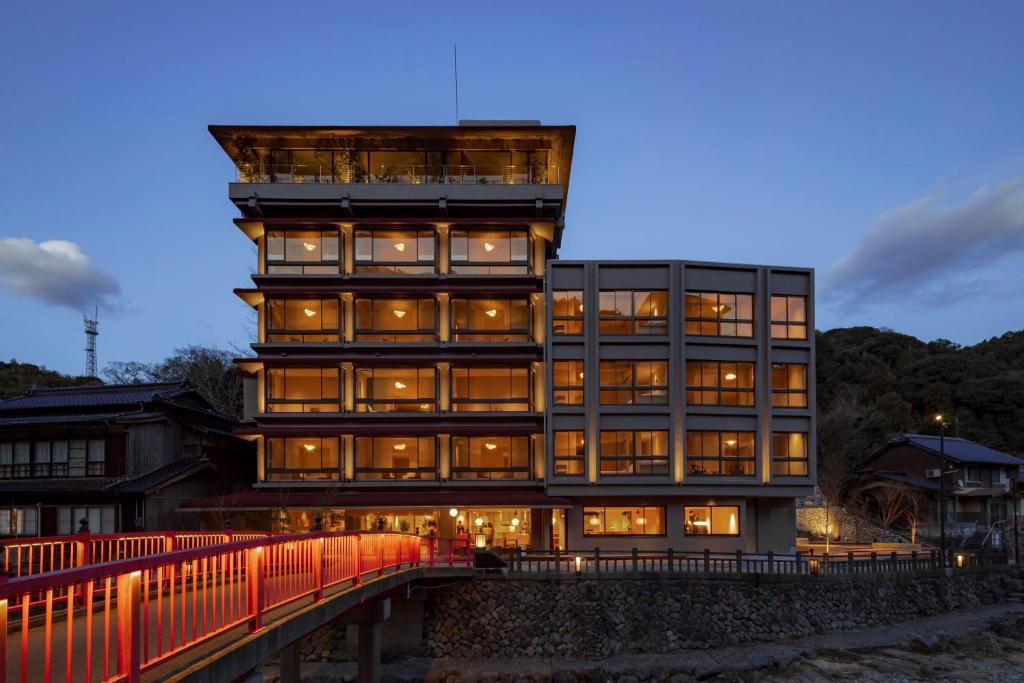
SOIL Nagatoyumoto puts guests within walking distance of Nagato's thermal springs, riverside paths, and local food culture. The property is designed around the rhythms of an onsen town — access to the springs is immediate, the neighbourhood moves at a pace that rewards slowness, and the surrounding Yamaguchi prefecture landscape shapes both the architecture and the table.

Basel, Switzerland
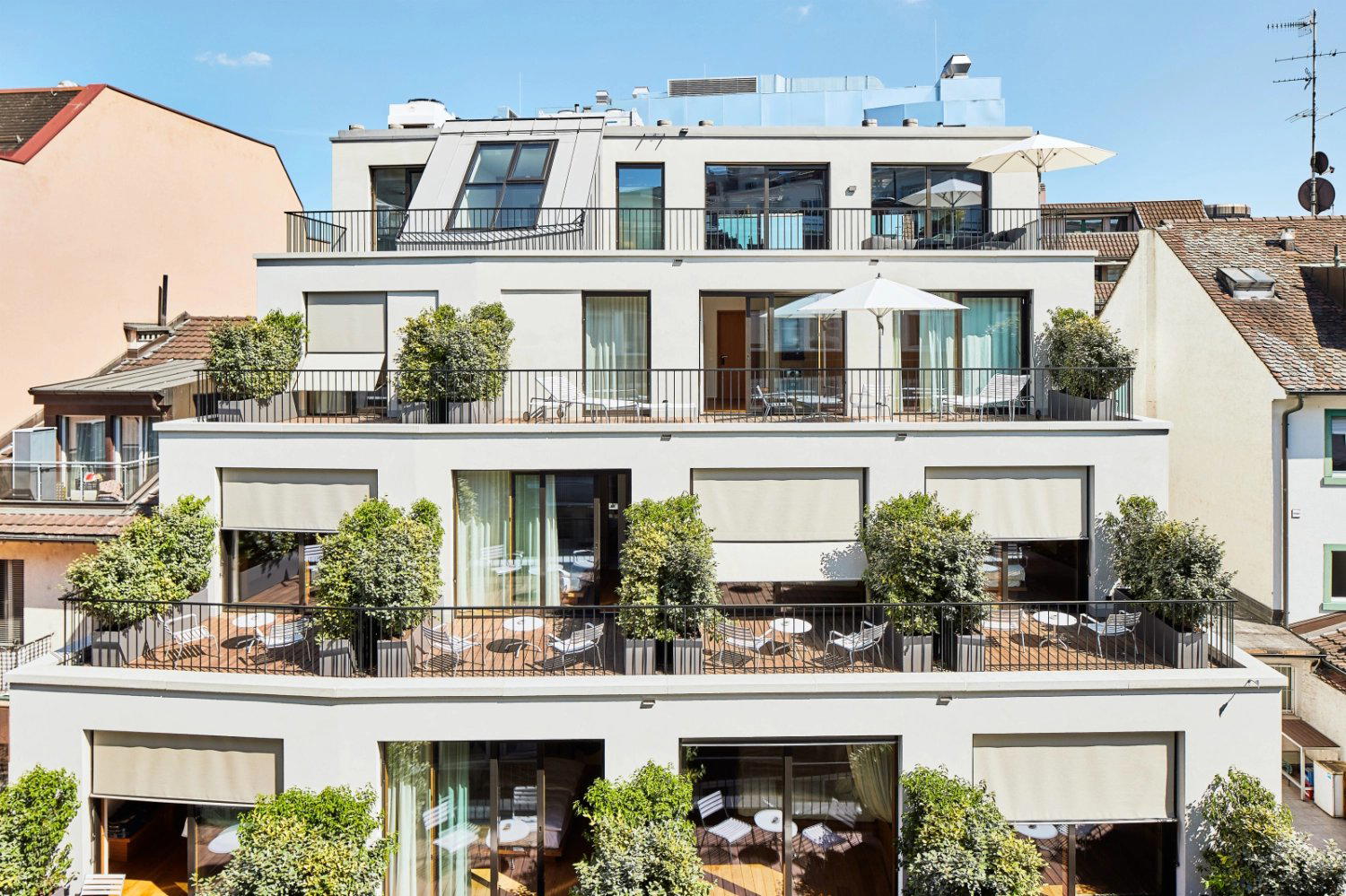
Art House Basel occupies a deliberate position in Steinenvorstadt, one of the city's more creatively charged streets, where design and contemporary art intersect in the built environment itself. The property operates as a platform for visual culture rather than a conventional hotel, placing it in a different register from Basel's grand riverside addresses. For visitors arriving during Art Basel or the wider cultural calendar, it offers an alternative to the city's more ceremonial luxury.

Kyoto, Japan
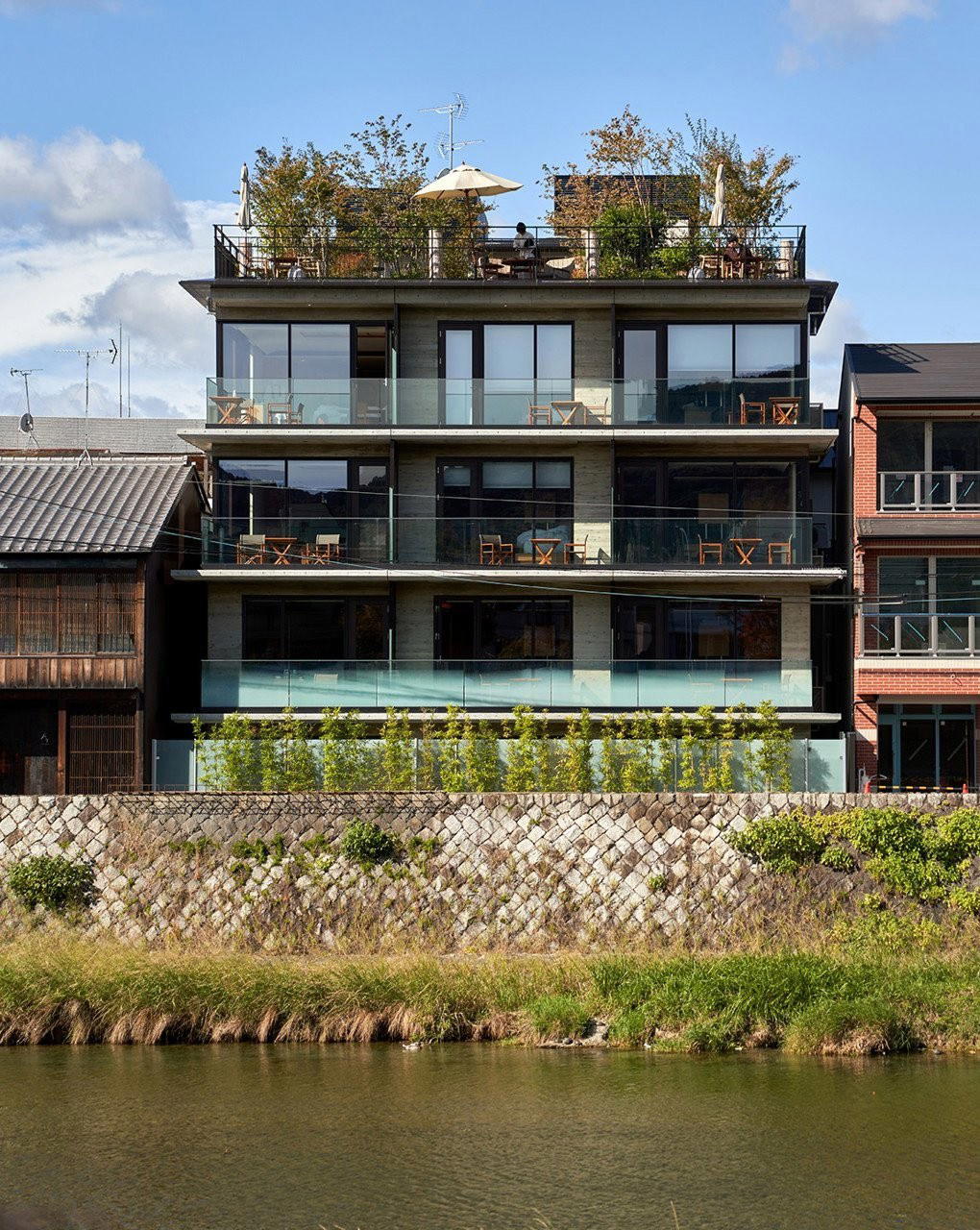
A 19-room Michelin Key-awarded property in Gojo-Kawaramachi, Genji Kyoto occupies a concrete structure that draws directly from the machiya townhouse tradition, with radiant floor heating, river-facing balconies, and tatami rooms furnished with Verner Panton chairs. Rates from $512 per night place it in Kyoto's serious design-hotel tier, where architectural restraint and craft-led interiors define the competitive set.

Los Angeles, United States
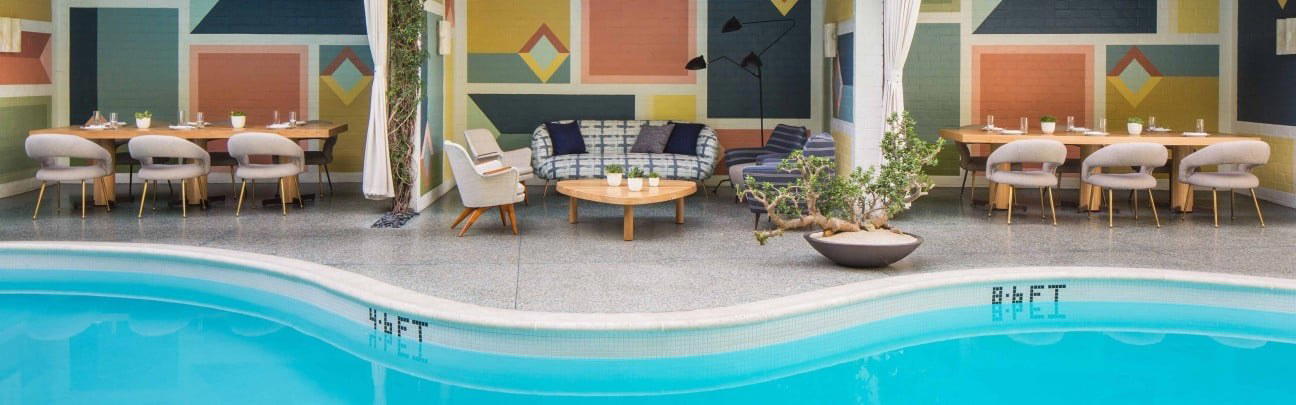
Avalon Hotel Beverly Hills anchors itself around a celebrated outdoor pool and open-air dining scene at 9400 West Olympic Boulevard, sitting in a different register from the grand-lobby palaces of neighbouring Rodeo Drive. The property trades on its mid-century design lineage and poolside culture, offering a boutique alternative within a neighbourhood otherwise dominated by large-format luxury.

Ljubljana, Slovenia
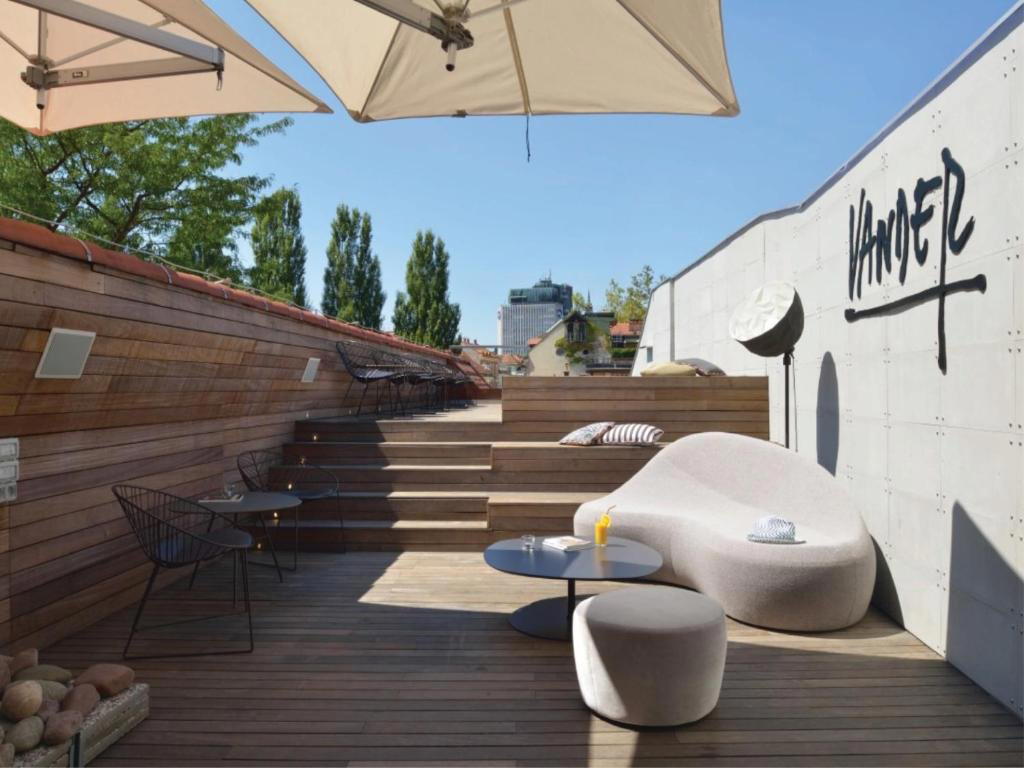
Vander Urbani Resort occupies a position inside Ljubljana's historic centre where the intimacy of a family-run property meets the creative energy of one of Central Europe's most compact and walkable capitals. Set on Krojaska ulica, it operates at the smaller, character-led end of the city's accommodation spectrum, placing guests within reach of the old town's architecture, restaurant strip, and independent bar scene.

Martigny, Switzerland
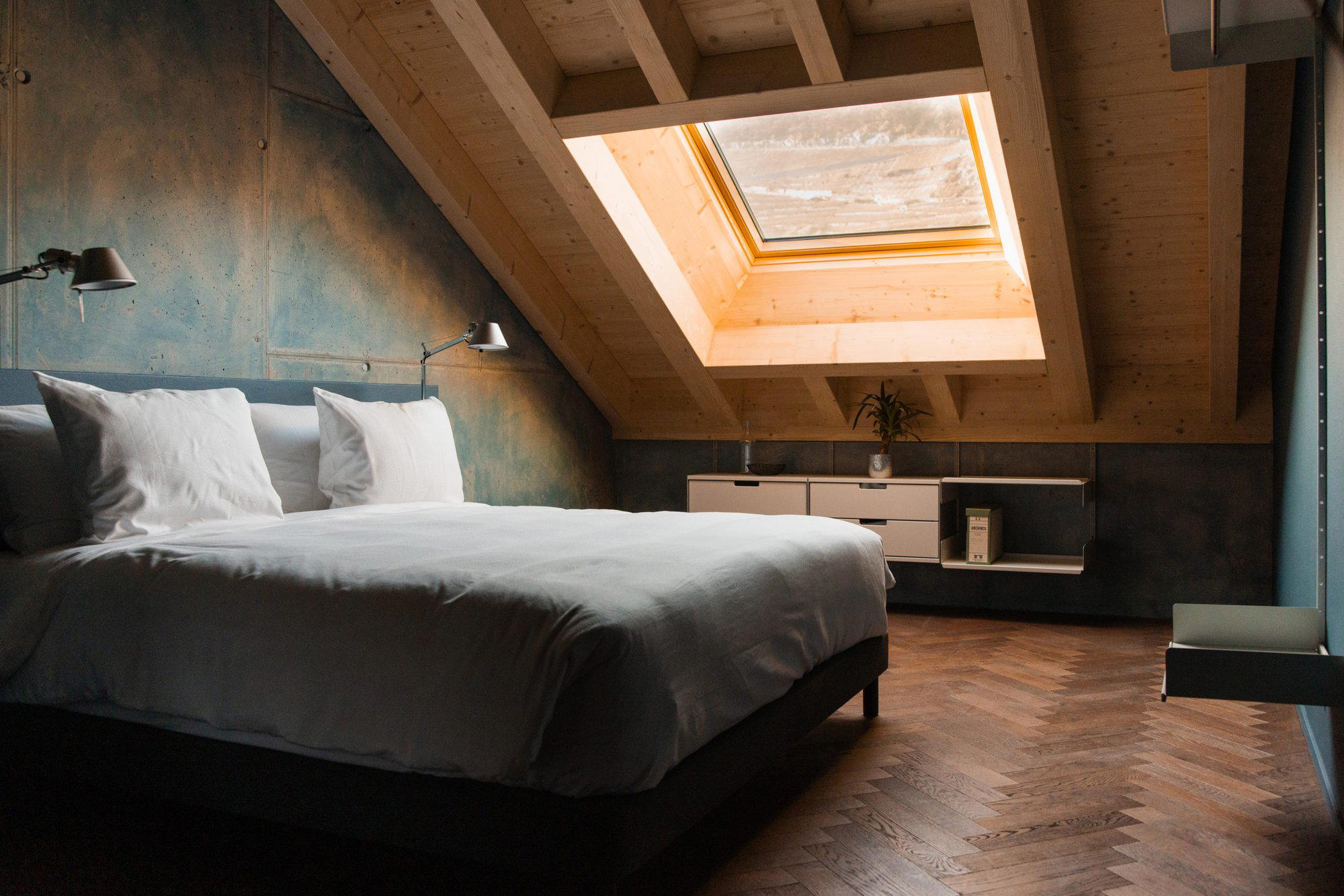
Hôtel Borsari brings an industrial-meets-midcentury design sensibility to Martigny, a Swiss town better known for Roman ruins and Alpine trail access than for design-led accommodation. The property sits at the intersection of Swiss and German aesthetic traditions in a city that connects the Rhône Valley to the Grand-Saint-Bernard Pass, making it a practical and architecturally considered base for the Valais region.

Duderstadt, Germany
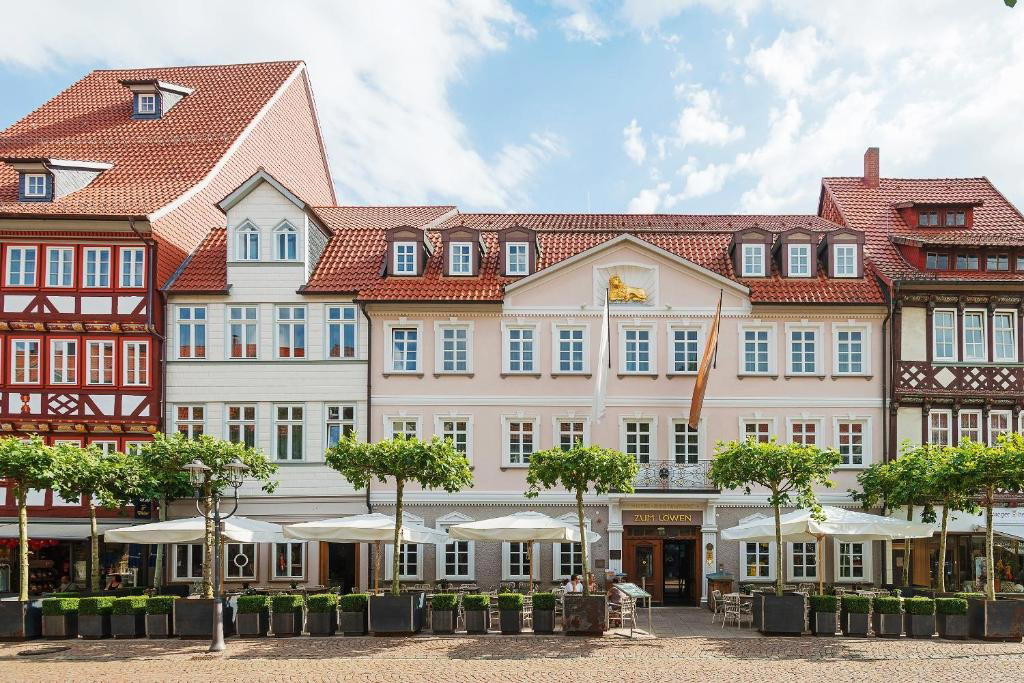
A timber-framed half-timbered building on Duderstadt's medieval market street, Zum Löwen Design Hotel Resort & Spa sits at the intersection of Lower Saxony's architectural heritage and considered contemporary hospitality. The property's design language draws from the town's remarkably intact medieval core, offering a stay that reads as an exercise in regional character rather than generic luxury positioning.

Bacalar, Mexico
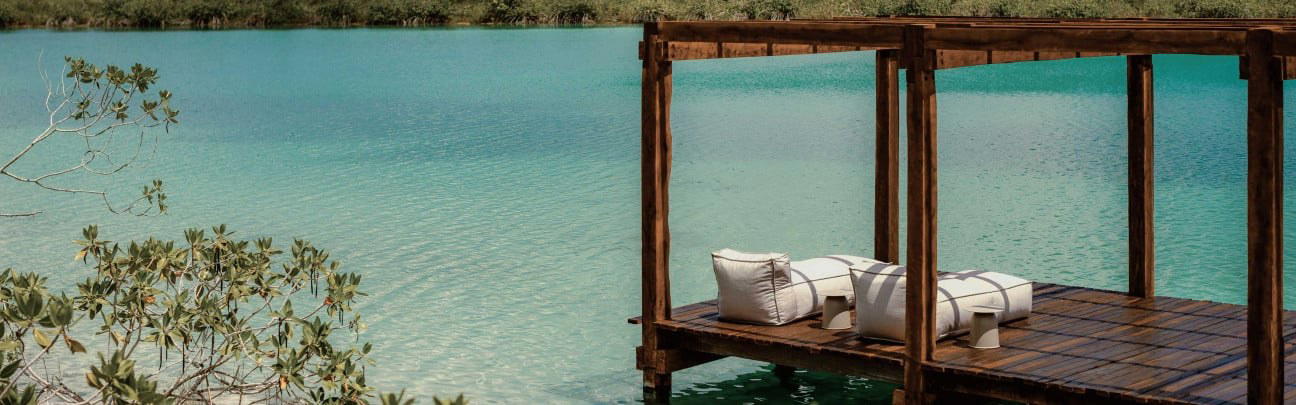
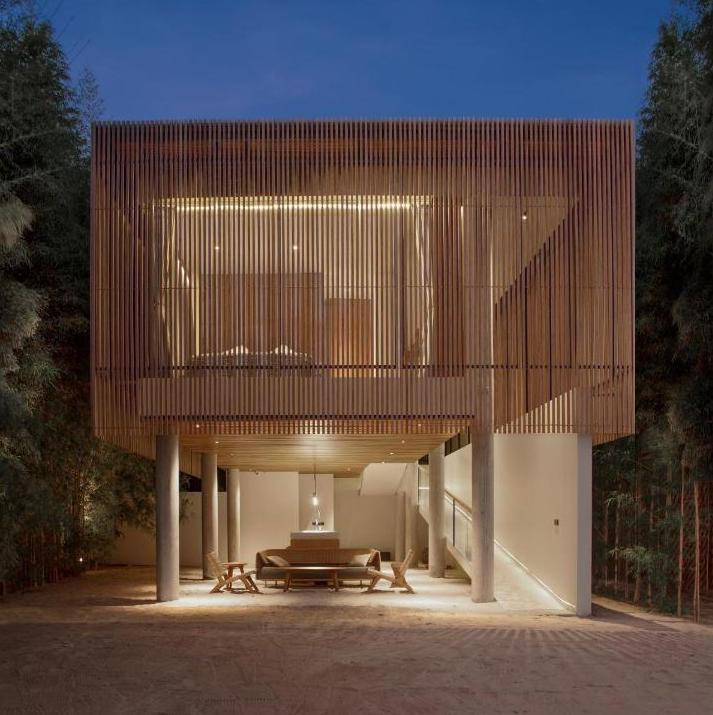
Boca de Agua Bacalar sits directly on the banks of the Bacalar lagoon in Quintana Roo, with 22 treehouse-style rooms built on stilts above the jungle floor. At around $380 per night, it positions itself as a low-footprint, nature-immersive alternative to the Riviera Maya's resort corridor, with Mayan ruins nearby and the lagoon's turquoise shallows essentially at your doorstep.

Stepantsminda, Georgia
In Stepantsminda, at the foot of the Caucasus Mountains, Rooms Kazbegi is the property that put Georgian mountain hospitality on the international design map. Young local designers shaped a hotel that reads as culturally specific rather than internationally generic, with every architectural decision oriented toward the surrounding peaks. For travellers arriving from Tbilisi, it functions as both a base for serious mountain terrain and a destination in its own right.

Istanbul, Turkey
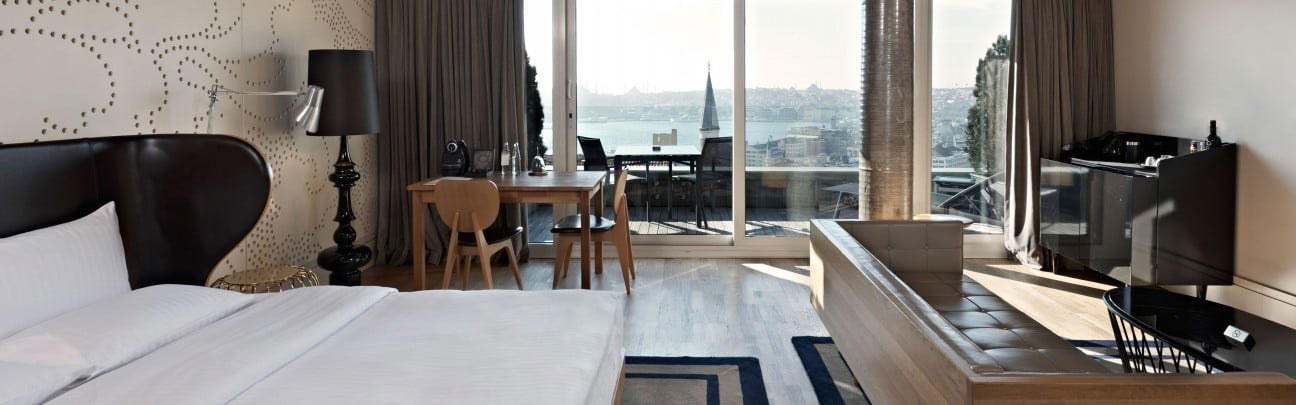
On a steep residential lane in Cihangir, Witt Istanbul Hotel places guests inside one of the city's most architecturally textured neighbourhoods rather than at a comfortable remove from it. Retro furnishings, monochromatic palettes, and apartment-scale proportions make it a counterpoint to the grand Bosphorus-view hotels that dominate Istanbul's luxury tier. For travellers who want neighbourhood life alongside modern comfort, the address is deliberate.

Stockholm, Sweden
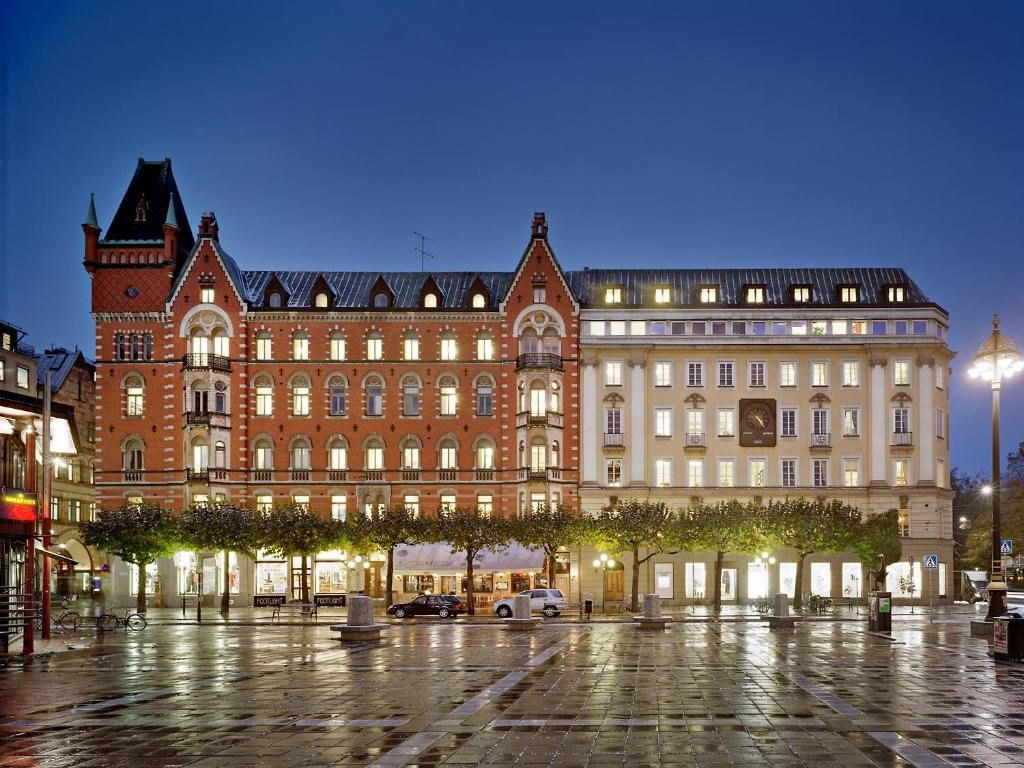
Occupying a 19th-century stone building at Norrmalmstorg 2-4 that once housed the bank where Stockholm syndrome was coined, Nobis Hotel delivers 201 rooms with Carrara marble bathrooms and a design language defined by the Swedish trio Claesson Koivisto Rune. The contrast between ornate heritage interiors and restrained Scandinavian modernism gives the property a character that distinguishes it from Stockholm's newer design hotels. Rates from $302 per night.

London, United Kingdom
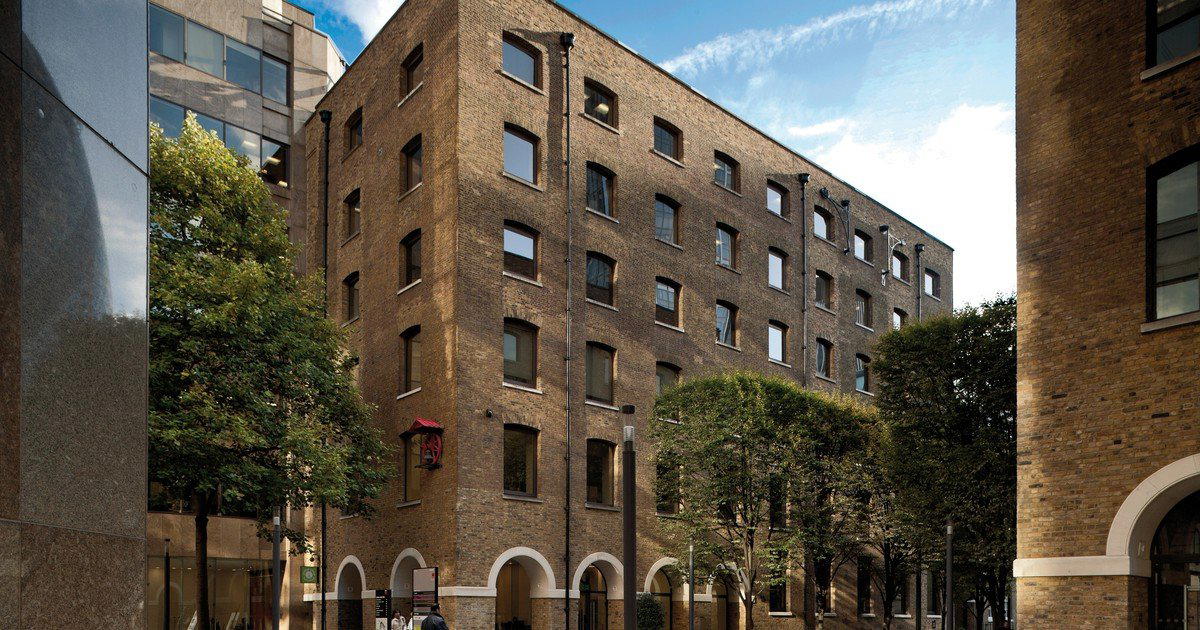
Sir Devonshire Square Hotel London occupies a redbrick building dating to 1768 at the meeting point of The City's financial core and Shoreditch's creative edge. The location places guests within walking distance of two of London's most distinct urban characters, making it a considered choice for travellers who want proximity to both. A historic address with a distinctly contemporary positioning.

Palm Springs, United States
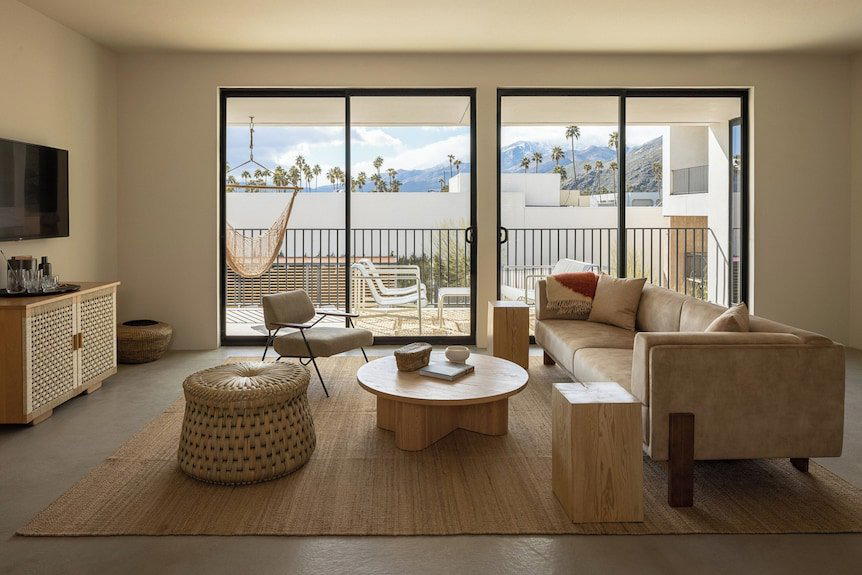
Drift Palm Springs translates the brand's Baja-inflected California cool into a desert setting, with handmade Mexican craftsmanship threading through the property's design. Located on South Indian Canyon Drive, it operates in Palm Springs' growing tier of personality-led boutique hotels that trade large-resort infrastructure for a more considered, place-specific atmosphere.

Reykjavik, Iceland
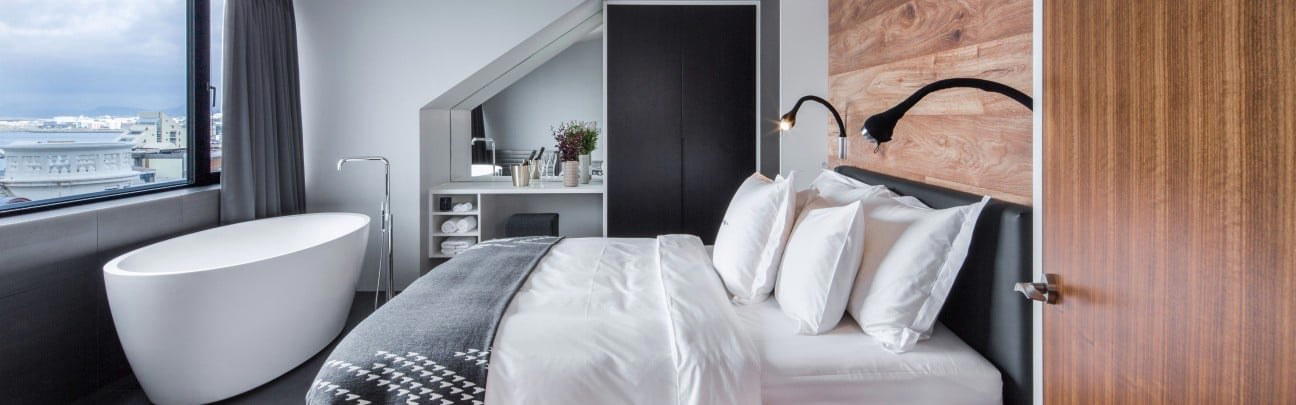
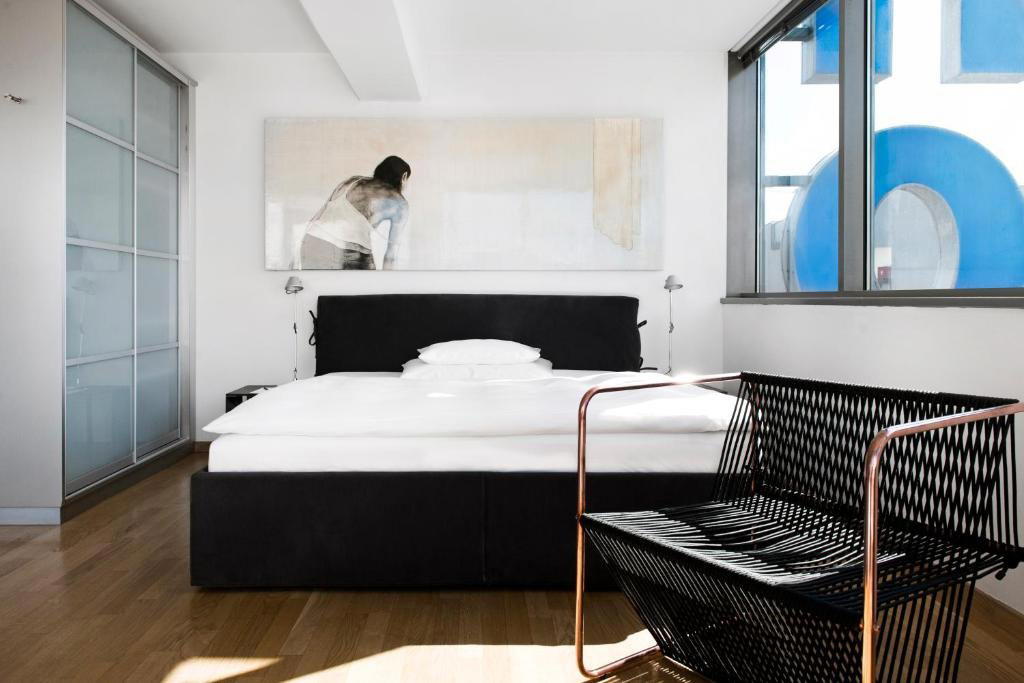
Ion City Hotel occupies a converted building on Laugavegur 28, placing guests at the centre of Reykjavik's most active street. The property brings a contemporary architectural sensibility to a neighbourhood layered with Icelandic social history, and sits in the mid-tier of the capital's design-forward hotel market. For visitors who want proximity to the city's bars, restaurants, and cultural venues without retreating to a resort format, the address is hard to argue with.

St. Moritz, Switzerland
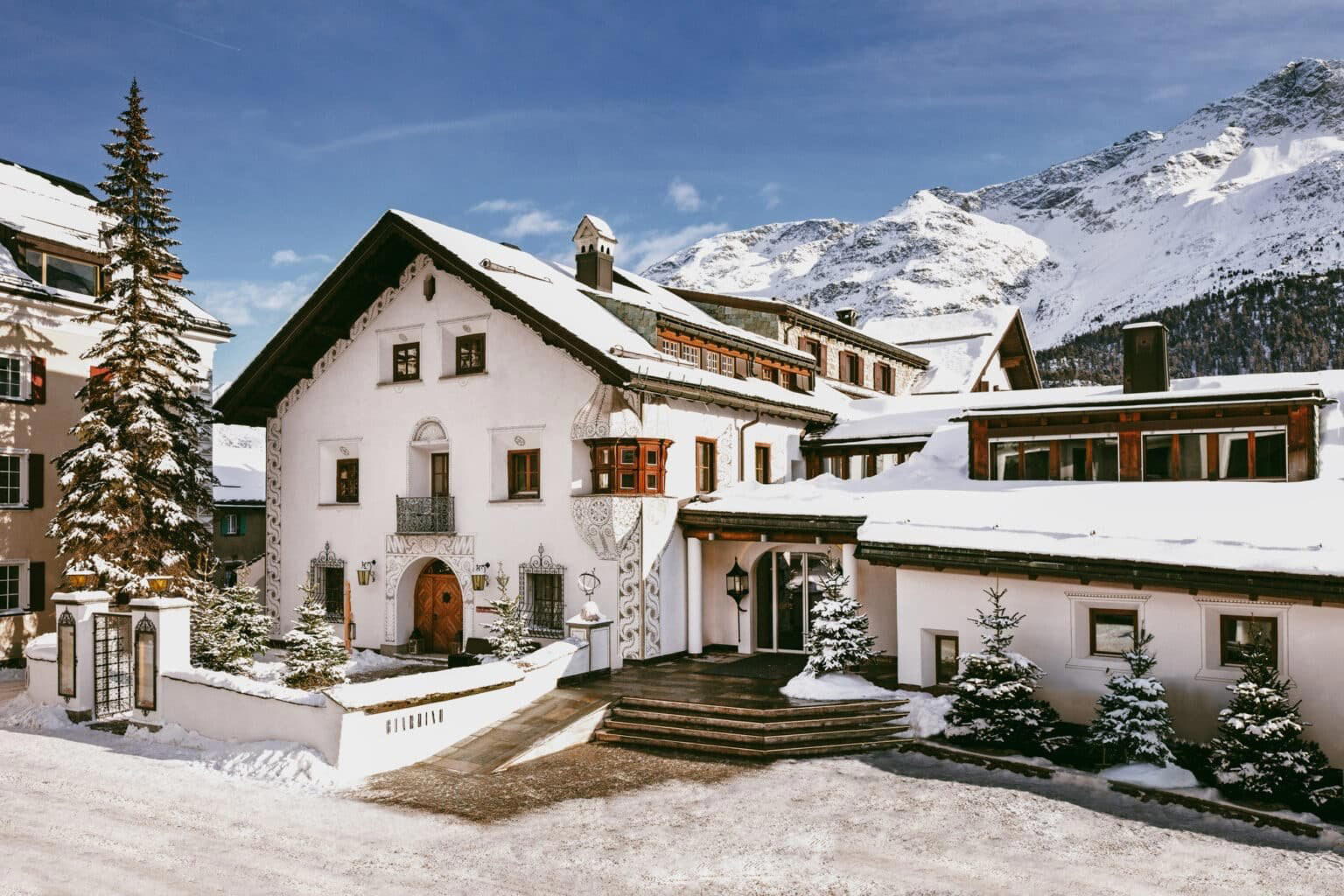
In Champfèr, a short distance from St. Moritz's centre, Giardino Mountain presents a classic Engadine exterior that gives little away. Inside, a 2011 renovation layered contemporary design over traditional Alpine bones, with 78 rooms and a dining programme anchored by the two-Michelin-starred Ecco St. Moritz. The result is a property that competes on food credentials as much as on Alpine atmosphere.

Marrakech, Morocco
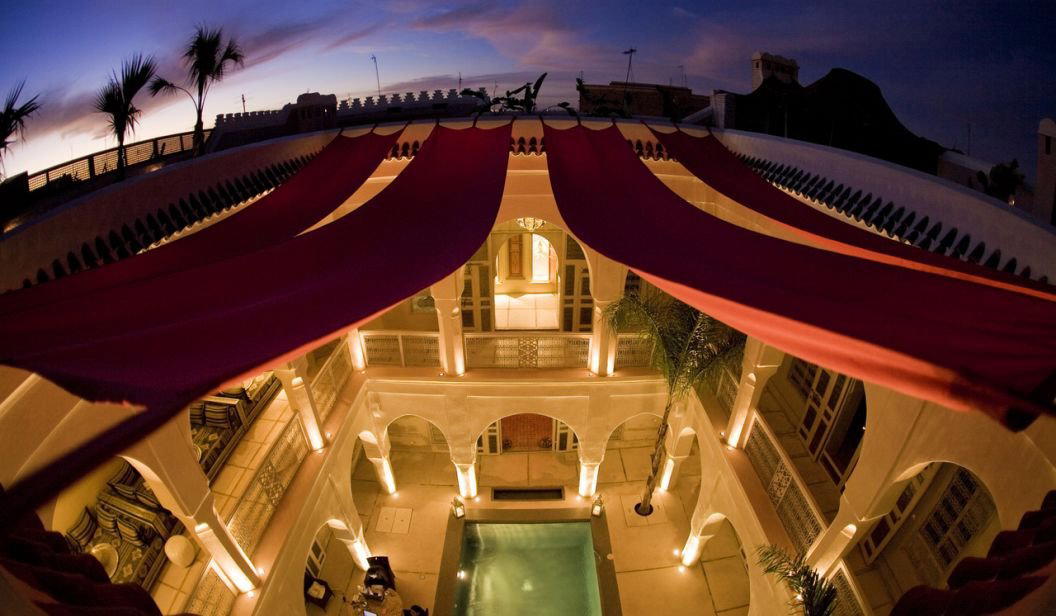
A 300-year-old city palace in the heart of Marrakech's medina, AnaYela occupies a tier of riad accommodation defined by historical depth rather than design-hotel gloss. At 28 Derb Zerwal, the property sits inside one of the medina's older residential quarters, where the architecture does the work that marketing usually attempts elsewhere. For travellers who want proximity to the medina's logic rather than a view of it, this is the address.

Tokyo, Japan
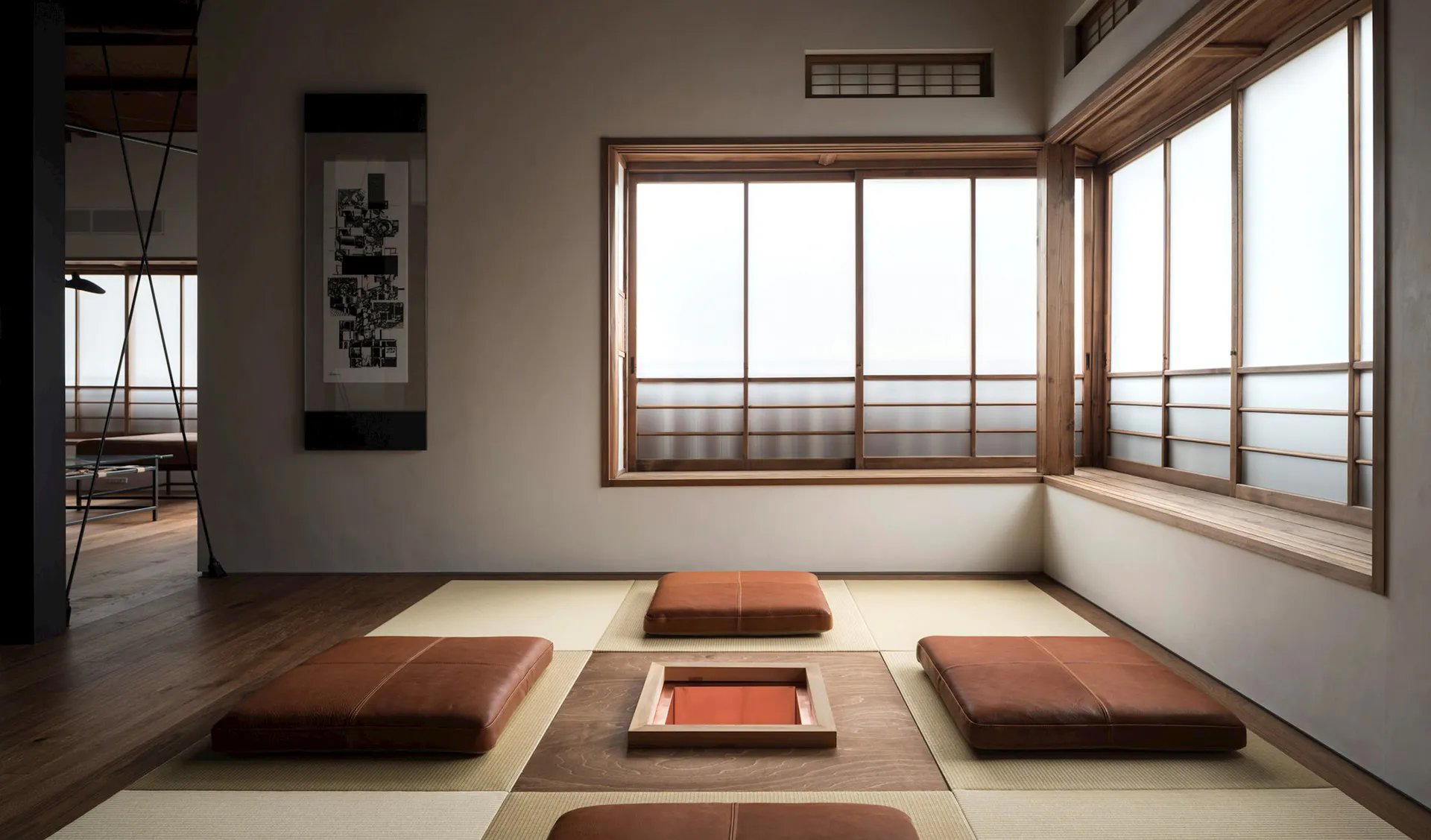
Where most Tokyo accommodation options involve tower blocks and lobby atrium theatre, Trunk House occupies a single traditional wooden building in Kagurazaka, one of the city's most historically layered neighbourhoods. A one-suite private residence, it places guests inside the architecture of old Tokyo rather than above it — a fundamentally different proposition from the city's internationally branded luxury hotels.

Incheon, South Korea
Nest Hotel occupies a position that few airport-adjacent properties in Northeast Asia can claim: a genuine case for staying on Yeongjong Island rather than rushing through it. Set in Incheon near Incheon International Airport, the hotel draws travellers who treat the layover or transit window as an opportunity rather than an inconvenience. For Incheon hotels at this tier, see our full guide.

Brussels, Belgium
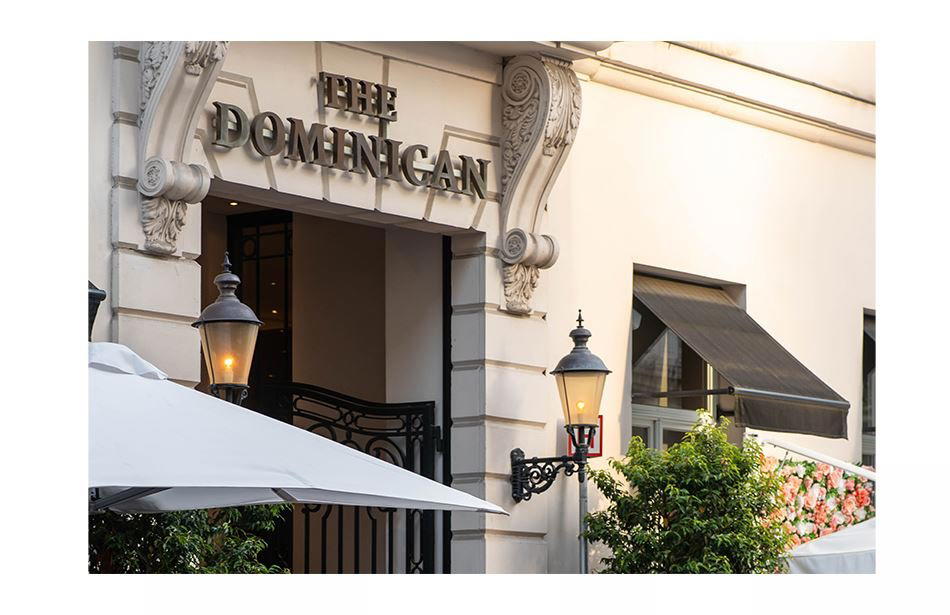
A former Dominican abbey on Rue Léopold in central Brussels, this hotel converts centuries of ecclesiastical architecture into a hotel stay defined by soaring vaulted ceilings, original stone floors, and richly layered textiles. The physical fabric of the building sets it apart from the glass-and-steel renovation projects that dominate the city centre, placing it closer to the heritage-conversion tier found across Belgium's most characterful properties.

London, United Kingdom
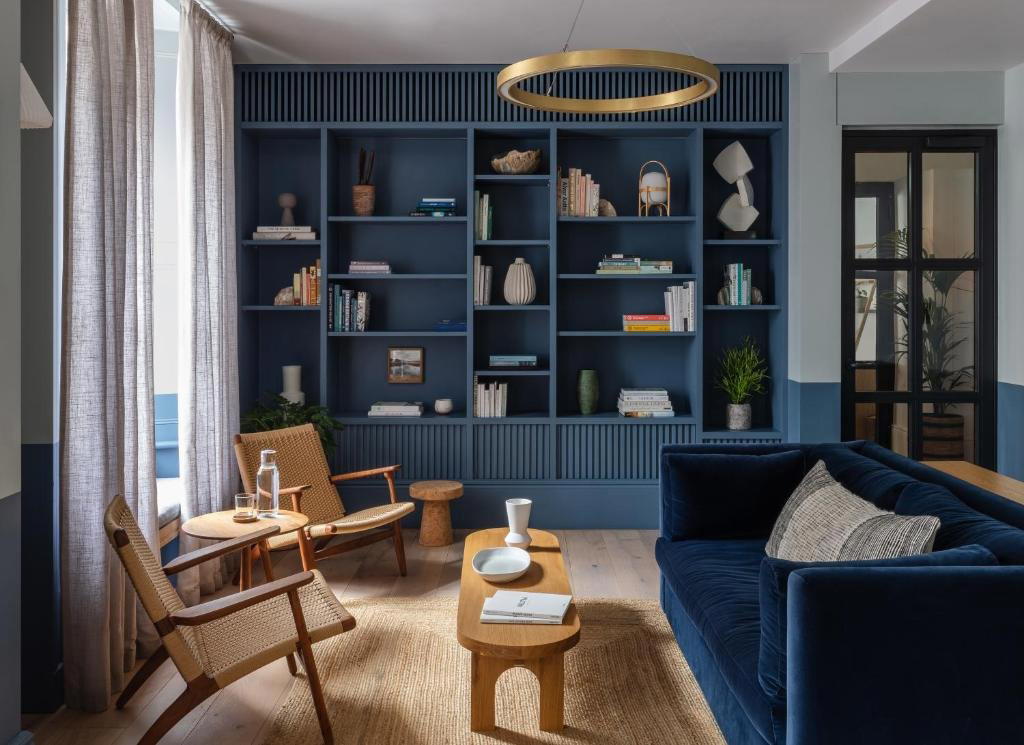
A wellness-oriented boutique hotel on a quiet Tyburnia street, Inhabit Southwick Street pairs Scandinavian-influenced design with a Californian well-being menu at its in-house Yeotown restaurant. The property sits in a niche between design-led independent hotels and the larger Paddington-area hospitality offer, with a guest experience built around restorative principles rather than conventional luxury signalling.

London, United Kingdom
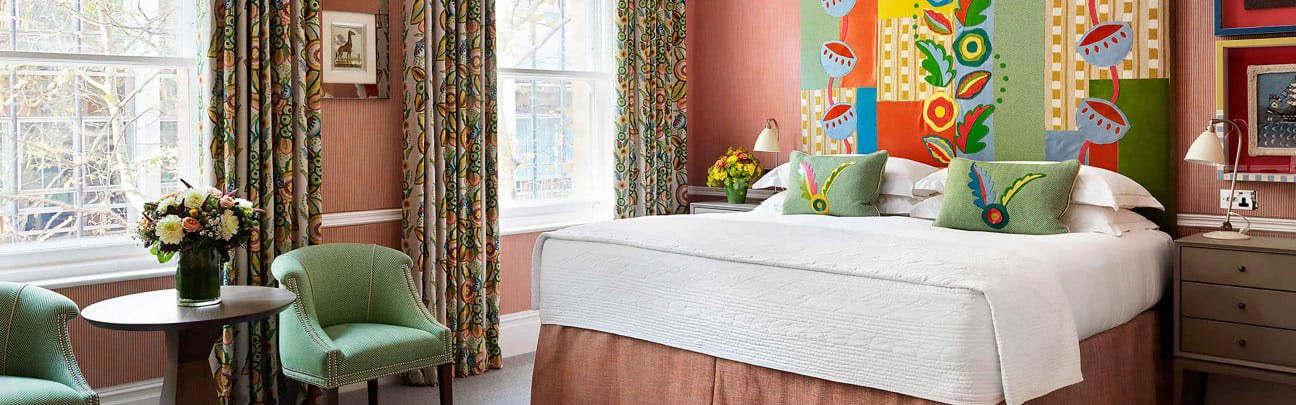
Charlotte Street Hotel occupies a 52-room townhouse on the edge of Fitzrovia, where Kit Kemp's signature color-saturated interiors reference the Bloomsbury Set's artistic legacy rather than generic London luxury. A Forbes Travel Guide Recommended property, it pairs that visual character with a 67-seat screening room, Oscar Restaurant, and a location that puts Soho's dining circuit within walking distance.

Berlin, Germany
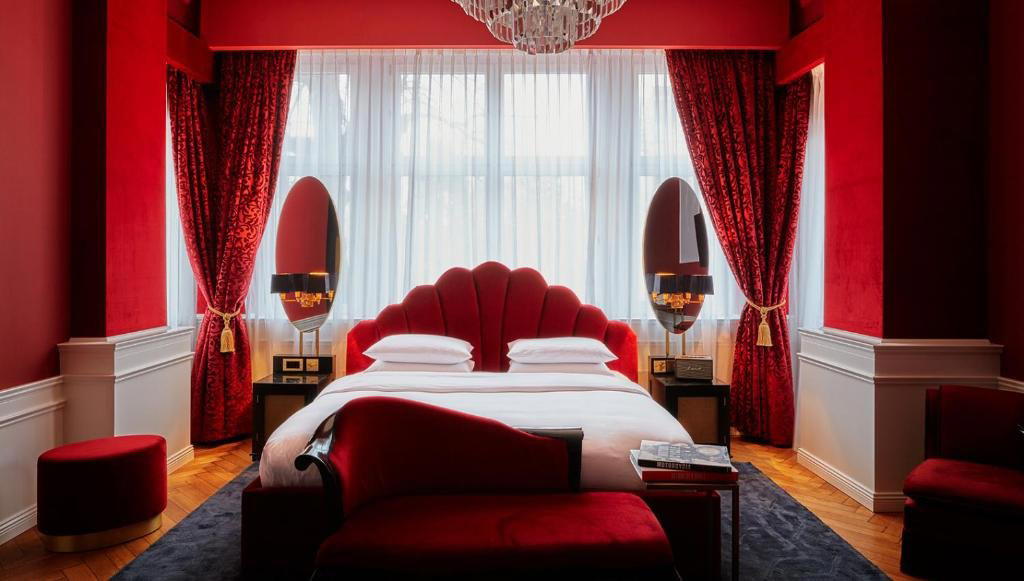
Provocateur occupies a deliberate position in Berlin's premium hospitality scene: part boutique hotel, part bar destination, dressed in a 1920s Parisian aesthetic filtered through the city's burlesque sensibility. Located on Brandenburgische Strasse in Wilmersdorf, it draws a crowd more interested in atmosphere than convention, with a bar program that has established its own following among Berlin's nightlife-aware hotel guests.

New York City, United States
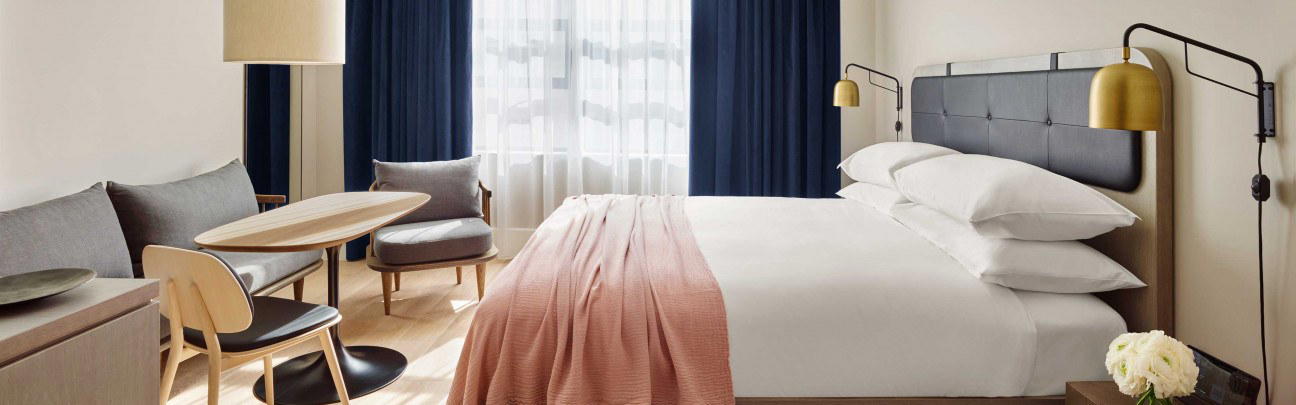
11 Howard occupies a former industrial building on Howard Street in SoHo, where Scandinavian design discipline meets a hyperlocal, socially conscious operating philosophy. The property sits at an intersection that few New York hotels have attempted: rigorous Nordic minimalism applied to one of Manhattan's most architecturally layered neighbourhoods. For travellers drawn to design-led stays over branded comfort, it belongs in the first shortlist.

Ixtapa-Zihuatanejo, Mexico
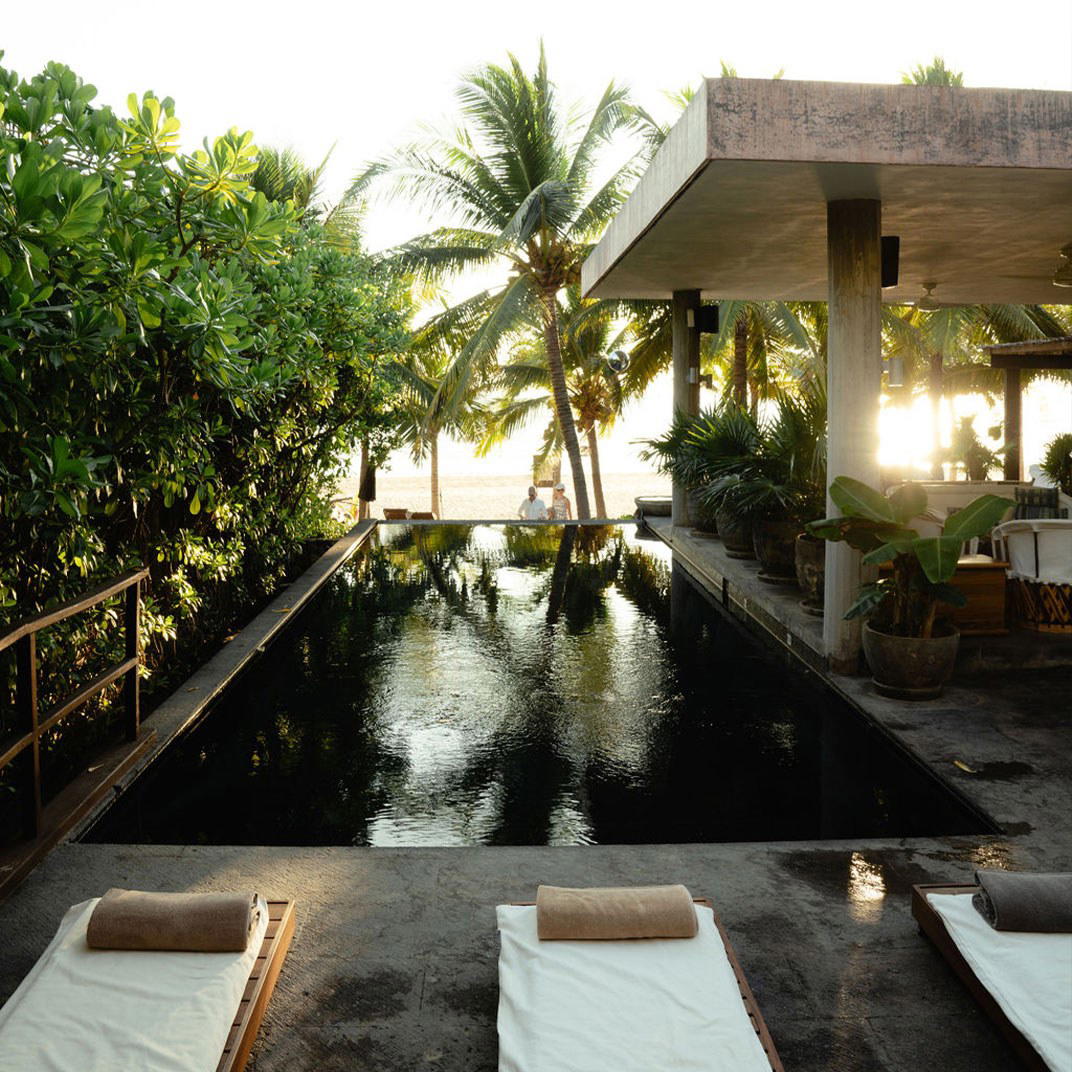
Lo Sereno Casa de Playa is a 10-room beachfront property on a three-mile stretch of unspoiled Pacific coast near Zihuatanejo, where the Sierra Madre foothills meet one of Mexico's most respected surf breaks. The scale is deliberately intimate, placing guests in direct contact with the natural setting rather than buffering them behind resort infrastructure. It occupies a distinct niche in Mexico's small-property coastal category.

Johannesburg, South Africa
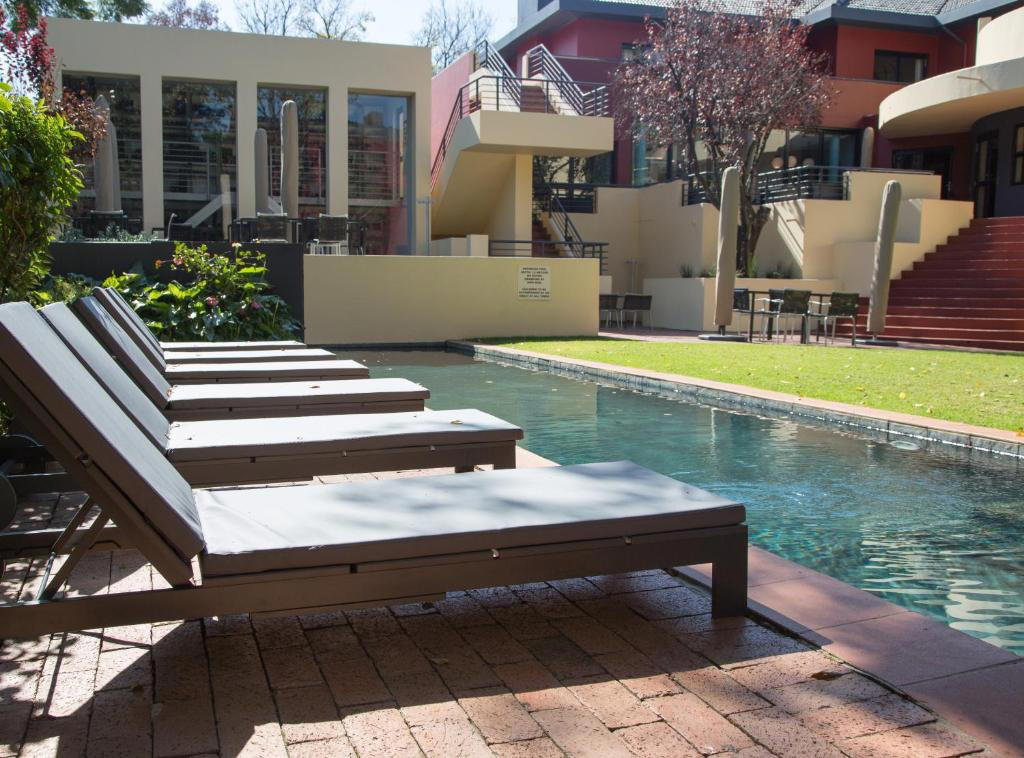
Ten Bompas sits on Bompas Road in Johannesburg's Dunkeld neighbourhood, offering 10 individually designed suites that span ethnic high-tech to Edwardian revival. The property occupies a niche between the city's large-footprint luxury hotels and its more anonymous guesthouses, positioning itself as a considered small-scale alternative for travellers who want character alongside proximity to Sandton and Rosebank.

San José del Cabo, Mexico
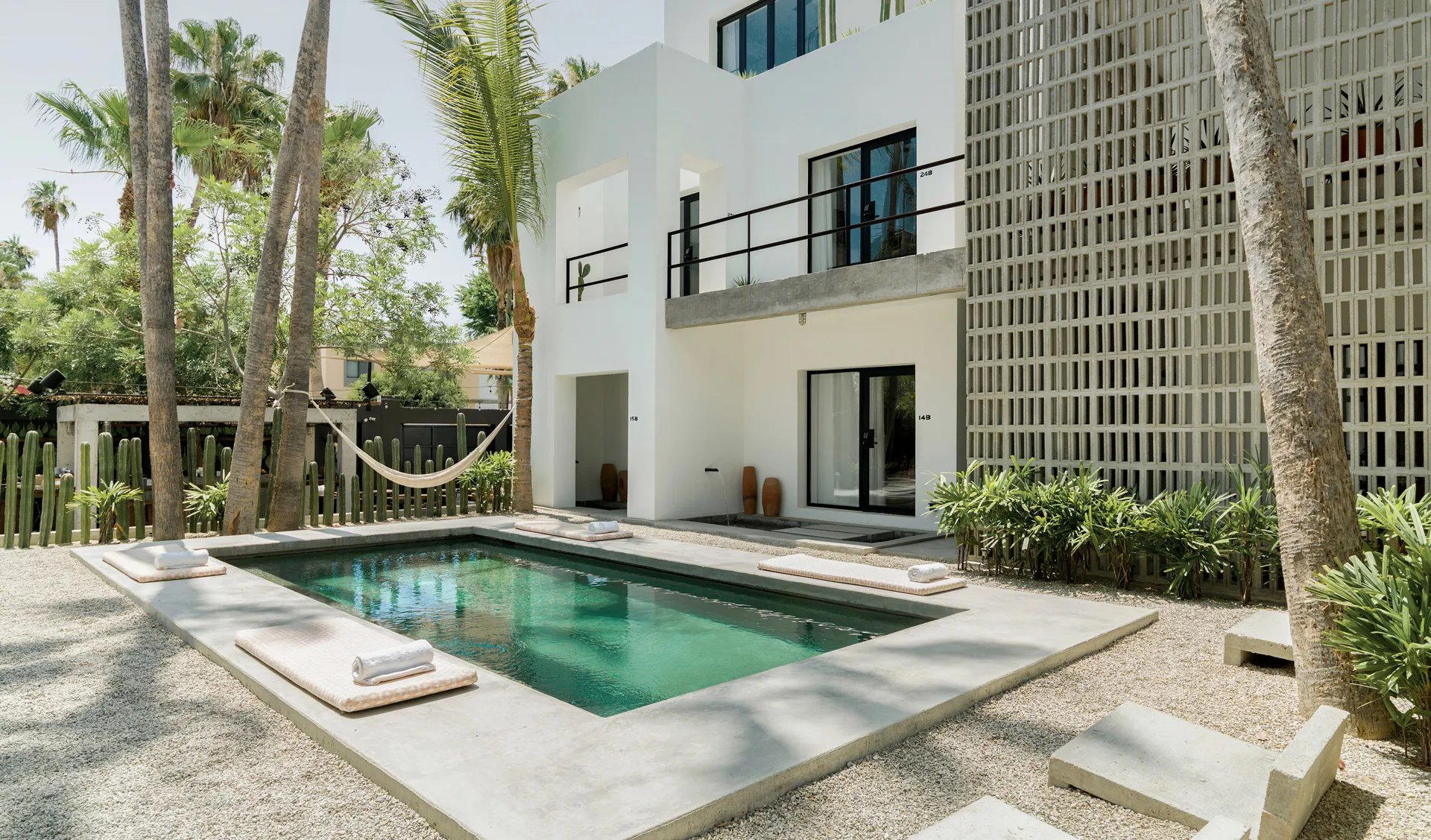
Drift San Jose del Cabo occupies a design-forward boutique position in the heart of San José del Cabo's art district, at Miguel Hidalgo 613 in Colonia Centro. Where most Baja properties orient guests toward the beach corridor, Drift points inward — toward the town's galleries, cobblestone streets, and colonial architecture. It sits in a small cohort of Mexican boutique properties that treat the surrounding neighbourhood as the primary amenity.

Paris, France
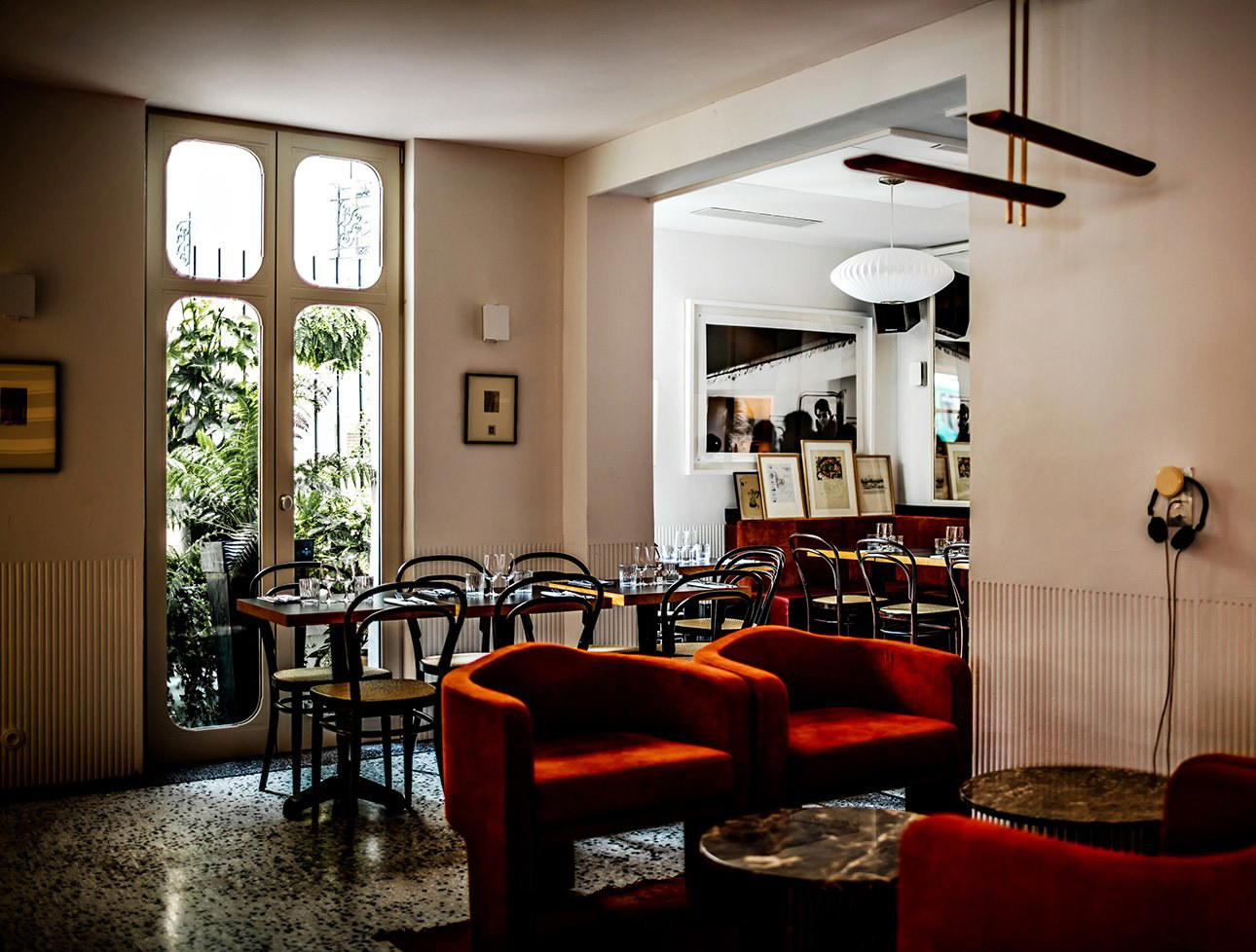
On rue Frochot in the 9th arrondissement, Le Pigalle draws directly from the creative and nocturnal energy that has defined this stretch of Paris for over a century. The property carries deep local roots in a neighbourhood where neon still competes with candlelight, and where the line between late-night bar culture and serious hospitality has always been productively blurred. It is a address that makes sense only if you understand Pigalle first.

Lana, Italy
Accessible only by a seven-minute cable car, Vigilius Mountain Resort sits at 1,500 metres above the South Tyrolean valley of Lana, offering 41 rooms in a design that layers bare timber, stone, and concrete with Modernist restraint. A 2024 Michelin 1 Key property rated 4.5 across 250 reviews, it combines Alpine isolation with two on-site restaurants serving the Northern Italian-Alpine cuisine of the border region. Priced from $423 per night.

London, United Kingdom
Ham Yard Hotel in Soho, London offers bold, designer-led rooms and suites framed around a tree-lined courtyard. Expect Kit Kemp interiors, a rooftop garden that supplies seasonal ingredients for the Ham Yard bar, and the vintage bowling alley imported from Texas. The property blends modern European dining, Orangery afternoon tea, and a 190-seat private theatre with attentive, personalized service. With 91 individually styled rooms, locally sourced menus, and art-filled public spaces, Ham Yard Hotel delivers a lively yet restful stay steps from West End theatres and Mayfair shopping.

Valle de Guadalupe, Mexico
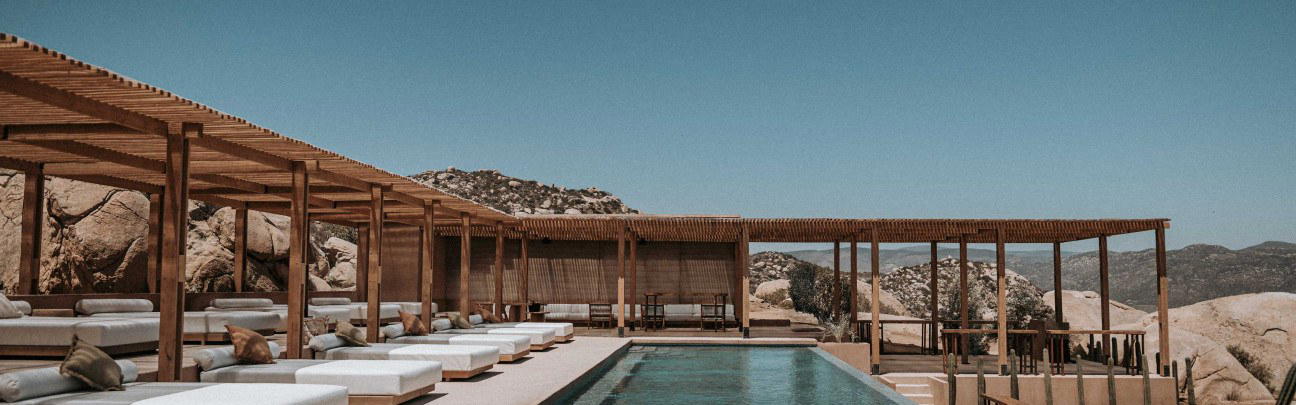
Positioned on a rugged hillside above the vineyards of Valle de Guadalupe, MIRA Earth Studios occupies a tier of design-led accommodation that prioritises raw landscape immersion over resort-scale amenity. The studios sit at the intersection of Baja wine country's maturing hospitality scene and a broader Latin American shift toward smaller, site-specific properties that treat terrain as architecture.

Ekas Bay, Indonesia
A seven-villa property on a secluded white-sand beach in Ekas Bay, Innit Lombok occupies one of the least-trafficked stretches of Lombok's southern coast. The design draws on Indonesian vernacular traditions, placing intimacy and material honesty above resort-scale spectacle. For those tracing Indonesia's smaller, architecture-led properties, it belongs in a distinct tier from the island's larger commercial operations.

Nicosia, Cyprus
A restored grand villa set against Nicosia's ancient Venetian walls, Amyth of Nicosia places guests inside the historic fabric of Cyprus's capital rather than beside it. The property sits at 29 Patriarchou Grigoriou, steps from the city's cultural and creative centres, making it a natural base for anyone approaching Nicosia seriously. For travellers who want architecture to do some of the storytelling, this is where to stay.

San Miguel de Allende, Mexico
A sleek Cubist counterpoint to San Miguel de Allende's colonial norm, Hotel Matilda occupies a 32-room property at Aldama 53 that doubles as a curated art space. A Diego Rivera portrait anchors the Library Lounge, while Moxi restaurant grounds its Latin American menu in locally sourced ingredients. Rates from $389 per night place it in the upper tier of boutique accommodation in the city center.

Stockholm, Sweden
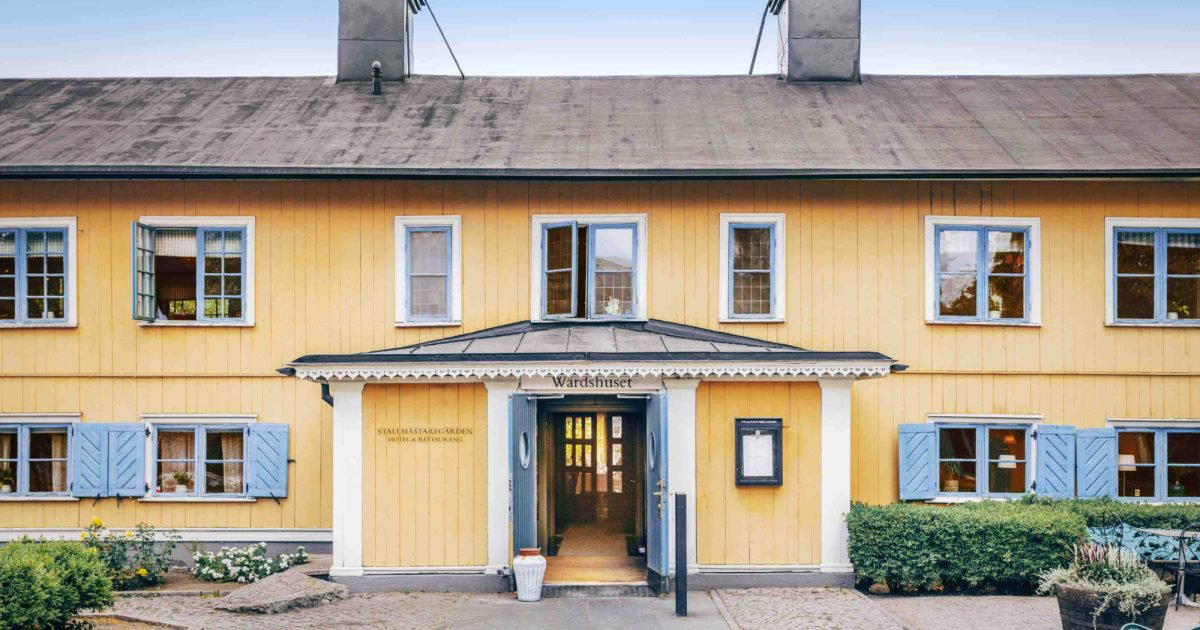
Stockholm's oldest inn, operating at Norrtull since the 17th century, Stallmästaregården positions itself in a small tier of Nordic dining rooms where architectural heritage and Swedish kitchen traditions share equal weight. Few addresses in the city pair water-edge setting with 1700s interior fabric still intact. For visitors comparing historically grounded restaurants against the city's newer fine-dining crop, it occupies a different bracket entirely.

Milan, Italy
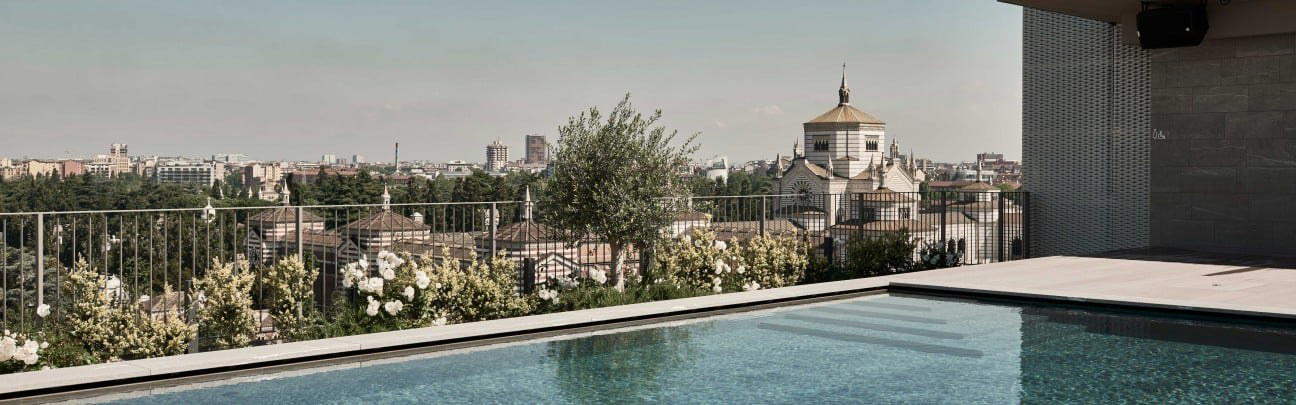
Hotel Viu Milan occupies a considered position in the city's design-conscious hotel tier, drawing Milan's creative and business communities to a property built around architectural intent, a rooftop terrace, and an award-winning culinary program. Located in the Porta Volta district, it represents the newer wave of Milan hotels that treat design as a structural commitment rather than an amenity layer.

Cala Sant Vicenç, Spain
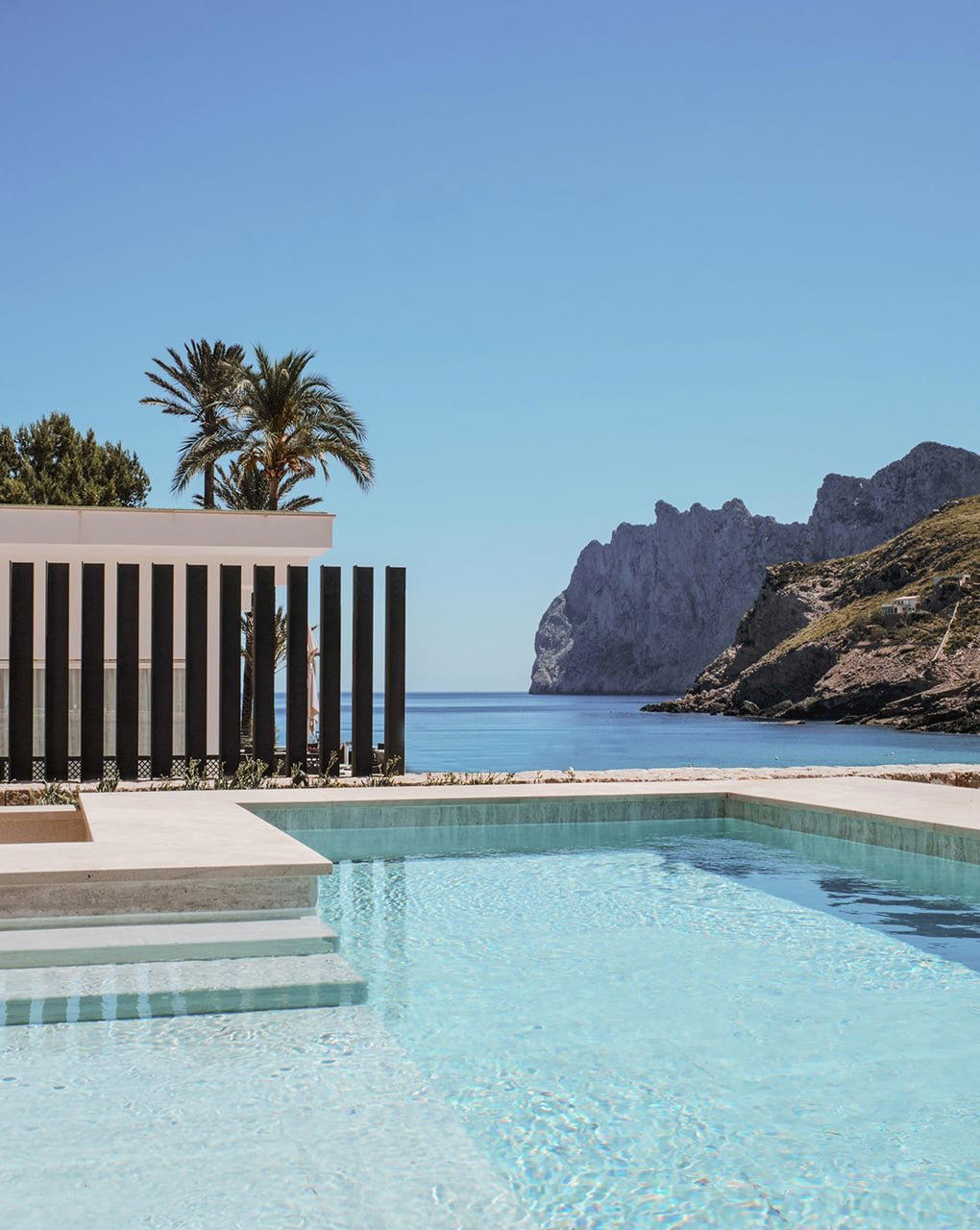
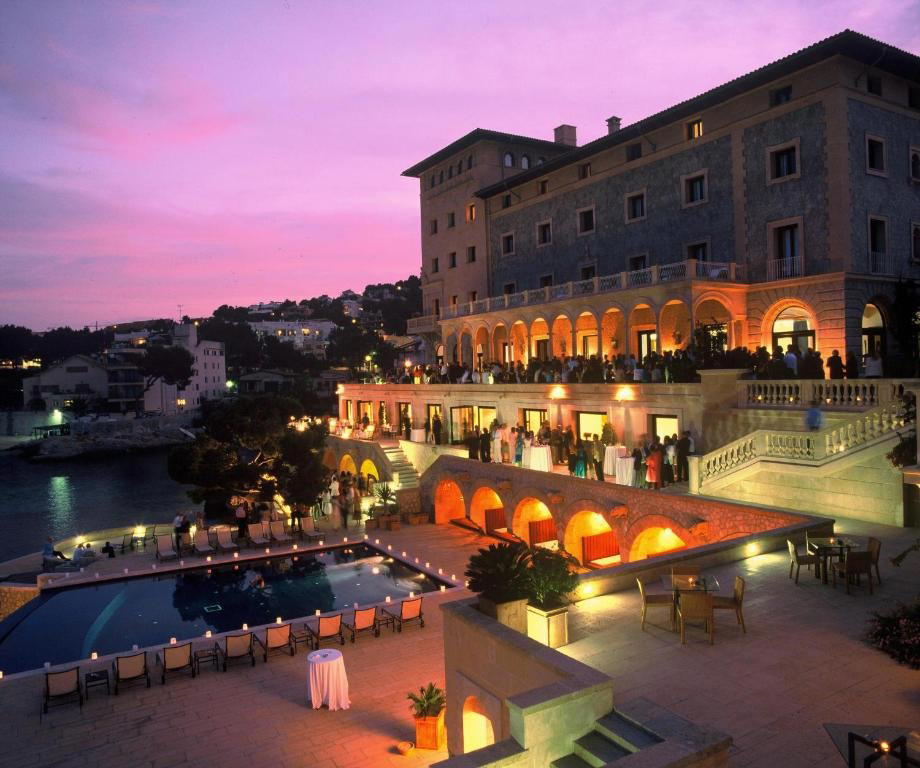
Positioned at the quieter northern tip of Mallorca in the protected cove of Cala Sant Vicenç, Hotel El Vicenç de la Mar is an adults-only property that earned 93 points from La Liste Top Hotels 2026. The setting favours understated design over resort spectacle, placing it among a small cohort of Balearic properties where scale is deliberately limited and the surrounding limestone geography does most of the work.

Singapore, Singapore
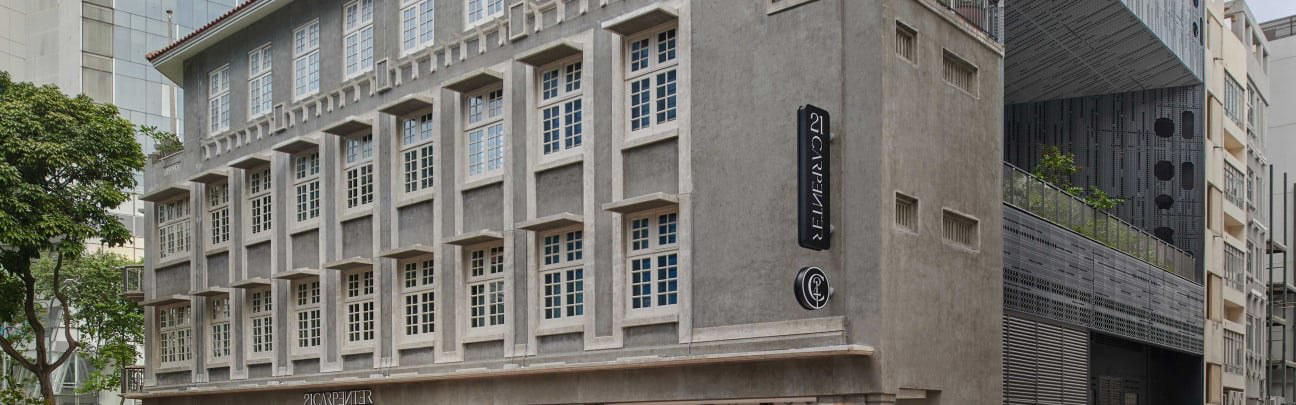
A shophouse conversion at the edge of Chinatown and Clarke Quay, 21 Carpenter occupies an early 20th-century building where the district's mercantile past and Singapore's contemporary hospitality meet. The address sits on Carpenter Street, a corridor that once served the river trade, and its preserved facade signals a category of Singapore accommodation that treats colonial-era architecture as a design asset rather than a backdrop. Visitors staying here are placing themselves inside one of the city's most layered historic neighbourhoods.

Monforte, Portugal
Built atop a fourteenth-century villa in Portugal's upper Alentejo, Torre de Palma Wine Hotel occupies a whitewashed hilltop estate where working vineyards, a riding stable, and 19 rooms of old-world refinement sit alongside a candlelit restaurant serving updated Alentejo cuisine. Rates from $280 per night make it one of the more accessible wine-country estates in the region.

Batumi, Georgia
Rooms Batumi occupies a converted building on Gogebashvili Street in Batumi's historic Old Town, pairing the neighbourhood's layered architectural character with a contemporary design approach. The inner courtyard functions as a retreat from the city's busier arteries, making the address itself the primary asset. Among Batumi's accommodation options, it occupies a distinct tier that favours atmosphere and location over scale.

Tbilisi, Georgia
Housed in a converted Soviet-era publishing house on Merab Kostava Street, Rooms Hotel Tbilisi occupies a distinctive place among the city's design-led boutique properties. Its 140 rooms layer warm textiles and vintage pieces over an industrial bones, while the Kitchen restaurant and Bar Room draw a local crowd alongside visiting guests. At around $100 per night, it sits at the accessible end of Tbilisi's emerging premium hotel tier.

Mykonos, Greece
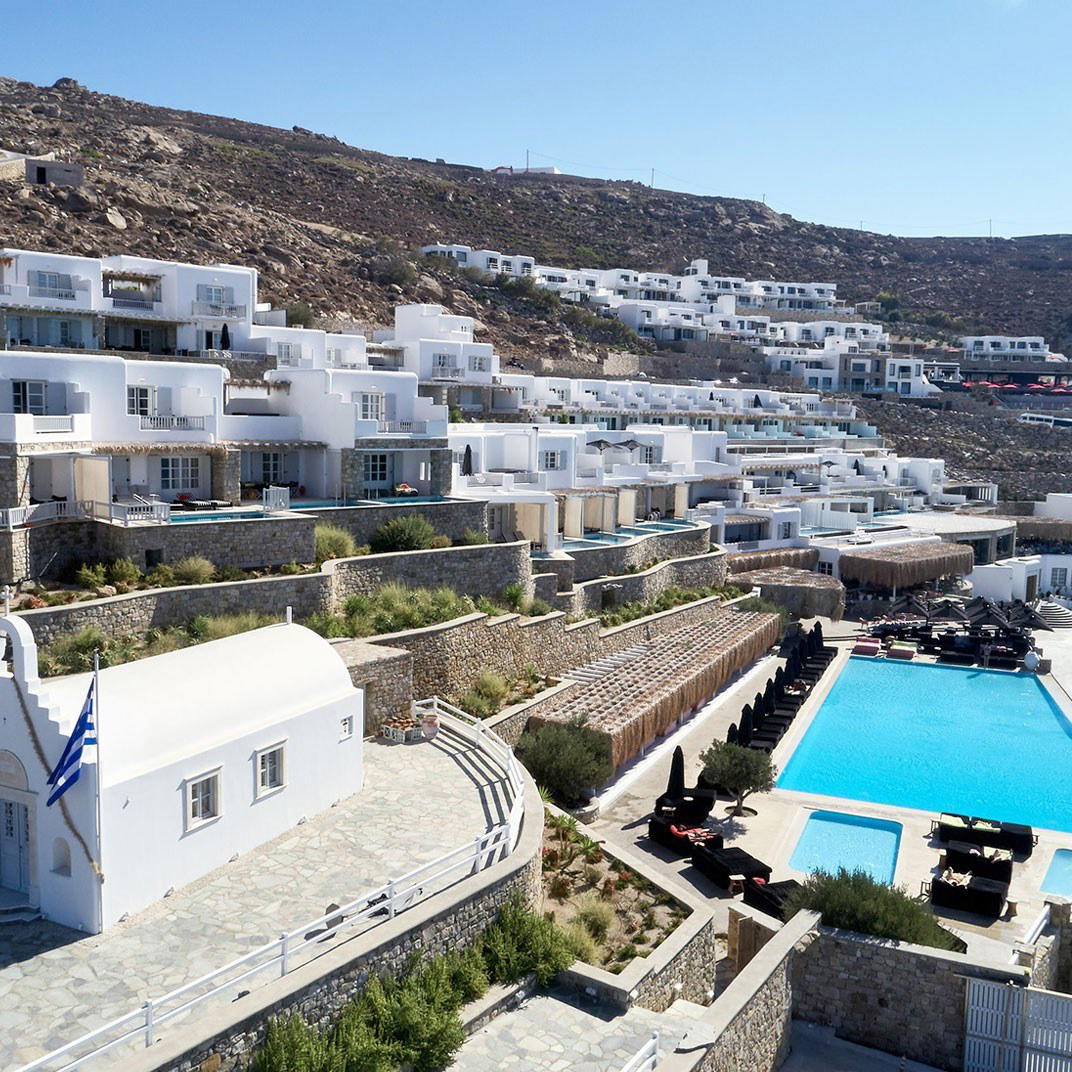
Perched above Elia Beach, Myconian Villa Collection operates at the quieter, more private end of Mykonos luxury. The 96-room boutique property pairs traditional whitewashed architecture with contemporary interiors, a thalassotherapy spa, a dedicated outpost of Geneva's Artion Gallery, and a fine-dining restaurant serving modern Mediterranean menus built around local Mykonian producers.

Mexico City, Mexico
Habita occupies five floors of floating glass on Avenida Presidente Masaryk, Polanco's most scrutinised stretch of real estate, where the property positions itself through Mexican art, rare designer furniture, and a Modernist aesthetic that reads as curatorial rather than decorative. The hotel sits within Polanco's design-forward accommodation tier, where visual identity and cultural programming carry as much weight as room count or brand affiliation.

Paris, France
Le Roch Hotel & Spa occupies a quiet address on rue Saint-Roch in Paris's 1st arrondissement, where pastel tones and soft lighting give the interiors a deliberately residential character. Compared to the grand-palace hotels along rue de Rivoli, Le Roch operates at a more intimate scale, positioning it within Paris's design-led boutique tier rather than its historic palace category.

London, United Kingdom
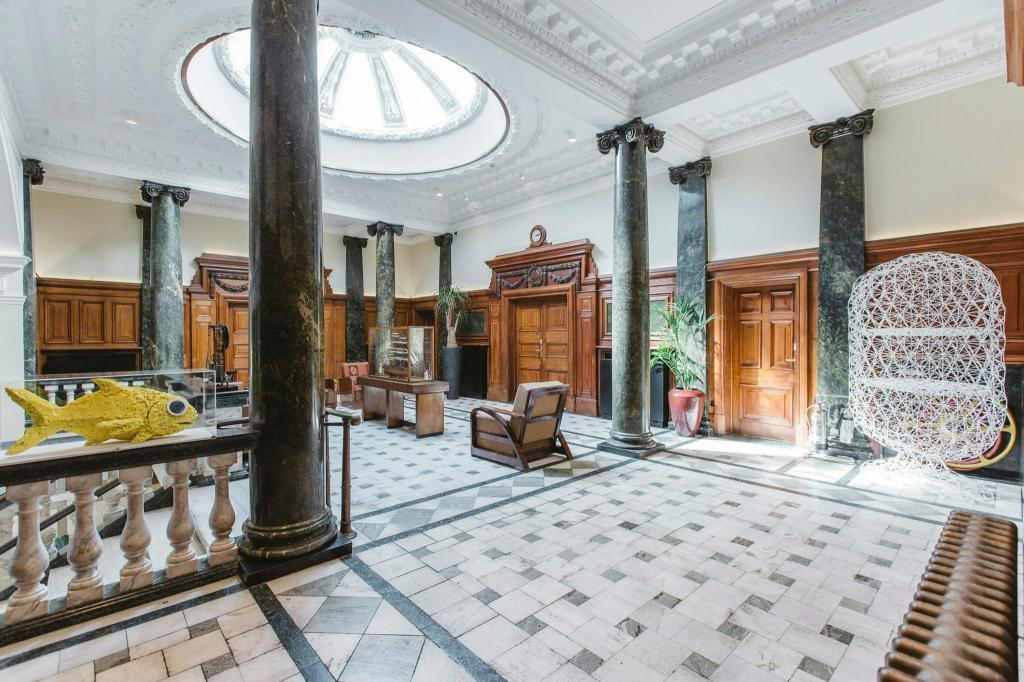
A converted Edwardian town hall in Bethnal Green, Town Hall Hotel occupies one of East London's most architecturally distinctive addresses. The building's civic bones — ornate council chambers, mosaic floors, original ironwork — sit alongside contemporary interiors in a neighbourhood that has shifted from working-class borough to one of London's most discussed postcodes. It positions itself firmly outside the West End luxury corridor.

Zurich, Switzerland
Positioned in Zürich's emerging Wollishofen district, The Home Hotel draws on the provocative spirit of the Dada movement to shape a stay that feels more like a cultural proposition than a standard hotel stay. The address at Kalandergasse 1 places guests in one of the city's most interesting residential-commercial neighbourhoods, away from the lake-front grand hotel corridor.

Baltimore, United States
Guesthouse by Good Neighbor occupies a restored address on Falls Road in Baltimore's Hampden neighbourhood, where local artisans shaped every material decision. The result is a property that sits firmly in the city's craft-led, design-forward accommodation tier — grounded in place, built for travellers who want a base with neighbourhood texture rather than chain neutrality.

Kurashiki, Japan
In the canal district of Kurashiki, Yoruya occupies a preserved Edo-period machiya townhouse where exposed timber beams, tatami flooring, and sliding shoji screens define the physical experience as much as anything served. The architecture is not decorative nostalgia — it is the product, placing this address inside a category of heritage spaces that Japan's best-preserved historic districts have produced.

Panicale, Italy
A fully restored 14th-century palazzo on the Umbria-Tuscany border, Rastrello occupies one of central Italy's most historically layered settings. The property sits within Panicale, a medieval hilltop village above Lake Trasimeno, positioning it among a small tier of Italian rural properties where architectural heritage and agricultural surroundings define the guest experience rather than resort amenities.

Guadalajara, Mexico
Casa Habita occupies a restored Art Deco tower in Guadalajara's Col. Americana district, translating early 20th-century architectural grandeur into a 37-room boutique property that sits at the smaller, design-led end of the city's premium hotel market. For travellers who prefer architectural coherence over resort scale, it represents one of the more considered addresses in western Mexico.

Santorini, Greece
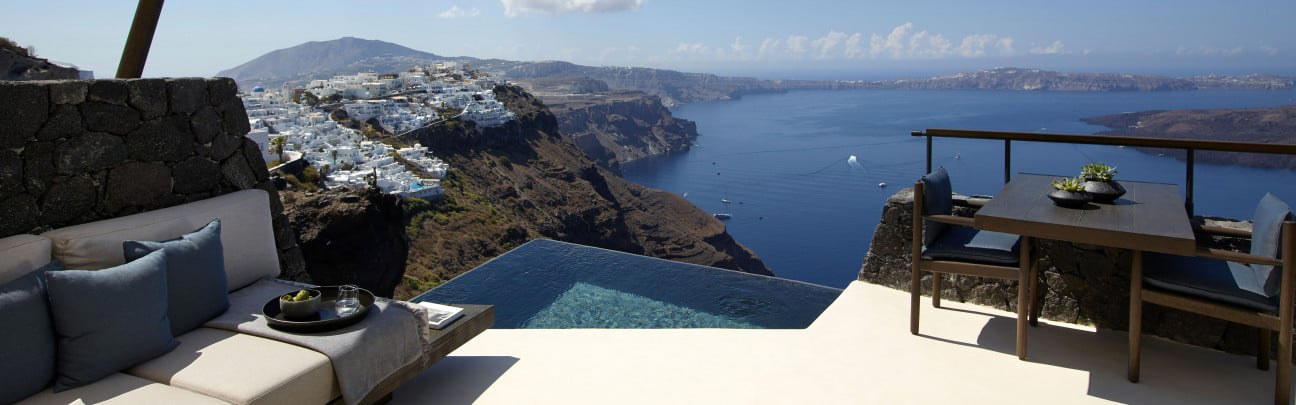
Carved into the caldera cliffs of Imerovigli, Vora occupies one of Santorini's most dramatic perches, where volcanic rock meets polished privacy. The property sits in the upper tier of cliff-edge accommodation on the island, positioned for guests who prioritise seclusion and unobstructed caldera views over proximity to Oia's busier terraces. For Santorini at its most concentrated, this is a serious contender.

George Town Penang, Malaysia
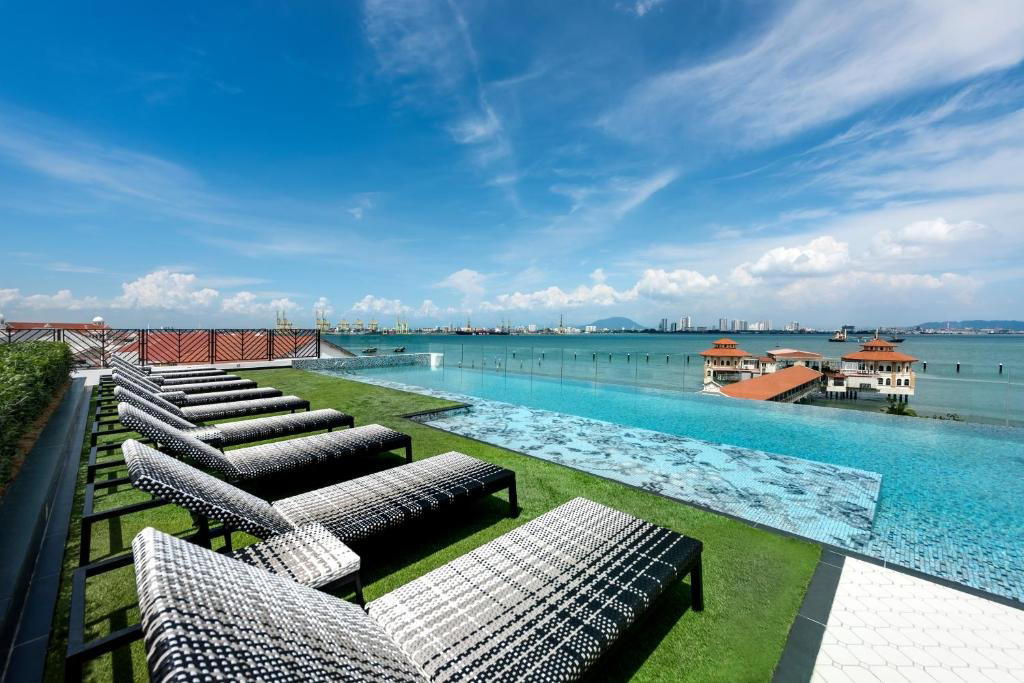
A dual award-winner for Luxury Design Hotel and Luxury Concept Hotel, The Prestige occupies a George Town heritage address at 8 Gat Lebuh Gereja, translating Victorian architectural grammar into a contemporary hospitality format. The property sits within Penang's UNESCO-listed inner city, positioning it among the tighter, design-focused tier of Penang accommodation rather than the large-resort category.

Lana, Italy
A 500-year-old structure in Lana's historic centre, 1477 Reichhalter represents the kind of adaptive hospitality that South Tyrol does particularly well: deep architectural heritage held in careful tension with a contemporary sensibility. The building's age is not incidental — it frames every room, every decision, every detail of how guests experience this corner of the Alto Adige.

San Francisco, United States
Set inside a 1904 flatiron building on McAllister Street, San Francisco Proper Hotel anchors the Proper brand's flagship with Kelly Wearstler's layered interior design and a civic-centre address that puts guests within walking distance of the city's main cultural institutions. The property sits in an increasingly considered tier of design-led independents that trade scale for atmosphere and guest-facing specificity.

Zermatt, Switzerland
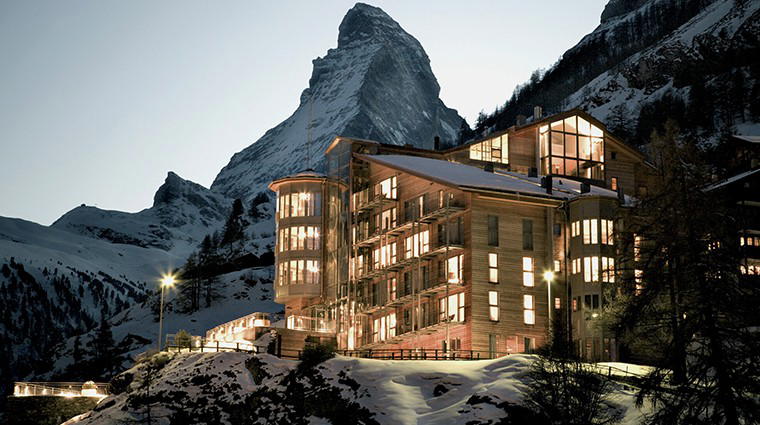
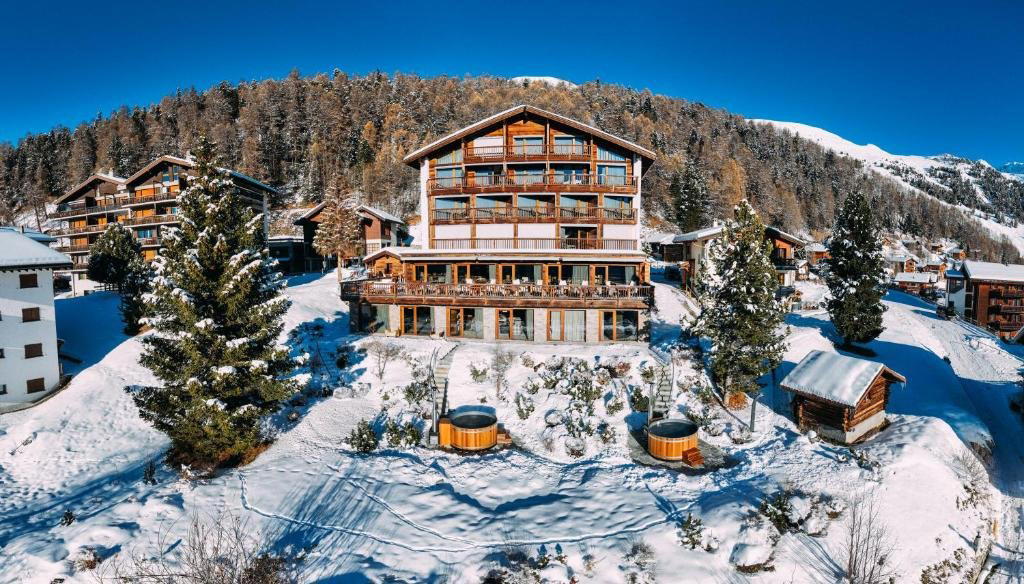
Reached by a tunnel cut through rock and a glass elevator that surfaces above Zermatt's rooftops, THE OMNIA Mountain Lodge operates at the architectural edge of Alpine design. The 30-room property earned 95 points on the 2026 La Liste Top Hotels ranking and places itself in the design-led, low-key luxury tier that defines the sharper end of Swiss mountain hospitality. A 60-seat restaurant, indoor-outdoor pool, and Matterhorn-facing suites complete the offer.

Lisbon, Portugal
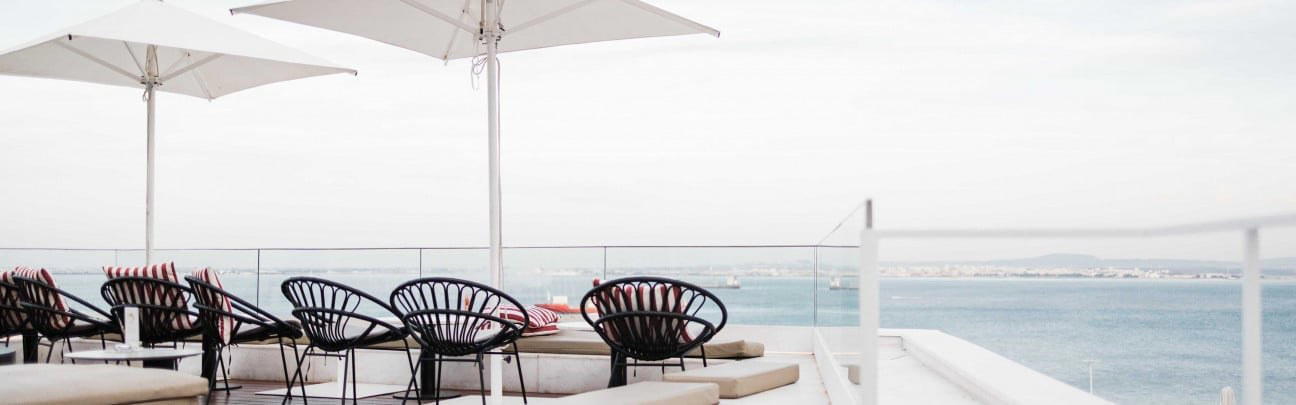
Set in a nineteenth-century building on a cobblestoned Alfama lane, Memmo Alfama positions itself in the smaller, design-conscious tier of Lisbon lodging, where address does the work that square footage cannot. Sweeping views over the rooftops to the Tagus River define the experience from check-in onward, placing it well apart from the large international-branded properties clustered along Avenida da Liberdade.

Palmar, Mauritius
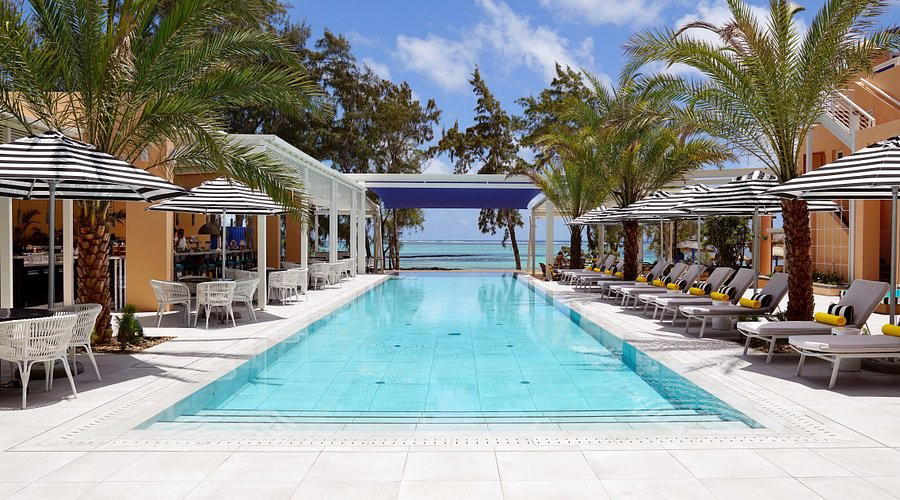
SALT of Palmar + Mauritius transforms sustainable luxury through Camille Walala's bold design and conscious hospitality on a peninsula between two pristine bays. This adults-only Design Hotels member features 59 vibrant suites, three distinctive bars including Mauritius's first rooftop venue, and farm-to-table dining that celebrates the island's multicultural heritage.

Playa del Ingles, Spain
Bohemia Suites & Spa sits apart from Playa del Ingles' resort strip, an oceanfront property that draws on Gran Canaria's raw volcanic palette through native materials, deep earth tones, and spa facilities calibrated for genuine withdrawal rather than pool-deck performance. For travellers who find the island's mass-market hotel corridor a poor match for their expectations, this is a more considered alternative.

Canggu, Indonesia
Magia De Uma occupies a family estate on Jl. Umalas Tunon, where private park grounds and traditional Balinese architecture frame a retreat built around Indonesian heritage and healing. The property sits close enough to Canggu's activity to feel connected, yet operates at a register that most of the neighbourhood's villa stock does not attempt. For travellers seeking something grounded in local culture rather than international resort polish, it belongs in the shortlist.

Tinos, Greece
A three-villa retreat in the hills above Agios Fokas, Pnoēs Tinos was designed by one of Greece's most celebrated architects and set against the raw terrain of an island better known for its marble-carving tradition than its luxury accommodation. Private pools, organic gardens, and immediate proximity to some of Tinos's quieter beaches place it in the specialist tier of Cycladic stays.

San Rafael, Mexico
Maison Couturier occupies a rare position in Mexico's tropical hospitality scene: a property in San Rafael, Veracruz, where French architectural sensibility meets the lush coastal terrain of the Gulf. The combination of Mexican tradition and French design restraint produces a house that reads less like a resort and more like a considered private residence transported to the tropics.

Munich, Germany
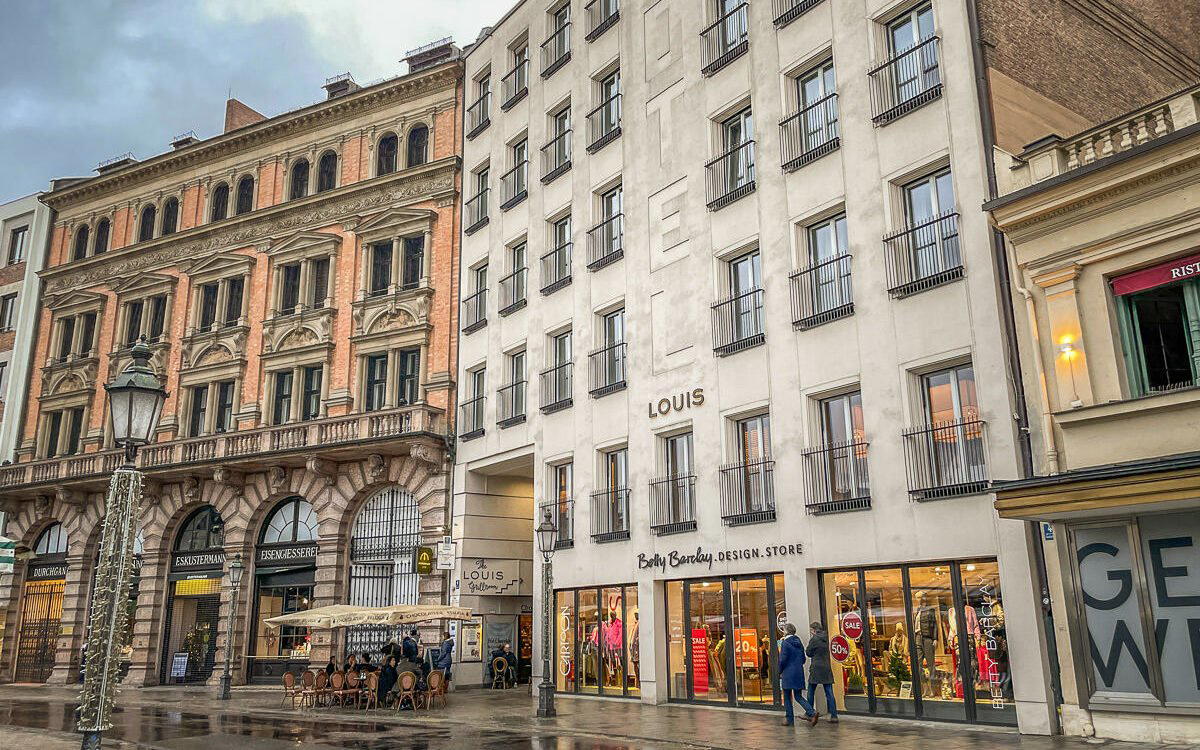
At the edge of Viktualienmarkt, LOUIS Hotel occupies one of Munich's most charged addresses, where the old city's market rhythms and the Altstadt's architectural grain converge. The property reads as a design-led urban hotel rather than a grand-hotel institution, and its position in the square gives it a civic intimacy that larger Munich properties, by virtue of scale alone, cannot replicate.

Paris, France
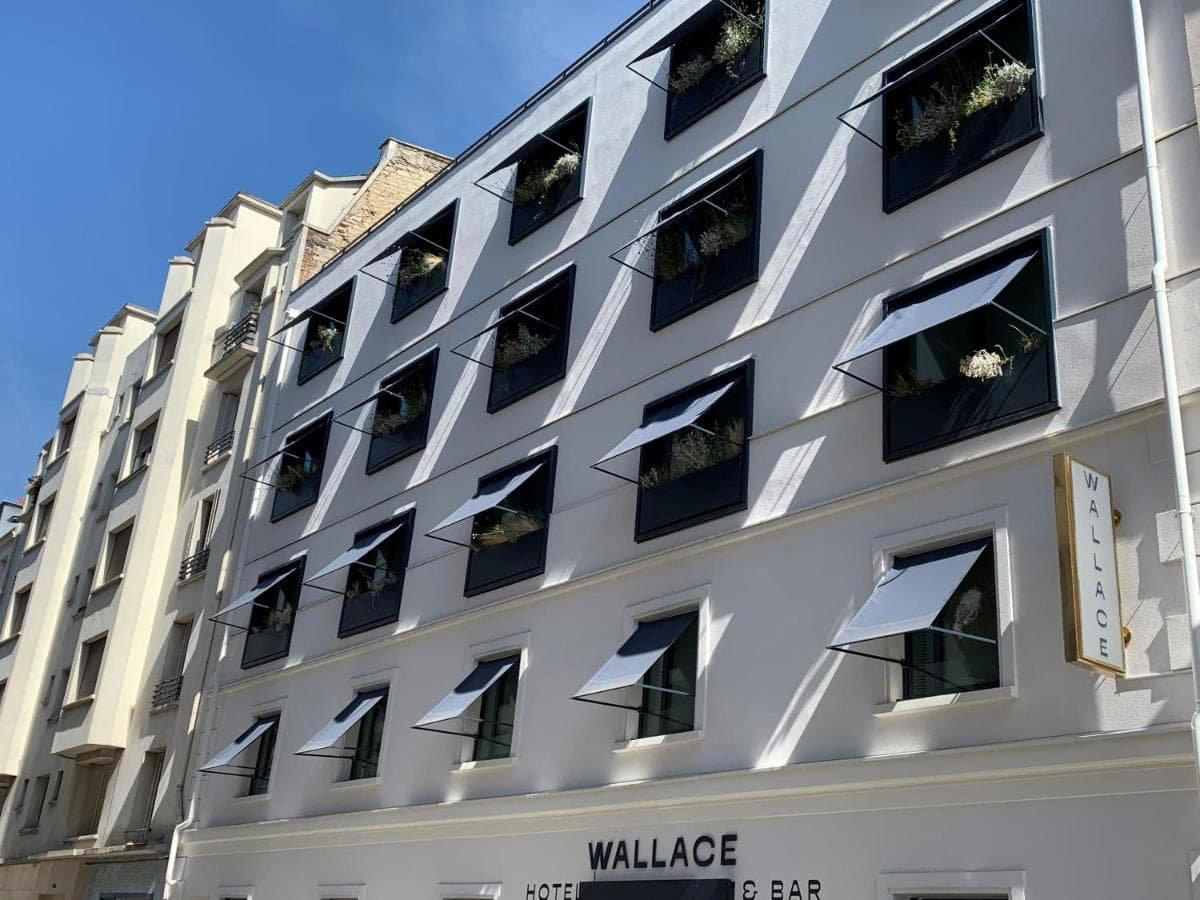
Hôtel Wallace sits on Rue Fondary in the residential 15th arrondissement, carrying a 1970s Italian Riviera aesthetic that feels deliberate rather than nostalgic. Where Paris hotels often compete on grandeur or heritage pedigree, Wallace positions itself through ease, warmth, and a quieter kind of centrality. It is a hotel for travellers who want the city without the performance.

Paris, France
A boutique hotel in Paris's 8th arrondissement, La Maison Champs Élysées occupies a Haussmann-era building on Rue Jean Goujon, deep in the Golden Triangle. Where many of the neighbourhood's grand addresses lean into conventional luxury codes, this property trades in theatrical interior design: dramatic illusions, ironic surface treatments, and a room experience calibrated to surprise rather than reassure.

Halkidiki, Greece
Ekies All Senses Resort sits on the Vourvourou peninsula of Halkidiki's Sithonia finger, where organic architecture and eco-conscious design work with the surrounding pine-fringed coast rather than against it. Greek tradition and contemporary sensibility run through the property in equal measure, making it a reference point for design-led stays in a region that increasingly splits between large resort compounds and smaller, character-driven alternatives.

Trakai, Lithuania
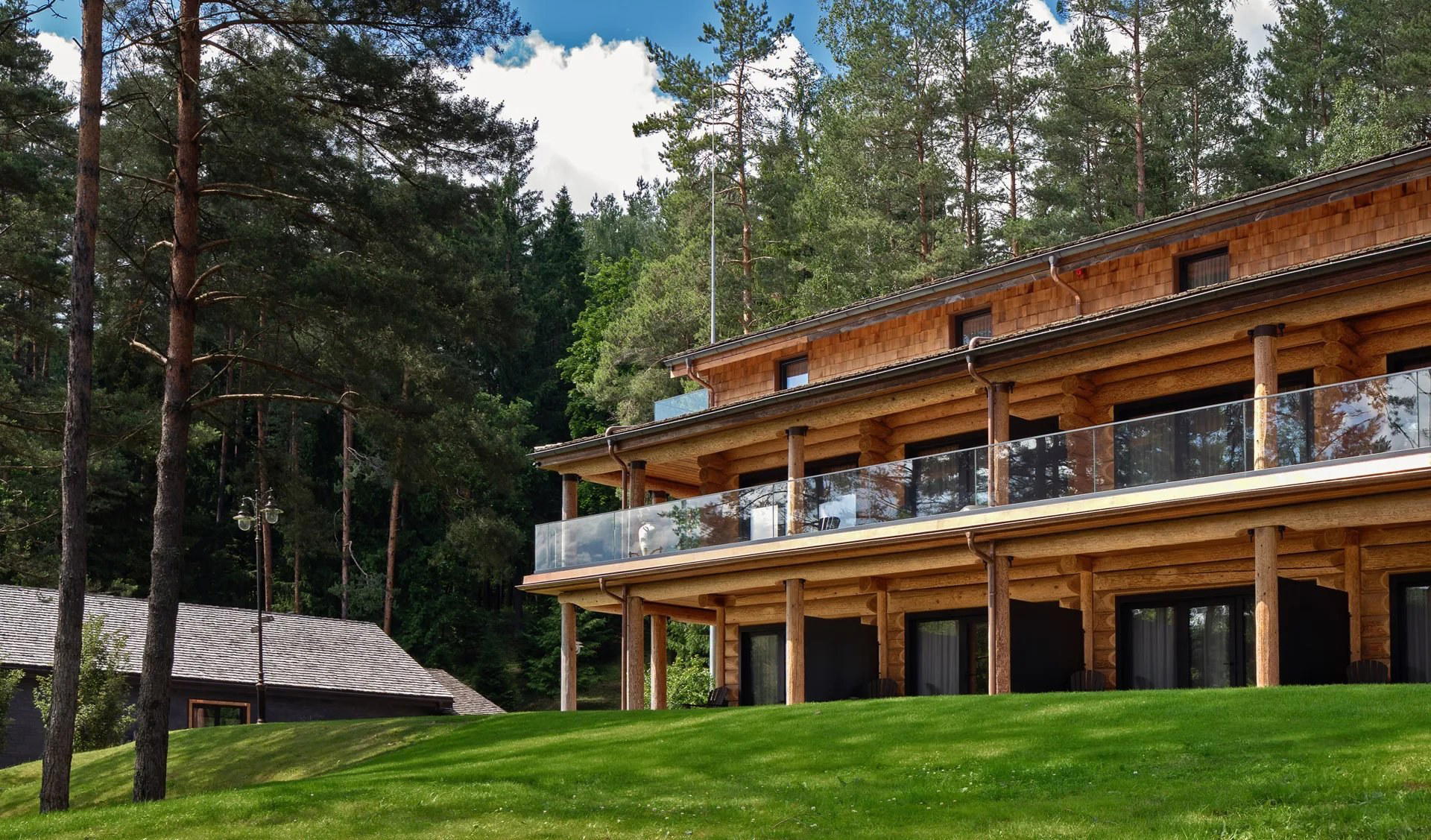
Esperanza Lake Resort sits on eleven private hectares within Aukštadvaris Regional Park, forty kilometres from Vilnius. The main lodge, constructed from centuries-old cedar, holds thirty rooms oriented toward Ungurys Lake or the surrounding forest. At around $206 per night, it occupies the quieter end of Lithuania's premium nature-retreat tier, where the programme runs on long walks and still water rather than structured activity.

Mexico City, Mexico
Occupying a colonial-era building on Isabel la Católica in Mexico City's Historic Centre, Downtown Mexico places guests inside a UNESCO World Heritage Site without sacrificing the stripped-back, bohemian-chic atmosphere that distinguishes it from the polished international chains of Polanco. Industrial detail sits against centuries-old architecture, creating a particular tension that defines the Historic Centre's current generation of design-led stays.

León, Mexico
Elena de Cobre occupies a singular position in León's architectural conversation, drawing recognition for the way it fuses Brutalist mass with colonial Mexican form. Located in the Centro district at Calle Rosas Moreno 201, the property represents a strand of Mexican design thinking that prioritises structural honesty over decorative comfort. For travellers approaching León as more than a shoe-trade stopover, it is a compelling reason to look harder at the city.

Crans-Montana, Switzerland
Chetzeron sits at altitude above Crans-Montana, combining ski-in, ski-out access with a design-forward approach to mountain hospitality. The surrounding terrain — powdered slopes descending into silence — defines the experience as much as the architecture. For those seeking the Swiss Alps at their most unmediated, this is where the mountain genuinely delivers.

Istanbul, Turkey
Casa Foscolo Hotel occupies a heritage structure in one of Istanbul's oldest central districts, where the building's layered history shapes the experience as much as the service. Art, local culture, and architectural memory coexist across the property, placing it in the city's smaller cohort of design-led, character-forward stays rather than the large international-chain tier.

Palma, Spain
Positioned on the coastal road between Palma and Andratx, Hospes Maricel sits in Cas Català-Illetes, where the Balearic Sea sets the dominant atmosphere. The property holds a 91-point score from La Liste Top Hotels 2026, placing it within Spain's upper tier of recognised luxury accommodation. For travellers prioritising a waterfront setting over urban proximity, it represents a considered alternative to Palma's old-town hotel cluster.

Saint-Rémy-de-Provence, France
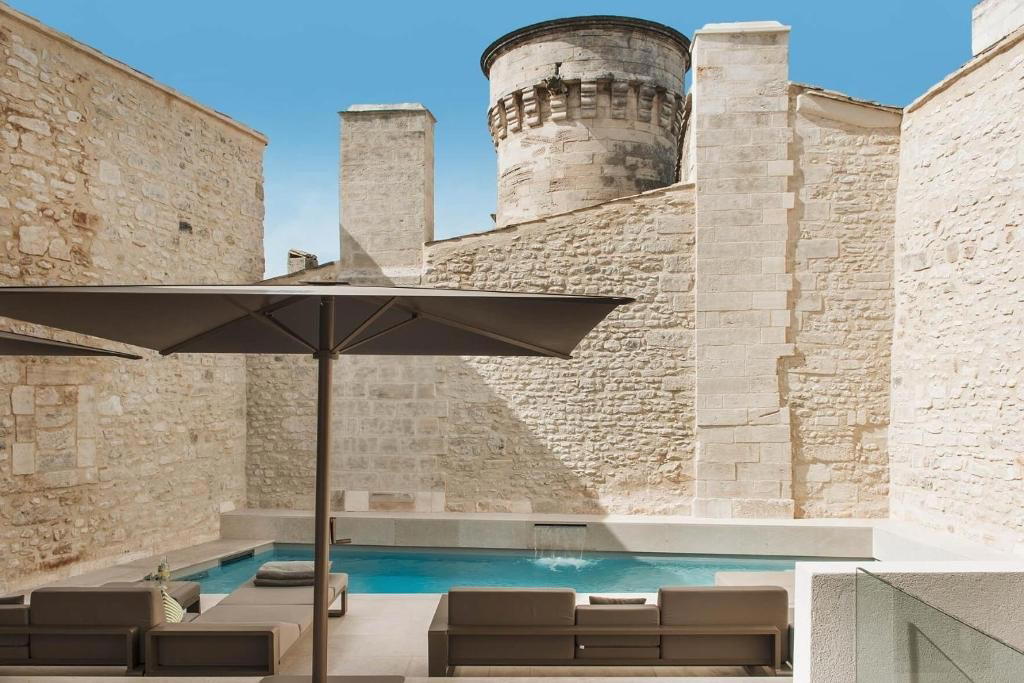
A 17th-century mansion in the heart of Saint-Rémy-de-Provence, Hôtel de Tourrel holds a Michelin 1 Key and just nine suites carved from what were once 24 rooms. The architect-owner stripped back centuries of paint to reveal original stucco walls, then furnished the result with mid-century pieces and underfloor heating. Open seasonally from mid-March through late October, it sits at the quieter end of Provence's boutique hotel spectrum.

Shanghai, China
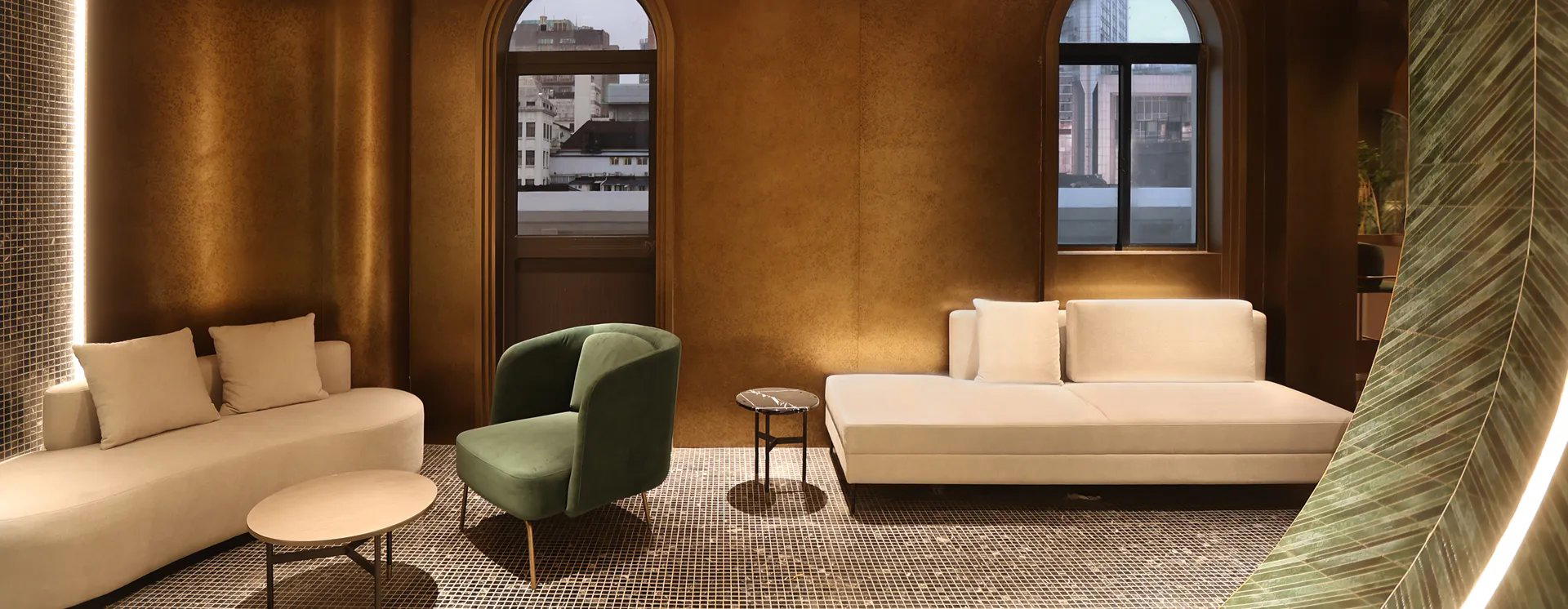
A century-old structure on Guizhou Road, Habo Hotel Shanghai carries forward the architectural memory of the city's golden age. Positioned in the heart of old Shanghai, the property connects guests directly to the cultural and artistic currents that shaped the city. For travellers seeking a hotel rooted in historical fabric rather than modern-build luxury, it represents a distinct point on Shanghai's accommodation spectrum.

Bolzano, Italy
A newly transformed midcentury property on Via Piave 15 in central Bolzano, Parkhotel Mondschein brings a park-like setting and a yoga studio to a city that sits at the intersection of Italian and Alpine traditions. The renovation leans into the building's original architectural character rather than erasing it, placing this Old World structure in a niche that distinguishes it from the region's more conventional hotel offerings.

Chandolin, Switzerland
Chandolin Boutique Hotel sits at one of the highest permanently inhabited villages in Europe, where the Anniviers valley's traditional chalet architecture sets the tone for an interior built from local wood and stone. The property typifies a category of small Swiss alpine hotels that trade resort-scale amenities for material authenticity and altitude. Visitors come for the quiet, the views, and the craftsmanship embedded in the building itself.

Castelrotto, Italy
Schgaguler Hotel sits in Castelrotto at the foot of the Dolomites, where the architecture and design program is shaped by the mountain terrain as much as any interior brief. The property positions itself in the design-led, art-forward tier of South Tyrolean hospitality, where creative intent and natural surroundings are the primary draws for travellers making a considered detour from the Bolzano valley floor.

Bangkok, Thailand
Positioned on Soi Sukhumvit 31 in Bangkok's Watthana district, Public House Bangkok reframes the British gentlemen's club as a contemporary, inclusive social venue. The address places guests within easy reach of Sukhumvit's dining and nightlife corridor, making it a practical and characterful base for exploring the city's broader hospitality scene.

Jenner, United States
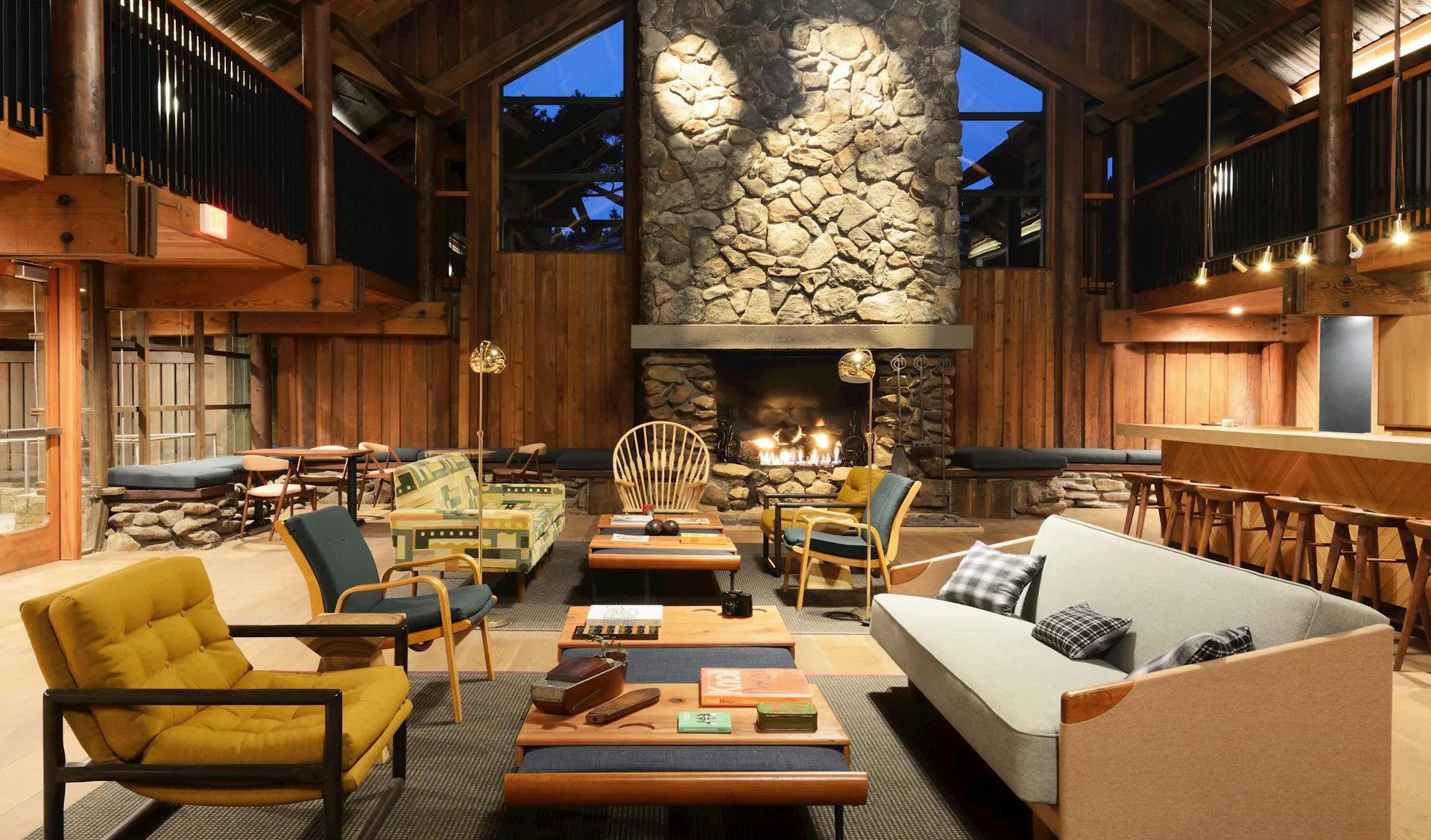
A 1960s coastal property on California's Sonoma Coast, Timber Cove Resort sits above the Pacific on Highway 1 north of Jenner, combining mid-century architectural bones with a rugged oceanfront setting that few Northern California properties can match. The resort's reimagined interiors and dramatic clifftop position place it in a distinct tier among design-led California escapes.

Amsterdam, Netherlands
Occupying a converted 19th-century diamond factory on Albert Cuypstraat, Sir Albert Hotel sits at the heart of De Pijp, Amsterdam's most architecturally layered neighbourhood. The industrial bones of the original building have been recast into a setting that reflects the creative character of the surrounding streets, where the Albert Cuyp market runs six days a week just outside the door.

Lake Como, Italy
Filario Hotel & Residences sits on the quieter western shore of Lake Como in Lezzeno, offering a contemporary design sensibility that reads against the grain of the lake's predominantly historic hotel stock. The property brings a modernist aesthetic to one of Italy's most tradition-bound destinations, making it a considered choice for travellers who want the Como setting without the grand-villa format.

Saarlouis, Germany
A remodeled Franco-German villa on the edge of Saarlouis, LA MAISON holds a 2024 Michelin 2 Keys distinction and 55 rooms split between a warmly furnished historic house and a bold minimalist annex. At around $233 per night, it occupies the design-led boutique tier of German hospitality, where architecture and art do the heavy lifting that a larger property might leave to amenities.

Warsaw, Poland
A neoclassical address on Poznańska Street, H15 Boutique Hotel occupies one of Warsaw's architecturally significant buildings — a former seat of influence now operating as a boutique property at the centre of the city. The building's layered history gives it a different kind of presence than Warsaw's newer luxury entrants, making it a considered choice for travellers who treat the physical fabric of a place as part of the stay.

Berlin, Germany
KPM Hotel & Residences occupies a quiet stretch of Charlottenburg, where the interiors are shaped by the legacy of the Königliche Porzellan-Manufaktur — the Royal Porcelain Manufactory that has operated in Berlin since 1763. The result is a hotel where design functions as historical argument, placing it in a distinct tier among Berlin's luxury properties.

Puebla, Mexico
A late 19th-century water purification factory in Puebla's UNESCO-listed historic centre, La Purificadora converts industrial heritage into one of Mexico's more architecturally serious hotel addresses. The property sits on the colonial road connecting Mexico City and Veracruz, where centuries of trade and migration have made Puebla one of the country's most layered cultural and culinary cities.

Laigueglia Liguria, Italy
Hotel Windsor occupies a direct seafront position in Laigueglia, one of the quieter fishing villages on the Ligurian Riviera, where the architectural character and coastal setting recall the glamour that defined this stretch of coast in its mid-century heyday. The property draws comparisons to Cinque Terre's visual drama, delivering that same sense of painted facades meeting open water, at a register that remains deliberately unhurried.

George Town Penang, Malaysia
A colonial mansion on Macalister Road in George Town, Penang, that holds its colonial-era bones alongside deliberately contemporary interiors. The property sits in the smaller, design-led tier of Malaysian boutique hotels, where architectural character and neighbourhood context do more editorial work than brand scale. For George Town visitors who treat the city's heritage district as a reason to stay, not just a backdrop to pass through.

Lisbon, Portugal
Hotel Hotel occupies a Lisbon address in Glória that operates as much social hub as lodging, drawing creative residents and curious visitors into the same orbit. The property has built a reputation as a connector between neighbourhood life and the city's wider cultural current, placing it in a different register from the international-chain hotels that dominate Lisbon's premium tier.

Calistoga, United States
One of Calistoga's most recognizable addresses, Dr. Wilkinson's Backyard Resort & Mineral Springs sits on Lincoln Avenue where the town's geothermal heritage meets a thoughtful architectural restoration by SB Architects. The property honors its mid-century spa origins while operating within a contemporary resort framework, placing it in a distinct tier among the valley's wellness-focused properties.

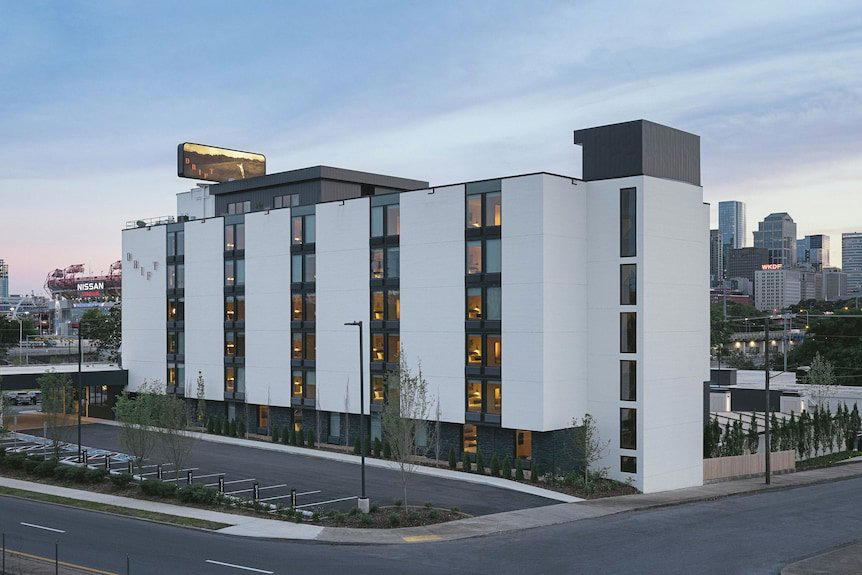
Nashville, United States
Drift Nashville sits on the eastern edge of downtown, where California-coastal design sensibility meets the momentum of a rapidly developing Nashville corridor. Positioned near the city's new football stadium, it occupies a district that is actively rewriting what Nashville hospitality looks like beyond the honky-tonk core. For travellers watching the city's next chapter unfold, this is a considered address.

London, United Kingdom
Firmdale's Haymarket Hotel occupies a prime position just off Piccadilly Circus, placing 53 rooms at the junction of Theatreland and the West End's cultural core. La Liste scored it 91.5 points in 2026, and the property adds an 18-metre indoor pool with a poolside bar to the group's signature Kit Kemp interiors — a combination that sets it apart within the Firmdale portfolio.

Prague, Czech Republic
Sir Prague in Prague is a refined boutique hotel offering contemporary accommodations and attentive service. Accommodations include river-view suites and calm City View rooms, paired with signature experiences such as a rooftop terrace for evening cocktails, a spa and wellness center with tailored treatments, and concierge-led walking tours. The property emphasizes thoughtful design, local craftsmanship, and warm, discreet service that makes each stay feel personal. Guests notice quiet, comfortable bedding, marble bathrooms, and city views framed by historic rooftops. With a strong local reputation for service and carefully curated experiences, Sir Prague provides a memorable base for cultural exploration or executive stays in the heart of Prague.

Mykonos, Greece
Rocabella Mykonos sits in Agios Stefanos, where the Cycladic design tradition of dissolving interior and exterior space reaches a particular clarity. The property's architecture treats the surrounding scenery as part of the room itself, with patios and interior spaces calibrated to fold the Aegean view into daily life. For travellers prioritising the quality of the overnight stay over proximity to Mykonos Town's busier corridors, it occupies a considered position in the island's accommodation map.

Crete, Greece
Spread across two kilometres of Aegean coastline in Agios Nikolaos, Minos Beach Art Hotel is one of Crete's most recognised waterfront addresses, holding World Travel Awards recognition as Europe's Leading Luxury Hotel Villa and Continent Winner for Luxury Beachfront Resort. Bungalow-style accommodation, original art installations, and Cretan kitchen credentials position it in a distinct tier among the island's coastal properties.

Niigata, Japan
A 13-room ryokan-adjacent retreat in the Niigata alpine interior, Satoyama-Jujo holds a 2024 Michelin One Key and sits at approximately $1,166 per night. The property occupies a restored kominka farmhouse in Minamiuonuma, where lacquered elm beams, Isamu Noguchi furnishings, and a Scandinavian-inflected aesthetic produce a design argument for the convergence of Japanese folk architecture and Nordic minimalism.

Adelboden, Switzerland
A 71-room contemporary hotel in Adelboden, The Cambrian trades the expected chalet vernacular for oiled hardwoods, custom furnishings, and near-universal balcony views over the high Alpine landscape. Priced from $296 per night, it sits close enough to Berne for a low-effort approach to Swiss mountain travel, while Adelboden's relative obscurity keeps the scene unhurried and the skiing genuinely good.

North Male Atoll, Maldives
Patina Maldives, Fari Islands sits in the North Malé Atoll as part of the multi-island Fari Islands development, sharing a marina village with The Ritz-Carlton Maldives. Scoring 95 points in the 2026 La Liste Top Hotels ranking, it draws guests with open-air villa architecture, a design-led spa, and a service model built around dedicated 'essentialists' who personalise each stay from the first inquiry.

Phuket, Thailand
Built on the foundations of a century-old tin mine and redesigned by Bill Bensley, The Slate occupies a niche that most Phuket properties don't attempt: industrial-inflected luxury in a beach resort format. With 185 rooms across six categories, a position near Nai Yang Beach, and a 94.5-point score from La Liste Top Hotels 2026, it sits apart from the island's villa-and-spa mainstream.

Sumba, Indonesia
On Sumba's largely undeveloped southwest coast, Cap Karoso occupies a position that Bali's more saturated resort scene can no longer offer: genuine remoteness paired with considered design. The 67-room property threads modernist architecture through indigenous Sumbanese craft, runs a farm-to-table kitchen, and operates Julang — a residency restaurant that brings visiting French chefs to the island for chef's table dinners. Rates start at $464 per night.

Montreal, Canada
Hotel St. Paul occupies a Beaux-Arts landmark at the edge of Vieux-Montréal, converting a building of considerable architectural weight into something deliberately understated. The contemporary interior design reads as a counterpoint to the ornate stone facade outside. For travellers who want to be placed precisely inside Old Montreal without the lobby theatrics of a larger property, it positions itself as a considered alternative.

Lugu Lake, China
Set on the shores of Lugu Lake in Sichuan's remote Yanyuan County, The ArcadiaPlace occupies a village position inside one of China's most architecturally and culturally distinct alpine settings. The property sits within Mosuo territory, where matrilineal traditions and vernacular timber architecture define the built environment. For travellers reaching this far corner of southwest China, it represents a specific tier of lake-edge accommodation shaped entirely by its surroundings.

Lisbon, Portugal
Positioned along the Belém waterfront at Doca do Bom Sucesso, Altis Belém Hotel & Spa trades on one of Lisbon's most architecturally charged addresses — where the Tagus opens toward the Atlantic and the Tower of Belém anchors the skyline. A 93-point score from La Liste's 2026 Top Hotels ranking places it among Portugal's most formally recognised luxury properties, drawing travellers who want proximity to the Age of Discovery monuments without sacrificing design coherence.

Mykonos, Greece
Positioned on a hillside above Mykonos Town with direct sightlines across the Aegean, Myconian Kyma sits in a quieter register than the island's beach-club circuit while remaining within walking distance of Chora. Among Mykonos properties that trade on elevation and seclusion, it occupies a particular niche: close enough to the action to use the town freely, far enough above it to feel genuinely removed.

Ho Chi Minh City, Vietnam
Bach Suites Saigon brings the French colonial character of District 3 into a boutique format that earned Country Winner recognition for Best Architectural Design. Situated on Pham Ngoc Thach Street in Vo Thi Sau Ward, the property draws from the neighbourhood's tree-lined heritage while applying a contemporary residential sensibility. For travellers who want Ho Chi Minh City's architectural history woven into the stay itself, this is a considered address.

Silvaplana, Switzerland
Nira Alpina sits at the foot of the Corvatsch cable car in Silvaplana, placing guests within direct reach of the Engadin's most demanding ski terrain while delivering a contemporary take on mountain-chic hospitality. The property pairs ski-in, ski-out convenience with a dining program that positions it well above the functional mountain lodge tier. For the Upper Engadin, it represents one of the more considered pairings of access and gastronomy in the region.

La Paz, Mexico
A restored colonial hacienda on La Paz's seafront malecón, Baja Club occupies one of the city's most characterful addresses at Paseo Álvaro Obregón 265. The property sits at the intersection of historic architecture and the Sea of Cortez's world-class dive and kayak access, making it a practical and atmospheric base for exploring Baja California Sur's maritime culture.

Los Angeles, United States
A 23-room, Michelin 1 Key boutique hotel in West Hollywood, Hotel 850 SVB occupies a century-old bungalow on San Vicente Boulevard and rates from $372 per night. Hotelier Jeff Klein's second Los Angeles property trades the Sunset Tower's grand-hotel register for something quieter: a residential-scale retreat where the roof deck, outdoor fireplace, and Hollywood views are the main event.

Sagres, Portugal
Positioned at the southwestern tip of Portugal where the Atlantic meets the Costa Vicentina, Memmo Baleeira pairs minimalist design with the raw landscape of Sagres. The property draws on local Atlantic flavours and the particular quality of light and wind that define this extreme corner of the Algarve. It occupies a different tier from the larger resort properties along the eastern Algarve coast.

Palma, Spain
A 33-room design hotel in Palma's historic centre, El Llorenç Parc de la Mar holds a 2024 Michelin Key and a 93-point La Liste Top Hotels rating. Designer Magnus Ehrland's warm, eclectic interiors pair modernist geometry with Mediterranean tactility, while an Arab bath spa, rooftop infinity pool, and two restaurants, including the Michelin-starred Dins Santi Taura, make it one of the more complete urban retreats in the city.

London, United Kingdom
On a quiet Victorian terrace in South Kensington, Number Sixteen occupies a position between boutique hotel and high-grade guesthouse that few London properties manage convincingly. Forty-one rooms across a row of nineteenth-century townhouses keep the scale intimate, while a conservatory restaurant, library, and walled garden give the property a domestic coherence that larger Firmdale addresses trade away for energy and scale.

Chicago, United States
Occupying a converted 1920s clock tower at the junction of Wicker Park and Bucktown, The Robey sits where two of Chicago's most culturally active neighborhoods meet. The hotel's rooftop cocktail lounge has made it a reference point for the city's independent hotel set, drawing both overnight guests and locals who treat the building as a neighborhood anchor.

Paros, Greece
Set along the pine-fringed coastline of Kolympithres in northern Paros, Parīlio holds 46 suites and villas in a Cycladic setting that draws on the island's whitewashed architecture and natural terrain. The property positions itself in the smaller, design-led tier of Greek island luxury, where low key counts and architectural restraint matter more than resort scale. Paros itself offers a quieter alternative to Santorini and Mykonos without sacrificing access to quality dining and beaches.

Frankfurt, Germany
The Pure sits in Frankfurt's Bahnhofsviertel on Niddastrasse, translating the city's financial cosmopolitanism into a design language that pairs marble surfaces with leather detailing and a mood that runs from business-day composed to late-night charged. It reads as a Frankfurt hotel in full — commercially minded, internationally fluent, and unwilling to be boring about it.

Dijon, France
A Haussmann-style address on rue Devosge places Vertigo Hotel squarely inside Dijon's architectural heritage, while sleek contemporary interiors signal a property operating in the mid-tier boutique register. The wine offer, as expected in a city that functions as the administrative capital of Burgundy, is a genuine draw rather than an afterthought.

Kourouta, Greece
A former wine-tank industrial complex on the Peloponnese coast, Dexamenes Seaside Hotel transforms the concrete geometry of 1920s winemaking infrastructure into spare, architecturally considered accommodation. The setting, on the Kourouta beachfront in Elis, positions it among a narrow tier of Greek properties where adaptive reuse and material honesty drive the design proposition rather than conventional resort polish. For travellers oriented toward design and place, the conversion itself is the experience.

St. George’s Grenada, Grenada
Laluna occupies a hillside above Portici Beach in Morne Rouge, combining Caribbean, Balinese, and Italian design into a compact luxury retreat that holds its own against Grenada's more established properties. The physical setting — terraced grounds descending toward the water — does most of the editorial work, making it one of the more design-considered addresses in the south of the island.

Tulum, Mexico
A private coastal villa on Tulum's Boca Paila corridor, XELA positions itself firmly within the small-scale, design-conscious end of the Caribbean Mexico market. The property operates as a house-guest retreat rather than a conventional hotel, trading branded infrastructure for proximity to the Sian Ka'an Biosphere Reserve and the quieter, wilder stretch of the Tulum coast south of the main hotel zone.

Stockholm, Sweden
At Nacka Strand on Stockholm's eastern waterway, Hotel J occupies a position that sits roughly fifteen minutes by sea from the city centre, framing the Swedish archipelago through a design lens drawn unmistakably from New England's coastal vernacular. The result is a property that operates outside Stockholm's dense hotel core while pulling guests toward the water rather than the urban grid.

Kyiv, Ukraine
On Kostiantynivska Street in Kyiv's Podil district, Bursa Hotel occupies a historical building repositioned as a contemporary creative retreat. The property sits at the intersection of art, education, and local culture, making it a reference point for design-conscious travellers seeking proximity to the city's most active cultural quarter. Check availability directly through the hotel.

Mérida, Mexico
Hotel Sevilla occupies a restored 19th-century colonial building on Calle 62 in central Mérida, where original architecture and contemporary hospitality converge around light-filled courtyards and poolside gardens. The property sits within the city's historic centro, placing guests within walking distance of Mérida's main plaza and its concentration of Yucatecan cultural life. For travelers choosing Mérida over the peninsula's resort corridor, it offers an architecturally grounded base in the Spanish colonial tradition.

Osaka, Japan
A design-led boutique property in Osaka's Dojimahama district, Zentis Osaka pairs French-Japanese cuisine with a considered architectural sensibility that distinguishes it from the city's larger luxury hotel tier. The property occupies a compact footprint in Kita-ku, positioning guests close to the Nakanoshima cultural corridor while offering an atmosphere calibrated for slower, more deliberate stays.

Stockholm, Sweden
A 1930s warehouse in Stockholm's Hagastaden district, Blique by Nobis occupies a building that has moved from industrial utility to architectural centrepiece. The property sits at the edge of the city's most concentrated contemporary art scene, where adaptive reuse of mid-century structures defines the neighbourhood's character. For travellers who read hotels as physical arguments about a city, this is one of Stockholm's more considered ones.

Lombok, Indonesia
Somewhere Lombok is a villa property in Central Lombok's Prabu area, positioned within the mindful-travel segment that has reshaped how design-led escapes operate across Indonesia's eastern islands. The property frames itself around personal villas and a considered approach to place, sitting in the quieter, slower tier of Lombok accommodation well away from the island's more trafficked resort corridors.

Playa del Carmen, Mexico
Among Playa del Carmen's boutique hotels, Hotel La Semilla occupies a specific niche: adults-only, design-led, and positioned where 5th Avenue's energy gives way to quieter residential streets near the shore. Vintage Mexican furniture and flea-market finds replace the standardised resort palette found across the Riviera Maya, placing it closer to the character-driven small-hotel tradition than the all-inclusive corridor.

Kingston, United States
Hotel Kinsley occupies four historic buildings in Kingston, New York, where exposed beams, stone walls, and boutique-scale rooms place it squarely in the Hudson Valley's growing tier of architecture-led retreats. Positioned between the Catskill Mountains and the Hudson River, it reads as a deliberate counterpoint to the generic upstate inn — one where the buildings themselves set the terms of the stay.

Tulum, Mexico
Positioned at Km 4.5 on the Tulum coast road, Papaya Playa Project occupies a stretch of Caribbean shoreline within sight of the only Maya ruins overlooking the ocean. The property has built a reputation around sustainability and creative programming, drawing a crowd that comes as much for the cultural calendar as the setting. It sits in the independent, design-conscious tier of Tulum's hotel scene, distinct from the branded resort corridor further north.

Healdsburg, United States
On Healdsburg's central plaza, Hotel Healdsburg positions guests within walking distance of the town's most concentrated stretch of wine-country dining and tasting rooms, while keeping three distinct northern Sonoma wine regions accessible by car. The hotel's in-house restaurant anchors its culinary identity and draws visitors who treat the dining programme as a primary reason to stay.

Laax, Switzerland
Built from 40-million-year-old stone and recognised as the world's most sustainable ski resort, Rocksresort in Laax occupies a category of its own among Swiss Alpine properties. The cubist architecture is a deliberate architectural statement, positioning the resort at the intersection of geological permanence and contemporary design rigour. It belongs to a different competitive set than the grand-hotel tradition that defines resorts like St. Moritz or Gstaad.

Soufriere, St Lucia
Set on St Lucia's oldest working cocoa farm in the hills above Soufriere, Rabot Hotel From Hotel Chocolat places cacao at the centre of the entire guest experience. The British chocolate company transformed Rabot Estate into a property where the crop shapes the food, the treatments, and the architecture. For travellers who want engagement with a living agricultural landscape rather than a conventional beach resort, it occupies a distinct position on the island.

Berlin, Germany
At Potsdamer Platz, The Mandala Hotel trades Berlin's frenetic energy for composed apartment-style suites and one of the city's most decorated restaurant rooms. FACIL, its two-Michelin-star fifth-floor restaurant, sits beneath a retractable glass roof overlooking a quiet inner courtyard. Rated 96.5 points by La Liste's 2026 Top Hotels ranking, the property prices from $298 per night across 158 rooms and suites.

Tbilisi, Georgia
A restored period mansion on Chakhrukhadze Street, The Blue Fox Hotel offers 17 rooms decorated with hand-painted murals by Tbilisi artist Musya Qeburia. At roughly $76 per night, it sits in the Old Town's character-led accommodation tier, with an inner courtyard that doubles as the social hub for drinks, live music, and a restaurant serving international cooking with Georgian inflection.

Santo Stefano di Sessanio, Italy
A Michelin Key-awarded albergo diffuso spread across a living sixteenth-century Abruzzo mountain village, Sextantio places 29 rooms inside the stone fabric of Santo Stefano di Sessanio rather than behind a hotel lobby. Underfloor heating, Philippe Starck bathroom fittings, and a restaurant serving authentic Abruzzese cuisine sit inside medieval walls, roughly two hours from Rome airport, at around $172 per night.

Münster, Germany
In a city defined by Gothic spires and cycling culture, Mauritzhof Hotel Münster translates Westphalian architectural gravity into a design-led boutique stay. Fifty rooms done in slate, taupe, and turquoise sit behind soundproofed walls at Eisenbahnstraße 17, with parquet floors, underfloor-heated bathrooms, and balconies facing the cathedral skyline. At around $217 per night, it occupies the upper tier of Münster's independent hotel market.

Lisbon, Portugal
Positioned on Rua Dom Pedro V in the heart of Príncipe Real, Memmo Príncipe Real is a design-led boutique hotel earning 95.5 points in the 2026 La Liste Top Hotels ranking. It occupies one of Lisbon's most architecturally layered neighbourhoods, where 19th-century palaces and contemporary independent boutiques coexist within walking distance of the Jardim do Príncipe Real. For travellers who want to be embedded in the neighbourhood rather than above it, this is the address.

Ixtapa-Zihuatanejo, Mexico
Hotelito at MUSA sits on Mexico's Pacific Coast where the Sierra Madre meets the surf, positioning itself not as a conventional hotel but as a community organised around art, regeneration, and exploration. On the Ixtapa-Zihuatanejo coastline, it represents a category apart from standard resort hospitality — closer in spirit to a curated residency than a hotel stay. For travellers who find purpose-led environments more compelling than amenity lists, it warrants attention.

London, United Kingdom
Down a nondescript mews off Dean Street, The Soho Hotel occupies a position that few London boutiques have managed to hold: 96 rooms decorated in Kit Kemp's characteristically bold, warm style, with loft windows, private terraces, and spaces designed for genuine comfort rather than visual theatre. At around $616 per night, it sits in the upper tier of London's independent luxury hotel market and has earned its place there.

Santorini, Greece
Istoria occupies a 12-suite position on Perivolos Beach, where black volcanic sand gives way to the Aegean. The property blends classic and contemporary aesthetics in a format designed as much for social gathering as for accommodation. For travelers seeking a beach-anchored base on Santorini's southern coast, it represents a different register than the caldera-view circuit.

Thessaloniki, Greece
The Met Hotel sits on 26th October Street in central Thessaloniki, where monochromatic interiors make a deliberate architectural counter-argument to the city's layered Byzantine and Ottoman built environment. The spaces read as both functional and considered, placing the hotel in a design-forward tier that has few direct peers in northern Greece's accommodation market.

Arcadia, Greece
A Design Hotels member set at 1,200 metres on Mount Mainalos, Manna occupies a neoclassical monument from the 1920s in the heart of the Arcadian Peloponnese. Designed entirely by K-Studio and anchored by farm-to-table cooking from award-winning chef Athinagoras Kostakos, the property sits two hours from Athens and positions itself squarely against Greece's small but growing cohort of serious mountain retreats.

Atlanta, United States
Hotel Granada occupies a Spanish Colonial building on West Peachtree Street, holding its own against Midtown Atlanta's glass-and-steel towers with a different kind of spatial logic: intimate scale, historic architecture, and an identity rooted in place rather than brand. For travellers who find Atlanta's mainstream hotel corridor interchangeable, Granada offers a counter-argument in brick and wrought iron.

London, United Kingdom
Boundary Shoreditch occupies a converted Victorian warehouse on Boundary Street in East London's E2, positioning itself as a design-led hotel that pays homage to the modernist designers who shaped contemporary living. Where Mayfair hotels trade on heritage grandeur, Boundary operates in a different register entirely: industrial bones, considered interiors, and a neighbourhood whose creative identity has hardened over two decades into something genuinely self-sustaining.

Mühlbach am Hochkönig, Austria
A six-suite property in the Salzburg Alps, stieg'nhaus sits an hour from the city in the village of Mühlbach am Hochkönig, combining Mediterranean clarity with alpine seclusion. The intimate scale, refined interiors, and mountain setting place it in a niche tier of Austrian properties where low key count and environmental drama do the heavy lifting. For those seeking quiet over programming, it reads as a serious option in the Hochkönig region.

London, United Kingdom
A 44-room Firmdale property on a quiet Georgian cul-de-sac in SW3, Knightsbridge Hotel offers a mid-tier entry point into one of London's most expensive postcodes. Rates from around $368 per night position it below the neighbourhood's trophy hotels while sharing Firmdale's signature approach to eclectic, art-forward interiors. For visitors whose primary agenda runs to Harrods, Harvey Nichols, and Sloane Street, the location calculus is straightforward.

Mexico City, Mexico
Occupying a storied colonial-era building on República de Guatemala in Mexico City's historic centre, Círculo Mexicano translates the character of its neighbourhood into a design-forward hotel with a genuine social presence. The property reads as a local cultural fixture rather than a transit point, with its architecture and communal spaces doing the heavy editorial work of placing guests directly inside Centro Histórico's ongoing transformation.

Istanbul, Turkey
The Bank Hotel Istanbul in Istanbul reimagines a former bank into a 63-room boutique hotel that blends contemporary design with historic character. Accommodations range from Deluxe Rooms to duplex and penthouse suites, each offering free WiFi, thoughtful materials and Karaköy views. Signature experiences include Serica, a Silk Road–inspired restaurant, The Lobby Bar & Restaurant for modern Mediterranean dining, and the Bank Roof Bar serving skyline cocktails until late. Guests can unwind in a Turkish hammam and full spa or maintain routines in the fitness center. Solar energy, reduced water consumption and a no single-use-plastics policy reinforce a responsible stay for design-minded travelers exploring Istanbul.

Na Jomtien, Thailand
MASON Pattaya sits along Na Jomtien's quieter southern shoreline, 35 rooms built from local Thai granite and polished wood in a blocky minimalist style that references the region's stone-carving tradition. Pattaya Bay views extend from wraparound windows and private pools, while the dining spread runs from an all-day bistro to a sunset cocktail bar. Rates from $473 per night.

Puerto Escondido, Mexico
Set between the Oaxacan mountains and the Pacific, Hotel Terrestre is Grupo Habita's most architecturally daring property: fourteen solar-powered brick-and-concrete villas, entirely off-grid, with open-air rooms, plunge pools, and a restaurant that sources from the surrounding land. At $495 per night, it occupies a distinct tier among Puerto Escondido's small-format properties, trading resort amenities for deliberate simplicity.

Oaxaca, Mexico
Positioned on Calle Macedonio Alcalá in Oaxaca's historic centre, Otro Oaxaca brings together views across the city, a subterranean spa, and interiors built around local craft traditions. The property reads as a considered response to Oaxaca's growing premium hospitality tier, where design-led independents are setting the pace against larger international formats.

Crete, Greece
Set among olive groves in western Crete, Tella Thera operates at the intersection of sustainability, organic design, and deliberate stillness. The property's approach — rooted in Cretan landscape rather than resort spectacle — places it within a small tier of Greek retreats that treat mindfulness and ecological sensitivity as structural principles, not amenities. For those seeking disconnection with cultural depth, it represents a considered alternative to the island's coastal hotel mainstream.

Healdsburg, United States
Harmon Guest House occupies a converted industrial space on Healdsburg Avenue, positioning itself as both a lodging address and a local gathering point in one of Sonoma County's most wine-forward small towns. The design ethos runs toward sustainable materials and exposed structure rather than plush resort convention, making it a distinct option in a Healdsburg hotel market that otherwise tilts toward boutique luxury.

Kyiv, Ukraine
11 Mirrors by FACE the Service sits on B.Khmelnytskogo Street in central Kyiv as one of the city's most closely watched design-led hotels. Its minimal, cosmopolitan aesthetic and collaborative programming place it in a distinct tier of post-2014 Ukrainian hospitality — properties that read as cultural statements as much as places to sleep. For travellers seeking a Kyiv address with genuine architectural intent, it registers as a serious option.

Hong Kong, Hong Kong
On Nathan Road in the heart of Tsim Sha Tsui, The Mira Hong Kong occupies one of Kowloon's most commercially active corridors and has positioned itself as a design-forward lifestyle property within that dense urban context. The hotel draws from a tradition of independently minded Kowloon addresses that sit apart from the Harbour-front luxury tier, offering a distinct vantage point on the city for travellers who prefer the energy of the peninsula to the polish of Central.

Salamanca, Spain
A 16th-century Augustinian convent converted into one of Salamanca's most architecturally serious hotels, Hospes Palacio de San Esteban occupies the historic heart of the city within walking distance of the Plaza Mayor and the university quarter. The property pairs restored Castilian stonework with a contemporary interior sensibility, positioning it firmly in the design-led heritage hotel tier that has reshaped how premium travellers engage with Spain's monumental cities.

Phuket, Thailand
On Phuket's Pansea Beach, The Surin occupies a tropical bay where the resort's architecture defers entirely to the terrain: no elevators, no flat corridors, just a series of stairs and walkways threading through dense vegetation toward the water. Compared with the large-footprint international brands along the island's west coast, The Surin operates on a quieter, more site-specific register that rewards guests who prioritise setting over amenity volume.

Gagliano Del Capo, Italy
At the very tip of Puglia's Salento peninsula, Palazzo Daniele occupies a 150-year-old building transformed into a nine-suite boutique property where minimalist contemporary Italian design meets aged stone and original tilework. Priced from $473 per night and open April through October, it operates at the scale of a private residence while matching larger luxury properties on detail and finish.

Mykonos, Greece
A landmark property at Kato Mili, Mykonos Theoxenia carries the architectural weight of the island's mid-century design heritage alongside a recent renovation that draws organic interiors toward something quieter and more considered. The whitewashed bones of the original structure remain the dominant statement, with luminous spaces that frame rather than compete with the surrounding Cycladic light.

Friedrichshafen, Germany
Seegut Zeppelin occupies a landscaped park of meadows, orchard trees, and century-old pines on the edge of Lake Constance, offering private shoreline access rare for this stretch of the German Bodensee. The property sits in a quieter register than Friedrichshafen's town-centre hotels, trading urban amenity for grounds-led seclusion. For travellers prioritising nature and calm over walkability, it occupies a distinct position in the regional accommodation set.

Hamburg, Germany
SIDE Design Hotel Hamburg occupies a striking modernist building in Hamburg's theatre district, earning 93 points on the 2026 La Liste Top Hotels ranking. The property represents the city's design-led boutique tier, positioned between grand historic palaces and contemporary lifestyle hotels. Its Drehbahn address places guests within walking distance of the Binnenalster and the city's central cultural axis.

Sifnos, Greece
On the island of Sifnos, Stamna Sifnos occupies a quiet register that most Cycladic properties have abandoned in favour of spectacle. Extensive gardens, sea views across the Aegean, and a pace calibrated to the island's own rhythms place it in a distinct tier of retreat-focused accommodation. Reached by ferry from Piraeus, it sits in Apollonia, the island's small capital, and draws guests who treat slow travel as a discipline rather than an accident.

Parrano, Italy
Eremito occupies a restored medieval hermitage in the Umbrian hills of Parrano, where cell-like rooms and a deliberately stripped-back aesthetic make it one of Italy's most committed retreats. The design is architectural devotion: stone walls, candlelight, and near-total silence. For those seeking a genuine break from stimulation, few properties in central Italy match its consistency of purpose.

Offenburg, Germany
A former prison for radical thinkers converted into one of Offenburg's most architecturally distinctive stays, Hotel Liberty holds both the Regional Luxury Design Hotel award and Germany's Country Winner for Luxury Boutique Hotel. The property frames its unusual heritage around fine cuisine and shared experiences, making it a compelling case study in adaptive reuse within Germany's Baden-Württemberg hotel circuit.

Canggu, Indonesia
Set on Jl. Pantai Batu Bolong in the heart of Canggu, The Bohemian Bali positions itself at the intersection of industrial design and Balinese craft tradition. The property draws on raw material contrasts — exposed concrete alongside organic textures — placing it within Canggu's growing cohort of design-led independent stays that trade scale for atmosphere. For the full Canggu picture, see our <a href="https://www.enprimeurclub.com/hotels/canggu">Canggu hotels guide</a>.

Merano, Italy
Positioned high above Merano in South Tyrol, Arua Private Spa Villas delivers villa-format seclusion with panoramic Alpine views and a spa-led experience that places it among the more private retreats in the Italian Alps. The property at St. Peter 17 occupies a hillside setting that separates it from the town's established spa hotels, offering guests a self-contained environment with bespoke privacy as its defining feature.

Stawiguda Masuria, Poland
Set in the Masurian countryside outside Stawiguda, Hotel Galery69 is clad in whitened timber planks in keeping with the region's vernacular building tradition. The property sits within a quiet rural setting that defines much of Warmia-Masuria's character as a destination — lakes, forest, and low-density architecture. Travellers seeking an alternative to Poland's urban hotel circuit will find it worth considering.

Oklahoma City, United States
Bradford House earned a 2024 Michelin One Key designation, placing it among a small cohort of recognized lodging properties in Oklahoma City. Located at 1235 NW 38th Street in the city's Uptown corridor, it holds a 4.4 Google rating across more than 400 reviews. For travelers tracking Michelin's expanding hotel program into mid-continent American cities, Bradford House is the address the guide currently points toward.

Singapore, Singapore
A converted 1895 godown on Robertson Quay, The Warehouse Hotel channels Singapore's colonial-era trading past through adaptive industrial design. The property sits in one of the city's most walkable riverside corridors, drawing guests and regulars who return for its culturally anchored atmosphere rather than badge-name amenities. It occupies a niche between heritage boutique and design-led contemporary, with few direct comparators at that address.

Artà, Spain
A 32-room finca estate outside Artà, Es Racó d'Artà holds a Michelin Key and 93 points in La Liste's 2026 Top Hotels ranking, with rates from $602 per night. The property spans a main farmhouse, nearly two dozen casas and casitas, and borders the Parc Natural de Llevant. Its restaurant draws from an organic estate garden, fruit trees, olive groves, and on-site vineyards, with a wellness programme built around the spa, yoga, and forest-immersion walks.

Klaipėda, Lithuania
On Teatro Street in Klaipėda's Old Town, Reja occupies a position at the intersection of the city's architectural memory and its emerging creative identity. Recognized as a hub for cultural exchange and a gathering point for the creative community, it draws locals and visitors looking for something more substantive than a casual stop — a place where the fabric of Old Town is part of the experience itself.

New York City, United States
A Michelin 1 Key hotel on the Lower East Side, The Ludlow Hotel brings 184 rooms of vintage-inflected design to a neighbourhood that has historically punched below its weight in quality accommodation. Related to the Bowery, the Marlton, and the Maritime, it carries genuine New York hospitality pedigree, and its Dirty French restaurant from Major Food Group gives it a social centre with real culinary credentials.

Phang Nga, Thailand
Casa de La Flora in Khao Lak, Phang Nga, occupies a distinct position in Thailand's design-led accommodation tier, where Brutalist geometry meets tropical environment in a property that refuses the region's default aesthetic of open-air pavilions and pitched roofs. The angular architecture creates an immediate visual tension with the surrounding landscape, positioning it as a counterpoint to the organic resort forms that dominate this stretch of coast.

Matera, Italy
Sextantio Le Grotte della Civita occupies 18 cave rooms carved into the volcanic hillsides of Matera, one of southern Italy's oldest continuously inhabited settlements. At $367 per night and recognised with a Michelin 1 Key in 2024, it operates as an albergo diffuso — a distributed hotel format where the accommodation itself is the archaeological experience. Bari Airport (BRI) lies approximately 60km away, with car transfer the recommended approach.

Reykjavik, Iceland
A converted 1930s office building on Hverfisgata, the 101 Hotel sits at the centre of Reykjavik's shift from overlooked capital to serious international travel destination. The property occupies the casual-chic register that defines central Reykjavik's hospitality scene today: architecturally considered, socially fluid, and positioned for travellers who want proximity to the city's cultural core without the remove of a resort.

Melbourne, Australia
On Flinders Lane in Melbourne's CBD, Adelphi Hotel trades in a design language all its own: interiors drawn from the visual vocabulary of sweets and confectionery, referencing the theatrical whimsy of Willy Wonka as much as contemporary boutique hospitality. The result is a property that sits well outside the conventional Melbourne hotel conversation, occupying a specific niche where design provocation is the core offering.

Göttingen, Germany
FREIgeist Göttingen Innenstadt occupies a position in Germany's university-town hospitality scene that few properties in the mid-tier have claimed: a creative, culturally engaged address on Berliner Strasse aimed at travellers who want atmosphere alongside a bed. Positioned in Göttingen's city centre, it draws on the town's academic identity to frame a stay that reads more as cultural participation than standard hotel transit.

Canillo, Andorra
A four-bedroom mountain lodge in Canillo, Andorra, L'Ovella Negra Mountain earns its name — 'black sheep' — by operating at a remove from the valley's resort mainstream. Accessible by snowcat in winter, the wood-and-stone structure offers communal living, a log fire, and seasonal cooking for guests who measure a mountain stay by what happens inside as much as outside.

San Diego, United States
Occupying a preserved 1904 landmark on 5th Avenue, Granger Hotel Gaslamp Quarter situates itself at the intersection of San Diego's architectural past and its contemporary hospitality ambitions. The building's century-old bones give the property a contextual weight that newer Gaslamp openings simply cannot replicate. For travelers who read a hotel's physical fabric as carefully as its service record, this address makes a credible case.

Vilnius, Lithuania
A 15th-century noble residence on Vilnius's Didžioji Street, Hotel Pacai layers centuries of Lithuanian history beneath a sharply contemporary interior. Original parquet floors, hand-painted frescoes, and centuries-old wooden joists coexist with a restrained black-and-white palette and curated local art across 104 rooms. At around $179 per night, it occupies a distinctive position in the Old Town's design-forward hotel tier.

Mykonos, Greece
Set above Elia Beach, Mykonos' longest stretch of sand, Myconian Avaton translates classic Cycladic architecture into a contemporary resort format with direct views across the Aegean. The property sits within the wider Myconian Collection, positioning it among the island's more established resort operators. Visitors booking ahead of the summer peak will find it among the more considered options on the southern coast.

Nairobi, Kenya
Positioned in Nairobi's embassy quarter along Limuru Road, Trademark Hotel occupies a district where international business and diplomatic traffic set the rhythm. The property delivers international cuisine, comprehensive business facilities, and access to some of the city's more considered wellness and leisure amenities — making it a natural base for extended stays in the Kenyan capital.

Hunter Mountain, United States
Scribner's Catskill Lodge occupies a stretch of the Catskill Mountains above Hunter, where the design sensibility runs toward reclaimed wood, stone, and an aesthetic that treats the surrounding forest as part of the interior program. It sits in the small tier of Northeastern mountain retreats that position themselves against design-led properties rather than conventional ski lodges, drawing a New York City crowd that wants altitude without sacrificing considered hospitality.

Puerto Escondido, Mexico
Grupo Habita's 39-room property on a pedestrian lane in La Punta Zicatela positions itself at the quieter, design-led end of Puerto Escondido's accommodation spectrum. Concrete, tropical wood, and handmade tile compose an earthy material palette, while a rooftop spa, courtyard pool, and chef-driven restaurant extend the unhurried coastal register throughout. Rates start at $270 per night.

Chattanooga, United States
Chattanooga's first boutique hotel, The Dwell Hotel at 120 East 10th Street converts a historical building into a midcentury-inflected property where retro design and considered comfort occupy the same frame. The address places guests in the heart of downtown, within reach of the Tennessee River waterfront and the city's growing independent dining scene. For a city that spent years short on design-forward accommodation, The Dwell represents a meaningful shift in what overnight options look like here.

Miami Beach, United States
A reimagined Art Deco address on Collins Avenue, The Shelborne by Proper occupies one of South Beach's most recognizable oceanfront positions. The Proper Hotels group has recast the property as a place where the neighborhood's mid-century architecture meets a considered approach to rest, movement, and social ritual — from early-morning ocean swims to late-evening poolside gatherings.

Port de Sóller, Spain
Bikini Island & Mountain Hotel Port de Sóller occupies a stretch of Mallorca's northwest coast where the Serra de Tramuntana drops toward a sheltered bay. Its bohemian, come-as-you-are character sets it apart from the formal resort properties elsewhere on the island, making it a natural base for travellers who want direct access to Port de Sóller's tram, market culture, and mountain trails without the choreography of high-service luxury.

Abidjan, Ivory Coast
Abidjan's first boutique hotel, La Maison Palmier occupies a residential address in Les Deux Plateaux, combining contemporary design with vintage character across a leafy, intimate property. The hotel brings a small-scale, design-led sensibility to a city where large international flags have traditionally dominated the upper accommodation tier. For travellers seeking a quieter entry point into Abidjan's residential north, it represents a distinct alternative.

Santa Barbara, United States
Drift Santa Barbara occupies a considered position on State Street, where sustainable design and a warm, stripped-back aesthetic challenge the conventional resort-hotel formula that dominates the city. Where most Santa Barbara properties lean into Spanish Colonial grandeur, Drift reads as a deliberate counterpoint: sleek without being cold, comfortable without being generic. It belongs to a smaller cohort of design-led independents that have reshaped what mid-city lodging can look like in California's so-called American Riviera.

Istanbul, Turkey
Gezi Hotel Bosphorus occupies a position in Beyoğlu that few Istanbul properties can claim: a direct sightline over the water from one of the city's most walkable addresses, Mete Caddesi. The property reads as a quieter counterpoint to the larger international flagships along the Bosphorus shore, trading scale for access to Taksim, Gezi Park, and the strait's defining panorama.

Gonnesweiler, Germany
A Michelin 2 Keys lakeside property on the Bostalsee in the Saar-Hunsrück Nature Park region, Seezeitlodge Hotel & Spa offers 100 rooms and a 2,700m² spa complex with Celtic sauna village. The all-inclusive access model sets it apart from the typical German wellness hotel, placing it firmly in the destination-resort tier for the Saarland region.

Maharashtra, India
Set within a working winery in Maharashtra's Baramati wine belt, Hotel Irada occupies a restored manor house surrounded by vine rows, forest trails, and open agricultural terrain. The property positions itself at the intersection of heritage architecture and India's emerging wine country hospitality, offering an alternative to the urban luxury tier represented by Mumbai's grand hotels.

Austin, United States
Austin Proper Hotel sits in the Second Street District with 244 rooms, a Michelin 1 Key recognition, and a 91-point La Liste 2026 rating. Kelly Wearstler's interiors translate Texas materials and local craft into a deliberately urban register, while McGuire Moorman Hospitality runs the food and beverage program, including a Mediterranean grill and a 30-seat cocktail bar.

Palm Springs, United States
Palm Springs has always traded in a particular kind of glamour, and the Avalon Hotel and Bungalows sits near the centre of that tradition. Positioned on South Belardo Road with San Jacinto's ridgeline as a backdrop, this property channels the mid-century Hollywood retreat era through architecture and atmosphere rather than nostalgia alone. It belongs to a small tier of Palm Springs hotels where design integrity and historical resonance carry more weight than room count.

Baltimore, United States
Hotel Ulysses at 2 E. Read Street occupies a corner of Mount Vernon that reads Baltimore's own cultural mythology back at you. Styled as an homage to John Waters, Edgar Allan Poe, and Billie Holiday, the property trades in drama, literary reference, and cinematic playfulness, positioning it as one of the city's most distinctive boutique addresses for travellers who want character built into the walls, not applied as an afterthought.

Puerto Escondido, Mexico
Hotel Escondido sits on the Oaxacan Pacific coast, where individual palapa bungalows with private plunge pools translate the rhythms of a fishing village into a considered architectural idiom. The property belongs to a small cohort of design-led Mexican hotels that trade large-scale infrastructure for material honesty and spatial restraint. For travellers already familiar with Puerto Escondido's surf-and-mezcal culture, it reads as the logical accommodation choice.

Los Angeles, United States
Santa Monica Proper earned a Michelin 1 Key in 2024, placing it in a tier defined by design-led boutique hotels rather than full-service resort chains. Kelly Wearstler's interiors span 267 rooms across a new build and a restored 1920s Spanish Colonial landmark on Wilshire Boulevard. Rooftop pool access, an Ayurvedic spa, and two distinct dining formats make it the most architecturally coherent option in its Santa Monica price bracket.

Patras, Greece
A 19th-century mansion on Palaion Patron Germanou Street repurposed as one of Patras's most architecturally considered addresses. The Bold Type Hotel connects guests to the city through cultural programming, a lush courtyard, and a dining scene that extends well beyond hotel-standard fare. For a city long overlooked on Greece's luxury hotel circuit, it represents a meaningful shift in what Patras can offer the travelled visitor.

Santo Isidoro, Portugal
Sitting on the quiet Atlantic edge of Santo Isidoro, north of Lisbon's commuter belt, Immerso earned 92 points in the 2026 La Liste Top Hotels ranking — a signal that places it firmly in Portugal's premium small-hotel tier. The property addresses a stretch of coast that most international visitors pass through rather than pause at, which is precisely what makes the positioning deliberate rather than accidental.

Saint-Tropez, France
Recognised by Gault & Millau with an Exceptional Hotel 5-point distinction in 2025, Hôtel Sezz Saint-Tropez positions itself at the quieter, design-conscious end of the Riviera's premium accommodation market. Located on the Route des Salins, it sits outside the port's social circuit, making it a considered choice for guests who treat stillness as a feature rather than a compromise. Rated 4.4 across 206 Google reviews.

Pienza, Italy
A former convent on Pienza's main corso, La Bandita Townhouse occupies one of Val d'Orcia's most architecturally loaded addresses. The property trades on the rhythms of a working Tuscan village rather than resort-scale amenity, positioning it among Italy's smaller, place-specific lodgings where the building's history does more heavy lifting than any designed experience programme.

La Paz, Bolivia
In La Paz's Calacoto district, Atix Hotel has carved out a distinct position as the city's most serious design-led property, channeling Bolivian art, culture, and gastronomy through a considered architectural framework. Where most South American luxury hotels default to international templates, Atix commits to local creative identity as its organizing principle. For travelers who want a hotel that reads the country it occupies, this is the address in La Paz.

San José del Cabo, Mexico
NEST Baja sits along Camino Cabo Este on San José del Cabo's quieter eastern corridor, where indoor-outdoor architecture creates a series of sanctuaries anchored by fireplaces, plunge pools, and sea views over the Sea of Cortez. The property occupies a design-led niche in a destination that otherwise trends toward large resort formats, making it a reference point for travellers prioritising spatial intimacy over amenity volume.

Helsinki, Finland
Hotel St. George occupies a historically layered building on Yrjönkatu in central Helsinki, operating as one of the city's most discussed design-forward properties. The hotel has drawn attention for resetting expectations around what a contemporary urban stay in Finland can look like, pairing period architecture with a programming approach that extends well beyond accommodation into arts, dining, and cultural engagement.

Stockholm, Sweden
Hotel Skeppsholmen occupies a centuries-old Royal Marine barracks on Skeppsholmen island, carefully restored with soft colours and modernist restraint. The property sits apart from Stockholm's main hotel corridor, offering water views and an unusual quietness within walking distance of Gamla Stan and Djurgården. It is among the few Stockholm hotels where architectural history and considered design coexist without either overwhelming the other.

Valencia, Spain
Two adjoining 19th-century palace residences on Navarro Reverter, freshly renovated and repositioned as one of Valencia's more architecturally considered addresses. Hospes Palau de la Mar sits at the intersection of Valencian neoclassical heritage and contemporary design thinking, placing it in a distinct tier among the city's central hotels. The location, a short walk from the Turia gardens and the old city, does much of the work.

New York City, United States
The Moore occupies a West Chelsea address on West 22nd Street, positioning guests within walking distance of the High Line, gallery row, and the Hudson River waterfront. The property presents a residential character that sets it apart from the large-format hotels dominating Midtown, making it a considered choice for travellers who prefer neighbourhood immersion over lobby spectacle.

Rome, Italy
G-Rough occupies a palazzo on Piazza Pasquino, steps from Piazza Navona, and operates as one of Rome's more deliberately unconventional luxury properties. The concept is rooted in a 'Made in Italy' design identity that departs from the palazzo-restoration template most of the city's premium hotels follow. For travellers who read interior design as closely as they read menus, it earns serious consideration.

Zakynthos, Greece
At Tsilivi on Zakynthos's northeastern coast, Olea All Suite Hotel stakes its identity on a design collision between thatched roofs, oak timber, bamboo, and sharp tropical-modernist cubes threaded through by flowing water. The all-suite format signals a property pitched at guests who treat space as non-negotiable. For the Ionian islands, this architectural register is genuinely rare.

Edinburgh, United Kingdom
Market Street Hotel sits at the precise boundary where Edinburgh's Old Town meets the New, on a cobbled street that runs between the Royal Mile and Waverley Station. The address alone signals intent: this is a hotel built around urban position rather than retreat. For visitors who want the city as their primary experience, the location does most of the editorial work.

Los Angeles, United States
A 1926 California Renaissance Revival building at 1100 S Broadway, Downtown LA Proper Hotel holds a 2024 Michelin Key and 148 rooms shaped by Kelly Wearstler's layered pattern work. The rooftop spans 5,000 square feet with skyline views in every direction, while Cara Cara and Caldo Verde mark the first hotel restaurants by James Beard Award winners Suzanne Goin and Caroline Styne. Rates from $561 per night.

Thun, Switzerland
A converted 19th-century freight depot in Thun, Hotel Spedition bridges industrial heritage and mid-20th-century design through 120-year-old exposed oak beams set against modernist interiors. The property occupies a distinctive tier in the Swiss Bernese Oberland accommodation scene, offering a design-forward alternative to the grand lakeside hotels that define the region's hospitality tradition. Gewerbestrasse 4 places guests within reach of Thun's old town and the Alps beyond.

Eindhoven, Netherlands
Kazerne occupies a converted military barracks in central Eindhoven, operating as a hybrid space where design exhibitions, dining, and overnight stays coexist under one roof. Closely tied to Dutch Design Week, the city's annual showcase that draws international attention each October, it functions as a living gallery rather than a conventional hotel or restaurant — the spaces shift with each new creative programme.

Hong Kong, Hong Kong
Mira Moon occupies a distinct niche in Causeway Bay's hotel scene, translating Chinese fairytale mythology into a design-forward hospitality format. The property sits on Jaffe Road amid the neighbourhood's dense commercial energy, offering a contrast to Hong Kong's international luxury chains. For travellers seeking cultural specificity over global-brand consistency, it reads as a deliberate choice rather than a default.

Seville, Spain
On a quiet plaza in Seville's Santa Catalina neighbourhood, Hospes Las Casas del Rey de Baeza occupies a cluster of 18th-century townhouses that trade the city's louder registers for something cooler and more considered. The property sits inside the Hospes portfolio, a Spanish group that consistently favours architectural restraint over spectacle, and delivers one of central Seville's more composed hotel experiences.

Iki Island, Japan
On Iki Island, a short ferry crossing from Kyushu, Iki Retreat by Onko Chishin sits within one of Japan's most undervisited island landscapes, combining onsen bathing, fresh seafood from surrounding waters, and sea-facing architecture that earns its place in the quieter tier of Japanese retreat hospitality. For travellers seeking distance from the ryokan circuits of Hakone or Kyoto, it represents a considered alternative with genuine geographic remove.

Amsterdam, Netherlands
Sir Adam Hotel occupies the A'dam Tower on Amsterdam's North Bank, a post-industrial creative district that has repositioned itself as the city's most music-forward address. The hotel integrates a music library and recording studios into its guest offering, placing it in a distinct niche among Amsterdam's design-led properties. For those already drawn to the neighbourhood's cultural programming, the address does much of the editorial work.

Hamburg, Germany
Tortue Hamburg occupies a converted building at Stadthausbrücke 10, bringing 128 rooms, a French brasserie, an Asian dining room, and a courtyard to Hamburg's city centre. The hotel draws a regular after-work crowd to its bars, while the tortoise motif threads through the design from lobby statues to lampshades. It sits in a tier of Hamburg hotels that trades heritage grandeur for deliberate contemporary style.

Umbertide, Italy
A 2024 Michelin Key-awarded boutique hotel occupying a converted 12th-century Umbrian monastery in Calzolaro, outside Umbertide. Twelve rooms split between original stone structure and a contemporary annex marry medieval fabric with designer furnishings. The restaurant serves creative Umbrian cuisine with global references; the bar focuses on cocktails and regional wines, priced from around $488 per night.

Niseko Hokkaido, Japan
An intimate mountain lodge in the heart of Niseko's ski terrain, Kimamaya by Odin occupies a design niche few properties in Hokkaido attempt: the deliberate collision of Scandinavian minimalism and Japanese Zen spatial thinking. Year-round in its appeal and limited in its key count, it sits closer to the design-led boutique tier than the resort-hotel mainstream that dominates this part of the island.

Santorini, Greece
Set among Santorini's interior village landscape at Mesariá, Noūs is a five-star property built around space, slowness, and intentional design. Private pools, Jacuzzis, gardens, and a meditative fire pit anchor a wellness-forward programme that reads as a deliberate counter to the island's high-volume caldera circuit. For travellers seeking a slower register on the island, it occupies a distinct position in the local luxury tier.

Minerbio, Italy
A former aristocratic residence outside Bologna, Elizabeth Country House sits alongside a medieval village in the Po Valley flatlands, offering a form of rural Italian hospitality that trades scale for atmosphere. Manicured grounds frame a property that reads more like a private estate than a conventional hotel — a useful counterpoint to the city-centre luxury of the wider region.

Copenhagen, Denmark
A 1903 former Royal Danish Conservatory of Music transformed into a 75-room luxury hotel, Nobis Copenhagen sits one block from Tivoli Gardens in the heart of the city. Swedish architect Gert Wingårdh's 2017 renovation layers warm modernism over a stately classical façade, earning a 91.5-point La Liste Top Hotels ranking in 2026. Restaurant NOI, a modern sauna, hammam, and cold bath complete the offer at rates from $398.

Medellín, Colombia
Wake BioHotel occupies a residential pocket of El Poblado's southern edge, where the design brief places natural materials, restorative programming, and spatial restraint above conventional luxury signals. Located at Carrera 25 No 3-115 in Tesoro, it sits in a growing cohort of Colombian properties that treat wellness architecture as the primary offering rather than an amenity layer added to a standard room count.

Lech, Austria
In the hamlet of Zug, a quiet satellite of Lech am Arlberg, Rote Wand Gourmet Hotel has built one of Austria's most decorated wine programs alongside a retreat atmosphere that sets it apart from the busier village centre. Recognised by La Liste Top Hotels at 94.5 points in 2026 and awarded Star Wine List's By the Glass List of the Year for Austria in 2021, it operates at the intersection of alpine seclusion and serious hospitality craft.

Cannes, France
Five Seas Hotel occupies a considered position in Cannes's mid-scale luxury tier, earning a 2025 Gault & Millau Exceptional Hotel designation with a five-point award — recognition that places it above standard four-star competition. Sitting on Rue Notre Dame near the old port, it draws travellers who want design-led stays without the scale of the Boulevard de la Croisette palaces. Google reviewers rate it 4.5 across 748 submissions.

Athens, Greece
Semiramis occupies a sharp corner of Kifissia, Athens's most composed northern suburb, where the design brief runs from the architecture through to the pool furniture without interruption. The property arrived as a statement about what a designer-controlled hotel could look like in Greece, and that clarity of intent still reads clearly today. For visitors who find central Athens properties too dense with historical weight, Kifissia offers a different register entirely.

London, United Kingdom
A 38-room Regency townhouse on Marylebone's Dorset Square, this boutique hotel trades scale for character, with cricket-themed interiors by designer Kit Kemp, an in-house bar and restaurant called The Potting Shed, and a drawing room with an honour bar that draws both guests and neighbourhood regulars. For travellers who find large London hotels impersonal, it sits in a different tier entirely.

Cologne, Germany
Occupying a neo-Gothic former monastery in Cologne's Old Town, The Qvest Hideaway positions itself at the intersection of architectural heritage and contemporary art collection. The property's design credentials — museum-grade photography, curated interiors, and preserved ecclesiastical stonework — place it in a narrow tier of German hotels where the building itself is the primary experience. Find it at Gereonskloster 12, within walking distance of the city's Roman core.

New York City, United States
Warren Street Hotel brings Firmdale's signature collision of bold color, layered pattern, and considered comfort to Tribeca, where 69 individually designed rooms sit behind a bright blue façade on Warren Street. A 2024 Michelin 1 Key recipient, the hotel occupies a distinct position in Downtown Manhattan's accommodation market, pairing fashionable common spaces with a bar and restaurant that draws both guests and locals.

Palma, Spain
A 16th-century building on Carrer de la Concepció, transformed by Swedish architecture firm Wingårdhs into a hotel where Mallorcan Huguet tilework meets Scandinavian brass and timber. The Nobis Group's Palma address sits in the old city's historic core, offering a design language that draws from both the island's craft traditions and northern European restraint.

Rome, Italy
An 18th-century mansion on Via del Velabro, one of Rome's oldest streets, Palazzo Velabro offers panoramic views across the ancient Velabrum quarter and the Forum Boarium below. The property trades on space rather than scale, with a residential character that sits apart from the city's larger luxury hotels. For visitors who want the ancient centre as a permanent backdrop, the address is difficult to argue with.

Asheville, United States
A restored 1920s office building at the center of downtown Asheville, The Flat Iron Hotel translates the city's period architecture into a hospitality format grounded in hyperlocal comfort. The building's history gives the property a structural identity that newer hotels in the market simply cannot replicate. For travelers who treat the built environment as part of the stay, it occupies a distinct position in Asheville's lodging mix.

Kenting National Park, Taiwan
A former presidential guesthouse on Taiwan's southernmost coast, Gloria Manor occupies a distinct tier among Kenting National Park's accommodation options: modernist architecture, a documented commitment to ecological responsibility, and a provenance that sets it apart from the resort-heavy competition along the peninsula. For travellers seeking design-led stays in southern Taiwan, it warrants serious consideration.

Córdoba, Spain
A 51-room Michelin Key-recognised property in Córdoba's historic centre, Hospes Palacio Del Bailio occupies a layered Andalusian mansion where Roman-era ruins sit beneath a glass atrium floor and centuries-old frescoes share walls with crisp contemporary interiors. The property earns its place at the upper end of Spain's heritage hotel category, combining a serious spa, an on-site modern-Spanish restaurant, and immediate access to the old town's most significant monuments.

Senglea, Malta
A 16th-century fortified granary on the Senglea waterfront, Cugó Gran Macina Malta occupies one of the Three Cities' most architecturally significant structures. The converted Macina building frames Grand Harbour views across every elevation, positioning it among Malta's small tier of heritage-led luxury properties. For travellers treating Senglea as a base rather than a day trip, it is the most considered choice on this side of the water.

Zermatt, Switzerland
CERVO Mountain Resort sits above Zermatt on the Riedweg, earning Michelin 2 Keys recognition in 2024 alongside a 4.7 Google rating from over 1,200 reviews. The property occupies the smaller, design-led tier of Alpine luxury, where wellness programming and altitude-aware retreat formats have replaced the grand-hotel model as the organizing principle. For travellers arriving from car-free Zermatt, the approach itself signals what follows.

Athens, Greece
Periscope occupies a slim boutique footprint on Haritos Street in Kolonaki, Athens' most affluent shopping quarter, positioning it closer to the neighbourhood's gallery spaces and designer boutiques than to the grand boulevard hotels near Syntagma. The property operates as a contemporary art hub with an urban sensibility, and its rooftop orientation toward the city gives it a viewing advantage that larger competitors in its price tier rarely match.

Saint-Saturnin, France
Awarded a Michelin Key in 2024, Domaine des Andéols sits just outside the Lubéron village of Saint-Saturnin-lès-Apt as one of Provence's most architecturally serious small hotels. Nineteen accommodations split between farmhouse-style maisons and contemporary Nature Suites are furnished with modernist pieces and bold art that have no equivalent in the region's lavender-and-limestone mainstream. Two restaurants, a hammam, and direct access to the estate's parkland complete the picture.

Montigny-la-Resle, France
A ten-room château in the Burgundy countryside that earns its 2024 Michelin 1 Key through a sharp editorial tension: a 19th-century white-shuttered manor filled with bespoke Dutch design pieces and a gallery-calibre contemporary art collection. Rooms start at $312 per night, with a two-night minimum on peak weekends. The locavore restaurant, pool, and spa complete a property that functions as a working country house rather than a preserved monument.

Crete, Greece
A former tannery complex on Chania's waterfront, The Tanneries Hotel & Spa converts industrial heritage into minimalist boutique accommodation on Crete's northwestern coast. The property sits at the edge of the old harbour quarter, where raw stone walls and high ceilings carry the weight of the building's working past into a present that is quieter and considerably more considered than most of Crete's resort circuit.

Oaxaca, Mexico
Hotel Escondido Oaxaca occupies a colonial structure on José María Morelos in the city's historic centre, where Old World architecture meets a considered modern interior shaped by local artisan craft. The property sits within Oaxaca's premium boutique tier, drawing travellers who want proximity to the city's cultural core without sacrificing design quality. Book ahead: this is a small property in a city with a shortage of serious design-led rooms.

Monte Gordo, Mexico
Azúcar sits along the Veracruz coast in Monte Gordo, where thatched palapa roofs, broad-slat wood floors, and clean-lined furniture define a seaside dining space that trades resort formality for something more considered. The design does most of the heavy lifting here, creating a setting that reads as relaxed without being careless. For context on the wider scene, see our full <a href="https://www.enprimeurclub.com/restaurants/monte-gordo">Monte Gordo restaurants guide</a>.

Shenzhen, China
NOA Hotel Shenzhen occupies an industrial heritage building on Baogang Road, translating raw architectural material into a contemporary setting for creative professionals, families, and design-conscious travellers. Metal, marble, and wood define the interiors, positioning the property within Shenzhen's smaller cohort of design-led hotels that trade brand scale for spatial identity. It reads as a deliberate counter-programme to the city's dominant luxury-tower format.

Antigua Guatemala, Guatemala
Good Hotel Antigua occupies a converted colonial mansion on Calle del Hermano Pedro, making it the only contemporary hotel operating in the historic centre of Antigua Guatemala. Dutch-influenced design sits against centuries-old stonework, and the hotel's founding mission channels proceeds toward NGOs supporting local children. It is an unusual entry point into a city where heritage property renovation is the dominant hotel format.

Ponta Do Sol, Portugal
On Madeira's southwestern coast, Estalagem da Ponta do Sol occupies a clifftop position where architecture steps back to let the Atlantic do the work. Spare, considered design frames views that shift with the light and season. For travellers seeking a property where the physical setting is the primary experience, this is a credible address on an island increasingly recognised for design-led accommodation.

Matsuyama, Japan
Designed by Tadao Ando and awarded a Michelin Key in 2024, this seven-suite mountaintop property above Matsuyama delivers a specific kind of quietude that concrete-and-light architecture rarely achieves elsewhere in Japan. Rates from $397 per night position it in the mid-upper tier of Shikoku's small luxury accommodation market, with Seto Inland Sea views and a ryokan-adjacent sensibility that owes more to Ando's spatial philosophy than to tradition.

Quito, Ecuador
Carlota occupies a colonial-era building in Quito's UNESCO-listed Historic Centre, placing guests at the architectural and cultural core of one of Latin America's most significant old cities. The hotel sits within walking distance of Plaza Grande and the city's most important religious and civic monuments, making it a natural base for anyone treating Quito seriously as a destination rather than a transit stop.

Palma, Spain
A Michelin 1 Key boutique hotel inside a 12th-century Muslim palace in Palma's historic centre, Nobis Hotel Palma pairs medieval stone walls with Danish-influenced design across 37 rooms and suites. Rates from $454 and a Google rating of 4.6 from 156 reviews place it firmly in Palma's upper tier of heritage properties. The rooftop bar, with its west-facing sunset position, is one of the city's more sought-after evening perches.

Phang Nga, Thailand
Iniala Beach House sits on Natai Beach in Phang Nga, north of Phuket, with ten rooms and villas designed by eleven different designers. Scoring 96.5 points in the 2026 La Liste Top Hotels, it runs a two-restaurant dining programme that includes the 15-seat Aulis Phuket under Simon Rogan's multi-Michelin-starred restaurant group. Rates from $714 per night.

Mexico City, Mexico
Condesa DF occupies a converted 1920s apartment building on Avenida Veracruz, reworked by Paris-based designer India Mahdavi into something that reads as French neoclassical filtered through a distinctly Mexican informality. The result is a property that operates in a different register from the city's corporate luxury tier, trading grand-lobby scale for a more considered, design-forward intimacy in one of the capital's most residential neighbourhoods.

Stockholm, Sweden
Miss Clara by Nobis occupies a converted school building on Sveavägen, one of Stockholm's central arteries, where Art Nouveau architecture has been reinterpreted for contemporary hospitality. The Nobis Group's approach here sits at the intersection of heritage preservation and modern service culture, placing the property in a peer set defined by design-led independent hotels rather than international chains. For travellers seeking a Stockholm base with architectural character and attentive, personalised service, it belongs on the shortlist alongside properties like Ett Hem and At Six.

Rome, Italy
Hotel Chapter Roma earned 90.5 points in the 2026 La Liste Top Hotels ranking, placing it in a tier of Rome properties that trade on restraint and design precision rather than grand-hotel ceremony. Located on Via di S. Maria de' Calderari in the historic centre, it sits within walking distance of Campo de' Fiori and the Jewish Ghetto, where the city's oldest streets set the architectural tone for the kind of overnight stay the property delivers.

Athens, Greece
Designed by K-Studio and positioned in the Monastiraki district of central Athens, Perianth Hotel is a neomodernist property that frames contemporary Greek culture against one of the ancient city's most historically layered neighbourhoods. The hotel's architectural approach treats local materiality and design language as primary rather than decorative, placing it in a peer set defined by design-led independents rather than international flag properties.

Bolzano, Italy
On Piazza Walther, Bolzano's central square where German-speaking Alpine culture meets Italian urban life, Hotel Greif has operated as a family-owned property for generations. The hotel works a specific seam: the architecture and interior commissions connect it to the tradition of Art Hotel programming common in Austria and South Tyrol, while its address places it at the most legible entry point to the city. For travellers wanting to read Bolzano through its buildings and objects rather than just its scenery, the Greif offers a considered base.

Prague, Czech Republic
Hotel Josef sits in Prague's Old Town on Rybná street, making a case for Czech modernist design within a neighbourhood defined by Baroque and Gothic weight. The property positions contemporary architecture as a counterpoint to its surroundings, drawing guests who want proximity to the historic centre without dressing in it. It occupies a distinct tier among Old Town hotels where design intent, not just location, drives the choice.

Maspalomas, Spain
Seaside Palm Beach sits on the Avenida del Oasis in Maspalomas, Gran Canaria, earning 95 points in the 2026 La Liste Top Hotels ranking — a recognition that places it among Spain's most assessed resort properties. The hotel operates within the Seaside collection, giving it access to a wider design and hospitality infrastructure in the south of the island. Travellers looking for a Canary Islands resort rated against international standards will find it here.

Zanzibar, Tanzania
On Zanzibar's northwest coast at Kendwa, Zuri Zanzibar earned 91 points in La Liste's 2026 Top Hotels ranking, placing it among a small cohort of East African properties recognised at that level. The property draws on the island's layered Swahili and Arab heritage while operating at a scale and design sensibility that positions it closer to boutique luxury than resort sprawl.

London, United Kingdom
On a Victorian garden square at the northern edge of Hyde Park, Inhabit Queen's Gardens occupies one of Bayswater's quieter residential addresses. The interior draws on Scandinavian references balanced with classic British detail, placing it among London's design-led independent hotels. Hyde Park access and a short walk to Paddington and the Elizabeth line make the location as practical as it is calm.

Bergamo, Italy
GombitHotel occupies a building at the crossing of two ancient Roman roads in Bergamo Alta, placing guests at the literal and historical centre of one of northern Italy's most architecturally layered hill towns. The property sits within the Venetian walls of the upper city, where medieval stonework and Renaissance civic planning define the streetscape at every turn. For travellers arriving from Milan or Lake Como, it offers a genuinely different register of Italian hospitality.

Barcelona, Spain
Sir Victor Hotel occupies a deliberate position on Carrer del Rosselló in Barcelona's upper Eixample, where its limestone façade and function-driven design set it apart from the neighbourhood's decorative modernista tradition. The property pairs architectural discipline with a sophisticated culinary program, placing it among the city's design-led urban hotels rather than its grand-flag or heritage-boutique tiers.

Taipei, Taiwan
Hotel Proverbs Taipei occupies a measured position in Da'an District, where minimalist design and a service approach built around personalisation place it in a distinct tier among Taipei's boutique luxury properties. The hotel draws on restrained aesthetics without sacrificing comfort, appealing to travellers who find the grand-lobby theatrics of larger Taipei hotels beside the point.

Mérida, Mexico
On Paseo de Montejo, Mérida's grandest colonial boulevard, Rosas & Xocolate occupies a pair of restored pink mansions that position it squarely within the Yucatán's small tier of design-led boutique hotels. The property is built around romantic intent, drawing guests who want the city's Mayan-colonial heritage absorbed slowly, from a candlelit dining room or a shaded courtyard. See our full context in the <a href="https://www.enprimeurclub.com/hotels/merida">Mérida hotels guide</a>.

Rome, Italy
A restored 17th-century palazzo on Via delle Colonnette places Elizabeth Unique Hotel at walking distance from the Campo de' Fiori, the Pantheon, and the Tiber bend — Rome's densest concentration of ancient and Renaissance monuments. The address positions it within the smaller, design-conscious tier of historic-centre accommodation, where the building itself does much of the editorial work.

Sofia, Bulgaria
Sense Hotel Sofia occupies a considered position on Tsar Osvoboditel Boulevard, where its glass facade is designed to reflect the surrounding city rather than impose a separate aesthetic on it. The architecture engages directly with Sofia's historical streetscape, placing the hotel within easy reach of the city's major cultural landmarks. Among Sofia's premium addresses, it represents the design-led end of the market.

Buchs, Switzerland
A 200-year-old inn in Switzerland's Rhine Valley canton of St. Gallen, Gasthaus Traube in Buchs combines a historic restaurant building with 14 boutique rooms and a garden setting that reflects how rural Swiss hospitality has preserved its architectural identity across generations. For travellers moving between Zurich, Liechtenstein, and the Vorarlberg, it occupies a useful and characterful stop that larger hotel chains in the region cannot replicate.

Madrid, Spain
Occupying a 19th-century building directly opposite the Puerta de Alcalá gate in Madrid's Retiro district, Hospes Puerta de Alcalá translates the city's grand architectural heritage into a considered interior of dark woods, gold, silver, and white. The property sits in a city where heritage conversion hotels have become a distinct competitive tier, and its location at Plaza de la Independencia places it among the more architecturally grounded addresses in central Madrid.

Lana, Italy
Villa Arnica sits in the heart of Lana, a South Tyrolean village framed by apple orchards and Alpine ridgelines, and operates as a private villa that draws directly on the region's tradition of intimate, nature-embedded accommodation. Located at Schmiedgasse 6, it positions itself within the quieter, smaller-property tier that defines much of Lana's hospitality character, away from the resort-scale options found higher in the valley.

Crete, Greece
Phāea Cretan Malia sits on the north coast of Crete, where the Aegean light and the sprawling grounds define the experience as much as the interiors do. Pitched at families seeking space without sacrificing the considered finish of contemporary Cretan luxury, it represents a strand of the island's hospitality that prioritises lush outdoor living over the compact boutique format prevalent elsewhere in Greece.

Nairobi, Kenya
Tribe Hotel sits in Gigiri, Nairobi's diplomatic quarter, where warm ochre tones, hand-selected tribal crafts, and architecture drawn from East African material culture define a property in a different register from the city's international chains. Winner of the 2025 World Travel Awards Africa's Leading Design Hotel, it positions itself at the intersection of considered design and neighbourhood context, a short drive from Village Market and the UN complex.

Cape Town, South Africa
Gorgeous George occupies a restored 18th-century building on St Georges Mall, where Cape Town's colonial architecture meets a deliberately industrial design sensibility. The property positions itself as a design-led alternative to the city's legacy luxury hotels, trading grandeur for edge. For visitors arriving via the CBD, it places you at the centre of the city's most walkable stretch.

Paris, France
One of the last surviving grand Art Deco hotels in Paris, Hôtel Rochechouart occupies a fully restored 1920s building on Boulevard Marguerite de Rochechouart, at the point where Pigalle meets the lower slopes of Montmartre. The address places guests within walking distance of two of the city's most culturally layered neighbourhoods, at a fraction of the rate commanded by the palace hotels of the 8th arrondissement.

Tokyo, Japan
In the Ura-Harajuku stretch of Jingumae, Trunk Hotel Cat Street occupies the design-led, neighbourhood-embedded tier of Tokyo lodging. Upcycled furnishings, contemporary artworks, and a food program the property calls 'Shibuya soul food' position it as a deliberate counter-point to the large-format luxury hotels operating farther east in the city.

Kota Kinabalu Sabah, Malaysia
The Luma Hotel sits at the intersection of Kota Kinabalu's emerging creative district and the biological richness of Borneo's interior, positioned along Sutera Avenue in the Jalan Sembulan corridor. Its address places guests within reach of the city's waterfront and commercial core, while its design sensibility draws a clear line between urban ambition and the rainforest context that defines Sabah at large.

Alicante, Spain
A former Dominican convent on Calle Rafael Altamira, Hospes Amérigo brings together centuries of layered history — ecclesiastical, civic, and residential — inside a building where marble, glass, and iron read as material record rather than decorative choice. The conversion places it inside a small category of Spanish heritage hotels where the architecture does the heaviest editorial work, and Alicante's old-town location keeps the Mediterranean within easy walking distance.

Maastricht, Netherlands
A 15th-century Gothic monastery converted into one of Maastricht's most architecturally distinctive hotels, Kruisherenhotel occupies a former Crutched Friars convent in the city centre. The medieval shell — ribbed vaults, lancet windows, stone piers — frames a deliberately spare contemporary interior, making the gap between centuries the central design statement. It belongs to a small European category of sacred-space conversions that treat history as structure rather than decoration.

Locarno, Switzerland
A 15-room family-owned property in Minusio, on the Swiss shore of Lake Maggiore, Giardino Lago is a member of Design Hotels and positions itself at the intersection of Alpine address and Italian sensibility. Where many of the lake's historic properties have aged into comfortable inertia, this one has been updated for the modern boutique era, with contemporary interiors, a rooftop lounge, and panoramic terrace views across the water to the mountains.

Cassago Brianza, Italy
A family-run minimalist retreat in the forested hills of Brianza, C-Hotel & Spa sits at a deliberate remove from Lake Como's high-season intensity. The property's defining characteristic is its combination of spare, considered design and the warm ambient presence of homemade chocolate, a sensory choice that gives the interior a domestic temperature that purely visual minimalism rarely achieves. The spa offer completes a low-key but purposeful package for guests prioritising withdrawal over spectacle.

Bad Gastein, Austria
A mid-century hotel refurbished for a new generation of alpine travellers, The Comodo Bad Gastein sits at the centre of one of Europe's most discussed mountain revivals. Seventy rooms draw on Sixties modernism and Art Deco references, while the spa channels the town's thermal spring heritage. Farm-to-table cooking, small-batch wines, and craft cocktails complete a package priced from $189.

Dubai, United Arab Emirates
In a city that built its reputation on spectacle and scale, FORM Hotel Al Jaddaf takes a deliberately different position: architecture-forward, low-key, and personal in a way that most Dubai addresses are not. Located in the Al Jaddaf district, away from the main tourist corridors, it represents a niche in Dubai hospitality that is still finding its audience but has already found its form.

Baa Atoll, Maldives
Finolhu occupies Kanufushi Island in Baa Atoll, one of the Maldives' most ecologically significant atolls and a UNESCO Biosphere Reserve. The resort positions itself in the design-led, private-villa tier of Maldivian hospitality, where outdoor experience, architectural character, and natural setting carry as much weight as room count. It sits in a peer group that includes several of the atoll's most closely watched properties.

Monteverde, Costa Rica
Operating since 1985, Hotel Belmar is one of Monteverde's oldest continually run eco-lodges, now carbon-neutral and still family-owned. Guest rooms carry a treehouse quality, set against the cloud forest canopy, while the kitchen draws from on-site gardens and coastal suppliers. For travelers who want ecological commitment without sacrificing comfort, it occupies a distinct position in the region's boutique hotel tier.

Phuket, Thailand
On Phuket's western coast in the Kamala valley, The Naka Phuket positions itself in the smaller-scale, design-led tier of the island's villa market — glass-built accommodation, Andaman Sea panoramas, and a setting that prioritises seclusion over resort scale. It sits in a competitive peer set that includes some of the island's most restrained luxury properties, and suits travellers whose priority is uninterrupted privacy over programmed amenity.

Athens, Greece
Fresh Hotel occupies a converted Neoclassical mansion adjoining a modernist structure on Athinas Street, in the market district below the Acropolis. The property pairs bold contemporary design with neo-folkloric references across its suites, placing it in a distinct tier among Athens city-centre hotels that prioritise design identity over brand affiliation.

Hamburg, Germany
Positioned above Hamburg's St. Georg neighbourhood with views across the Outer Alster, The George occupies a distinct tier among the city's design-led boutique properties. Its address on Barcastraße places guests within reach of the waterfront promenade and the dense cultural fabric of one of Hamburg's most characterful districts. For travellers who want proximity to the water without the formality of the Alster's grand hotel tier, it represents a considered alternative.

Milan, Italy
A 19th-century palazzo on Via San Raffaele, steps from the Duomo, redesigned by fashion designer Vincenzo de Cotiis into one of Milan's most architecturally deliberate hotels. Raw concrete, aged metals, and salvaged materials sit alongside the building's original stonework in a way that reads less like decoration and more like an argument about what luxury should look like in a city defined by design.

Paphos, Cyprus
Set on eight acres of landscaped gardens along Paphos' seafront promenade, Almyra occupies a position that few hotels in Cyprus can match: a full-scale property with Mediterranean views, recent refurbishment, and the kind of address that draws both couples and families to the same site without either feeling compromised.

Los Angeles, United States
Hotel June West L.A. occupies a distinct position on the Westside, drawing together architecture-forward design, a food and beverage program backed by some of Los Angeles's most recognised restaurateurs, and a sensibility aimed squarely at the experience-oriented traveller. Located at 8639 Lincoln Blvd near LAX, it represents a newer strand of Los Angeles hospitality that treats the hotel as cultural venue rather than transit convenience.

Tbilisi, Georgia
A 42-room property in a restored 1930s publishing house on Merab Kostava Street, Stamba is Tbilisi's clearest signal that the city's boutique hotel movement has reached genuine maturity. Scored 93.5 points in the 2026 La Liste Top Hotels ranking at a published rate of $321, it anchors its appeal in post-industrial architecture, a five-storey atrium where trees grow through the floors, and two of the city's most talked-about food and drink venues.

Athens, Greece
New Hotel occupies a converted five-star property on Filellinon Street in central Athens, where Brazilian designer duo Fernando and Humberto Campana transformed the former Olympic Palace Hotel into a 79-room art installation commissioned by arts patron Dakis Joannou. The interiors fuse contemporary handicraft, street-culture references, and salvaged architectural remnants into a design statement that sits well outside the conventional luxury-hotel template.

Sofia, Bulgaria
A 35-room boutique hotel on a quiet side street in Sofia's historic center, Juno Hotel opens at $259 per night with floor-to-ceiling windows, Bang & Olufsen-equipped rooms, and a farm-to-table restaurant focused on contemporary Balkan cuisine. Original oil paintings by Bulgarian artist Tatiana Harizanova run throughout, and the lobby forgoes a formal reception desk in favor of a lounge that flows directly into the wine bar.

Munich, Germany
Against Munich's grand hotel tradition of chandeliers and ceremony, Cortiina occupies a different position: 75 rooms of minimal, material-led design set on Ledererstraße, a short walk from Marienplatz. Rates from around $270 place it in the mid-to-upper boutique tier, below the Michelin-keyed properties but above the city's design-neutral business hotels. The lobby bar functions as a genuine social anchor, not a hotel amenity.
Find out on Pearl and keep score across every place in 2026 Design Hotels Collection.
Overview
The 2026 Design Hotels Collection is a curated global portfolio of over 300 independent boutique and luxury hotels recognized for their exceptional design and original hospitality concepts. Managed by Design Hotels, a subsidiary of Marriott International, the collection spans more than 60 countries and emphasizes the visionary "Originals" behind each property. It serves as a premier resource for travelers seeking unique, design-driven accommodations.
Design Hotels, founded in 1993 and now part of Marriott International, runs this prestigious collection. Winners are selected through a rigorous curation process that approves only about 5% of applicants, focusing on architectural innovation and conceptual originality. The collection is highly regarded for its ability to connect design-conscious travelers with unique, culturally rooted venues. It primarily includes boutique hotels, resorts, and lodges that offer more than just a stay, but a transformative experience led by visionary hoteliers.
The 2026 Design Hotels Collection represents the pinnacle of independent hospitality, showcasing properties that defy convention through bold design and visionary leadership. From bio-optimization retreats in Medellín to heritage restorations in Shanghai, this year's list highlights the evolving intersection of wellness, culture, and architecture. On this Pearl page, readers will find an in-depth look at the most influential hotels shaping the future of travel and the creative minds behind them. The collection continues to bridge the gap between creative forces and the world of luxury hospitality.
The 2026 edition is marked by a significant shift toward "bio-optimization" and ancestral wellness, exemplified by new members like Wake BioHotel in Colombia and NEST Baja in Mexico. It also celebrates a deeper expansion into emerging creative hubs in Asia and the Indian countryside, reflecting a global desire for both high-tech recovery and low-tech nature immersion. This year's collection highlights nine key destinations, including Medellín, Nosara, and Sainte-Marie, as the most influential spots for design-conscious travelers.