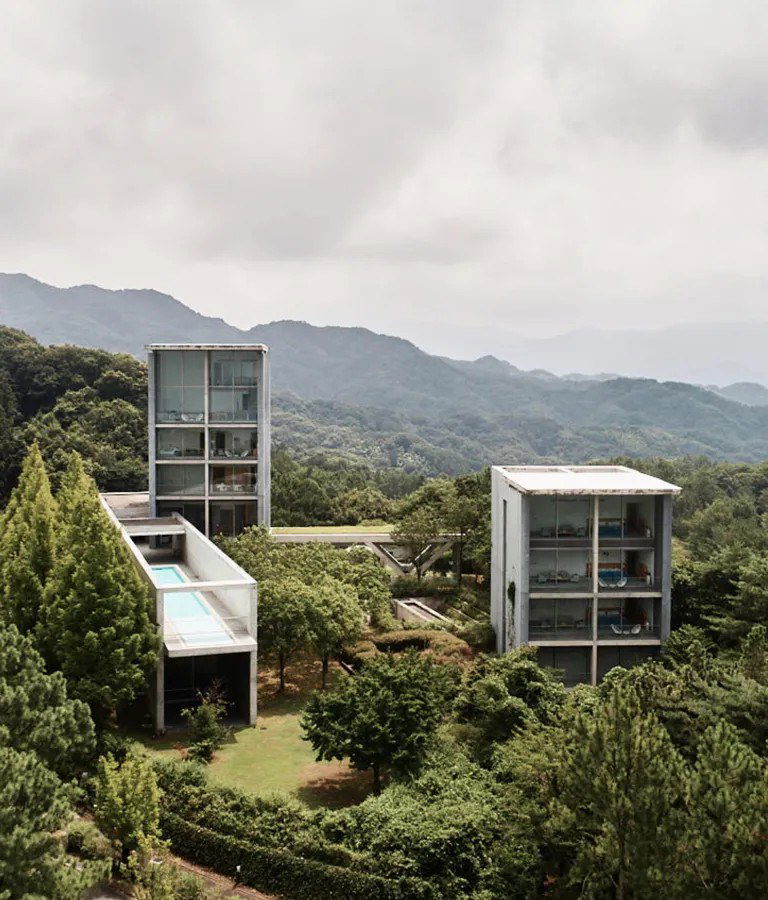


SETOUCHI RETREAT by Onko Chishin
Yanaidanimachi, Matsuyama
Hotel in Matsuyama, Japan
 Book with Pearl
The Read
Ando-Designed Mountaintop Minimalism
Why go
SETOUCHI RETREAT by Onko Chishin is the Matsuyama choice for travelers who value a quiet, design-led stay over central convenience. The Michelin 1 Key recognition gives it a clear quality signal, but families should book it only if the trip allows for a slower, retreat-style rhythm rather than constant walk-out access.
About SETOUCHI RETREAT by Onko Chishin
SETOUCHI RETREAT by Onko Chishin is a Matsuyama hotel with two recognition signals: Michelin 1 Key in 2024 and 2026 Design Hotels Member status. Travelers should confirm specifics like room categories, facilities, dining, pricing, access, service format directly.
Worth it for travelers prioritizing a recognized Matsuyama stay
SETOUCHI RETREAT by Onko Chishin is in Matsuyama. The clearest reasons to consider it are its Michelin 1 Key recognition and Design Hotels Member status for 2026. If those signals matter to your trip planning, it belongs on the shortlist; if your decision depends on exact location logistics, room details, meals, or on-property amenities, verify those directly before booking.
For trip planning, compare it with other options based on the practical details that matter for your stay: dates, access, room needs, cancellation terms, any current information from the hotel. For meals or activities around the city, use current Matsuyama planning resources and confirm details directly.
Book after confirming the details that matter to your itinerary
Treat SETOUCHI RETREAT by Onko Chishin as a hotel to confirm carefully rather than one to judge on assumptions. Before committing, check the latest room availability, policies, access details, any services you specifically need. Quick reference: choose it if its recognition is important to you; compare further if convenience, facilities, or detailed service information will decide the stay.
Planning details
- Location
- 794-1 Yanaidanimachi, Matsuyama, Ehime 790-2641
- Website
- setouchi.by-onko-chishin.com
- Phone
- +81 89-977-9500
The take
The Take
The Vibe
Setouchi Retreat is a study in disciplined minimalism rendered at architectural scale. Designed by Tadao Ando, the property uses exposed, flawlessly poured concrete and deliberate shifts between enclosed and open space to shape light and silence. The result feels precise rather than ornamental: surfaces reward slowness, transitions are purposeful, and quiet is arranged rather than incidental. Perched on a mountainside above Matsuyama with views to the Seto Inland Sea, the retreat reads as an intimate, modern sanctuary—small in footprint and generous in contemplative space—where design itself is the primary amenity and the atmosphere favors reflection over spectacle.
Best For
Setouchi Retreat suits travelers seeking a quiet, design-driven respite—couples on a romantic getaway or honeymoon, guests celebrating an anniversary, and visitors pursuing a restorative wellness retreat. Its seven-room scale and mountainside siting foster privacy and stillness, while the presence of major architectural authorship (Tadao Ando) makes the stay appeal to those interested in architecture and contemplative experiences. The retreat pairs well with low‑key exploration of Matsuyama—Dogo Onsen and the castle are nearby—so itineraries that prioritize slow afternoons and relaxed sightseeing fit best.
Stay Tips
With just seven rooms and a deliberately restrained scale, availability at Setouchi Retreat can be limited; book well in advance, especially for weekend dates or peak travel seasons. Expect a stay oriented around quiet and architecture rather than conventional hotel amenities: plan time to experience the building, the mountainside siting, and views across the Seto Inland Sea. For visitors combining the retreat with local sights, allow extra travel time to and from Matsuyama and to nearby Dogo Onsen to make the most of a slow, restorative visit.
Venue details
Ambiance
Minimalist luxury with serene, clean spaces, concrete architecture, floor-to-ceiling windows, and profound emptiness inspiring silence and tranquility.
Tags
Vibe
Best For
Experience
Amenities
View
Accessibility
About the Stay
- Rooms
- 7
- Check-in
- 15:00
- Check-out
- 11:00
- Property Style
- Small Luxury All Suite Hotel Designed by Tadao Ando
- Design Style
- Majestic Minimalism with Smooth Concrete Walls and Museum Quality Art
Planning details
Location
794-1 Yanaidanimachi, Matsuyama, Ehime 790-2641 · Directions
Recognition and awards
Also consider
Also Consider
- Itomachi Hotel 0, Notable alternative
- Etajimasou Hotel & SPA Hiroshima, Notable alternative
- Azumi Setoda, Notable alternative
- Hilton Hiroshima, Notable alternative
- KIRO Hiroshima by THE SHARE HOTELS, Notable alternative
Hotel context
How it compares with Setouchi and Hiroshima hotels
Choose SETOUCHI RETREAT by Onko Chishin if the trip is built around quiet, design, a slower Matsuyama base. Itomachi Hotel 0 is the more value-minded cross-shop for travelers who want a simpler stay, while Azumi Setoda is the stronger comparison for a destination-hotel mood elsewhere in the Setouchi region.
For easier logistics, Hilton Hiroshima is the safer business or family choice: larger-city infrastructure, more predictable chain-hotel expectations, likely broader room flexibility. KIRO Hiroshima by THE SHARE HOTELS fits travelers who want Hiroshima access and a lighter design-hotel feel without committing to a retreat setting.
Etajimasou Hotel & SPA Hiroshima is the closest alternative for travelers comparing waterside calm with a spa-oriented stay. If the goal is Matsuyama specifically, stay with SETOUCHI RETREAT; if the goal is a broader Setouchi escape and booking here is tight, Azumi Setoda or Etajimasou are the cleaner fallbacks.
Explore Matsuyama
Around this place
Discover more on Pearl
Unlock the full SETOUCHI RETREAT by Onko Chishin guide in Pearl, including awards, comparisons, FAQs, planning details, and nearby places.
Compare SETOUCHI RETREAT by Onko Chishin
| Venue | Location | Awards |
|---|---|---|
| SETOUCHI RETREAT by Onko Chishin | Matsuyama | 2026 Design Hotels CollectionMichelin 1 Key 20252025 Michelin 1 Key2024 Michelin 1 Key |
| Itomachi Hotel 0 | Saijo | No published awards |
| Etajimasou Hotel & SPA Hiroshima | Hiroshima | No published awards |
| Azumi Setoda | Onomichi | 2026 Mr & Mrs Smith Luxury Hotels2025 Michelin 1 Key2024 Michelin 1 Key |
| Hilton Hiroshima | Hiroshima | No published awards |
| KIRO Hiroshima by THE SHARE HOTELS | Hiroshima | No published awards |
How SETOUCHI RETREAT by Onko Chishin: Worth It? compares with similar nearby venues.
FAQ
Frequently Asked Questions
How does SETOUCHI RETREAT by Onko Chishin compare to other hotels?
SETOUCHI RETREAT by Onko Chishin is a Matsuyama hotel with Michelin 1 Key recognition and 2026 Design Hotels Member status. For broader comparison, travelers may also look at Azumi Setoda, Etajimasou Hotel & SPA Hiroshima, Hilton Hiroshima, KIRO Hiroshima by THE SHARE HOTELS, Itomachi Hotel 0, while checking each property's city, access, current details directly.
When is the best time to book SETOUCHI RETREAT by Onko Chishin?
If you want to stay there because of its Michelin 1 Key recognition or Design Hotels Member status, check availability early enough to compare dates, policies, room options before finalizing the rest of your Matsuyama plans.
Do loyalty programs work at SETOUCHI RETREAT by Onko Chishin?
Its recognition points are Michelin 1 Key and 2026 Design Hotels Member status. Confirm any loyalty benefits directly before booking.
How is the location of SETOUCHI RETREAT by Onko Chishin?
Which room category is best at SETOUCHI RETREAT by Onko Chishin?
Choose based on the latest information from the hotel, including room size, layout, policies, availability for your dates.