
    Hotel in Hangzhou, China

    Conrad Hangzhou

    250pts

    Riverfront Altitude Dining

    Conrad Hangzhou, Hotel in Hangzhou

    About Conrad Hangzhou

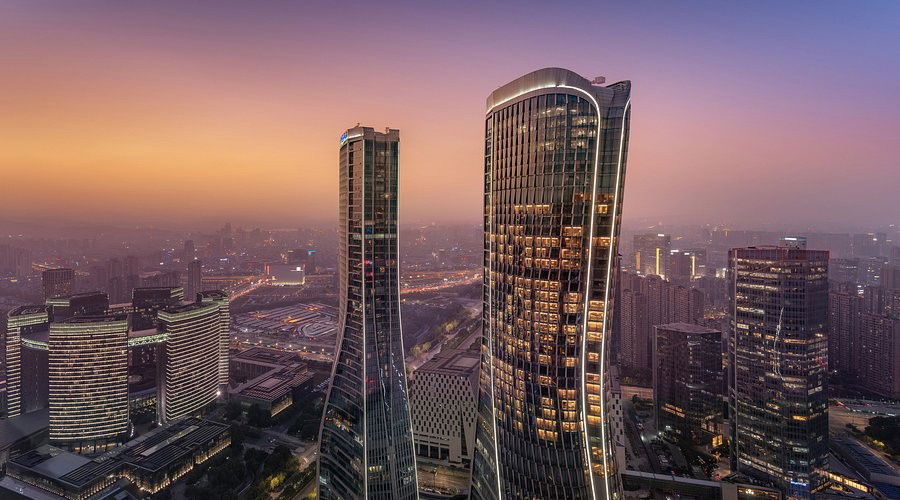
    Conrad Hangzhou rises above the Qiantang River in twin towers within the Gold LEED-certified Raffles City complex, positioning itself at the intersection of business infrastructure and urban luxury. Four dining outlets — including Li'An, the city's highest restaurant on the 50th floor — anchor an offering that extends to Yuan Spa on the eighth floor and rooms beginning at nearly 540 square feet with floor-to-ceiling river or city views.

    Altitude, River, and the Logic of the Qianjiang CBD

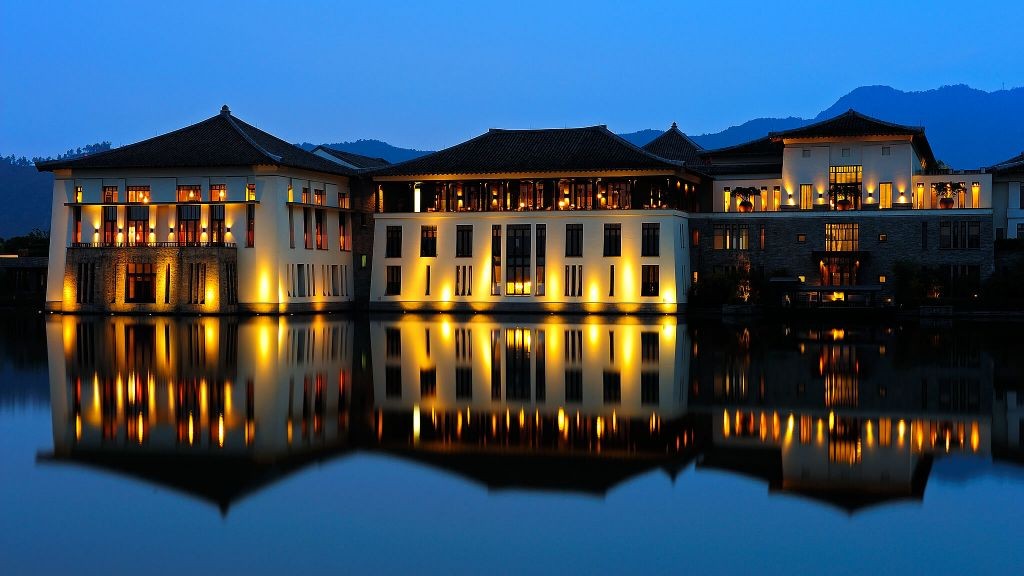
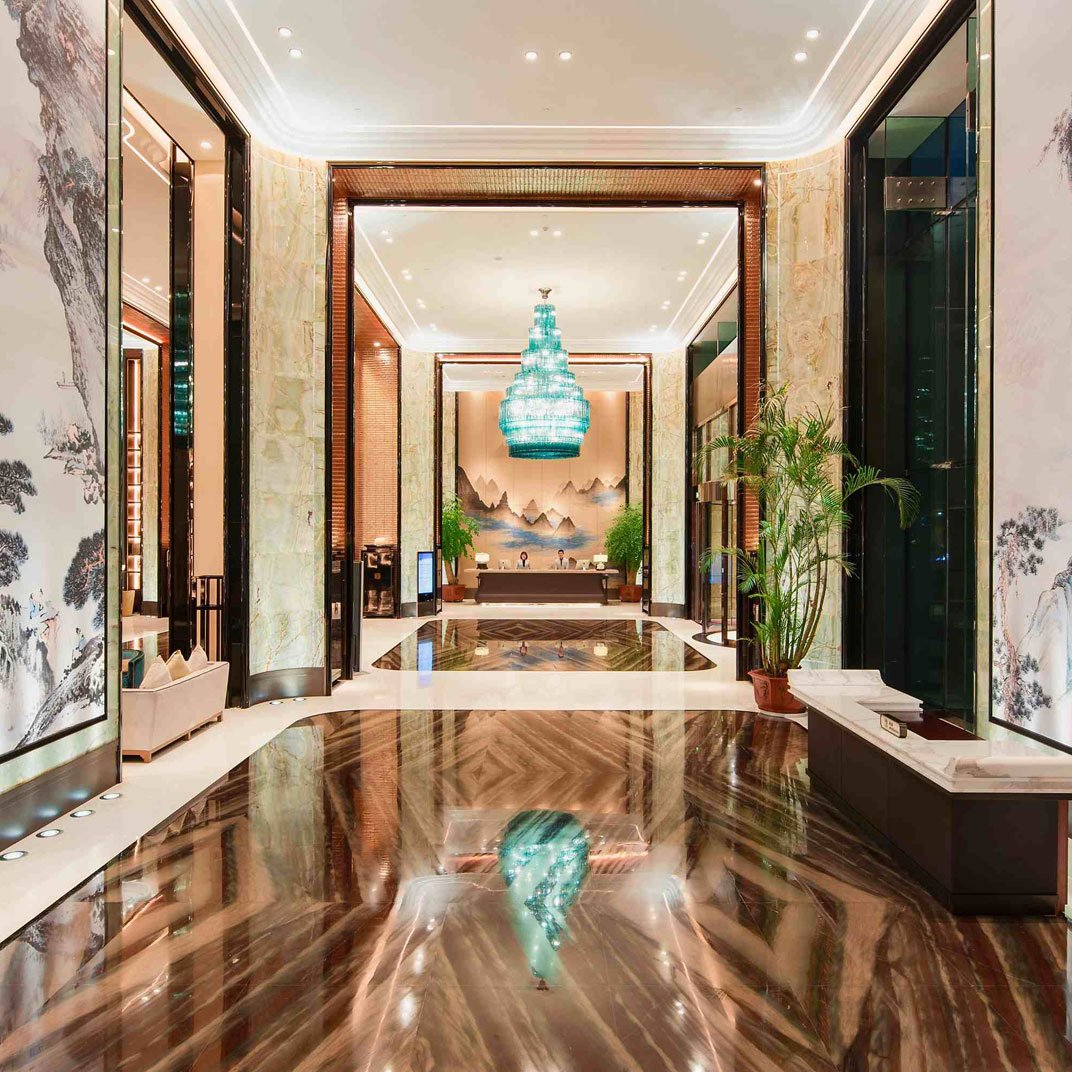
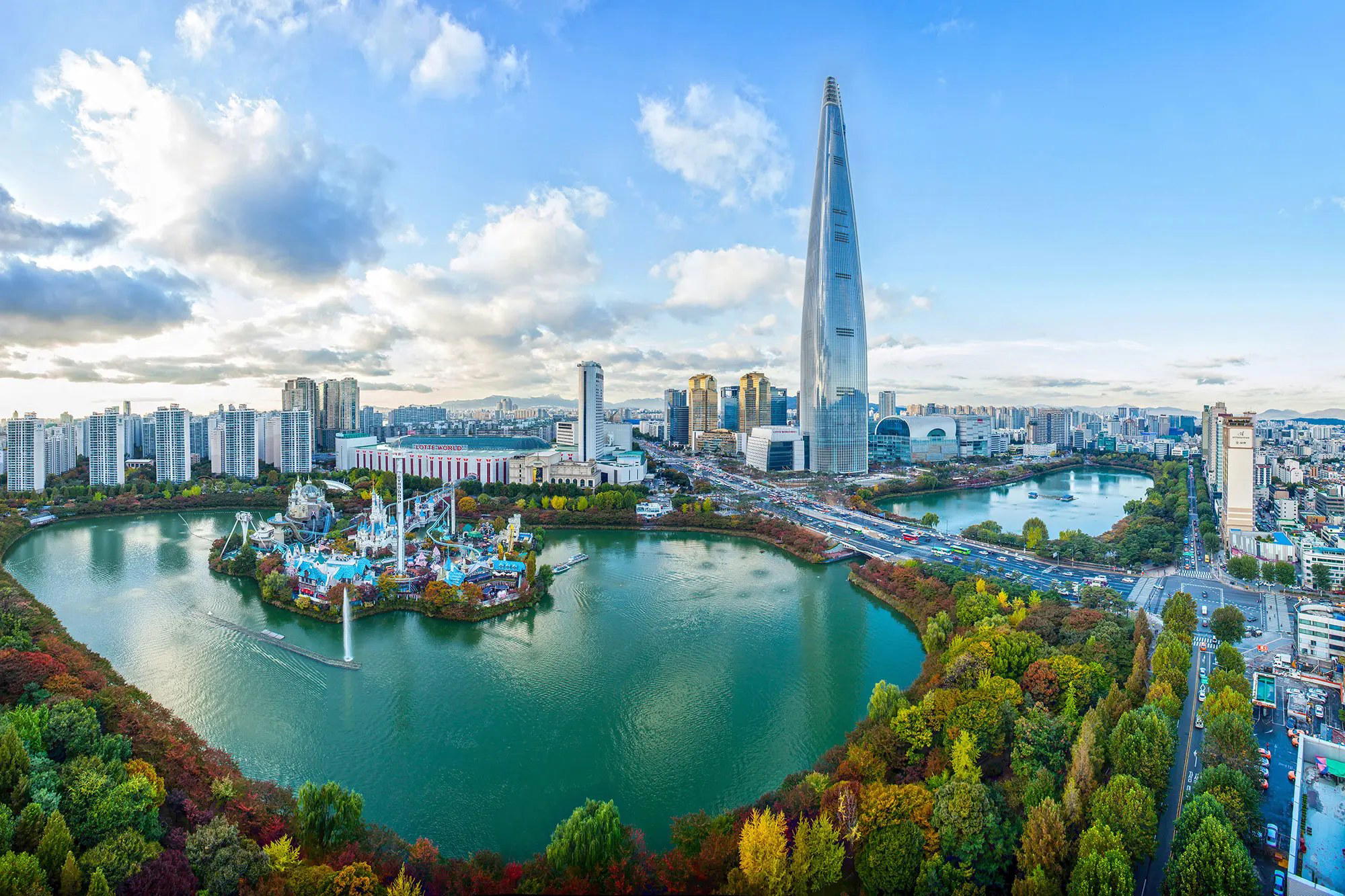
    Hangzhou's luxury hotel market has historically oriented itself around West Lake, where properties like Four Seasons Hotel Hangzhou at West Lake and Amanfayun trade on proximity to the city's defining natural asset. The Qianjiang CBD represents a different proposition: a purpose-built financial district along the Qiantang River, where architecture communicates scale and where connectivity to the convention circuit, the airport, and the national rail network carries as much weight as scenic outlook. Conrad Hangzhou operates from within this logic. Part of the Gold LEED-certified Raffles City complex, the hotel occupies two towers that function less as standalone objects than as vertical anchors for a mixed-use environment covering shopping, dining, cinema, and office space. This is a hotel designed to be arrived at — from Hangzhou Xiaoshan International Airport, from a high-speed train, from the adjacent Hangzhou Convention Center — and to absorb the demands of guests who require both efficiency and a credible luxury register.

    What the Rooms Are Actually Doing

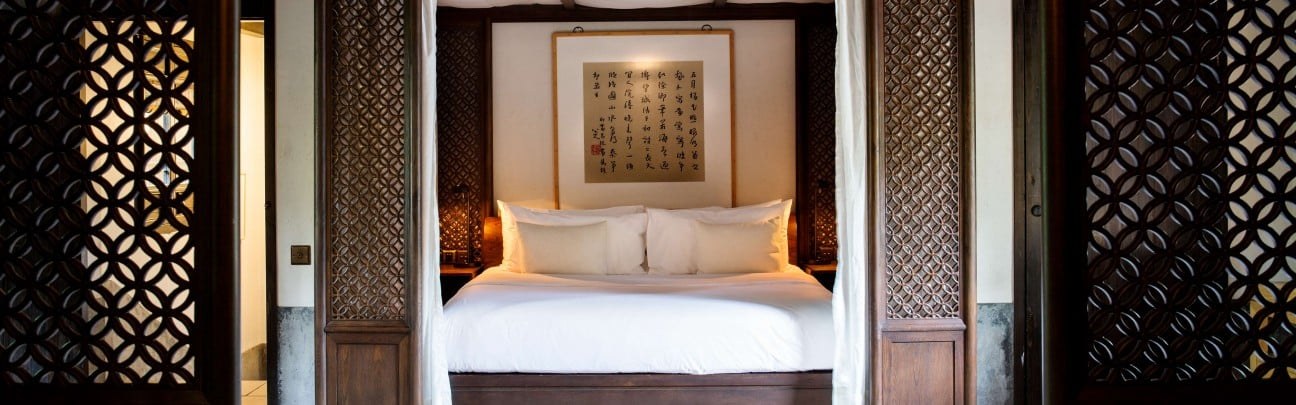
    The approach to accommodation here reflects a broader pattern in Chinese urban luxury: rooms sized and finished to a standard that competes with international branded peers rather than boutique local operators. At nearly 540 square feet for a standard configuration, the entry-level offering places Conrad Hangzhou in a tier that properties like Midtown, Hangzhou or Four Seasons Hotel Hangzhou at Hangzhou Centre would recognise as competitive ground. The design language , warm neutrals, wood panelling, green accents , references the tea-growing context of the surrounding region without leaning into pastiche. Floor-to-ceiling windows give every room a view dividend, with the city grid on one side and the Qiantang River on the other.

    The suite tier amplifies this in measurable increments. The King Conrad Suite, at over 1,200 square feet, adds an oversized square tub oriented toward the river. The King Presidential Suite, at 3,035 square feet, operates as a self-contained environment with dedicated dining, reception, and sleeping zones. In a city where convention business generates multi-night, multi-room bookings at scale, the ability to offer that upper tier on demand matters to the hotel's positioning. Guests planning extended stays or entertaining in-room will find that the Presidential Suite functions more as a private residence than a hotel room, with space to host, to work, and to decompress. For a comparison of how this suite tier positions itself against Hangzhou's luxury residential-style hotels, Banyan Tree Hangzhou and Fuchun Resort Hotel Fuyang offer different calibrations of space and setting worth considering.

    Four Restaurants and One Clear Hierarchy

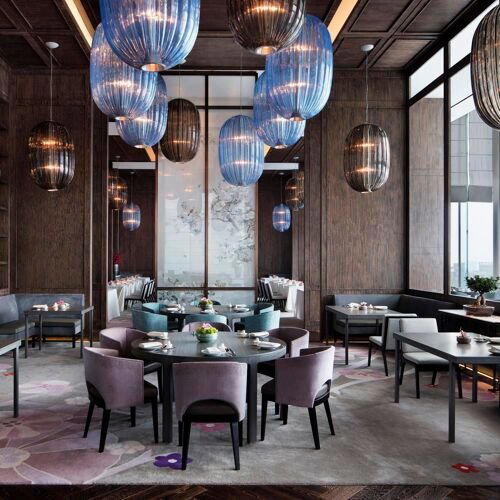
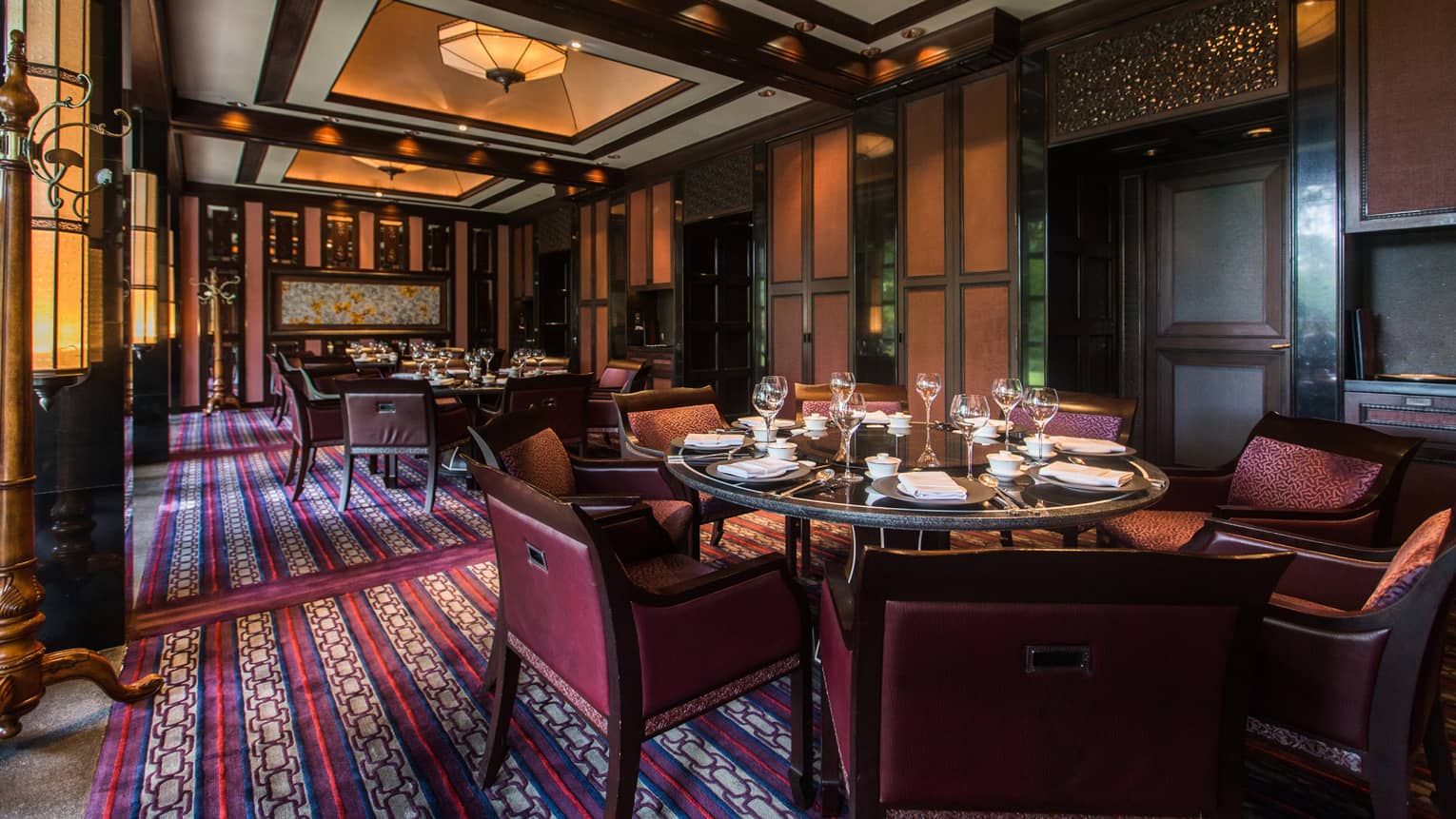
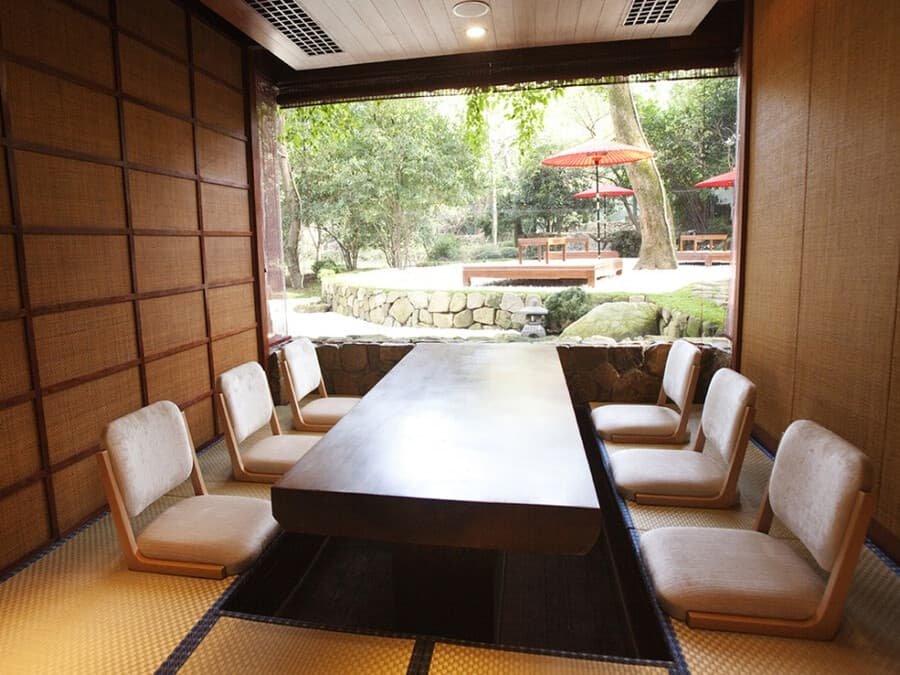
    Dining architecture at Conrad Hangzhou follows a model increasingly common in large-format urban luxury hotels across China: multiple outlets covering distinct dayparts and registers, with one anchor restaurant positioned to hold its own against independent dining destinations in the city. JIN handles afternoon tea. Blue Willow runs weekend brunch , a format that has grown from a Western import into a fixture of urban Chinese hospitality, particularly for family and social occasions. RYUKEN delivers modern Japanese in a format that reflects Hangzhou's appetite for Japanese culinary concepts, a preference visible across the city's restaurant scene in both independent and hotel-anchored venues.

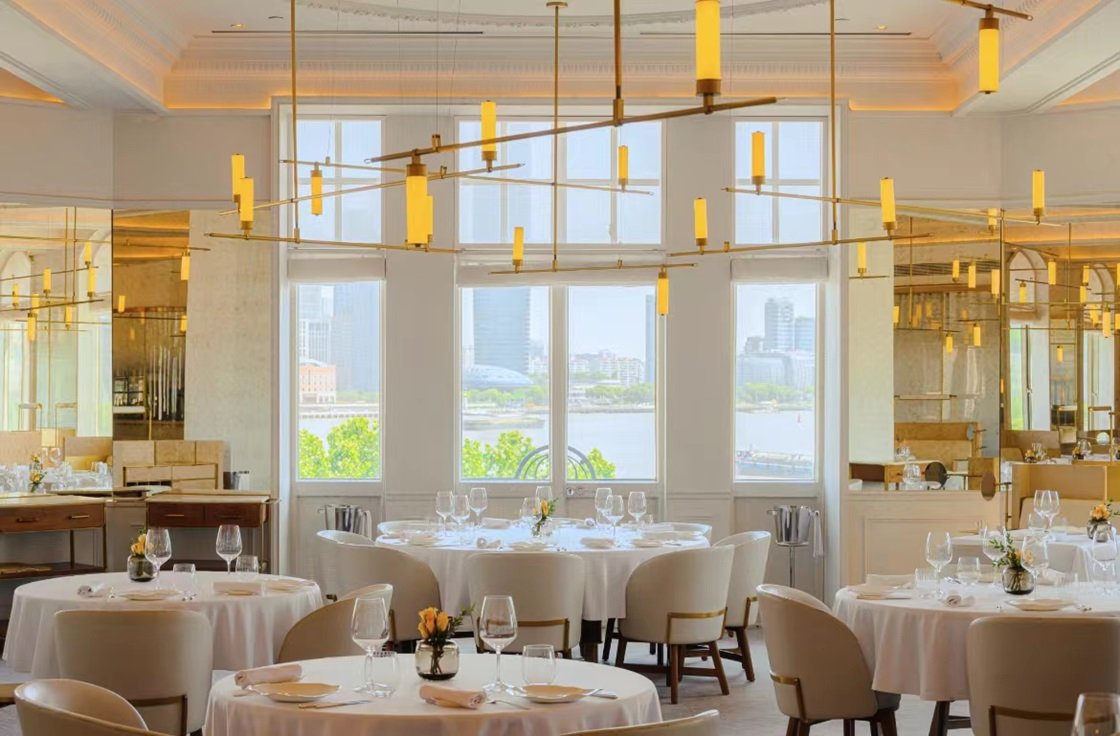
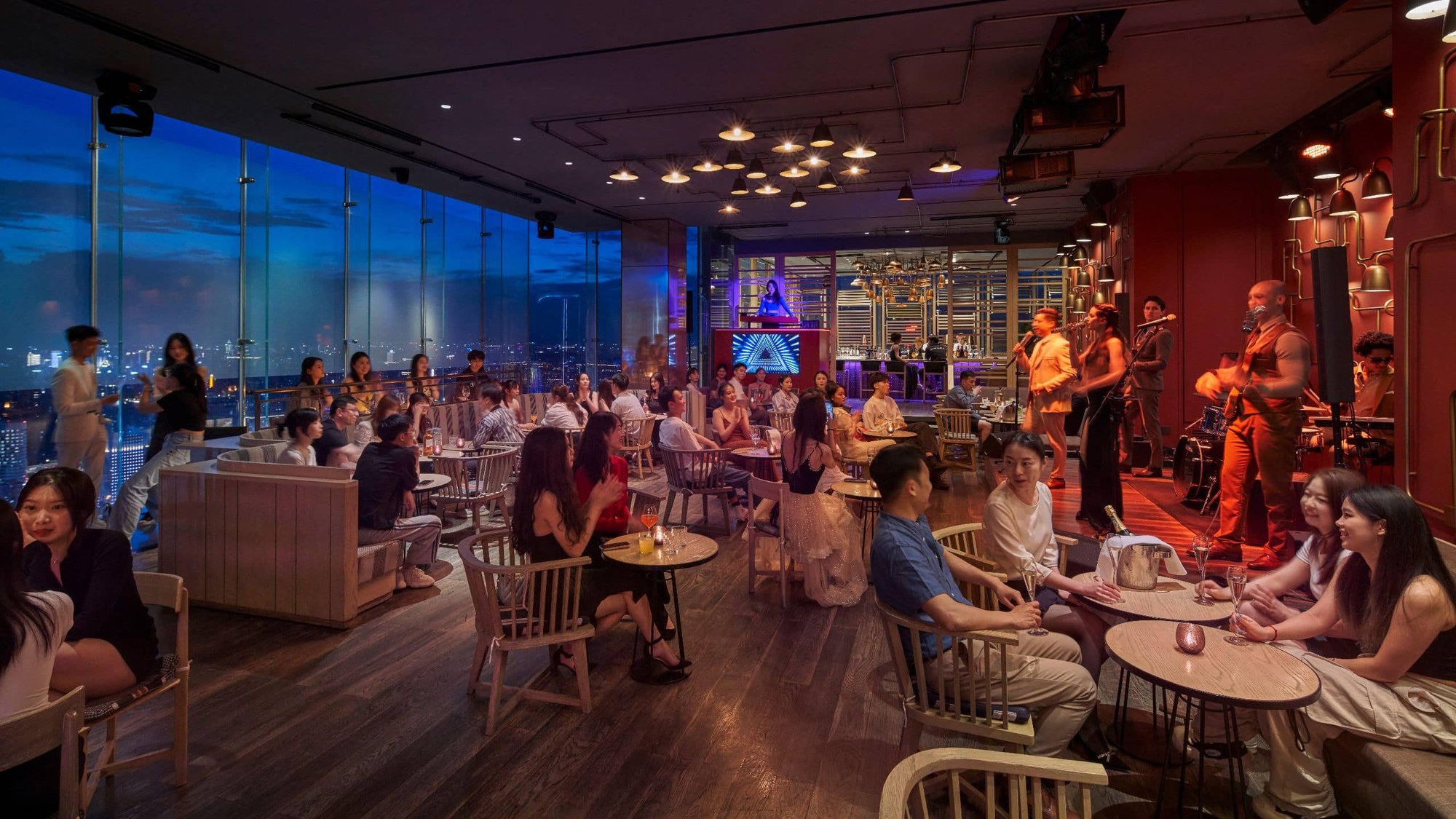
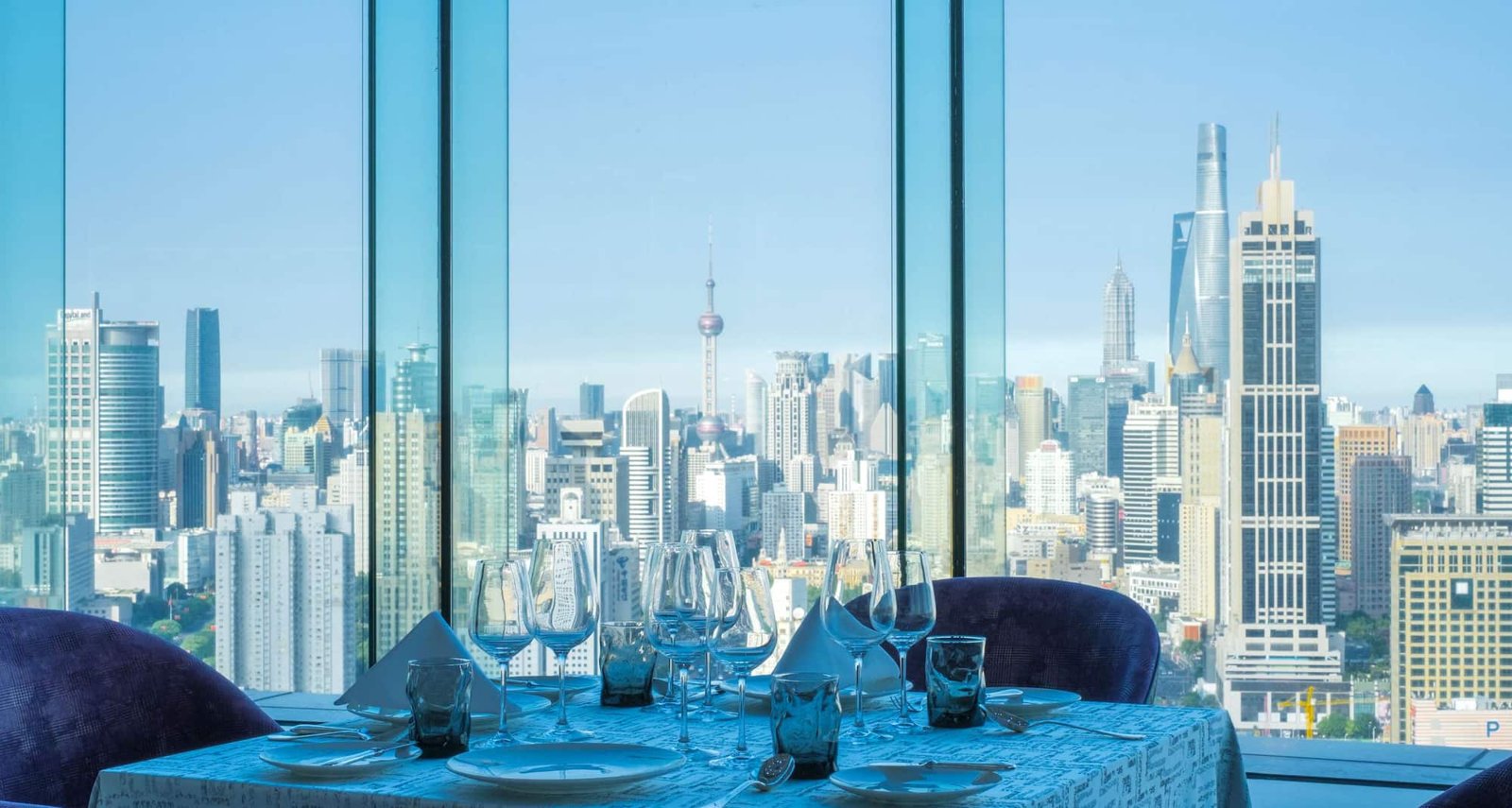
    Li'An occupies the 50th floor and, as the highest restaurant in Hangzhou, functions as the hotel's most visible culinary statement. Contemporary Chinese cuisine at this altitude operates with an obvious view advantage, but the more important point is that the format positions Li'An within a specific competitive bracket: hotel restaurants that aim to draw non-resident diners rather than rely solely on the captive audience of hotel guests. For a broader map of how Hangzhou's dining scene distributes across property types and price points, the full Hangzhou restaurants guide provides useful orientation. Comparable urban towers with high-floor dining ambitions in China include JW Marriott Hotel Shanghai at Tomorrow Square, where altitude is equally central to the dining proposition.

    Service Architecture in a Convention-Anchored Hotel

    In hotels structured around convention and corporate demand, service quality often gets tested less at the level of individual interaction and more at the level of operational logistics: how quickly transitions are managed between guest cohorts, how staff anticipate needs across different guest types arriving in the same check-in window, how 24-hour room service holds quality across the full service window. Conrad Hangzhou's connection to the Hilton Worldwide portfolio means it operates within a structured service framework with defined standards for each of these scenarios.

    The practical shape of this for leisure guests is that anticipatory service is built into the operational model rather than dependent on individual staff initiative. Yuan Spa on the eighth floor, with Valmont product protocols and traditional bath treatments, offers a recovery circuit that integrates into longer stays without requiring guests to negotiate external bookings. Babysitting services, house car access, and fitness classes with dedicated instructors extend the range of proactive support beyond the room tier. For guests arriving from international connections , Hangzhou Xiaoshan International Airport sits within a direct transfer window , the transition from transit to settled is designed to be fast. The hotel's position next to the convention center also means that the check-in volume during major events is a known planning variable, and the operational teams are calibrated accordingly.

    Guests comparing this model with smaller, independently operated luxury properties in Hangzhou, such as Hangzhou Muh Shoou Xixi Hotel, should note that the service philosophy differs fundamentally in scale and intent. Where boutique properties tend toward personalisation through staff-to-guest ratio and owner proximity, Conrad Hangzhou's approach is systematised at a level that handles volume without visible degradation in output. Both are legitimate models; which suits depends on the nature of the stay.

    The City Beyond the Complex

    West Lake sits approximately 30 minutes from the Qianjiang CBD, and the contrast between the two poles of Hangzhou's geography is instructive. The lake district, with its willow-lined causeways, pagodas, and historic temple compounds, represents the cultural capital that placed Hangzhou on China's ancient city list. The Qianjiang CBD, by contrast, is recent, engineered, and oriented toward economic output. Conrad Hangzhou sits squarely in the latter but makes the former accessible without difficulty. Longjing village, where the pan-roasted green tea that defines Hangzhou's culinary identity has been cultivated for centuries, is a 30-minute taxi ride. The practice of drinking longjing alongside housemade dumplings in one of the village's traditional tea houses represents a specific and deeply local ritual that most Hangzhou visits should include regardless of where you're staying.

    The Raffles City complex itself operates as a self-contained retail and leisure environment, with fashion boutiques, a cinema, and a food and beverage circuit that reduces the friction of evenings where guests prefer not to travel far. The Qianjiang Light Show, a synchronized LED display across more than 30 riverside high-rises using over 700,000 lights, runs in the evenings and is visible from the hotel's river-facing rooms and terraces. Guests at altitude have a natural vantage point that ground-level viewing areas don't replicate. For travelers mapping a wider circuit through eastern China, nearby reference points in the Conrad network include Conrad Hangzhou Tonglu, while broader regional comparisons span properties including Andaz Shenzhen Bay, Altira Macau, and Mandarin Oriental Qianmen in Beijing. Further afield, the brand's wider portfolio includes properties such as 1 Hotel Haitang Bay, Sanya and Xiamen Yunding Resort for guests building a multi-city China itinerary. For a distinct contrast in luxury format elsewhere in Asia, Amandayan in Lijiang and Hyatt Place Nanjing Xuanwu represent opposite ends of the scale and service-model spectrum. International comparisons for guests who move between Conrad-tier properties globally include Aman New York, The Fifth Avenue Hotel, and Aman Venice, each operating in a different format tier but against a comparable price expectation.

    Planning Your Stay

    Conrad Hangzhou is located at 228 Xinye Road, Shangcheng District, within the Raffles City complex along the Qiantang River. The hotel connects directly to the Hangzhou Convention Center and maintains short transfer windows to Hangzhou Xiaoshan International Airport and the high-speed rail network, making it particularly practical for mixed business-leisure trips. Amenities across the property cover 24-hour room service, indoor pool, gym, fitness classes, meeting rooms, house car, and babysitting services. Yuan Spa operates on the eighth floor with Valmont treatment protocols. Booking through the Hilton Honors system or directly via the Conrad brand channel is standard practice for rate access and room preference requests. Guests arriving during major convention periods at the adjacent center should note that room availability and service demand will be higher than during standard occupancy windows , advance booking is advisable for those dates. Conrad Hangzhou carries a Google review average of 4.7 across 23 reviews at the time of writing, a signal of consistent delivery at the upper end of the branded luxury tier.

    Frequently Asked Questions

    What is Conrad Hangzhou known for?

    Conrad Hangzhou is known primarily for its position within the Qianjiang CBD and for Li'An, its contemporary Chinese restaurant on the 50th floor, which holds the distinction of being the highest restaurant in Hangzhou. The hotel is also recognised for its integration into the Gold LEED-certified Raffles City complex, which combines hotel operations with retail, dining, and convention infrastructure. As part of Hilton Worldwide's Conrad brand, it draws a significant share of its business from the adjacent Hangzhou Convention Center, placing it in a competitive bracket with other large-format urban luxury properties in the city.

    What's the signature room at Conrad Hangzhou?

    The King Presidential Suite, at 3,035 square feet, represents the property's most comprehensive accommodation offer, with dedicated zones for sleeping, dining, and reception alongside access to an oversized soaking tub and sauna. For guests who want the river-view experience at a more contained scale, the King Conrad Suite exceeds 1,200 square feet and features an oversized square tub oriented toward the Qiantang River. Both suites are positioned to serve guests who require space to host or work independently of the hotel's public areas.

    Do they take walk-ins at Conrad Hangzhou?

    For hotel stays, same-day room availability exists but is subject to convention center booking patterns, which can compress inventory significantly during major events at the adjacent Hangzhou Convention Center. If you're arriving without a reservation during a known convention period, the likelihood of walk-in availability at competitive rates drops considerably. For dining at Li'An on the 50th floor, advance reservation is advisable given both the altitude draw for non-resident guests and the limited capacity that comes with a high-floor format. The Hilton direct booking channel and Honors membership remain the most practical routes for securing preferred room types.

    What makes Li'An restaurant worth considering for non-hotel guests visiting Hangzhou?

    Li'An sits on the 50th floor of Conrad Hangzhou, making it the highest restaurant in the city, a physical fact that shapes the dining context in ways that ground-level contemporary Chinese venues cannot replicate. The combination of city and Qiantang River panoramas with a contemporary Chinese menu positions it within a specific tier of destination-dining hotel restaurants that actively compete for non-resident covers rather than relying on captive hotel traffic. Guests without a room booking should treat a reservation at Li'An as they would any high-demand city-view restaurant , securing a table in advance is advisable, particularly for evening service when the Qianjiang Light Show is visible from the dining room.

    Recognized By

    Keep this place

    Save or rate Conrad Hangzhou on Pearl

    Keep this venue in your Pearl passport, rate it after you visit, and track it alongside every other place you collect.