
Hotel in Dayton, United States
AC Hotel Dayton
150Pearl PointsUrban Design Base
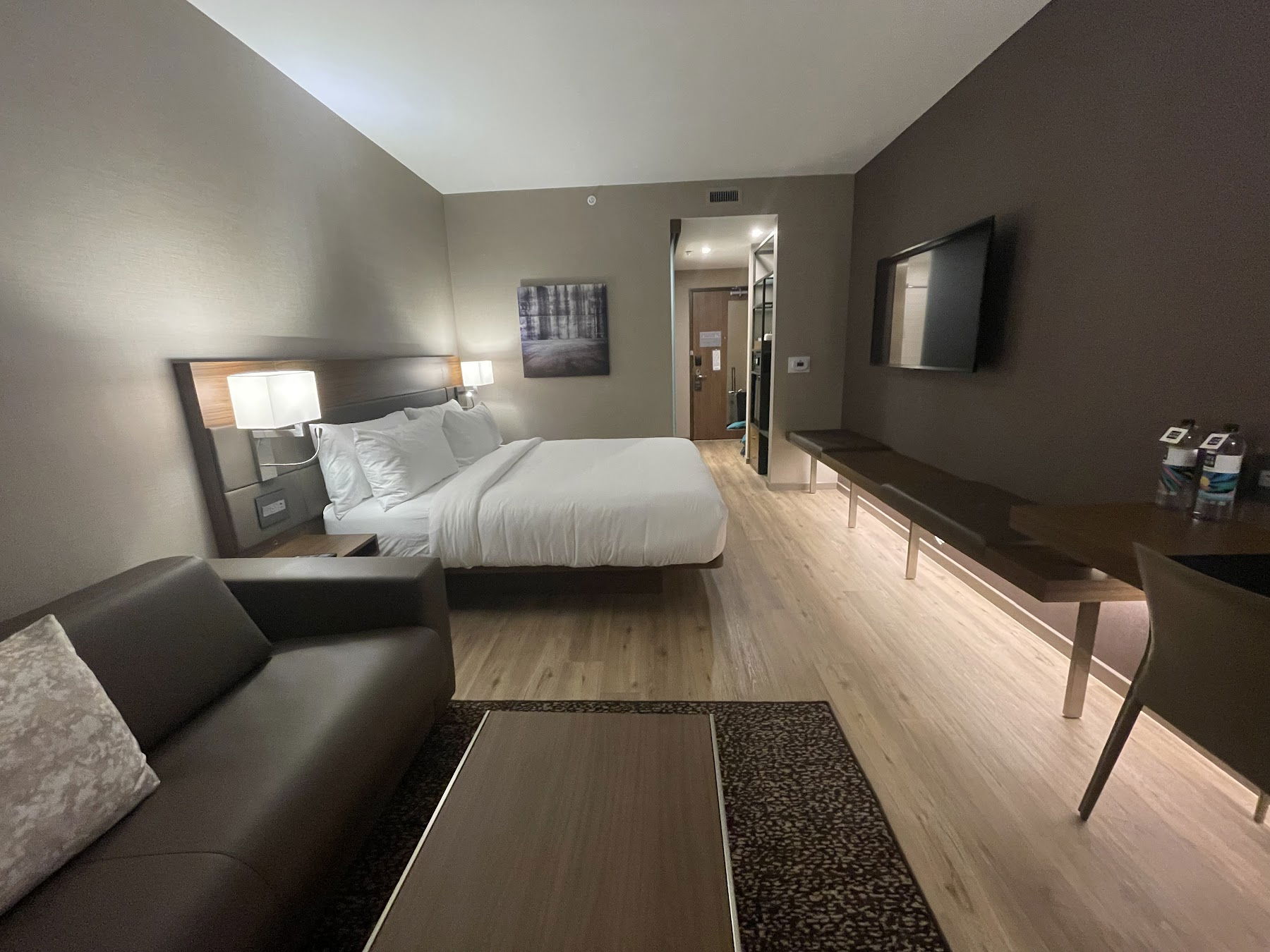
About AC Hotel Dayton
AC Hotel Dayton belongs to the design-led business-hotel tier shaping mid-sized American downtowns: cleaner lines, fewer resort signals, and a stronger relationship to work, dining, and short-stay city itineraries. With no published EP Club record for awards, pricing, chef, or restaurant format, the smarter read is contextual: judge it against Dayton’s urban hotel set, not destination resorts or historic grand hotels.
First impression: a city hotel read through design
Approaching a contemporary downtown hotel in a city such as Dayton is less about spectacle than proportion. The signals tend to be quieter: glass, street frontage, a lobby intended for laptops as much as luggage, and a public floor that has to serve multiple audiences across the day. That is the useful frame for AC Hotel Dayton. The property sits in the modern select-service and lifestyle-hotel conversation, a tier where design discipline matters because there is less reliance on resort acreage, heritage architecture, or destination dining to carry the stay.
Dayton’s hospitality scene operates differently from coastal luxury markets. The city is tied to aviation history, university traffic, medical travel, corporate visits, arts programming, and regional weekend movement rather than a single leisure narrative. That produces hotels that have to be efficient without feeling anonymous. The design question is practical: can a property create a composed base for a short urban stay while keeping enough visual identity to avoid the generic business-hotel drift that has flattened so many American downtowns?
AC Hotel Dayton should be read inside that shift. The AC brand, as a category, has built its reputation on pared-back interiors, European-influenced public spaces, and a restrained approach to service touchpoints. With 4-star positioning and 134 rooms, AC Hotel Dayton fits the contemporary city-base category, with a price tier of 3 for travelers weighing value against design and location. Instead, the point is the format: this is the kind of hotel Dayton needs if its downtown is to hold travelers who want polish without the ceremony or tariff structure of a grand urban flagship.
Why design carries more weight in Dayton than it might in larger hotel markets
In New York, Los Angeles, or Miami, hotel design often competes with a long field of visual signatures: landmark lobbies, clubby townhouses, beachfront compounds, and architect-driven towers. In Dayton, the comparison set is narrower, which makes small design decisions more legible. Lighting, seating density, acoustic control, and the way a lobby handles the transition between workday and evening all matter because the hotel may function as a meeting point as much as a sleeping address.
The city’s built environment gives this kind of property a specific role. Dayton has industrial and aviation-era associations, but its contemporary downtown experience is made from arts venues, offices, restaurants, bars, and event traffic rather than a single monument district. A design-led hotel in this context should not try to imitate resort luxury. It should give the traveler a controlled threshold between the city outside and the working rhythm inside: a place to check email, wait for a colleague, reset between meetings, or return after dinner without feeling stranded in a fluorescent corridor culture.
That is where AC Hotel Dayton’s competitive position becomes clearer. It is not usefully compared with remote American retreats such as Amangiri in Canyon Point, where architecture is inseparable from desert landscape, or Post Ranch Inn in Big Sur, where the setting drives the hotel’s entire emotional register. Dayton’s urban hotel category is about compression: fewer spatial theatrics, more importance placed on whether the public areas, rooms, and service rhythm make a short stay feel coherent.
The AC format and the new middle of American city hotels
The American hotel market has spent the past decade splitting into sharper categories. At one end sit full-service luxury properties with destination restaurants, spa programs, concierges, and heavy staffing. At another are basic limited-service hotels built around sleep and price. Between them is a more interesting band: hotels that borrow design language from boutique hospitality while retaining the operational efficiency of a larger brand system. AC Hotel Dayton belongs to this middle band.
That middle band is often where mid-sized cities see the strongest change. A traveler no longer has to choose between a chain property with little personality and a luxury hotel priced for a different kind of trip. Design becomes a value proposition, not decoration. A restrained lobby palette, European-style bar cues, compact but organized rooms, and a social ground floor can shift the whole stay if the execution is disciplined. Its broader brand position places the property in the modern, design-conscious business-and-leisure tier.
For readers comparing hotel categories across EP Club, that difference matters. The Fifth Avenue Hotel in New York City uses maximal urban character and high-touch hospitality to define itself in a dense luxury market. The Beverly Hills Hotel in Los Angeles carries a different kind of heritage weight. A Dayton AC property has a narrower brief: deliver a composed, contemporary city stay without pretending to be a resort, private club, or historic grande dame.
Atmosphere: controlled, urban, and built for short stays
The expected atmosphere at a hotel in this category is measured rather than theatrical. The public spaces tend to privilege clean sightlines, work-friendly seating, and a bar-lobby relationship that can absorb both solo travelers and small groups. In a city such as Dayton, that matters because many stays are purpose-driven: a meeting, a university visit, a performance, a family commitment, a regional weekend itinerary. The hotel has to handle early departures and late arrivals as naturally as it handles a pre-dinner drink.
Because the database record does not list a restaurant, chef, cuisine type, bar program, or signature dishes, there is no basis for claiming a destination food identity here. That absence is useful information. Travelers should treat the property as a design-forward base rather than a dining-led hotel. The more interesting culinary work will likely happen across the city, where Dayton’s restaurant and bar scene can be planned separately from the room decision.
This distinction prevents a common hotel-planning mistake. A polished lobby does not automatically mean the hotel is a food destination, and a good room does not require a chef-led restaurant downstairs. In mid-sized cities, separating the sleep decision from the dining decision often produces a stronger trip. Stay where the design, location logic, and price tier fit the itinerary, then build meals around the city rather than the elevator bank.
How it compares with design-led and destination hotels elsewhere
The American hotel conversation is filled with properties whose identities depend on setting. Meadowood Napa Valley in Napa is tied to wine-country pace and estate-style hospitality. SingleThread Farm Inn in Healdsburg belongs to the small-inn, restaurant-linked model. Kona Village, A Rosewood Resort in Kailua Kona is read through a resort lens, while Little Palm Island Resort & Spa in Little Torch Key depends on seclusion and island logistics.
Dayton asks for a different scale of judgment. The stronger comparison is not with remote retreats, but with urban properties that translate design into daily usability. Raffles Boston in Boston brings a larger luxury apparatus to a major city. 1 Hotel San Francisco in San Francisco uses sustainability-coded materials and waterfront-city context. Chicago Athletic Association in Chicago works through adaptive reuse and clubby civic drama. AC Hotel Dayton sits in a quieter register, where the achievement is not theatrical personality but a more current hotel grammar for a city whose travel demand is varied and practical.
That context also explains what should not be expected. This is not the ranch-and-river language of Sage Lodge in Pray, the wellness-intensive structure of Canyon Ranch Tucson in Tucson, or the historic European grandeur associated with Hôtel de Paris Monte-Carlo in Monte Carlo, Badrutt's Palace Hotel in St. Moritz, or Aman Venice in Venice. The Dayton brief is urban utility with a design filter.
What the absence of awards and pricing data tells a planner
That does not disqualify the hotel; it simply changes the decision process. With heavily awarded hotels, outside recognition can anchor expectations before arrival. Without that signal, travelers should rely on category fit, current rate comparison, location needs, cancellation terms, and the role the hotel will play in the itinerary.
Price is especially important in this category. A design-led chain hotel can be a smart choice when the rate gap between it and basic competitors is modest, particularly for travelers who will use the lobby, bar, or work areas. If the rate approaches full-service luxury pricing, the calculation changes, because a traveler may expect deeper staffing, broader amenities, or a more developed food and beverage program. Since the database record does not publish a price range, current rates should be checked against other Dayton hotels for the exact dates of travel.
The same logic applies to booking depth. Dayton demand can move around university calendars, performances, sports, business travel, and regional events. With no published booking method, website, phone number, or room inventory in the record, planning should be date-sensitive rather than reputation-sensitive. For ordinary midweek travel, the decision may be driven by rate and location. Around event-heavy weekends, a longer lead time is sensible, especially for travelers who need a specific room type or cancellation flexibility.
Dayton beyond the room
A hotel page should not pretend the room is the whole trip. Dayton’s more rewarding itineraries usually combine a practical base with separate decisions about restaurants, bars, cultural stops, and nearby experiences. That is particularly true when the hotel record does not identify a chef-led restaurant or a destination bar. The property may solve the lodging question, but the city supplies the broader texture.
For dining, the useful starting point is Our full Dayton restaurants guide, which should be read as a separate layer from the hotel choice. For drinks, Our full Dayton bars guide can help distinguish neighborhood bars, cocktail rooms, and casual late-evening options. Travelers building a wider regional itinerary can also use Our full Dayton wineries guide and Our full Dayton experiences guide. For lodging comparisons within the same market, Our full Dayton hotels guide is the logical companion page.
The practical value of AC Hotel Dayton, then, is not that it replaces the city around it. Its value is that it can make the city easier to use. That is the quiet promise of a design-forward urban hotel in a mid-sized market: not escape, but friction reduction. The lobby should work before a meeting, the room should reset the day, and the overall atmosphere should feel current without requiring the guest to buy into a resort fantasy.
Planning notes
Plan this property as a contemporary city base rather than a full resort stay. The hotel’s 4-star, 134-room profile and $153 nightly rate suggest a practical downtown stay, with reservations recommended. In practical terms, that means checking the rate against comparable Dayton hotels and confirming cancellation terms before booking.
For a one-night business stop, the decision can be made close to arrival if rates remain stable and room type is not sensitive, though advance booking is still recommended. For weekends tied to university, arts, sports, or regional events, planning further ahead is the better strategy. important than availability and rate discipline. The traveler who treats the hotel as one part of a wider Dayton plan will make the sharper choice.
Location
Dayton, United States
Explore Dayton
Save or rate AC Hotel Dayton on Pearl
Keep this venue in your Pearl passport, rate it after you visit, and track it alongside every other place you collect.