
Hotel in Cologne, Germany
Althoff Dom Hotel
150Pearl PointsDom-Adjacent Urban Stay
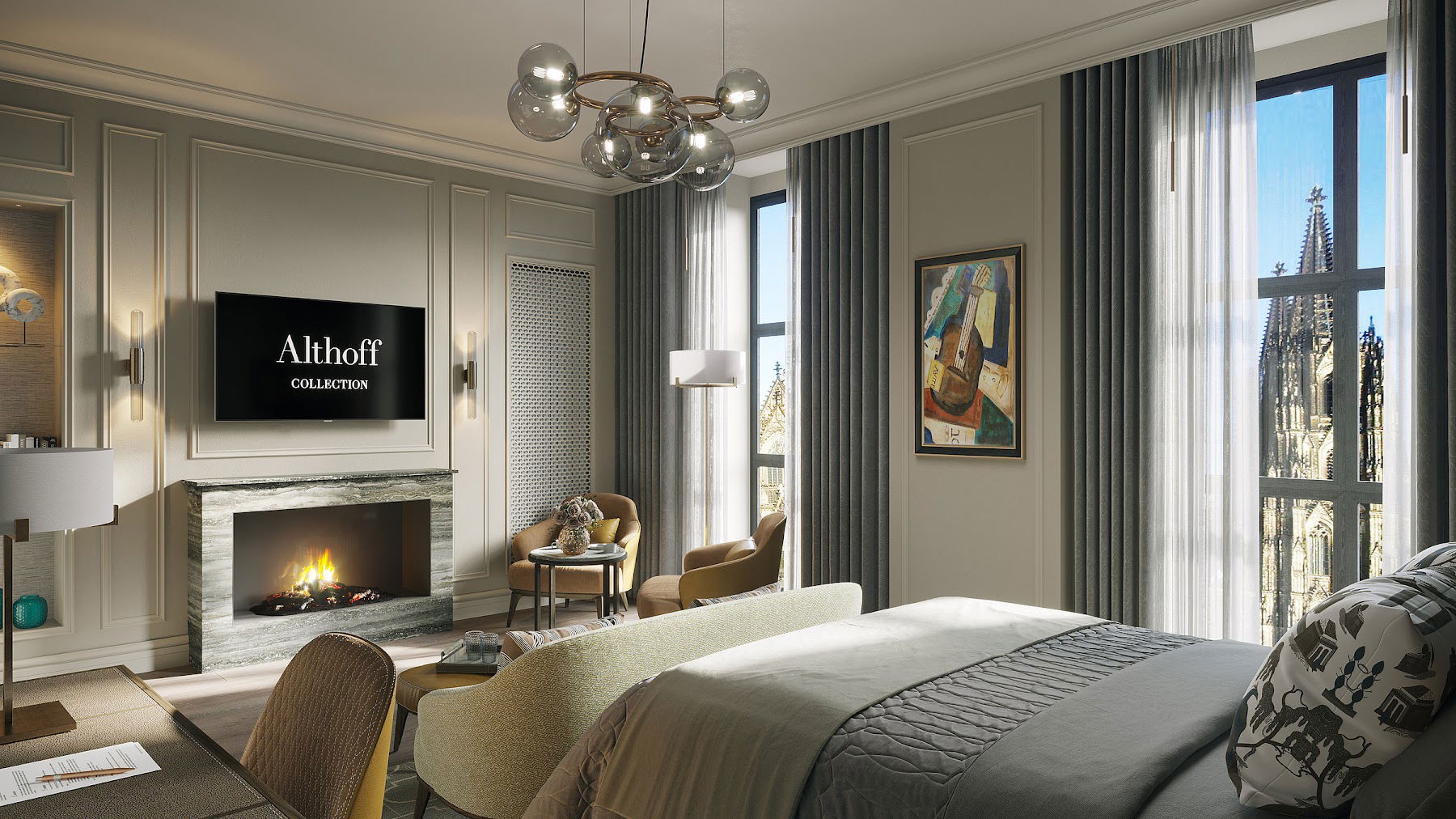
About Althoff Dom Hotel
<strong>Althoff Dom Hotel</strong> belongs to <strong>Cologne</strong>’s small circle of <strong>cathedral</strong>-adjacent grand-hotel addresses, where <strong>architecture</strong>, civic history and location carry more weight than resort theatrics. With database details on rooms, rates and awards unavailable, the smart read is comparative: judge it against Cologne’s heritage hotels, design-led conversions and Rhine-facing business-<strong>luxury</strong> properties rather than expecting a resort-style brief.
Arriving in a cathedral city
Cologne is a city where scale announces itself before service does. The cathedral dominates the centre with a kind of architectural authority that changes the tone of every hotel nearby: facades feel smaller, lobbies feel more exposed, and the choice of address becomes part of the stay rather than an afterthought. Althoff Dom Hotel sits inside that conversation. The available record confirms the name and city, but not the address, star rating, room count, price band, awards or operating details, so the responsible reading begins with context rather than claims. In Cologne, a hotel carrying the Dom name is not competing on beach-club leisure or countryside privacy. It is competing on urban proximity, architectural presence and the emotional charge of staying near one of Europe’s defining Gothic landmarks.
That matters because Cologne’s hotel scene is unusually split. One side favours civic grand-hotel formality near the cathedral and main station; another favours design conversions, art-led interiors and neighbourhood hotels with a looser rhythm. For travellers comparing Althoff Dom Hotel with Excelsior Hotel Ernst, the question is not merely which property has heavier drapes or deeper service rituals. It is which version of Cologne the stay should frame: ceremonial centre, contemporary design city, Rhine-side convention capital or creative district base.
Architecture is the first filter
The assigned lens for this hotel is architecture and design, and Cologne rewards that approach. The city was heavily rebuilt after the Second World War, leaving a centre where medieval memory, postwar pragmatism and later commercial polish sit close together. The cathedral survived as the fixed point; much of the surrounding hospitality fabric has had to negotiate that fact. Hotels near the Dom rarely get to behave as neutral containers. Their entrances, sightlines and public rooms are read against stone, rail movement and tourist density.
Althoff Dom Hotel should therefore be understood through its relationship to setting before any unverified claim about interiors. The database does not provide a style label, architect, renovation note, suite inventory or design brief. That absence matters. A serious traveller should avoid assuming a palace-hotel interior, boutique minimalism or contemporary German restraint without confirmation from current hotel materials. What can be said is more useful: in this part of Cologne, design quality is judged by how well a hotel manages the pressure of the centre. Does it create calm without erasing the city? Does it acknowledge the Dom’s presence without turning it into scenery? Does it handle arrival, circulation and public space with the composure expected at a premium address?
The comparison set sharpens the point. THE QVEST and The Qvest Hideaway belong to Cologne’s design-conscious side, where adaptive reuse and art-world references carry the experience. 25hours Hotel The Circle represents the city’s playful, concept-driven lane. Hyatt Regency Köln plays a different game, using the Rhine and skyline views as its central asset. Against those peers, Althoff Dom Hotel’s editorial interest lies in how a central, Dom-associated address can deliver architectural seriousness without needing resort scale.
The Cologne hotel map is compact but not simple
Cologne’s centre compresses several guest profiles into a small area. Cathedral visitors, trade-fair travellers, rail arrivals, museum-goers and restaurant-focused weekends all overlap around the Hauptbahnhof, Altstadt and Rhine crossings. That overlap creates a hotel market where location can be either a convenience or a compromise. A property near the Dom can offer immediate access to the city’s cultural core, but it also needs to handle crowds, transit flow and the daytime intensity of a major visitor district.
This is where planning becomes more important than adjectives. The database record does not list a website, phone number, booking method, price range or hours, and no address is provided. Travellers should therefore verify current booking channels, arrival instructions and rate conditions directly through official sources before treating the hotel as a confirmed option. If the aim is a cathedral-centred stay, compare it with Legend Hotel, Cologne and the formal heritage profile of Excelsior Hotel Ernst. If the aim is a more contemporary Cologne weekend, the stronger comparison may be Urban Loft Cologne or The New Yorker Hotel.
The practical rhythm of Cologne also changes by calendar. Trade fairs can tighten room availability across the city, and the Christmas market period turns the cathedral precinct into a high-demand zone. Carnival brings another pressure point, with the city’s public life spilling into streets, bars and hotels. Those are city-level planning realities rather than venue-specific policies, but they should shape any premium hotel decision here. For a broader read on where to stay, Our full Cologne hotels guide is the better starting point than treating a single property name as the whole answer.
What the Dom setting changes
Hotels beside major monuments are often misread as automatically quiet, formal or old-fashioned. Cologne complicates that assumption. The Dom precinct is ceremonial and crowded at once. It has the solemnity of stone vaulting, the practical churn of a rail hub and the easy disorder of a city that drinks Kölsch without much ceremony. A hotel in this orbit has to absorb several Cologne identities simultaneously.
For design-minded travellers, that tension is the appeal. The architecture of the stay is not limited to a lobby or guestroom. It includes the morning approach through the centre, the shift from cathedral square to hotel threshold, the relationship between public crowd and private interior, and the way evening changes the neighbourhood once day visitors thin. Althoff Dom Hotel’s name places it in that field of expectation, even though the record does not allow claims about views, materials, room categories or restaurant programming.
The dining context matters too, because Cologne’s premium stays are rarely isolated from the city’s eating and drinking habits. The local restaurant scene balances Rhineland informality with ambitious kitchens, while the beer-house tradition remains central to how the city receives visitors. For planning meals around a stay, use Our full Cologne restaurants guide; for late drinks and Kölsch-adjacent decisions, Our full Cologne bars guide gives the wider map. Wine is not Cologne’s headline category in the way it is for the Mosel or Rheingau, but urban wine programs and regional access still matter, which is where Our full Cologne wineries guide helps frame expectations. For museums, river walks, concerts and structured cultural time, Our full Cologne experiences guide belongs in the same planning stack.
How it sits within German luxury travel
Germany’s high-end hotel culture is not a single style. It ranges from lakeside spa resorts to mountain cultural retreats, Hanseatic grand hotels, forest gastronomy addresses and small private resorts. Althoff Dom Hotel, by name and city, belongs to the urban heritage side of that spectrum. That makes it a different proposition from Althoff Seehotel Überfahrt in Rottach-Egern, where the lake-resort model changes the entire tempo of a stay.
The national comparison is useful because it prevents the wrong expectations. Fairmont Hotel Vier Jahreszeiten in Hamburg operates in a grand urban waterfront tradition. Hotel Traube Tonbach in Baiersbronn is tied to Black Forest gastronomy and retreat culture. Schloss Elmau Luxury Spa Retreat & Cultural Hideaway in Elmau links remoteness, spa infrastructure and cultural programming. Weissenhaus Private Nature Luxury Resort in Weissenhaus uses estate privacy and Baltic geography. Cologne is not selling that fantasy. Its appeal is urban immediacy, rail-connected ease and the architectural drama of the Dom at close range.
Other German comparisons underline the range. Villa Contessa in Bad Saarow reads as a small-scale resort decision; Söl'ring Hof in Sylt and BUDERSAND Hotel in Hörnum shift the emphasis to island weather, dunes and North Sea pacing; Esplanade Saarbrücken in Saarbrücken brings another urban-regional model. Althoff Dom Hotel’s field is narrower and more civic: a Cologne stay shaped by monument, centre and design discipline.
Planning the stay with incomplete public data
The responsible planning note is blunt: the database record for Althoff Dom Hotel does not include price range, awards, star rating, address, phone, website, room count, suite names, restaurant details, chef information, dress code or booking method. That is not a reason to dismiss it; it is a reason to avoid overclaiming. Premium travellers should confirm the current operational status, booking route, rates, included services, cancellation terms and exact arrival logistics through official channels before comparing nightly value against Cologne peers.
For lead time, Cologne’s calendar should drive behaviour. During major trade fairs, Carnival and the Advent market season around the cathedral, hotel demand can tighten well ahead of travel dates. Outside those periods, the city can be more forgiving, but premium central rooms may still price according to event compression rather than weekend leisure demand. Since no venue-specific booking window is available in the record, the sound move is to plan earlier for event dates and compare flexible terms across the central set.
Nightly-rate value cannot be assessed from the provided data because no price band or award record is listed. A fair value test should use three questions. First, is the Dom-centred location materially useful for the trip, or would the Rhine, Belgian Quarter or another district serve better? Second, does the confirmed room category provide the space, quiet and design quality expected at the quoted rate? Third, does service depth, breakfast policy and arrival convenience match the price against Excelsior Hotel Ernst, Hyatt Regency Köln and the design-led alternatives? Without those answers, value remains a case-by-case judgement rather than a fixed verdict.
Design travellers should compare beyond Cologne
Cologne’s architectural-hotel conversation also belongs to a broader European pattern. Monument-adjacent hotels are not automatically superior to design conversions or resort properties; they simply offer a different kind of cultural proximity. A traveller drawn to the civic theatre of a central address might also understand the appeal of Hôtel de Paris Monte-Carlo in Monte Carlo or Badrutt's Palace Hotel in St. Moritz, where the building’s social meaning shapes the stay as much as the room. A traveller who cares more about contemporary interiors and urban reinvention may find a different reference point in The Fifth Avenue Hotel in New York City.
That is the useful way to read Althoff Dom Hotel from the available record. It is not possible to certify its suites, service rituals or design materials here. It is possible to place it in the right editorial frame: Cologne centrality, cathedral gravity and the premium-hotel question of whether architecture can create calm in a heavily visited urban core.
FAQ
What should I expect atmosphere-wise at Althoff Dom Hotel?
Expect the atmosphere question to be shaped first by Cologne and the Dom context, not by resort-style seclusion. The record does not list awards, price range or interior style, so the safest expectation is a central, architecture-led urban stay whose appeal depends on proximity to the cathedral district and how the hotel manages that intensity.
How does Althoff Dom Hotel fit into Cologne’s hotel scene?
It fits into the cathedral-adjacent premium set rather than Cologne’s looser design-hotel or Rhine-business categories. With no cuisine, chef or awards data in the record, its editorial relevance comes from city position and architectural association rather than restaurant credentials or published accolades.
What's the defining thing about Althoff Dom Hotel?
The defining factor is its Dom-linked identity in Cologne. Since the provided data does not include price, awards, address or room details, the defensible distinction is contextual: it belongs to the small group of stays where the cathedral district frames the entire hotel decision.
How far ahead should I plan for Althoff Dom Hotel?
Plan earlier for trade-fair periods, Carnival and the Christmas market season, when central Cologne demand rises. The database does not provide a website, phone number, price band or booking policy, so confirm availability and terms through official channels before locking in travel.
Which suite category should anchor a stay at Althoff Dom Hotel?
Choose the confirmed suite category only after checking current hotel materials. The record does not list suite names, room sizes, style details, awards or price levels, so no specific suite can be responsibly identified from the supplied data.
How should I plan for Althoff Dom Hotel?
Plan around the central Cologne itinerary first: cathedral time, museums, restaurants, bars and Rhine movement. Because website, phone, price and booking-method fields are not available in the record, verify operational details directly and compare against other central hotels before committing.
Is Althoff Dom Hotel worth the nightly rate?
That depends on the live rate and the confirmed room category. No price range or awards are listed in the supplied data, so value should be judged against Cologne peers on location, design quality, service inclusions, cancellation terms and how much a Dom-centred base matters for the trip.
Location
Cologne, Germany
Explore Cologne
Save or rate Althoff Dom Hotel on Pearl
Keep this venue in your Pearl passport, rate it after you visit, and track it alongside every other place you collect.