
Hotel in Coba, Mexico
Coqui Coqui Papholchac Coba Residence \u0026 Spa
150ptsLagoon-Edge Jungle Retreat

About Coqui Coqui Papholchac Coba Residence \u0026 Spa
A Michelin Selected residence on the edge of the Cobá lagoon, Coqui Coqui Papholchac operates at the quieter end of Mexico's boutique hotel spectrum: few rooms, deep jungle surrounds, and a design sensibility rooted in Yucatecan craft and colonial texture. For travellers who come to Cobá for the ruins and stay for the atmosphere, this property sets the tone for the entire visit.
Where the Jungle Meets the Lagoon Shore
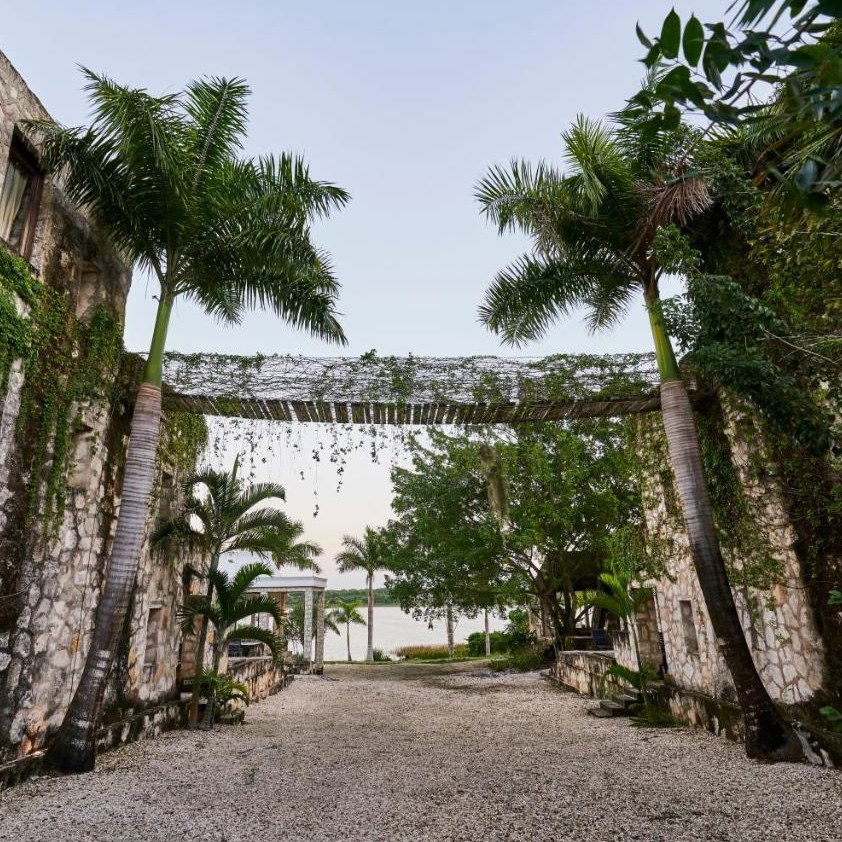
The road that skirts Cobá's southern lagoon, Laguna Papholchac, does not invite speed. The vegetation presses in from both sides, the asphalt narrows, and by the time the property appears, the surrounding rainforest has already done most of the atmospheric work. Coqui Coqui Papholchac Coba Residence & Spa sits at this edge — between dense Yucatecan jungle and still lagoon water — in a way that shapes the entire sensory register of a stay before a guest has crossed the threshold. That positioning is not incidental; it is the premise on which the property's design logic rests.
Among Mexico's small-footprint luxury properties, the Cobá outpost of the Coqui Coqui brand sits in a distinct tier. Where large-scale Riviera Maya hotels such as those found in the Auberge Resorts Collection at Punta Maroma or Palmaïa in Playa del Carmen compete on amenity volume and room count, Coqui Coqui operates in a deliberately contracted format. The property functions more as a residence than a resort , a distinction that carries real architectural consequence. The scale stays intimate, the programme stays curated, and the design vocabulary draws from Yucatecan colonial craft rather than international resort conventions.
The Architecture of Restraint
Yucatán's colonial built environment has a particular visual grammar: thick limestone walls, arched doorways, tiled floors in terracotta and hand-painted ceramic, and a preference for cross-ventilation over mechanical cooling. Coqui Coqui's design approach in Cobá works within that grammar rather than importing an exterior aesthetic onto a jungle site. The result is a property that reads as rooted rather than installed , a meaningful distinction in a region where luxury development has often proceeded in the opposite direction.
This places the property in conversation with a small cohort of Mexican boutique hotels that prioritise material authenticity over branded uniformity. Chablé Yucatán near Mérida operates on similar principles , local materials, hacienda architectural heritage, landscape integration , though at a larger and more amenity-dense scale. Hacienda Temozon in Temozon Sur draws from the same hacienda tradition, framing it within a more formal heritage-hotel context. Coqui Coqui Papholchac occupies the less formal, more atmospheric position within that peer set: the design reads less like a curated heritage property and more like a private compound that has absorbed its surroundings over time.
The spa component , named explicitly in the property's title , follows the same material logic. Jungle-adjacent wellness in the Yucatán Peninsula has a long regional tradition rooted in Mayan herbal knowledge and ritual bathing, and the better small properties in this area tend to work with that tradition rather than defaulting to international spa menus. While the specific treatment programmes at Coqui Coqui Papholchac are not detailed in our verified data, the brand's wider reputation across its Mexican properties has consistently aligned with local botanical sourcing and temazcal-adjacent formats.
Cobá as Context
Cobá is not Tulum. That distinction matters more than it might initially appear. Where Tulum has evolved into a high-density luxury corridor , with properties like Hotel Esencia competing in an increasingly crowded design-hotel market , Cobá remains primarily a destination for the archaeological site that shares its name. The ruins at Cobá, which include one of the few climbable pyramid structures remaining in Mexico, draw a more purpose-driven visitor. The surrounding town has not developed the restaurant density or nightlife infrastructure that characterises Tulum, which means the accommodation choice becomes the experience in a more direct sense.
That context raises the stakes for a property like Coqui Coqui Papholchac. Without a wider dining or entertainment ecosystem to fall back on, the property's own atmosphere, design coherence, and spa programme carry more of the experiential weight. The lagoon setting amplifies this: early morning light on still water, the acoustic texture of jungle birds, the absence of traffic noise. These are not background details , they are the primary offering, and the architecture is designed to frame rather than compete with them.
For those exploring the wider peninsula, the Cobá ruins sit roughly two hours from the resort corridor near Playa del Carmen and about 45 minutes from Tulum town, making the property workable as a base for day excursions without requiring a full itinerary commitment to Cobá itself. Travellers moving through the Yucatán on a longer circuit that includes Mérida or the Gulf Coast hacienda route would find it a logical midpoint. See our full Cobá guide for broader context on the town and surrounding area.
Where It Sits Among Mexican Boutique Properties
Mexico's premium small-hotel market has matured considerably over the past decade. The Pacific Coast has produced design-forward properties like Hotel Humano in Puerto Escondido and Playa Viva in Juluchuca, both of which prioritise ecological integration and limited capacity. The Oaxacan market has generated properties such as Casa Silencio and Hotel Casa Santo Origen, which work within the craft-culture framework of that city. Coqui Coqui Papholchac belongs to this broader movement of properties that treat the local material and cultural environment as the primary design resource , but its specific argument is the jungle-lagoon interface, which has no direct equivalent in the properties above.
At the higher end of the Mexican luxury spectrum, the contrast is sharper. One&Only Mandarina in Riviera Nayarit, Montage Los Cabos, and Zadun, A Ritz-Carlton Reserve operate on an entirely different premise: large-footprint, full-service, brand-backed resort formats where the property itself is the destination regardless of surrounding context. Coqui Coqui Papholchac does not compete in that tier and does not attempt to. Its 2025 Michelin Selected distinction , recognition that reflects a curated standard of hospitality quality rather than hotel scale or amenity count , signals alignment with a different competitive set entirely.
For travellers comparing properties across the Riviera Maya corridor, Maroma in Riviera Maya and Susurros del Corazón in Punta de Mita represent the more amenity-rich end of the boutique-leaning spectrum. Coqui Coqui Papholchac is quieter, more removed, and makes fewer concessions to the convenience expectations of a full-service resort. That is not a shortcoming , it is the product.
Planning a Stay
The property sits on the southern lagoon road outside Cobá town, reachable by car from Cancún (approximately two hours) or Tulum (approximately 45 minutes). Given the absence of restaurant infrastructure in Cobá town comparable to larger resort corridors, guests should expect the property to serve as a self-contained base. Booking directly through the Coqui Coqui brand channels is the standard approach, and given the limited room count characteristic of residence-format properties, lead time matters more than it would at larger hotels. The Yucatán Peninsula's dry season runs broadly from November through April, with the lagoon setting at its most photogenic in the cooler morning hours of the winter months.
Travellers building a wider Mexican itinerary at this quality tier might also consider Las Alamandas on the Costalegre, Casa de Sierra Nevada in San Miguel de Allende, Las Ventanas al Paraíso in San José del Cabo, or Xinalani in Quimixto , each occupying a similar small-footprint, design-conscious position in their respective regions.
Frequently Asked Questions
What kind of setting is Coqui Coqui Papholchac Coba Residence & Spa?
The property sits on the edge of Laguna Papholchac on the southern outskirts of Cobá, surrounded by Yucatecan rainforest. It operates as a residence-format hotel rather than a full-service resort, with a design rooted in local colonial craft and a spa programme oriented toward the jungle environment. Michelin Selected the property in its 2025 hotels guide, placing it among a curated tier of quality-verified independent properties in Mexico.
Which room offers the leading experience at Coqui Coqui Papholchac Coba Residence & Spa?
Specific room-type data is not available in our verified records for this property. As a residence-format property with limited keys, the variation between room types is typically less pronounced than at larger hotels , the setting and atmosphere are consistent across the property. The strongest argument for any room here is lagoon orientation and access to the jungle surroundings, rather than in-room amenity differentiation. Confirm current room configuration directly with the property at the time of booking.
Recognized By

Similar venues by awards
Related editorial
- How travel will be redefined by 2040The Death of Tourism as We Know It: Why 2040 Will Demand a Completely Different Kind of Traveler Let me be direct: the version of travel most of us grew up dreaming about — cheap flights, crowded lan
- Asia's 50 Best Restaurants 2026: The Chairman and Wing Go 1-2 from the Same BuildingThe Chairman takes No. 1 and Wing climbs to No. 2 at Asia's 50 Best Restaurants 2026. Both operate from the same Hong Kong building. Here's what it means.
- Four Seasons Yachts Debut: 95 Suites, 11 Restaurants, and a March 2026 Maiden VoyageFour Seasons I launches March 20, 2026, with 95 suites, a one-to-one staff ratio, and 11 onboard restaurants. Worth tracking if you want hotel-grade service at sea.
Save or rate Coqui Coqui Papholchac Coba Residence \u0026 Spa on Pearl
Keep this venue in your Pearl passport, rate it after you visit, and track it alongside every other place you collect.