
Zambezi Queen
Chobe River
Hotel in Chobe River, Botswana
 Book with Pearl
The Read
Price
$2,500+per night
Why go
Zambezi Queen is the Chobe River pick for travelers who want the safari experience shaped around the water rather than a land-lodge routine. Its 2026 Virtuoso Luxury Hotel Partner recognition gives it a useful trust signal for travelers booking through preferred channels. Cross-shop land-based or Zambezi lodges if room size, camp atmosphere, or falls access matters more.
About Zambezi Queen
The dress code is smart casual. Zambezi Queen is also listed as a Virtuoso Luxury Hotel Partner for 2026. For cuisine, specific amenities, room categories, pricing, schedules, or on-site services, check current details directly before making plans.
Choose it with the basics in mind
Use this as a concise planning note. The key points are the venue name, its Chobe River location, the smart casual dress code, and its 2026 Virtuoso Luxury Hotel Partner recognition.
If you are comparing options for a broader trip, you may also want to look at Matetsi Victoria Falls, Royal Chundu – Luxury Zambezi Lodges, Mukwa River Lodge, Toka Leya, or andBeyond Chobe Under Canvas. Confirm each property's current offering directly, including formats, inclusions, rooms, or services.
Use recognition as a value filter
The clearest trust signal for Zambezi Queen is its 2026 Virtuoso Luxury Hotel Partner recognition. If you are booking through an advisor or preferred program, check whether any benefits apply and whether they affect the overall value of the stay.
For broader planning, pair this profile with direct confirmation of the details that matter to your trip. If the trip depends on dining, activities, or other arrangements around Chobe River, confirm those details directly. The practical call: verify the current offer, then compare it with other suitable options for your itinerary.
Planning details
- Location
- Chobe River, Botswana/Namibia
- Website
- zqcollection.com/properties/zambezi-queen
The take
The Take
The Vibe
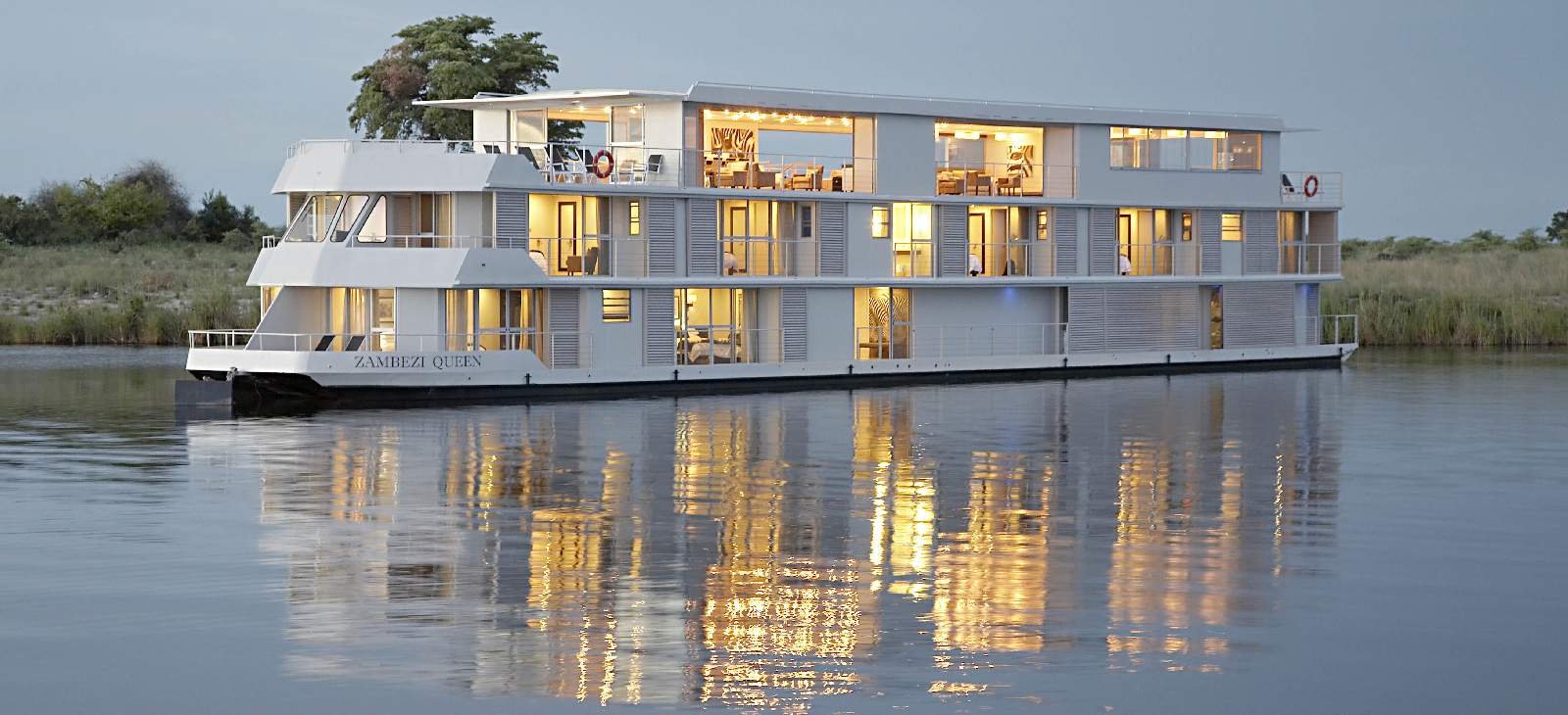
Zambezi Queen reads like a deliberately designed object moving through a wild landscape. The houseboat inverts the fixed-lodge model by navigating roughly 25 kilometres of the Chobe corridor, so the property feels less like a static camp and more like a mobile vantage point. Interiors play against the raw river environment: a five-star tension between careful, considered design and the immediacy of wildlife outside. With just 14 suites arranged into standard and master types, the vessel maintains an intimate, refined atmosphere where attention to detail and proximity to game define the guest experience.
Best For
This is a safari stay for travelers prioritizing close wildlife encounters and a refined, intimate setting. Couples and travelers celebrating a special occasion find the houseboat’s secluded, mobile format especially appealing; the vessel repositions to follow animal movement instead of waiting for game to come to it. The Chobe corridor’s extraordinary game and bird densities also make this a strong pick for serious birdwatchers and anyone wanting concentrated viewing from the comfort of a five-star floating property. The small suite count keeps the overall feel private and focused on the river.
Stay Tips
Book early: with only 14 suites (ten standard, four master) availability is limited and the property fills for peak wildlife seasons. If you want more space, request a master suite when reserving — the description notes distinct suite types and en-suite bathroom configurations. Ask the operator about planned river positioning during your dates: Zambezi Queen repositions along roughly 25 kilometres of the Chobe corridor to follow animal movement, so confirming how the vessel will be routed maximizes viewing and birding opportunities.
Venue details
Ambiance
Elegant and tranquil with floor-to-ceiling glass doors opening onto river views, warm lighting in the dining room and lounge, and serene outdoor deck spaces overlooking the African wilderness.
Tags
Vibe
Best For
Experience
Amenities
View
About the Stay
- Rooms
- 14
- Check-in
- 15:00
- Check-out
- 11:00
- Property Type
- Boutique hotel
- Property Style
- Luxury Floating Boutique Hotel with Contemporary Design by South African Designer Jenni Button, Blending Modern Sophistication with African Wilderness Aesthetics.
- Design Style
- Light and Airy Modern Interiors with Natural Materials, Private Balconies, Full Length Sliding Shutters, and Thoughtful Use of Space to Maximize River Views Across Three Elegantly Designed Deck Levels.
- Breakfast
- Included
- Airport Transfer
- Available
- Pool
- Yes
- Spa
- Yes
- Cancellation
- Moderate
Know before you go
Know Before You Go
- Getting there
- Chobe River, Botswana/Namibia
Planning details
Location
Chobe River, Botswana/Namibia · Directions
Recognition and awards

Also consider
Where to Look if This Is Not the Right Fit
Choose andBeyond Chobe Under Canvas if the priority is a more traditional safari-camp atmosphere rather than a river-based stay. Choose Matetsi Victoria Falls if the itinerary needs a stronger Victoria Falls lodge base with a broader land-lodge feel.
Hotel context
How It Compares
Zambezi Queen is the river-first choice in this set: calmer in feel, easier to understand for first-time safari travelers, and better suited to guests who want the water to define the stay. andBeyond Chobe Under Canvas is the stronger pick for a classic safari-camp mood, especially for travelers who prefer canvas, land-based guiding, and a closer-to-the-bush atmosphere.
Royal Chundu – Luxury Zambezi Lodges, Matetsi Victoria Falls, Toka Leya, and Mukwa River Lodge make more sense if the trip is built around a lodge base near the Zambezi or Victoria Falls area. Choose those if spacious lodge living, land activities, or falls access outrank the novelty and ease of a moving river stay.
Booking difficulty is marked easy here, which helps if the trip is coming together late or the itinerary needs a lower-friction anchor. For value, the key comparison is not headline price, since safari inclusions vary; compare what is included, whether preferred-program benefits apply, and whether the ambiance you want is river-quiet or lodge-based.
Explore Chobe River
Around this place
Discover more on Pearl
Unlock the full Zambezi Queen guide in Pearl, including awards, comparisons, FAQs, planning details, and nearby places.
Compare Zambezi Queen
| Venue | Location | Awards |
|---|---|---|
| Zambezi Queen | Chobe River | 2026 Virtuoso Luxury Hotel Collection |
| andBeyond Chobe Under Canvas | Chobe National Park | Preferred Hotels Member 2025 |
| Royal Chundu – Luxury Zambezi Lodges | Livingstone | No published awards |
| Matetsi Victoria Falls | Victoria Falls | 2026 Virtuoso Luxury Hotel Collection2026 Mr & Mrs Smith Luxury Hotels2026 La Liste Top Hotels2025 Travel + Leisure 100 Favorite Hotels in the World · #762025 Conde Nast Hotels Gold List |
| Toka Leya | Livingstone | 2026 La Liste Top Hotels |
| Mukwa River Lodge | Livingstone | No published awards |




How Zambezi Queen Chobe River compares with similar nearby venues.
FAQ
Frequently Asked Questions
When is the best time to book Zambezi Queen?
If your plans depend on staying in Chobe River, confirm availability, terms, and any advisor or preferred-program benefits before finalizing the rest of the trip.
Is Zambezi Queen family-friendly?
How is the location of Zambezi Queen?
Zambezi Queen is in Chobe River. Confirm the precise meeting point or address before travel.
Which room category is best at Zambezi Queen?
How does Zambezi Queen compare to other options?
Zambezi Queen can be compared with options such as andBeyond Chobe Under Canvas, Royal Chundu – Luxury Zambezi Lodges, Matetsi Victoria Falls, Toka Leya, and Mukwa River Lodge depending on your itinerary. Its key planning points are the Chobe River location, smart casual dress code, and 2026 Virtuoso Luxury Hotel Partner recognition, so confirm current offerings directly when comparing.