



Refugia Chiloé
San José, Chiloé
Hotel in Chiloé, Chile
 Book with Pearl
The Read
Stilted Geometry, Inland Sea
Price
$500–750per night
Why go
Refugia Chiloé is the stronger call for travelers who want Chiloé itself to define the trip, with a quiet island setting rather than a resort-hub feel. Its recognition, including Michelin 2 Keys in 2025, La Liste Top Hotels 2026, and Condé Nast Gold List 2026, makes it a serious hotel choice, but not the obvious pick for points-driven travelers.
About Refugia Chiloé
Refugia Chiloé is a Chiloé hotel with a clear awards signal: Michelin 2 Keys (2025), La Liste Top Hotels (2026) at 90pts, and Conde Nast Gold List (2026). Beyond those recognitions, the public details here are limited, so the safest way to assess it is as a Chiloé-focused stay rather than through claims about amenities, dining, service style, or exact location.
Choose it for a Chiloé stay with confirmed recognition
The strongest confirmed reasons to consider Refugia Chiloé are its Chiloé setting and its hotel accolades. Those awards make it a credible option for travelers who want a recognized stay in Chiloé, but they do not verify specific room features, dining formats, price points, loyalty benefits, or activity inclusions.
Use the awards as a starting point, then confirm the practical details directly before booking. For a broader planning pass, use our full Chiloé hotels guide, then cross-check food and downtime separately in our full Chiloé restaurants guide, our full Chiloé bars guide, our full Chiloé wineries guide, and our full Chiloé experiences guide.
Book for Chiloé; compare if your itinerary is flexible
The main reason to choose Refugia Chiloé is that it keeps the trip centered on Chiloé. If your route is flexible, compare it with other stay options such as Hotel AWA, Llao Llao Hotel & Resort, Llao Llao Resort, Golf & Spa, Mari Mari Natural Reserve Experience, and Puyuhuapi Lodge & Spa before committing.
Quick reference: pick this for a recognized Chiloé hotel stay; compare alternatives if your itinerary is not fixed around Chiloé.
Planning details
- Location
- San José Playa, Chiloé, Chile
- Website
- refugiachiloe.com
- Phone
- +56264690518
The take
The Take
The Vibe
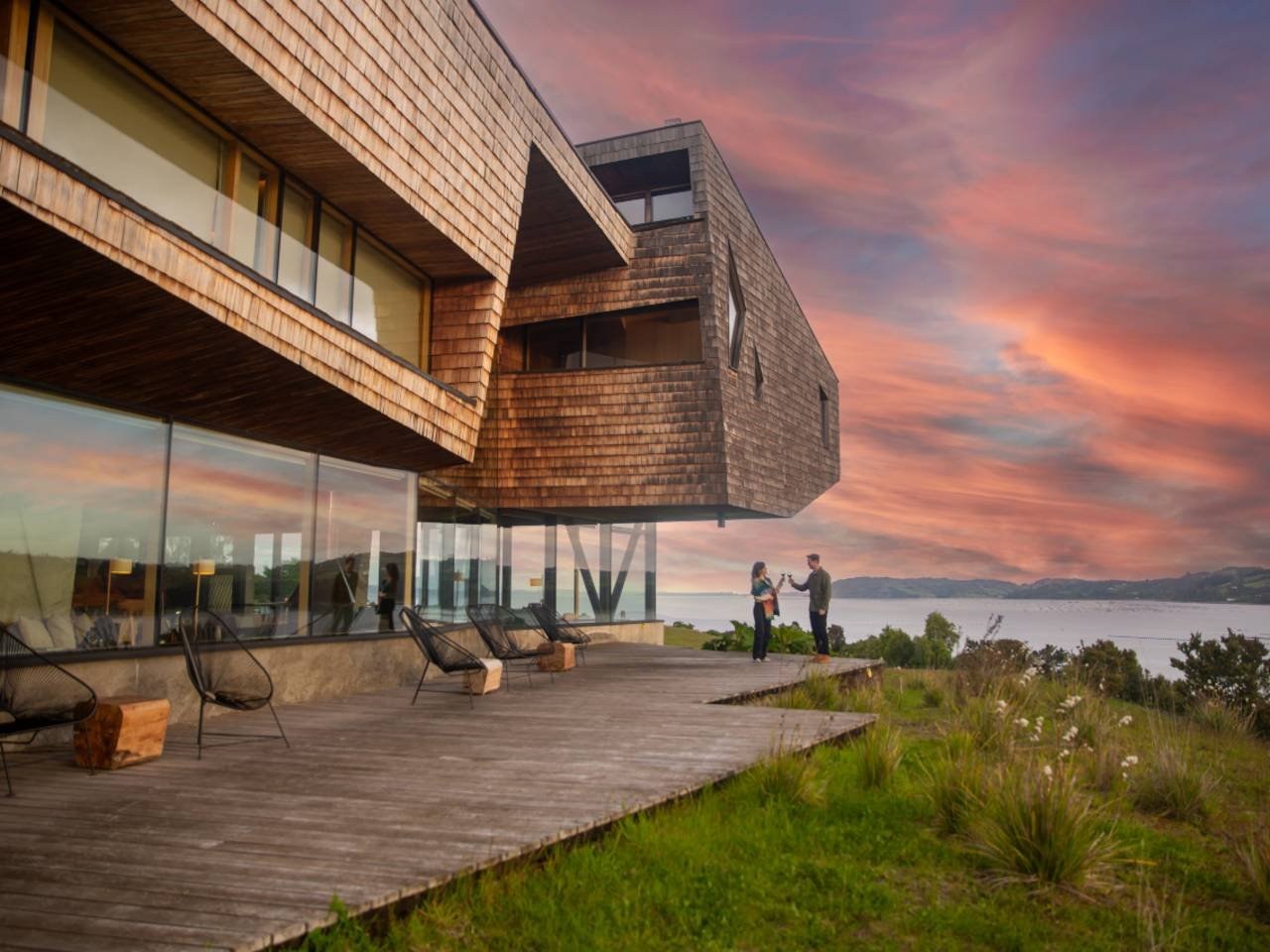
Refugia Chiloé presents itself as a study in purposeful contrast: a bold, geometric lodge that insists on being read as architecture rather than camouflage. The design borrows the silhouette of local palafitos and renders it in glass, natural timber and exposed industrial steel, creating an austere, modern composition that still gestures to vernacular memory. That tension between human construction and the inland sea is central to the place—the building’s clean lines frame the horizon and the low island hills, and the whole property reads as a considered, design-forward retreat for travelers who prize architecture and quiet, focused atmosphere.
Best For
Refugia is best for travelers who want more than a picturesque stopover: it suits those drawn to architecture, material detail and the kind of slow appreciation that Chiloé rewards. The lodge functions as a lens on the archipelago’s layered culture—its wooden churches, fishing communities and mythic traditions—so guests who enjoy exploring local history and design will find it especially satisfying. The property’s international design ambition and recognition make it a compelling option for discerning visitors seeking a thoughtful, contemplative escape anchored to the shoreline.
Stay Tips
Plan a multi-night stay to absorb both the architecture and the island’s cultural rhythms—Refugia’s design and setting are meant to be experienced over time rather than in a single evening. Leave space in your itinerary for visits to nearby fishing communities and the UNESCO wooden churches mentioned in the description, and schedule time to watch light and weather shift across the water; the lodge’s position on San José Playa gives rooms and public spaces clear relationships to the shoreline that reward lingering.
Venue details
Ambiance
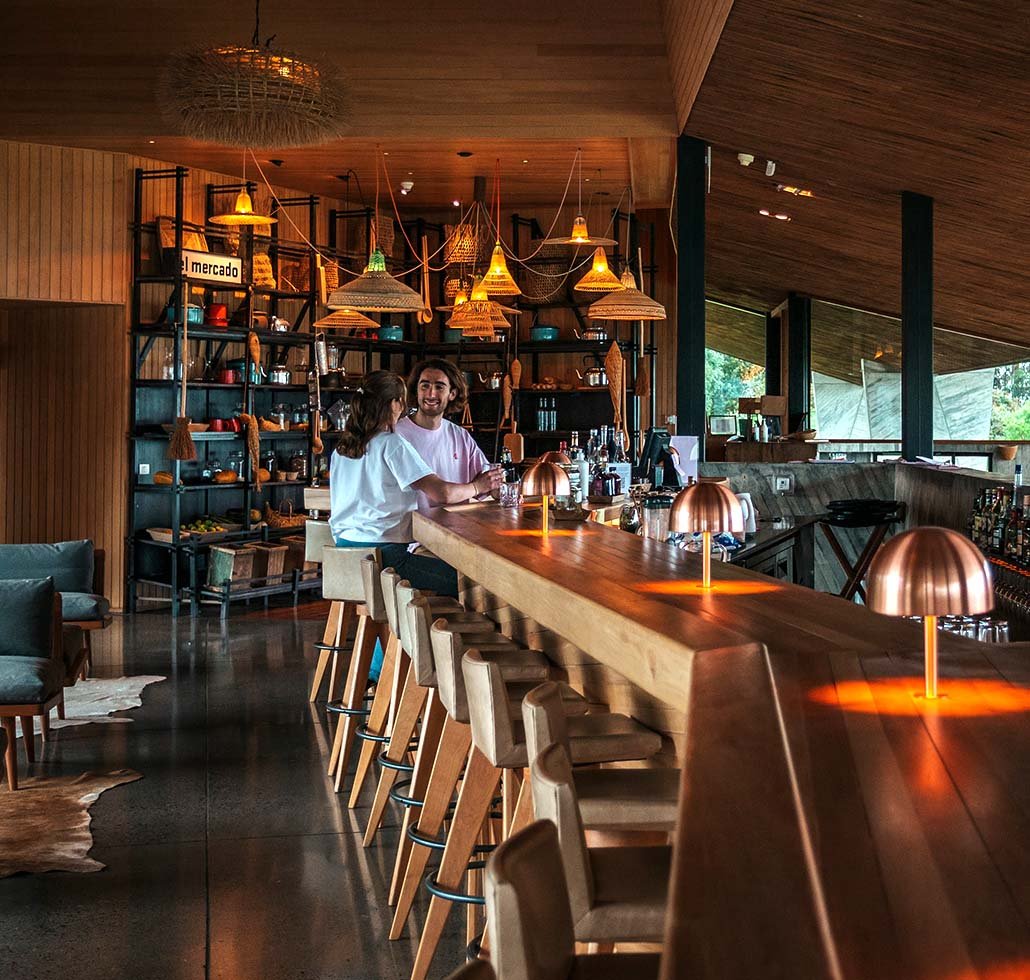
Serene and sociable with natural light through huge glass panes, cozy fireplaces, and stunning sea views fostering a peaceful island retreat atmosphere.
Tags
Vibe
Best For
Experience
Amenities
View
Accessibility
About the Stay
- Rooms
- 24
- Check-in
- 15:00
- Check-out
- 11:00
- Property Type
- Boutique hotel
- Property Style
- Contemporary Stilted Structure Blending Modern Design with Chilote Palafito Architecture on 10 Hectares of Beachfront Land.
- Design Style
- Minimalist with Clean Lines, Natural Woods, Industrial Beams, Handcrafted Furnishings, and Huge Glass Panes for Panoramic Views.
- Breakfast
- Included
- Airport Transfer
- Available
- Pool
- Yes
- Spa
- Yes
Know before you go
Know Before You Go
- Getting there
- San José Playa, Chiloé, Chile
Planning details
Location
Recognition and awards



Also consider
Also Consider
- Mari Mari Natural Reserve Experience, Notable alternative
- Hotel AWA, Notable alternative
- Puyuhuapi Lodge & Spa, Notable alternative
- Llao Llao Hotel & Resort, Notable alternative
- Llao Llao Resort, Golf & Spa, Notable alternative
Hotel context
How it compares in the wider Chiloé and Patagonia set
Refugia Chiloé is the Chiloé-first choice: book it when the island setting is the point of the trip. Mari Mari Natural Reserve Experience is the closer cross-shop for a nature-led coastal stay, while Hotel AWA makes more sense if the itinerary is already leaning toward the Puerto Varas and lake-region circuit.
Puyuhuapi Lodge & Spa is the better comparison for travelers who want a more spa-coded escape, while Refugia Chiloé reads quieter and more destination-specific. For guests who want a larger classic resort feel, Llao Llao Hotel & Resort and Llao Llao Resort, Golf & Spa are more conventional choices, especially for travelers who prefer broader facilities over a more remote island atmosphere.
Value depends on itinerary fit rather than a simple rate comparison. If Chiloé is central, Refugia Chiloé avoids backtracking and gives the trip a clearer sense of place. If the route is flexible, compare availability and logistics against Mari Mari Natural Reserve Experience and Hotel AWA first.
Explore Chiloé
Around this place
Discover more on Pearl
Unlock the full Refugia Chiloé guide in Pearl, including awards, comparisons, FAQs, planning details, and nearby places.
Compare Refugia Chiloé
| Venue | Location | Awards |
|---|---|---|
| Refugia Chiloé | Chiloé | 2026 Robb Report The 50 Greatest Luxury Hotels on Earth2026 La Liste Top HotelsConde Nast Gold List 20262026 Michelin 2 KeysMichelin 2 Keys 20252025 Michelin 2 Keys |
| Mari Mari Natural Reserve Experience | Los Muermos | Leading Hotels of the World 2026 |
| Hotel AWA | Puerto Varas | 2026 Virtuoso Luxury Hotel Collection2026 Mr & Mrs Smith Luxury HotelsLeading Hotels of the World 20262026 Michelin 1 KeyWorld Travel Awards 20252025 Michelin 1 Key |
| Puyuhuapi Lodge & Spa | Aisen | No published awards |
| Llao Llao Hotel & Resort | San Carlos de Bariloche | No published awards |
| Llao Llao Resort, Golf & Spa | Bariloche | No published awards |





How Refugia Chiloé compares with similar nearby venues.
FAQ
Frequently Asked Questions
How does Refugia Chiloé compare to other hotels?
Choose Refugia Chiloé if Chiloé itself is the point of the trip. If your route is broader, compare it with Hotel AWA, Mari Mari Natural Reserve Experience, Puyuhuapi Lodge & Spa, Llao Llao Hotel & Resort, and Llao Llao Resort, Golf & Spa based on itinerary fit, availability, and the latest details from each property.
How is the location of Refugia Chiloé?
Refugia Chiloé is in Chiloé. That is the only location detail to rely on here, so confirm exact access, transfers, and arrival logistics directly with the property before booking.
When is the best time to book Refugia Chiloé?
Refugia Chiloé has confirmed recognition from Michelin 2 Keys (2025), La Liste Top Hotels (2026): 90pts, and Conde Nast Gold List (2026). If your dates are fixed, it is sensible to check availability early; if your dates are flexible, compare it against Hotel AWA, Mari Mari Natural Reserve Experience, Puyuhuapi Lodge & Spa, Llao Llao Hotel & Resort, and Llao Llao Resort, Golf & Spa before deciding.
How is the dining at Refugia Chiloé?
No specific cuisine type, chef, menu format, price, or dining-service detail is here. Treat dining as a detail to confirm directly with Refugia Chiloé rather than as a confirmed reason to book. If food is a major priority, also compare other dining in Chiloé generically while planning the trip.
Do loyalty programs work at Refugia Chiloé?
No loyalty-program detail is here. The confirmed signals are Michelin 2 Keys (2025), La Liste Top Hotels (2026): 90pts, and Conde Nast Gold List (2026), so confirm booking benefits, rates, and any program participation directly before reserving.