
Hotel in Chihuahua City, Mexico
Central Hotel Boutique
500ptsColonial Courtyard Lodging

About Central Hotel Boutique
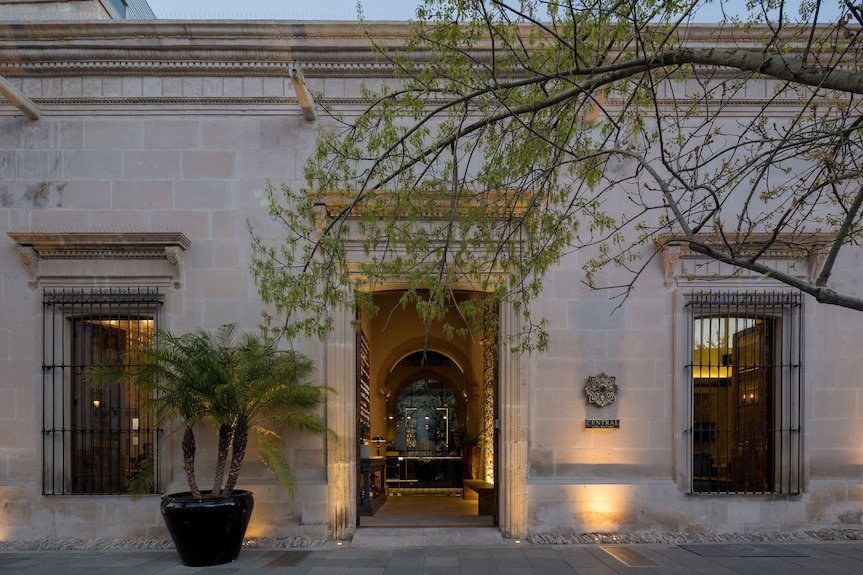
Housed in Casa Trías, Chihuahua City's oldest estate-style courtyard house dating to 1845, Central Hotel Boutique occupies an irreplaceable position beside the Plaza de Armas and the 18th-century cathedral. Eleven poet-named rooms blend antique architectural detail with contemporary furnishings, and the in-house restaurant El Poeta serves a creative interpretation of Chihuahuan and Sierra Tarahumara cuisine. For the historic city center, no lodging comes closer to the core of things, geographically or architecturally.
A 19th-Century Courtyard House at the Heart of Chihuahua
Mexico's boutique hotel tradition has long understood that the most persuasive architecture is inherited rather than invented. From Casa de Sierra Nevada in San Miguel de Allende to Casa Antonieta in Oaxaca City, the country's most compelling small hotels tend to occupy buildings that were already doing something interesting long before the first guest arrived. Central Hotel Boutique fits squarely in that lineage. Its home, Casa Trías, dates to 1845, making it Chihuahua City's oldest surviving estate-style courtyard house — and the building's position, directly adjacent to the Plaza de Armas and the 18th-century cathedral, means guests step out of one historical layer and immediately into another.
Chihuahua City is a place that rewards visitors who slow down and look up. The centro histórico carries the weight of the Mexican north — silver-era wealth, Porfirian civic ambition, and the shadow of Pancho Villa all leave visible marks on the streetscape. Arriving at Central Hotel Boutique from the plaza, you approach through a city block dense with that history, which makes the transition into the building's internal courtyard all the more effective. The shift from colonial street to enclosed patio is the hotel's opening argument, and it's a strong one.
What Casa Trías Looks Like From the Inside
The hotel's design operates through contrast rather than period recreation. Antique architectural details , stone arches, thick colonial walls, original tilework , provide the envelope, while the interiors introduce modern furniture and contemporary decoration without trying to resolve the tension between old and new. That tension is the point. The approach places Central Hotel Boutique in a category of Mexican heritage properties that resist the temptation of nostalgic pastiche, a group that includes Casa Polanco in Mexico City and Hotel Demetria in Guadalajara , hotels where historical bones support a contemporary sensibility rather than being smothered by themed decor.
The eleven rooms are each named for a different poet, a conceptual thread that runs through the property and sets its register. The names function less as a decorative conceit and more as a signal about the kind of guest the hotel is designed for: someone interested in place, language, and the kind of detail that rewards attention. Practical additions , Nespresso machines, Bose sound systems , are folded into rooms without disrupting the character of the architectural shell. The room count itself matters here: eleven rooms occupy a scale that allows for personalised service without the formality of a larger property, while keeping the building's spatial logic intact rather than subdividing it into anonymous corridors.
El Poeta and the Kitchen's Regional Frame
Hotel's restaurant, El Poeta, continues the poet theme into the dining room, where the atmosphere draws on the building's worn surfaces and accumulated character rather than attempting a fresh fit-out. The cooking addresses the flavors of Chihuahua and the Sierra Tarahumara , a culinary region less discussed than Oaxaca or the Yucatán but equally specific in its references: dried chiles, game, corn preparations, and the cattle-ranching traditions of the northern plains. El Poeta's approach is described as sophisticated and creative relative to those classical flavors, which positions it within a mode of Mexican regional cooking that uses classical technique and careful sourcing to amplify traditional ingredients rather than replace them.
Hotel's location means that context for this cooking is immediately available. The centro histórico's markets, street stalls, and traditional restaurants provide a baseline against which El Poeta's more considered register becomes legible. Guests who eat at the hotel restaurant and then walk the surrounding streets are, effectively, getting a comparative education in how a regional cuisine translates across different registers of formality and investment , which is, for food-minded travelers, a more useful kind of proximity than a hotel restaurant that operates in isolation from its city.
The Case for Staying in the Centro Histórico
Boutique hotels in Mexico's historic city centers occupy a different logic than resort properties. Where a place like Hotel Esencia in Tulum or One&Only; Mandarina in Riviera Nayarit asks guests to settle into a self-contained world, Central Hotel Boutique functions as a base for a city that repays walking. The Plaza de Armas is steps away, the cathedral is visible from the street, and the full range of the old city's architecture and commerce is accessible on foot. This kind of access has real value in Chihuahua, a destination whose centro histórico is more architecturally coherent and historically layered than its reputation outside Mexico suggests. For travelers using Chihuahua as an entry point for the Copper Canyon or the Barrancas del Cobre rail journey, the hotel's central position means an efficient first or final night rather than a suburban detour.
The hotel has been under its present ownership for more than two decades, a tenure that in the boutique hotel context carries its own kind of signal. Properties that endure at this scale over that period tend to do so through consistent management rather than periodic reinvention, and the accumulation of character that comes from sustained occupation of a building like Casa Trías is something that newer conversions haven't yet earned. That longevity also distinguishes Central Hotel Boutique from the recent wave of heritage property openings across northern Mexico , it has been doing this long enough to have developed its own institutional memory.
For further reading on Mexico's broader luxury lodging map, Chablé Yucatán in Merida, Maroma in Riviera Maya, and Las Ventanas al Paraíso in San José del Cabo represent the country's resort tier, while Casa Silencio in San Pablo Villa de Mitla and Cuixmala in La Huerta sit at the smaller, more architectural end of the spectrum. Central Hotel Boutique belongs to neither beach nor resort category , it is a city hotel in the oldest tradition of the form, where the building and its location are the primary asset, and everything else follows from that. See our full Chihuahua City restaurants and hotels guide for more context on the destination.
Planning Your Stay
Central Hotel Boutique holds eleven rooms across the Casa Trías building at Calle Guadalupe Victoria 202 in Zona Centro. Room availability and pricing should be confirmed directly, as no current room availability is listed. The central location eliminates the need for a car within the historic district; the city's main sights, including the Palacio de Gobierno and the Museo Casa Chihuahua, are within comfortable walking distance. Travelers arriving by air use General Roberto Fierro Villalobel International Airport, which sits roughly 20 kilometers north of the city center.
Frequently Asked Questions
How would you describe the overall feel of Central Hotel Boutique?
The property operates at the intersection of historical weight and contemporary restraint. Casa Trías, built in 1845 and the oldest estate-style courtyard house in Chihuahua City, provides the structural and atmospheric foundation. The interiors layer modern furniture and contemporary decoration over antique architectural detail rather than attempting a period recreation. The result is a hotel with genuine presence , a quality that comes from the building's age and position beside the Plaza de Armas and the 18th-century cathedral, not from design choices alone. Within Chihuahua's lodging market, it sits at a considerable remove from business hotels and chain properties in terms of both character and deliberate design.
What's the most popular room type at Central Hotel Boutique?
The hotel offers eleven rooms, each named for a different poet. Because room-by-room configuration details are not publicly available, specific recommendations on a standout room type cannot be confirmed. What the available information does establish is that each room integrates modern furnishings with antique architectural elements , stone, original tilework, colonial-era proportions , along with contemporary amenities including Nespresso machines and Bose sound systems. Guests interested in a specific room or floor should contact the hotel directly to discuss options.
What's the defining thing about Central Hotel Boutique?
Building. Casa Trías is not simply an attractive old house , it is Chihuahua City's oldest estate-style courtyard house, dating to 1845, and it occupies a position directly beside the Plaza de Armas and the city's 18th-century cathedral. No other lodging in Chihuahua City sits closer to that historical core, and no comparable property operates inside a building of equivalent age and architectural significance. Over more than two decades under its present ownership, the hotel has consolidated a position as the most stylish and most deliberate lodging option in the city center , a claim grounded in the scarcity of the building type itself, not in amenity lists.
Is Central Hotel Boutique reservation-only?
As a boutique property with eleven rooms, advance booking is advisable, particularly during peak travel periods around the Copper Canyon route and regional festivals. Current room availability is not listed publicly. Direct contact through the hotel's address at Calle Guadalupe Victoria 202 or through travel agents familiar with the Chihuahua market is the most reliable route to securing a reservation.
Does Central Hotel Boutique have a restaurant, and what kind of cooking does it serve?
Yes. El Poeta, the hotel's restaurant, occupies an atmospheric in-house space and focuses on a creative interpretation of the classic flavors of Chihuahua and the Sierra Tarahumara , a culinary tradition built around dried chiles, corn, and the cattle-ranching heritage of northern Mexico. The cooking is positioned at a more sophisticated register than the traditional street-level and market cooking available in the surrounding centro histórico, making the restaurant a useful reference point for guests interested in understanding how regional northern Mexican cuisine translates at different levels of culinary investment.
Recognized By

Related editorial
- How travel will be redefined by 2040The Death of Tourism as We Know It: Why 2040 Will Demand a Completely Different Kind of Traveler Let me be direct: the version of travel most of us grew up dreaming about — cheap flights, crowded lan
- Asia's 50 Best Restaurants 2026: The Chairman and Wing Go 1-2 from the Same BuildingThe Chairman takes No. 1 and Wing climbs to No. 2 at Asia's 50 Best Restaurants 2026. Both operate from the same Hong Kong building. Here's what it means.
- Four Seasons Yachts Debut: 95 Suites, 11 Restaurants, and a March 2026 Maiden VoyageFour Seasons I launches March 20, 2026, with 95 suites, a one-to-one staff ratio, and 11 onboard restaurants. Worth tracking if you want hotel-grade service at sea.
Save or rate Central Hotel Boutique on Pearl
Keep this venue in your Pearl passport, rate it after you visit, and track it alongside every other place you collect.