





Upper House Chengdu
Chengdushi, Chengdu
Hotel in Chengdu, China
Why go
Positioned on Bitieshi Street in Jinjiang District, Upper House Chengdu occupies a historic courtyard complex that places guests at the intersection of the city's Tang Dynasty heritage quarter and its accelerating contemporary scene. Recognised on the Tatler Asia-Pacific Best Hotels 2025 list and awarded by Star Wine List 2026, the property competes in a small comparable set of design-led Chengdu addresses that trade scale for atmosphere and neighbourhood specificity.
About Upper House Chengdu
A Historic Street Address in a City That Moves Fast
The Ritz-Carlton, Chengdu, The St. Regis Chengdu, and Waldorf Astoria Chengdu. On the other sit a smaller cohort of design-led properties anchored to specific neighbourhoods, where the address itself is part of the proposition. Upper House Chengdu belongs firmly in the second group. Its location on Bitieshi Street, in the Jinjiang District, places it within a part of the city where the physical fabric still carries the memory of earlier dynasties, where Chengdu's reputation as a city that lives well at a human pace remains legible in the street-level texture.
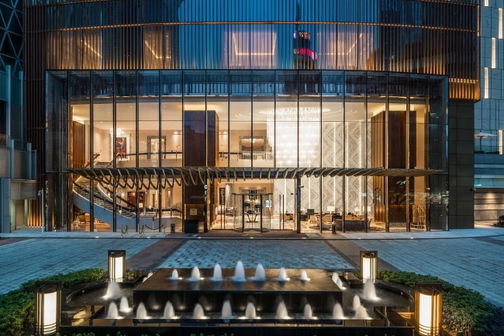
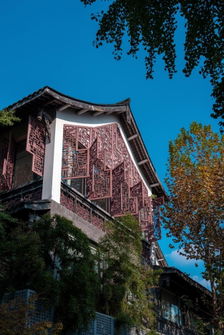
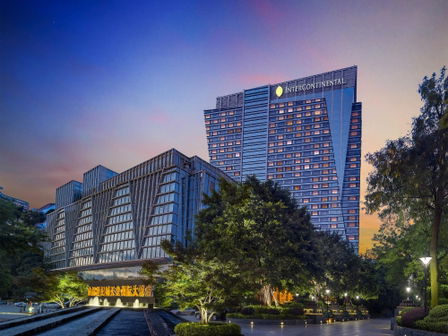
Approaching from the street, the entry sequence sets the register immediately. A historic courtyard building acts as threshold rather than lobby, a spatial decision that frames what follows as something other than a standard hotel arrival. The courtyard grammar of classical Chinese architecture, with its careful modulation of exterior and interior, compressed and released space, is a recurring device in Chengdu's older precincts, Upper House uses it as both an aesthetic and an argument about place. That argument is substantive: the Jinjiang District contains some of the city's most-visited heritage streets, a guest based here moves through a different Chengdu than one based further out in the development zones.
Design That Reads as Urban Position
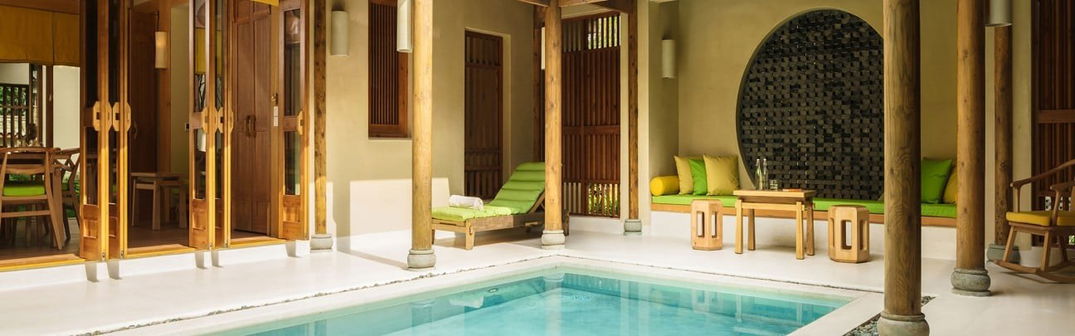
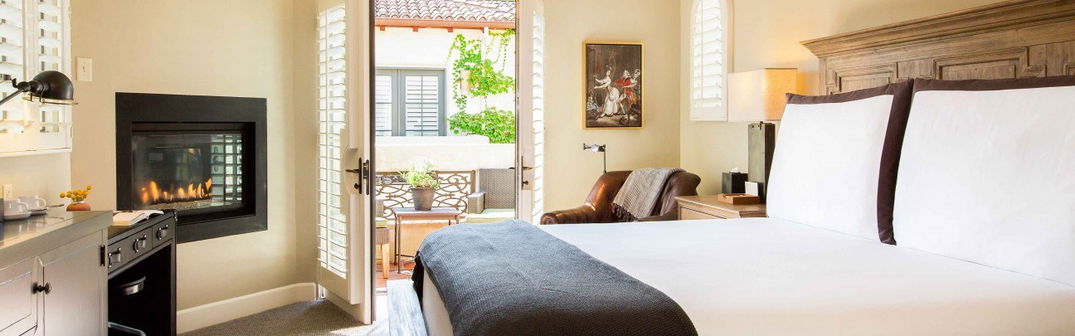
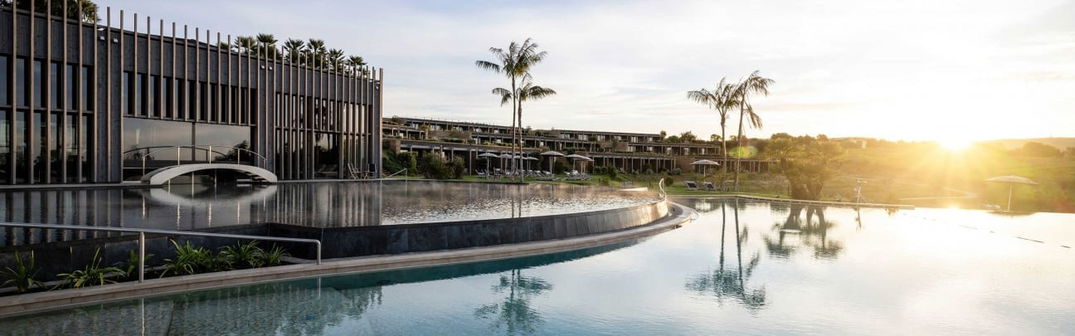
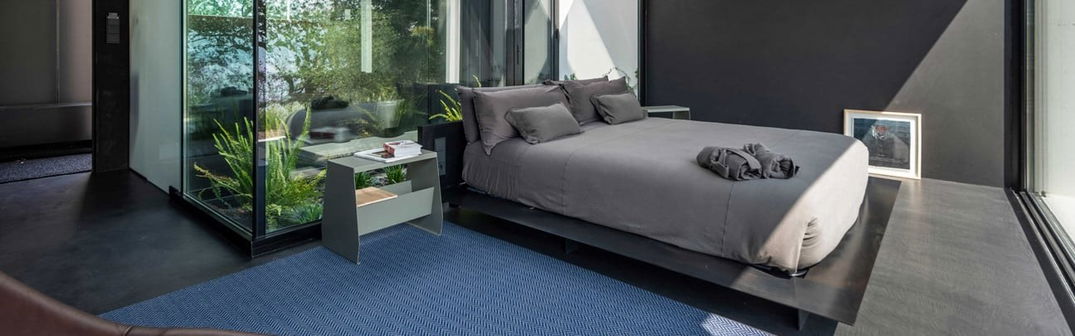
The property's design logic extends beyond the courtyard entry. The hotel rooms and residences are arranged around low hills that conceal a subterranean level, a structural choice that speaks to the density constraints and topographic character of a central urban site. The tension between the historic outer fabric and the contemporary interior is a deliberate editorial position: that the city's past and its current ambitions are not in opposition but in active conversation. This approach connects Upper House Chengdu to a broader regional pattern visible in properties like The Temple House, also in Chengdu's Jinjiang District, where Qing Dynasty heritage architecture provides the container for a contemporary hospitality programme. Both properties, recognised on the Tatler Asia-Pacific Leading Hotels 2025 list, sit in a niche that prioritises architectural specificity over square footage or brand recognition.
In the wider Chinese context, this model appears in properties like Mandarin Oriental Qianmen in Beijing and Amanfayun in Hangzhou, where heritage site integration is the defining asset, where the room count remains intentionally constrained. Upper House Chengdu operates within that same logic, positioning neighbourhood immersion as the primary value rather than facilities breadth.
Where the Address Does the Work
The editorial angle on Upper House Chengdu is not primarily about the rooms; it is about what the Bitieshi Street location provides access to. Jinjiang District is one of Chengdu's older central precincts, within reach of the Kuanzhai Alley heritage corridor to the north and the Tianfu Square cultural axis to the west. A guest here is not relying on hotel transfer logistics to encounter the city. Chengdu's tea house culture, its street-level food economy, its art and design scene are accessible without the mediation of a car. For a city that has added international inbound visitors rapidly since 2015, when Upper House Chengdu opened, that proximity to lived urban texture carries real practical weight.
Chengdu's food reputation is not incidental to a hotel choice here. The city holds more Michelin-starred restaurants than any other in Sichuan Province, the Jinjiang District sits close to the concentration of serious dining addresses that have made Chengdu a reference point in Chinese gastronomy. For hotel selection purposes, being in the right part of the city for evening dining, without a long commute back, is a material consideration. Upper House Chengdu's Star Wine List recognition for 2026 further signals that the property's beverage programme is operating at a level that connects to the city's broader dining seriousness.
comparable set and Competitive Position
Upper House Chengdu's competitive set is more specific than the city's general luxury tier. It does not compete primarily against the large international flags; it competes against design-led addresses where the physical environment and cultural specificity are the differentiator. Niccolo Chengdu occupies a different register, with a stronger F&B-forward; identity and a more contemporary commercial address. Six Senses Qing Cheng Mountain pulls in the opposite direction, trading urban proximity for landscape immersion outside the city. Guanyin Yiyuntai Hotel occupies a similarly heritage-inflected niche. Within this set, Upper House Chengdu's value case rests on the specific claim of being embedded in the urban fabric of Jinjiang District, at a site where arrival and neighbourhood are continuous rather than separate experiences.
For travellers who have stayed at comparable heritage-integrated properties in other Chinese cities, including Amandayan in Lijiang or Xiamen Yunding Resort, the logic will be familiar. The building is part of the argument. What differs in Chengdu is the urban energy around it: this is a city currently producing significant cultural output, with a museum sector that expanded substantially in the 2010s and a contemporary art scene anchored in the Hi-Tech Zone and the older districts both.
Planning a Stay
Upper House Chengdu is located at No. 81 Bitieshi Street, Jinjiang District. Chengdu Tianfu International Airport has direct connections from most major Chinese cities as well as a growing number of international routes, Sichuan's shoulder seasons, spring and autumn, offer the most stable visiting conditions. Summer in Chengdu is humid and warm; winter is mild but overcast for extended periods. The city's major cultural events, including the Chengdu International Food Festival, cluster in autumn and tend to increase pressure on central hotel inventory, so earlier planning is practical during those windows.
Inside Upper House Chengdu
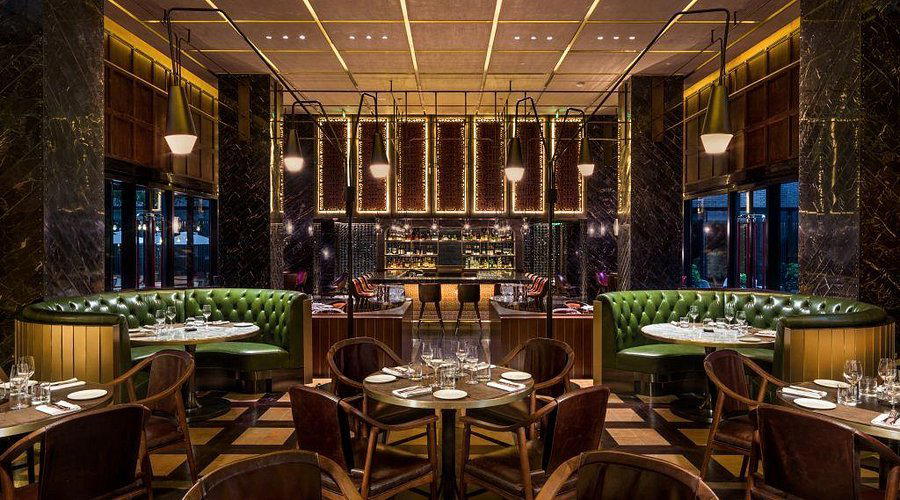 restaurantTivanoTivano brings Italian cuisine to the basement level of Chengdu's The Temple House hotel, operating at a price tier that places it alongside the city's serious dining rooms rather than its casual international options. A 2025 Black Pearl Diamond and 2024 Michelin Plate recognition confirm its position within Chengdu's growing fine-dining circuit. For Italian cooking in a city defined by Sichuan heat, Tivano offers a disciplined counterpoint.
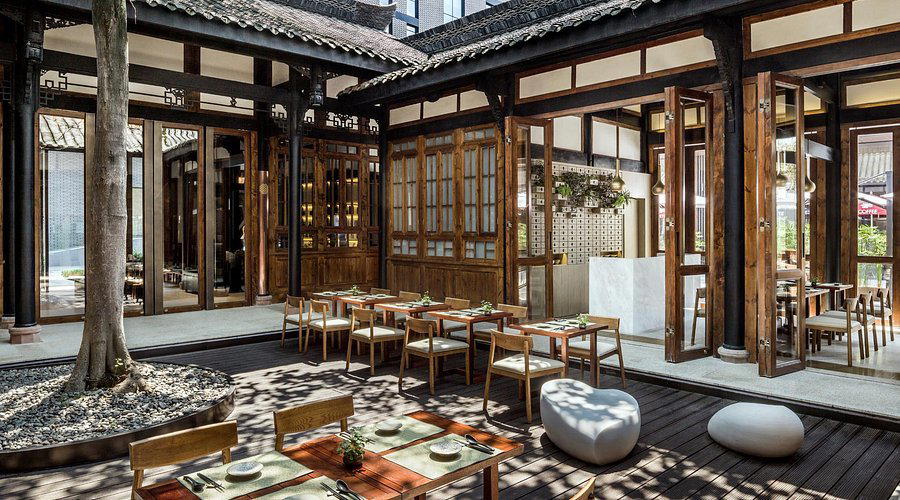 restaurantMi Xun TeahouseMi Xun Teahouse holds a Michelin star (2024) and occupies a courtyard house beside Daci Temple in Chengdu's Qingyang District, serving refined vegetarian cooking built around hand-picked Sichuan produce. A set menu sources ingredients from farms near panda habitats, including Mianyang porcini and Ya'an radish. At ¥¥ pricing, it sits well below the city's top-tier Michelin tables while matching them in recognition.
Planning details
- Location
- No. 81 Bitieshi Street, Jinjiang District
- Website
- thetemplehousehotel.com/en/default
- Phone
- 86-28-6636-9999
The take
The Take
The Vibe
Upper House Chengdu reads as a boutique, design-led address that intentionally foregrounds place. The arrival through a historic courtyard sets a measured tone: rather than a conventional hotel lobby, the property's classical Chinese courtyard grammar modulates interior and exterior space, signaling a quieter, more deliberate stay. Throughout the description the hotel is framed as part of Jinjiang's heritage fabric—an alternative to the city's clustered flagships—so the overall vibe feels rooted, refined and quietly urbane rather than glitzy or generic.
Best For
This hotel is best for travelers who want a sense of Chengdu's older neighbourhoods and an accommodation experience that reads as local and design-focused. Guests seeking a slower, more contemplative stay—weekend visitors, solo explorers and design-minded travelers—benefit most from the courtyard arrival and the property's position within Jinjiang's heritage streets. It appeals to anyone preferring a boutique, place-based base over the large, business-oriented hotels clustered in the city's development zones.
Planning details
Location
No. 81 Bitieshi Street, Jinjiang District · Directions
Recognition and awards




Explore Chengdu
Around this place
Discover more on Pearl
Unlock the full Upper House Chengdu guide in Pearl, including awards, comparisons, FAQs, planning details, and nearby places.