





Cavas Wine Lodge
Alto Agrelo
Hotel in Alto Agrelo, Argentina
 Book with Pearl
The Read
Vineyard-Immersive Wine Country Lodge
Why go
Cavas Wine Lodge is worth booking for a quiet, wine-country celebration in Alto Agrelo, especially if third-party hotel recognition and a serious wine signal matter. Upgrade only if the stay is built around time at the property; if the schedule is winery-heavy, keep the room choice efficient and spend elsewhere.
About Cavas Wine Lodge
Cavas Wine Lodge is a hotel in Alto Agrelo with a smart casual dress code and a recognition profile. Recognition includes La Liste Top Hotels 2026 at 94 points, Fodor's Most Incredible Hotels in the World 2026, Relais Chateaux Award 2025, Virtuoso Luxury Hotel Partner 2026, Star Wine List 2026.
Choose this for a recognized Alto Agrelo hotel
The strongest grounded case for Cavas Wine Lodge is its awards and recognition. La Liste Top Hotels 2026 lists it at 94 points, it is also associated with Fodor's Most Incredible Hotels in the World 2026, Relais Chateaux Award 2025, Virtuoso Luxury Hotel Partner 2026, Star Wine List 2026.
The dress code is smart casual. For other details that often matter for a hotel stay, including room categories, dining schedules, specific services, pricing, confirm directly through the hotel before making plans.
How to think about the hotel choice
Travelers comparing Cavas Wine Lodge with Awasi Mendoza, Chozos Resort by AKEN Spirit, Entre Cielos Luxury Wine Hotel & Spa, Entre Cielos Wine & Wellness Hotel, or Posada Borravino should focus on the relevant details for each property rather than assuming similar services or formats. For Cavas Wine Lodge, its strengths include its Alto Agrelo location, smart casual dress code, recognition profile.
For broader planning, compare Cavas Wine Lodge with other named options such as Awasi Mendoza and with other hotels generally. If dining, wellness, booking benefits, or specific hotel services are decisive, confirm those details directly with each property before booking.
Planning details
- Location
- C. Costa Flores s/n, M5507 Luján de Cuyo, Mendoza
- Website
- awasi.com/mendoza
- Phone
- +54 261 533-5205
The take
The Take
The Vibe
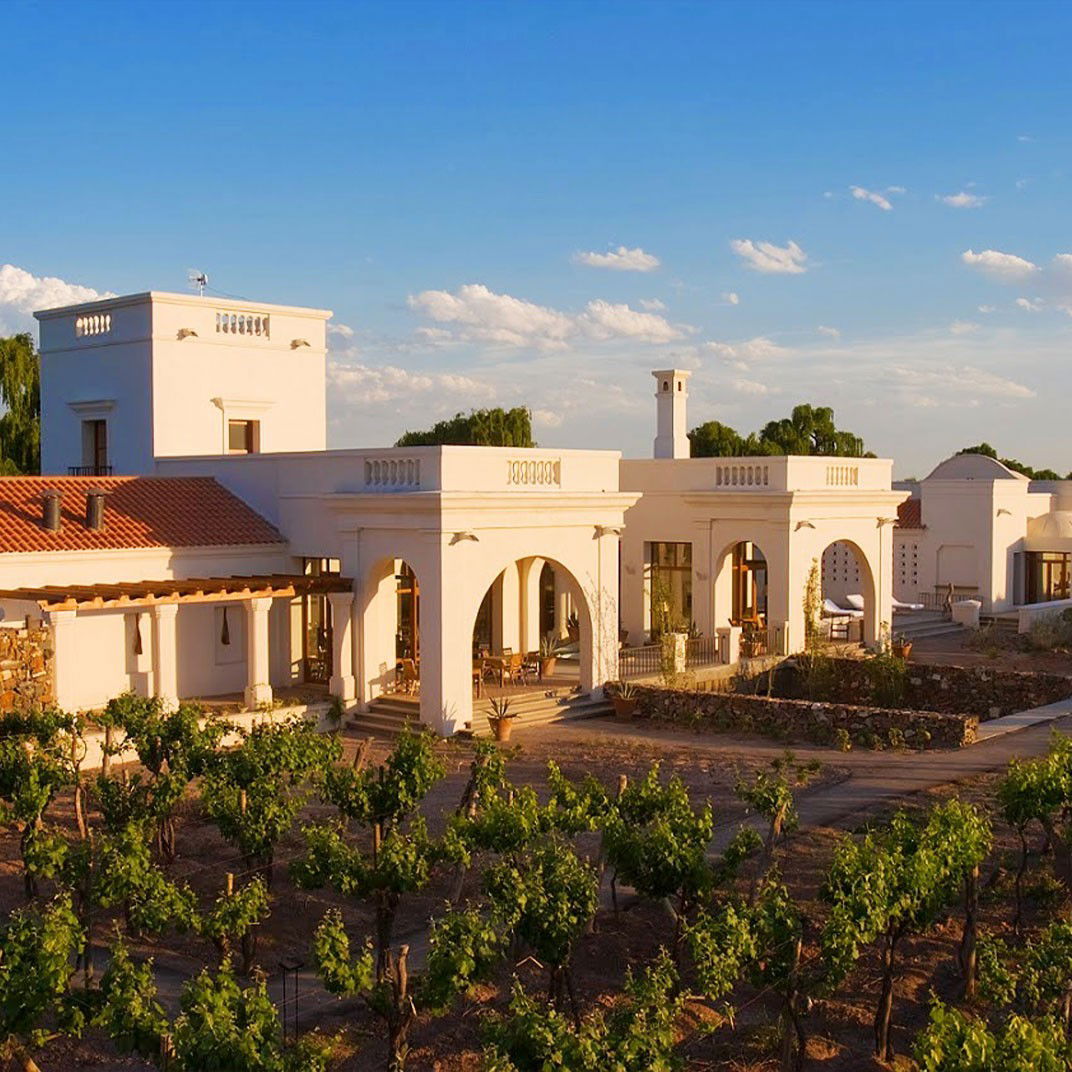
Cavas Wine Lodge reads like a vineyard gesture rather than a conventional hotel. Low Spanish Colonial forms and a dispersed casita plan dissolve into rows of old vines so that architecture functions as a frame for the landscape rather than a focal point. The property’s fourteen one‑bedroom villas emphasize privacy and restraint, and rooftop terraces punctuate a flat agricultural plain to lift views toward the snow‑capped Andes. The overall effect is quietly considered: design that privileges immersion in working vineyards, measured proportion, and an intimate connection to place.
Best For
This lodge is best for travelers seeking privacy, quiet and a wine‑country immersion rather than proximity to city amenities. Couples and honeymooners appreciate the one‑bedroom casitas and the sense of seclusion on a 55‑acre estate; design‑minded guests value the Spanish Colonial restraint and how the buildings frame the Andes and old vines. The property’s rural setting—about twenty miles south of Mendoza city—also makes it a natural pick for weekend escapes and anyone who wants to be based on the estate itself while exploring Alto Agrelo’s vineyards.
Stay Tips
When booking, request a casita oriented to the Andes if a mountain view is a priority—casitas are positioned to maximize both privacy and the western horizon. Note the lodge’s rural approach along a dirt road off Ruta Internacional 7 and factor in transfer time from Mendoza (the property sits roughly twenty miles south of the city). Expect standalone one‑bedroom villas rather than a centralized hotel block; ask the property which casitas include rooftop terraces if outdoor private space matters to you.
Venue details
Ambiance
Romantic and tranquil with candlelit dinners, fireside terraces, and vineyard surroundings evoking understated elegance and warmth.
Tags
Vibe
Best For
Experience
Amenities
View
About the Stay
- Rooms
- 18
- Check-in
- 15:00
- Check-out
- 11:00
- Property Style
- Wine Lodge with Private Vineyard Villas
- Design Style
- Contemporary Organic with Natural Stone and Adobe Elements
Planning details
Location





Also consider
Where to look if this is not the right fit
Cross-shop Awasi Mendoza if the trip calls for a more immersive luxury stay and the hotel is meant to shape the itinerary. Choose Entre Cielos Luxury Wine Hotel & Spa instead if wellness is the main reason for the Mendoza trip.
If the room is mainly a place to sleep between tastings, Posada Borravino is the cleaner value move. For a simpler vineyard setting, Chozos Resort by AKEN Spirit is the closest practical alternative.
Hotel context
How It Compares
Cavas Wine Lodge is the stronger choice for travelers who want a quiet Mendoza wine stay backed by major recognition, including La Liste Top Hotels, Fodor's, Relais & Châteaux, Virtuoso, Star Wine List. Awasi Mendoza is the better cross-shop for travelers seeking a more immersive luxury format, while Cavas is easier to justify for a classic wine-lodge celebration.
Chozos Resort by AKEN Spirit makes more sense if value and a simpler stay matter more than awards depth. Entre Cielos Luxury Wine Hotel & Spa and Entre Cielos Wine & Wellness Hotel are the stronger picks for a wellness-led trip. Posada Borravino is the practical alternative when the hotel is mainly a base between winery appointments.
Booking difficulty is listed as easy, so this is not the hotel to panic-book before building the rest of the itinerary. The smarter move is to decide first whether the trip is room-led or appointment-led: choose Cavas for quiet ambiance and recognition, choose Entre Cielos for wellness emphasis, choose Posada Borravino when budget discipline matters.
Explore Alto Agrelo
Around this place
Discover more on Pearl
Unlock the full Cavas Wine Lodge guide in Pearl, including awards, comparisons, FAQs, planning details, and nearby places.
Compare Cavas Wine Lodge
| Venue | Location | Awards |
|---|---|---|
| Cavas Wine Lodge | Alto Agrelo | 2026 Virtuoso Luxury Hotel CollectionStar Wine Lists 2026100 Most Incredible Hotels in the World · 20262026 La Liste Top Hotels2025 Michelin 2 Keys2025 Relais Chateaux Award |
| Awasi Mendoza | Luján de Cuyo | No published awards |
| Chozos Resort by AKEN Spirit | Agrelo | 2025 Michelin 1 Key |
| Entre Cielos Luxury Wine Hotel & Spa | Luján de Cuyo | No published awards |
| Entre Cielos Wine & Wellness Hotel | Mendoza | No published awards |
| Posada Borravino | Luján de Cuyo | No published awards |

How Cavas Wine Lodge Alto Agrelo compares with similar nearby venues.
FAQ
Frequently Asked Questions
How does Cavas Wine Lodge compare to other hotels?
Cavas Wine Lodge stands out for its recognition: La Liste Top Hotels (2026) at 94 points, Fodor's Most Incredible Hotels in the World (2026), Relais Chateaux Award (2025), Virtuoso Luxury Hotel Partner (2026), and Star Wine List (2026). If you are also considering Awasi Mendoza, Entre Cielos Luxury Wine Hotel & Spa, Entre Cielos Wine & Wellness Hotel, Chozos Resort by AKEN Spirit, or Posada Borravino, compare the current details directly with each hotel.
How is the dining at Cavas Wine Lodge?
Recognition includes Star Wine List (2026). Menu format, cuisine, hours, pricing, dietary accommodations should be checked with Cavas Wine Lodge directly before planning around a meal.
Is Cavas Wine Lodge family-friendly?
What is check-in like at Cavas Wine Lodge?
Do booking benefits apply at Cavas Wine Lodge?
A booking-related benefit is Virtuoso Luxury Hotel Partner (2026). For standard points earning, elite benefits, booking-channel perks, confirm the details with your travel advisor, booking channel, or the hotel before reserving.
When is the best time to book Cavas Wine Lodge?
If your dates are important, check availability directly with Cavas Wine Lodge or your booking channel and confirm any cancellation or deposit terms before reserving.