
Hotel in Alaior, Spain
Fontenille Menorca Santa Ponsa
225ptsEstate-Rooted Rural Retreat

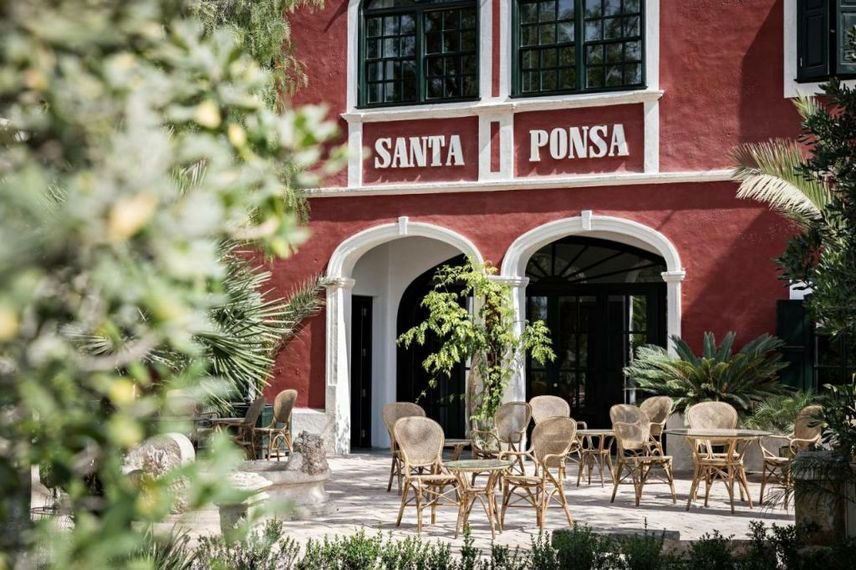
About Fontenille Menorca Santa Ponsa
Fontenille Menorca Santa Ponsa sits along the rural interior of Menorca near Alaior, recognised in La Liste's 2026 Top Hotels ranking with 91 points. The property belongs to a small European group building agroturismo-style hotels around working estate character. Travellers choosing it trade beach-strip convenience for stillness, agricultural landscape, and the understated food and hospitality programme the Fontenille brand has developed across its portfolio.
Rural Menorca and the Hotels That Have Made It a Serious Destination
Menorca arrived late to the premium hotel conversation that Mallorca and Ibiza dominated for years. That delay turned out to be an advantage. Where those islands accumulated infrastructure for volume tourism, Menorca kept its interior largely agricultural and its coastline protected under a UNESCO Biosphere Reserve designation that dates to 1993. The premium properties that have opened here over the past decade are almost uniformly small, estate-based, and oriented toward a quieter register of luxury. Torralbenc, Cap Menorca, and Menorca Experimental each sit within a few kilometres of Fontenille Menorca Santa Ponsa, and together they define a competitive set that prices against restraint and landscape rather than against resort facilities and pool bars.
Fontenille Menorca Santa Ponsa occupies an address along the Carretera Llucalari outside Alaior, the island's second-largest municipality and a town that functions as a working Menorcan community rather than a tourist node. Arriving from that direction, the transition from scrubland and stone-walled farm tracks to a property entrance is part of the experience in a way that a beachfront hotel address simply cannot replicate. This is an important distinction in how the Balearic premium tier has split: hotels oriented toward access to the sea, and hotels oriented toward immersion in the island's agricultural and historical interior.
The Fontenille Brand and What It Signals About This Property
The Fontenille group developed its identity through a flagship property in Luberon, France, where it applied an estate-hotel model built around food production, local wine, and architecture that reads as restoration rather than development. That template has transferred to Menorca with adjustments for the Mediterranean climate and Menorcan building tradition. The group occupies a position in European agroturismo hospitality analogous to what a small Burgundy domaine occupies in wine: deliberately limited in scale, resistant to standardisation, and reliant on the coherence of its programme rather than brand recognition to attract the right guest.
For travellers familiar with Abadía Retuerta LeDomaine in Teruel or Terra Dominicata in Escaladei, the Fontenille positioning will feel immediately familiar: an estate with agricultural context, a food programme that draws on what grows nearby, and an overall pace calibrated to the land rather than the schedule. This is a different proposition from Mandarin Oriental Ritz, Madrid or Mandarin Oriental Barcelona, where the hotel identity is urban, polished, and designed around international arrival. Fontenille Santa Ponsa is deliberately provincial in the French sense of that word — rooted in place, specific to its location, and uninterested in the aesthetics of global luxury hospitality.
The Dining Programme in Context
The Fontenille approach to food across its portfolio is organised around the estate rather than around a named chef. This is a meaningful philosophical distinction in European hotel dining, where the dominant model for two decades has been attaching a celebrity chef or Michelin credential to a restaurant as the primary commercial and reputational anchor. Fontenille resists that structure. The food programme here sits within a tradition of domaine hospitality where what matters is whether the kitchen is using what the land produces, whether the wine list reflects the region, and whether the pace of a meal matches the pace of the day.
That approach is harder to market than a Michelin star, but it produces a more coherent guest experience. Spain's estate-hotel dining scene has developed significant depth in this direction: Atrio Restaurante Hotel in Cáceres, Torre del Marqués Hotel Spa & Winery, and Pepe Vieira Restaurant & Hotel in Poio each demonstrate how seriously the country's regional hospitality sector has developed food programmes tied to specific landscapes. Fontenille Menorca Santa Ponsa belongs in that broader conversation, even if it occupies a quieter position within it.
Menorca's own food culture provides strong raw material. The island produces cheese, gin, and seafood of regional distinction. Mahón-Menorca cheese holds a Protected Designation of Origin. Gin production on the island dates to British occupation in the eighteenth century and remains a local industry. The seafood from the channels between Menorca and the Catalan coast has supplied the island's kitchens for centuries. An estate hotel kitchen working with those materials has both historical and gastronomic logic behind it.
Recognition and Peer Positioning
Fontenille Menorca Santa Ponsa holds 91 points in the La Liste 2026 Leading Hotels ranking, a French-led guide that aggregates reviews from multiple international sources and applies a scoring methodology across price, service, food, and overall experience. A score at that level places the property in the upper tier of the La Liste selection without reaching the extreme upper bracket occupied by multi-decade institutional hotels. For context, La Liste's hotel rankings include properties from across Spain's premium sector, including Akelarre in San Sebastián and Cap Rocat in Cala Blava. Within Menorca specifically, this recognition gives the property a verifiable credential that distinguishes it from the broader agroturismo category, where quality varies considerably.
Among Balearic alternatives, the comparison set is instructive. Hotel Can Ferrereta in Santanyí and Mas de Torrent Hotel & Spa in Torrent represent the rural-estate model on the mainland coast and in Mallorca. La Residencia, A Belmond Hotel, Mallorca occupies the upper end of that island's premium rural tier with Belmond group backing. Fontenille Menorca Santa Ponsa operates without the support of a large hotel group, which means the programme lives or dies on property-level execution rather than brand infrastructure.
Planning Your Stay
Alaior sits roughly in the centre of Menorca, accessible from Mahón airport in under twenty minutes by car. The island's airport connects to major European hubs, with frequency increasing substantially between May and October. Travel outside that window is possible but requires more flexibility with connections. Guests at Fontenille Santa Ponsa are positioned within reach of Menorca's southern calas, the prehistoric Talayotic sites that dot the island's interior, and the northern coast's wilder, rockier beaches. The property's address on the Carretera Llucalari places it closer to the southern coves than to the northern coast, which factors into how much driving guests will do during a stay.
For those building a wider Spain itinerary that includes premium rural hotels, Casa Beatnik Hotel in A Coruña, A Quinta da Auga Hotel & Spa in Santiago de Compostela, and Hotel Can Cera in Palma each represent comparable registers of hospitality in different regional contexts. See our full Alaior restaurants guide for the broader dining picture around the property.
Frequently Asked Questions
- What is the main draw of Fontenille Menorca Santa Ponsa?
- The property's primary appeal is the combination of Menorca's protected rural interior with an estate-hotel format that the Fontenille group has applied across southern Europe. The 91-point La Liste 2026 recognition gives it a verifiable quality signal in a category where credentials vary widely. Guests come for stillness, landscape, and a food programme tied to local production rather than for beach-resort facilities.
- Which room category should I book at Fontenille Menorca Santa Ponsa?
- Without published room-by-room data, the most reliable approach is to contact the property directly and ask about rooms oriented toward the agricultural landscape rather than road-facing positions. Estate hotels of this type typically have a premium tier with terrace or garden access that justifies the price difference over standard rooms. The La Liste 91-point score suggests the property maintains consistent standards across its accommodation.
- Do I need a reservation for Fontenille Menorca Santa Ponsa?
- For summer stays between June and September, advance booking is advisable. Menorca's premium rural properties operate at high occupancy during peak Mediterranean season, and small-key estates fill faster than larger resort hotels. Outside peak season, availability opens considerably. The property's website is the appropriate booking channel; direct contact generally offers the most flexibility on dates and room type.
- Who is Fontenille Menorca Santa Ponsa leading for?
- Travellers who find the resort-strip model of the Balearics too loud and the package-holiday format unworkable will find this property's register more fitting. The estate format suits couples and small groups who want to use a well-appointed base for exploring Menorca's calas, prehistoric sites, and local towns rather than those looking for poolside programming and nightlife proximity. The La Liste recognition places it in a peer set that prices against quality rather than volume.
- How does Fontenille Menorca Santa Ponsa compare to other estate hotels in the Balearics?
- Within Menorca, the property sits alongside Torralbenc and Menorca Experimental as part of a small cluster of design-conscious rural properties that have established the island as a credible destination for guests who would otherwise look at rural Mallorca or the Catalan coast. Its La Liste 2026 score of 91 points provides a cross-market credential that positions it above the general agroturismo category while remaining below the ultra-premium bracket occupied by long-established Balearic institutions.
Recognized By

Related editorial
- Best Fine Dining Restaurants in ParisFrom three-Michelin-star icons to the next generation of Parisian chefs pushing boundaries, these are the restaurants that define fine dining in the world's culinary capital.
- Best Luxury Hotels in RomeFrom rooftop terraces overlooking ancient ruins to Michelin-starred hotel dining, these are the luxury hotels that make Rome unforgettable.
- Best Cocktail Bars in KyotoFrom sleek lounges to hidden speakeasies, Kyoto's cocktail scene blends Japanese precision with global influence in ways you won't find anywhere else.
Save or rate Fontenille Menorca Santa Ponsa on Pearl
Keep this venue in your Pearl passport, rate it after you visit, and track it alongside every other place you collect.