You can get into Soho House, but you cannot simply sign up. The application is reviewed by a membership committee, and the waitlist at the most sought-after houses, Soho House New York, West Hollywood, and London's Dean Street location, runs long enough that approval can take months or longer. The fastest route for most applicants is a credible referral from an existing member, a portfolio that clearly signals work in the creative industries, and patience. If you need a private members' club with a gym and a rooftop pool on a specific timeline, book the alternative first and apply to Soho House in parallel.
Why the Door Stays Harder to Open at Some Houses Than Others
Soho House operates more than 40 houses across North America, Europe, Asia, and beyond, and demand is not uniform. The flagship locations in New York (Meatpacking District), Los Angeles (West Hollywood), and London (Dean Street, Shoreditch) carry the longest waitlists because they sit in the densest concentrations of the creative-industry professionals the club targets: film, fashion, music, advertising, architecture, and media. A newer house in a smaller market, Nashville, Mumbai, or Mexico City, typically moves faster.
The club's stated membership criteria center on working in the creative industries, broadly defined. Soho House does not require a specific job title, but the committee is looking for evidence that your work connects to the creative world in a substantive way. A freelance photographer, a mid-level TV producer, and a boutique hotel owner all fit the profile. A finance professional with no creative-industry connection is a harder case, regardless of income.
Capacity is the other constraint. Each house has a fixed number of members it will accept for that location, and the club manages density to keep the spaces from feeling overcrowded. When a house is at capacity, the waitlist is real, not performative.
When Applications Open and How the Waitlist Actually Works
There is no drop date, no announced opening window, and no public notification when a house moves from waitlisted to accepting. The application portal on the Soho House website accepts submissions on a rolling basis, but submission does not guarantee review on any particular timeline. Confirm current wait times directly with the membership team before planning around a specific approval date.
What is publicly documented: applicants fill out an online form covering their profession, creative-industry work, and a brief personal statement. Two existing member references are required for most houses, though the club has at times accepted applications with one strong reference at newer locations.
After submission, the application goes to a local membership committee. The committee reviews applications in batches. Applicants who are approved receive an invitation to join and pay the membership fee. Those who are not approved are typically notified, though the club does not provide detailed feedback on rejections.
The Channels That Actually Move Applications Forward
Ranked by realistic impact:

Member referral, in person. The single most effective lever. A current member who knows you, can speak to your work, and is willing to submit a reference through the member portal carries more weight than any other factor. Two strong references from active, long-standing members at the specific house you are applying to is the gold standard. A reference from a member who joined last month and barely uses the club is worth less than it sounds.
The online application, with a clear creative-industry narrative. The personal statement is not a formality. The committee is trying to answer one question: does this person belong in a room with our existing members? A vague statement ("I work in media and love design") is weaker than a specific one that names your projects, your collaborators, and why you want access to this particular house. Tailor the statement to the city and the house.
Applying to a newer or less-saturated house first. If you have flexibility on location, applying to a house that opened in the last two or three years in a secondary market is a faster path to membership. Once you are a member, you have access to all Soho House locations globally, so the entry point matters less than the approval itself.
The Soho Works route. Soho Works is the club's co-working arm, with spaces in several cities. A Soho Works membership is a separate product, but it puts you inside the ecosystem, in contact with existing Soho House members, and in a position to build the referral relationships that accelerate a house application. It is not a guaranteed path, but it is a legitimate one.
Direct outreach to the membership team. Soho House has local membership teams at each house. A polite, specific inquiry about the current waitlist status at a particular location is reasonable. They will not fast-track your application, but they can tell you whether the house is actively reviewing applications or effectively closed, which saves you from waiting on a queue that is not moving.
Inside a Soho House: What You're Actually Paying For
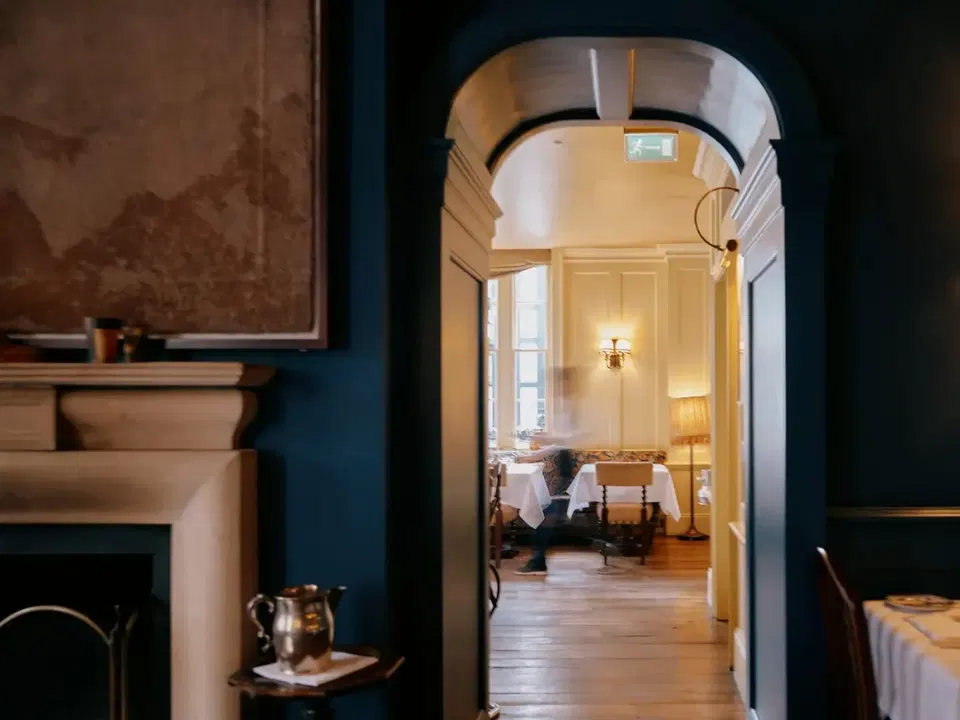
The physical experience varies by house, but the format is consistent: a multi-floor private members' club with a restaurant, a bar, a rooftop or outdoor space, a gym (at most locations), a screening room, and a pool (at the larger houses). The design language is deliberately residential, worn leather, vintage furniture, low lighting, art on the walls, rather than hotel-lobby formal. The point is that it feels like a well-appointed private home, not a corporate event space.
The restaurant and bar are the daily-use core. Food quality is solid and consistent across houses: the menu skews to all-day dining with a British-American comfort-food sensibility, and the kitchen is reliable rather than destination-worthy. You are not coming here for a tasting menu. You are coming because the room is comfortable, the service knows your name after a few visits, and you can take a meeting or a long lunch without being rushed.
The rooftop and pool, where they exist, are the amenity that members cite most often as justifying the fee. At Soho House New York, the rooftop pool is a genuine draw in summer. At Soho House Chicago (Midwest House), the lake views from the upper floors are the equivalent. These spaces are members-only, which means they are quieter and less crowded than comparable hotel rooftops open to the public.
Events are a substantive part of the membership. Each house runs a calendar of screenings, talks, panels, and social events, most of them free or low-cost for members. The quality varies, but the format is useful: smaller rooms, members-only attendance, and a built-in reason to show up without a specific agenda.
The gym and spa, where available, are competent rather than destination-level. If fitness facilities are your primary reason for joining, a dedicated gym membership in most cities will give you better equipment for less money. The gym is a convenience, not a selling point.
Annual membership fees vary by house tier and location. Fees are set by house and reviewed periodically. Confirm pricing directly with the membership team at the house you are applying to before committing.
How to Improve Your Odds: Practical Tactics
Apply to the house where you have the strongest referral network, not necessarily the one closest to your home. A strong reference at Soho House Chicago is worth more than a weak one at Soho House New York.
If you are early in your career or your creative-industry credentials are thin, wait. The committee is not looking for seniority, but they are looking for evidence of active work. A portfolio with two or three years of documented projects is a stronger application than one with a job title and no specifics.
Do not apply to multiple houses simultaneously as a strategy to increase your chances. The membership team can see this, and it reads as unfocused rather than enthusiastic.
If you are rejected, you can reapply. Confirm with the membership team before resubmitting. A reapplication with stronger references and a more specific personal statement is more likely to succeed than a resubmission of the same materials.
Guest access is available: members can bring guests to most houses, subject to house rules on frequency and guest fees. If you want to see the inside before committing to the application process, ask a member to bring you as a guest. This also gives you a realistic sense of whether the specific house fits your working and social habits.
Alternatives That Scratch the Same Itch
The Wing (now closed). A women-focused members' club that ran a similar creative-industry positioning before it shut all of its locations in 2022. It was better for networking events, with a smaller physical footprint than Soho House.
NeueHouse. Now a single New York location (Madison Square), co-working-forward, with a strong events calendar. The design is more considered than Soho House, the food is better, and the membership is smaller. No pool, no gym. Worth it if your primary use case is working and meeting people rather than leisure.
The Arts Club (London). Mayfair location, stronger food and wine program than Soho House, more formal atmosphere. The application process is similarly committee-based, but the membership skews older and the creative-industry definition is narrower. Better for established professionals; harder for early-career applicants.
Hotel day passes and rooftop bars. If the rooftop pool is the specific draw, several hotels in New York, LA, and London sell day passes or have publicly accessible rooftop bars. The 1 Hotel Brooklyn Bridge rooftop and the Arlo Rooftop in New York are two examples. Less exclusive, no membership fee, and available this week.
Worth the Application?
Yes, if you work in the creative industries, travel frequently between cities where Soho House operates, and will actually use the spaces for work and social life. The value compounds with use: the more houses you visit, the more the annual fee makes sense. A member who uses the New York, London, and LA houses regularly is getting a different product than someone who visits once a month in one city.
No, if your primary motivation is status, the rooftop pool, or a single location. The fee is real, the application process takes time, and the experience at any one house is good but not so singular that it justifies the effort if you are not going to use it consistently.
On timing: the waitlist at flagship houses is long and unpredictable. Apply now if you want access in the next 12 months, because the committee timeline is not in your control. In parallel, identify one existing member who knows your work well enough to write a specific reference, and ask them directly. That single step does more for your application than anything else on this list.
This week: find your strongest potential reference, review your personal statement for specificity, and submit the application to the house where your referral network is deepest, not the one with the most famous address.
Frequently Asked Questions
How long does the Soho House waitlist take?
Timelines vary significantly by location and current capacity. Flagship houses in New York, London, and Los Angeles tend to take longer than newer or smaller-market houses. Confirm current wait times directly with the membership team at the specific house you are applying to before planning around a particular approval date.
Do you need a referral to apply to Soho House?
Two member references are required for most houses. The strength and specificity of those references matters: a reference from an active, long-standing member who can speak directly to your work carries more weight than a nominal reference from a recent or inactive member. Some newer houses have accepted applications with one strong reference, but two is the standard.
Can you visit Soho House without being a member?
Members can bring guests to most houses, subject to house-specific rules on frequency and guest fees. This is the most practical way to see the inside before applying. Soho House does not operate as a public venue; non-members cannot book tables or access facilities independently.
How much does Soho House membership cost?
Fees are set by house tier and location and are reviewed periodically. Contact the membership team at the specific house you are applying to for current pricing before submitting an application.
What happens if your Soho House application is rejected?
Rejected applicants can reapply. A reapplication with stronger, more specific references and a revised personal statement is more likely to succeed than resubmitting the same materials. Confirm the reapplication process directly with the membership team at your target house.