
Bar in New York City, United States
Turntable Chicken Rock
100ptsVinyl-Era Chicken Counter
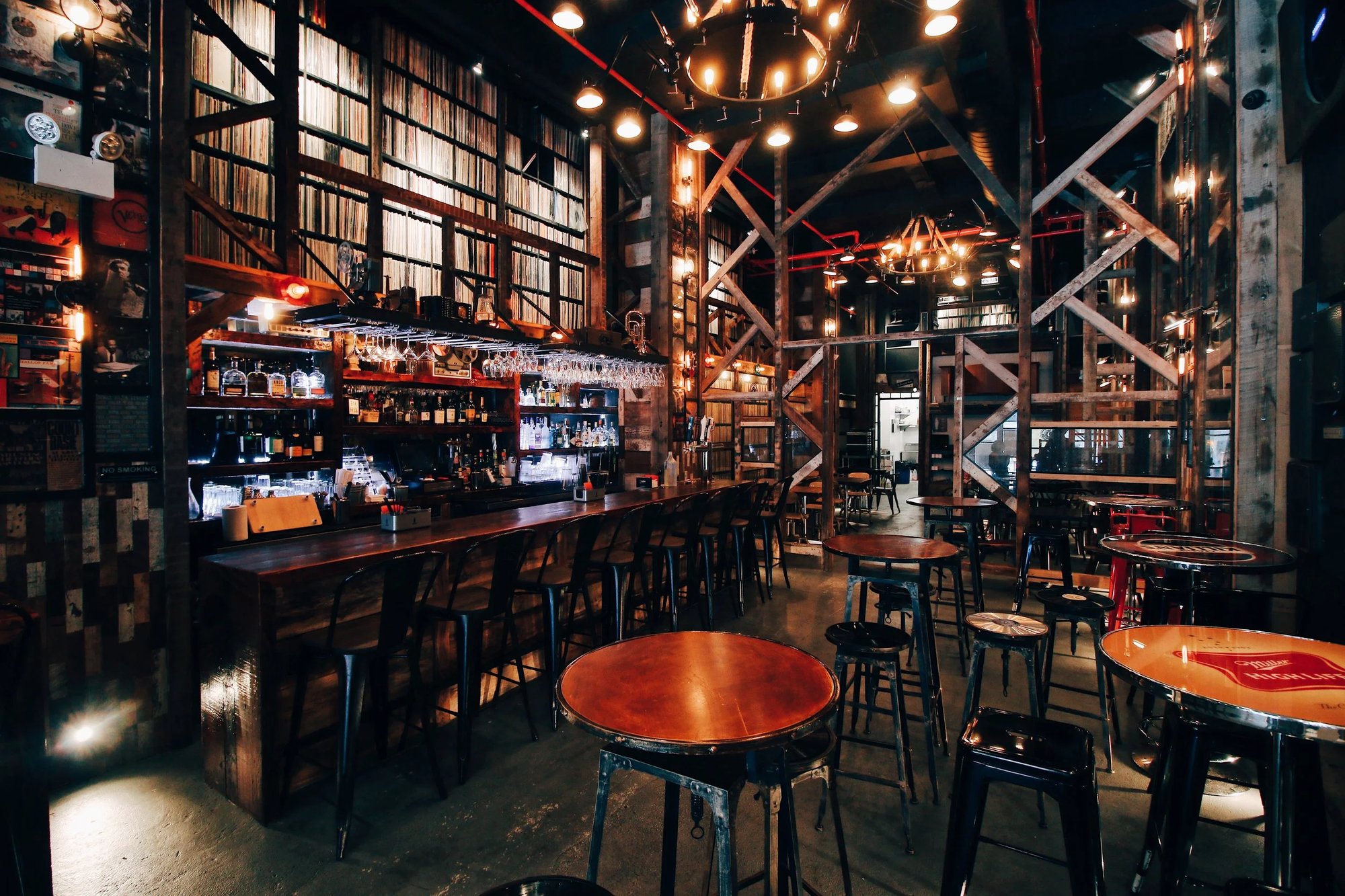
About Turntable Chicken Rock
A Fifth Avenue address in Midtown South places Turntable Chicken Rock squarely in one of New York City's most transit-dense dining corridors, where fast-casual formats and serious bar programs increasingly share the same block. The name signals something more specific than the address suggests, positioning this spot in a city where restaurant identity is built as much on concept as on cuisine.
Fifth Avenue, Midtown South, and the Logic of the Concept-Driven Dining Room
New York's Midtown South corridor, anchored by the stretch of Fifth Avenue running through the 20s and 30s, has spent the better part of a decade reshuffling its dining identity. The neighborhood sits at the intersection of several gravitational pulls: office density, commuter flow through Penn Station and the PATH, and the northward creep of a downtown dining culture that once stopped firmly at 14th Street. What emerges is a block-by-block patchwork of formats, where a technically serious bar program can operate across the street from a fast-casual chain, and where a venue's name alone does significant positioning work. Turntable Chicken Rock, at 290 Fifth Avenue, lands squarely inside that logic.
The name itself carries editorial weight in a city where naming conventions signal category and intent. "Chicken" places it in one of New York's fastest-moving protein categories, a segment that has attracted serious culinary attention since Korean fried chicken formats migrated out of Flushing and into Manhattan proper. "Turntable" implies music, atmosphere, and a particular kind of evening pacing. That combination suggests a venue operating in the overlap between destination dining and neighborhood anchor, the kind of format that performs differently on a Tuesday than on a Saturday, and that builds regulars before it builds press.
Chicken as a Serious Subject in New York's Current Dining Conversation
The broader context matters here. Across New York, the treatment of chicken as a primary protein has undergone a quiet elevation that mirrors what happened to ramen and tacos in previous cycles: a street-food or comfort format gets refined, priced up, and given a permanent address. The city now hosts a recognizable tier of chicken-forward concepts that compete less on price than on technique, sourcing, and setting. Rotisserie programs, koji-brined preparations, and double-fried Korean formats each represent distinct approaches to the same question of how heat and fat interact with poultry.
Sustainability dimension of that question has sharpened considerably in New York since roughly 2019. More chicken-focused restaurants are making sourcing decisions visible, whether through menu notations about pasture-raised or heritage breeds, or through partnerships with regional farms in the Hudson Valley or Pennsylvania. This shift is not merely cosmetic. Heritage breed birds, which carry more fat and connective tissue than commercial broilers, require different cooking approaches and longer resting times, which in turn affects the economics of a roasting or frying program. A venue that takes sourcing seriously has also, necessarily, made an argument about waste: using whole birds, incorporating livers and bones into the kitchen's economy, and reducing the byproduct footprint that high-volume chicken operations typically generate.
These are the questions that a venue positioned as Turntable Chicken Rock invites, even before the first dish arrives. For a broader map of where New York's drinking and dining culture sits right now, the full New York City restaurants and bars guide offers the wider picture.
The Bar Dimension: Music, Drinks, and the Cocktail Context
The "turntable" element of the name places this venue in conversation with a specific strand of New York bar culture that has grown more deliberate about the relationship between music programming and drink menus. New York's cocktail scene has moved well past the hidden-door speakeasy phase. The city's most-discussed bar programs now compete on transparency, technique, and thematic coherence. Venues like Attaboy NYC and Angel's Share operate on the axis of craft and restraint, while Superbueno and Amor y Amargo build menus around specific categories and cultural references. A venue that combines a chicken concept with a turntable-centric identity is proposing a different synthesis: atmosphere and food as co-equal rather than one subordinate to the other.
That proposition has precedent in other American cities. Kumiko in Chicago demonstrates how a formally structured bar program can anchor an experience without the food becoming an afterthought. Jewel of the South in New Orleans and Julep in Houston each show how a strong drink identity can carry regional cuisine into a more considered register. On the West Coast, ABV in San Francisco and Bar Leather Apron in Honolulu demonstrate that bar-forward venues with serious food programs operate as their own category, distinct from restaurants that also have bars. Allegory in Washington, D.C. and The Parlour in Frankfurt on the Main extend that logic internationally, showing that the music-and-craft-drink combination is neither a New York invention nor a New York-only format.
Sustainability as Format Logic, Not Marketing
For a chicken-centric restaurant in New York, environmental sourcing is not a peripheral concern. The city's supply chain for quality poultry has improved significantly over the past decade, with Hudson Valley farms such as Quattro's Game Farm and regional distributors giving Manhattan restaurants access to birds that were unavailable at scale ten years ago. When a venue commits to heritage or pasture-raised sourcing, that decision cascades through the kitchen: different fat content changes fry times and oil absorption, different texture changes rest protocols, and whole-bird purchasing changes what appears on the menu beyond the centerpiece cuts.
The waste reduction dimension follows directly. A kitchen that buys whole birds and uses them fully, stocks, fats, offal, and all, operates with a lower cost-per-protein-gram even at premium sourcing prices. That math has driven some of New York's more thoughtful chicken programs toward a whole-animal kitchen logic that would have seemed unusual for a concept of this type five years ago. The turntable identity suggests a venue oriented toward the evening, which in turn suggests a drinks program that needs to carry its own weight independent of food covers, a structure that rewards cocktail specificity and seasonal variation.
Planning a Visit: Address, Timing, and Practical Notes
Turntable Chicken Rock is located at 290 Fifth Avenue in Manhattan, in the NoMad-adjacent section of Midtown South. The address is within walking distance of the 28th Street subway stations on both the N/R and the 6 lines, making it one of the more transit-accessible positions in this part of the avenue. For current hours, booking arrangements, and any reservation requirements, the venue's own channels are the authoritative source, as policies in this part of the New York dining scene shift with demand and season. Given the dual identity of food program and music-oriented bar, visit timing matters: the experience likely differentiates meaningfully between early-evening dinner service and later-night drink-focused hours.
Frequently Asked Questions
- What cocktail do people recommend at Turntable Chicken Rock?
- Specific cocktail recommendations require current menu data, which changes with season and sourcing availability. What the venue's name and positioning suggest is a bar program built around atmosphere and concept coherence rather than a single signature drink. For comparison, New York venues operating in a similar register, where music and craft drinks share the room with serious food, often build their most-recommended cocktails around spirit categories that complement fried or roasted proteins: citrus-forward highballs, vinegar-based sours, or low-ABV formats that allow for longer visits. Checking recent visitor notes through current review platforms will give the most accurate picture of what's drawing attention on the current menu.
- What is Turntable Chicken Rock leading at?
- Based on its address in Midtown South and its concept-forward naming, Turntable Chicken Rock sits in the tier of New York restaurants where atmosphere and a specific protein focus do the primary positioning work. In a city where chicken-centric formats now span everything from fast-casual counters to tasting-menu-adjacent experiences, a venue that combines music programming with a dedicated chicken concept is proposing something in the mid-to-upper casual register, where the room and the food carry roughly equal weight. For context on where this fits within New York's broader dining spectrum, the EP Club New York City guide maps the category in more detail.
- How does Turntable Chicken Rock approach sourcing, and does that affect what's on the menu?
- Chicken-forward restaurants at this address in New York have access to a well-developed regional supply chain, including Hudson Valley farms and mid-Atlantic producers known for pasture-raised and heritage breed birds. When venues in this category commit to that tier of sourcing, it typically changes the menu structure: whole-bird purchasing supports a broader range of preparations, from roasted and fried centerpieces to stock-based sides and offal-forward additions. The sustainability argument and the culinary argument converge here, since higher-quality sourcing tends to reward simpler technique and fuller use of the bird. Confirming the specific sourcing approach at Turntable Chicken Rock is leading done directly with the venue, as these details shift with supplier relationships and season.
More bars in New York City
- (SUB)MERCER(SUB)MERCER occupies a basement address on Mercer Street in SoHo, positioning it as a deliberate destination rather than a drop-in. The subterranean format tends to keep ambient noise lower than street-level alternatives, making it a reasonable call for groups of four or more. Book ahead for weekends and confirm group capacity directly with the venue.
- 1 OR 81 OR 8 on DeKalb Avenue is a low-key Fort Greene bar that works best for two people on a weeknight when the room is quiet enough for conversation. Walk-ins are easy, no advance planning required. If a specialist cocktail program is your priority, Attaboy or Amor y Amargo offer more defined experiences — but for a neighbourhood drink without the fuss, this delivers.
- 230 Fifth Rooftop Bar230 Fifth is the easiest rooftop bar in Midtown to walk into, and the Empire State Building views justify the trip. The crowd skews groups and tourists, and the drinks are solid rather than craft-focused. Go early on a weekday for the best version of the experience; after 9 PM on weekends it tips firmly into party-group territory.
- 4 Charles Prime Rib4 Charles Prime Rib is a compact, reservation-required West Village dining room built around a focused prime rib format. It works well for dates and pairs but is too small for groups of four or more. Booking is easy relative to Manhattan peers, and the narrow menu signals a kitchen that executes one thing consistently well.
- 44 & X Hell's KitchenA low-key Hell's Kitchen neighborhood bar-restaurant that earns its place for easy weeknight dates and pre-theatre dinners. Booking is simple, the room is intimate enough for conversation, and there's no dress pressure. Not a cocktail destination, but a reliable, pressure-free option in Midtown West when you want comfort over spectacle.
- 58-22 Myrtle Ave58-22 Myrtle Ave is a low-key Ridgewood neighborhood spot that rewards return visits more than first impressions. Easy to get into, with no reservation headaches, it suits regulars looking for an unpretentious room rather than a structured cocktail program. If a strong drinks list or kitchen ambition matters to you, look to Attaboy or Amor y Amargo instead.
Related editorial
- Best Fine Dining Restaurants in ParisFrom three-Michelin-star icons to the next generation of Parisian chefs pushing boundaries, these are the restaurants that define fine dining in the world's culinary capital.
- Best Luxury Hotels in RomeFrom rooftop terraces overlooking ancient ruins to Michelin-starred hotel dining, these are the luxury hotels that make Rome unforgettable.
- Best Cocktail Bars in KyotoFrom sleek lounges to hidden speakeasies, Kyoto's cocktail scene blends Japanese precision with global influence in ways you won't find anywhere else.
Save or rate Turntable Chicken Rock on Pearl
Keep this venue in your Pearl passport, rate it after you visit, and track it alongside every other place you collect.