
Bar in New York City, United States
Sushi Yasuda
100ptsCounter-Driven Edo Precision
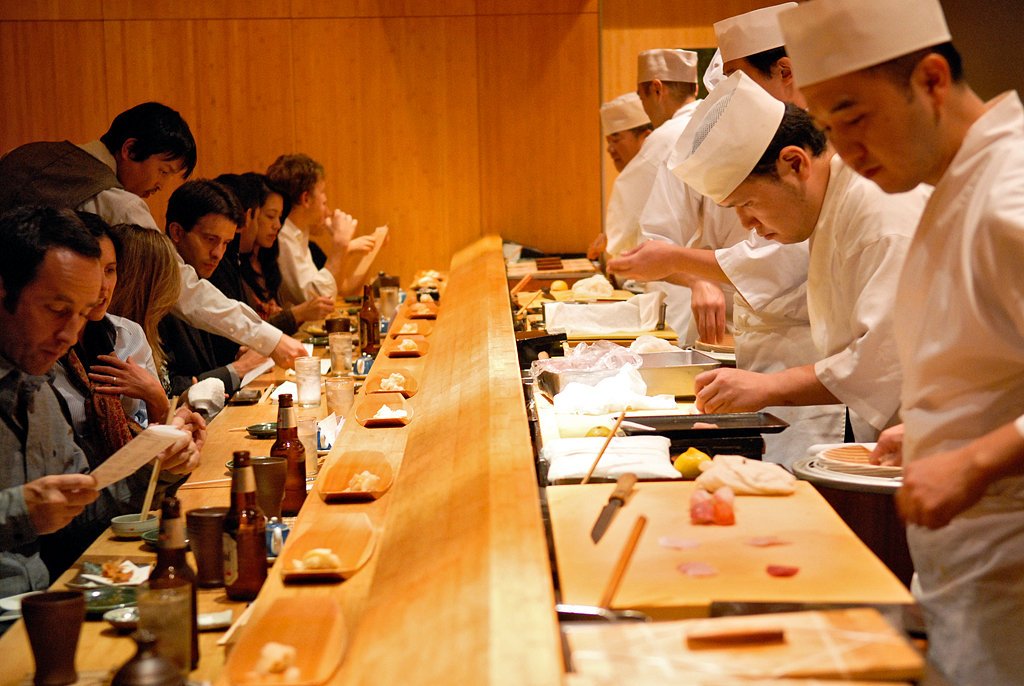
About Sushi Yasuda
Sushi Yasuda on East 43rd Street has held its place among Manhattan's serious omakase addresses for decades, drawing regulars and first-timers alike to a counter format that prizes rice temperature and fish sourcing over tableside ceremony. The Midtown location makes it logistically accessible, but the experience itself operates on the concentrated terms of a specialist counter — plan ahead, arrive with questions, and let the chef lead.
Planning a Seat at One of Midtown's Most Deliberate Counters
Manhattan's omakase market has stratified sharply over the past decade. At the upper end, a handful of counters command prices that place them alongside Tokyo's top-tier sushi rooms; at the entry level, omakase has been democratized into prix-fixe formats at accessible price points. Sushi Yasuda at 204 East 43rd Street has long occupied a middle-to-upper tier in that structure — serious enough to attract guests who track sourcing and rice quality, accessible enough in location to pull from the Midtown lunch and pre-theatre circuits without becoming a tourist trap. The address, one block from Grand Central Terminal, is the most practical detail on the page: it means the counter is reachable from nearly every transit corridor in the city, which changes how you should think about timing your visit.
What the Booking Logic Tells You About the Counter
In the broader context of New York sushi, booking difficulty is often the clearest proxy for a counter's standing. The city's most tightly held seats — small rooms with sub-ten-seat counters and a loyal regular base , require planning measured in weeks or months, not days. Sushi Yasuda operates inside that tier, where advance reservations are the baseline assumption rather than a precaution. Walk-in availability at the bar exists in theory during off-peak windows, but the counter format means that even a single seat going unfilled represents a meaningful gap in the room's rhythm. If you are visiting New York specifically to eat here, booking as far ahead as your schedule allows is the practical approach, not an overreaction. For guests whose dates are fixed, researching reservation windows before travel begins is the difference between a confirmed seat and a last-minute alternative.
The editorial angle worth noting here: the difficulty of booking a specific counter in New York rarely reflects marketing scarcity. It reflects seat count. A room with twelve to sixteen counter positions and two sittings per evening has a hard ceiling on how many covers it can produce. That physical constraint , not artificial exclusivity , is what makes advance planning the defining feature of the experience before you even arrive.
The Counter Tradition and Where Yasuda Fits
Sushi Yasuda belongs to a dining tradition that New York absorbed and adapted from Japan starting in the 1980s and 1990s. The counter-only or counter-primary format, where a single chef or small team controls the pacing and progression of the meal, arrived in Manhattan alongside a generation of Japanese chefs who trained in Tokyo and Osaka before establishing rooms in the United States. By the early 2000s, New York had developed its own omakase tier , counters that operated with genuine technical discipline rather than approximating the format for a broader audience. Sushi Yasuda was part of that establishment wave and has maintained its position through consistency rather than reinvention, which in this category is its own form of credibility. For context on the New York dining scene more broadly, our full New York City restaurants guide maps the city's wider range of options across cuisine types and neighbourhoods.
What to Know Before You Go
The East 43rd Street location situates Sushi Yasuda in a part of Midtown that isn't primarily a dining destination , the blocks around Grand Central are office and transit infrastructure, not a restaurant neighbourhood in the way that the West Village or the Lower East Side function. That context matters for planning. There are few compelling pre-dinner bar options immediately adjacent, so guests looking to build an evening around the meal should factor in travel time from a neighbourhood with more pre-dinner depth. For cocktail programs worth the detour before or after a Midtown dinner, Angel's Share in the East Village remains one of the city's most controlled environments for a pre-meal drink, while Attaboy NYC on the Lower East Side runs a guest-preference format that suits guests who already know what they want. For something with more energy and a broader spirits focus, Superbueno and Amor y Amargo represent the city's more editorially interesting bar tier, though both require repositioning across Manhattan from Midtown East.
Guests arriving from outside New York should note that Grand Central's position as a Metro-North hub makes the East 43rd Street address the most transit-accessible of any serious omakase counter in Manhattan, which partly explains its sustained draw from Connecticut and Westchester regulars alongside the core city audience. For comparison, similarly regarded counters in comparable cities , Kumiko in Chicago or carefully curated rooms in other US markets , tend to require more neighbourhood-specific navigation. The Midtown adjacency is a genuine practical advantage that distinguishes Sushi Yasuda's position from peers with harder-to-reach addresses.
Is the Investment Justified
New York's serious omakase tier now runs from roughly $150 per person at the lower end of the credentialed counter format to $500 and above at rooms with extensive international sourcing and ultra-small seat counts. Sushi Yasuda's pricing historically positioned it below the city's absolute ceiling but well above the entry-level omakase format, placing it in the bracket where guests are paying primarily for technical precision and fish quality rather than for room design or celebrity-chef association. In this price tier, the evaluation question is always whether the rice and fish sourcing justify the outlay relative to peers. The counter's sustained reputation, built over more than two decades in the city, suggests the answer has consistently been yes for guests who prioritize those fundamentals. That said, guests whose primary interest is in theatrics, elaborate courses, or extensively curated wine pairings may find the experience less differentiated from what a lower-priced counter delivers. The value case is strongest for guests who understand what they're paying for: direct counter access, high-quality fish, and a chef-driven pace.
For those building a broader trip around American bar and restaurant programs, it's worth noting that the controlled specialist format Sushi Yasuda represents has parallels in the bar world: Bar Leather Apron in Honolulu, Jewel of the South in New Orleans, Julep in Houston, ABV in San Francisco, and Allegory in Washington, D.C. all occupy the specialist tier in their respective cities, where the operating format and depth of program matter more than surface-level recognition. The discipline behind that format , whether applied to cocktails or sushi , tends to reward guests who arrive with some knowledge of what they're ordering.
Frequently Asked Questions
- What is Sushi Yasuda famous for?
- Sushi Yasuda is associated primarily with counter-format omakase dining in Manhattan, with a reputation built on rice quality and fish sourcing rather than elaborate course structures or room theatrics. It sits in the upper-middle tier of the city's serious sushi addresses and has maintained that position over more than two decades of operation. Its Midtown East location near Grand Central makes it among the most accessible credentialed counters in New York by transit.
- Should I book Sushi Yasuda in advance?
- Yes. The counter format imposes a hard limit on covers per service, and the room's standing means available seats fill well ahead. Guests with fixed travel dates should secure a reservation before departure rather than on arrival. Walk-in availability at the counter exists in theory but is unreliable, particularly at dinner.
- What drink is Sushi Yasuda famous for?
- Sushi Yasuda has a documented association with sake, which aligns with the counter's broader commitment to Japanese dining tradition. The rice-focused philosophy that defines the sushi program extends naturally to sake pairing, where the beverage complements rather than competes with the fish. Traditional omakase counters at this level generally treat sake selection as part of the meal's coherence, not as a separate attraction.
- When does Sushi Yasuda make the most sense to choose?
- The counter suits guests who are specifically seeking technical omakase dining in a no-theatrics format and who are willing to let the chef control pacing and selection. It makes less sense as a casual or spontaneous dinner option given the booking requirements and price point. For first-time visitors to New York who want a single high-quality sushi experience without navigating the city's most extreme reservation difficulty, the East 43rd Street address and transit access make this a logical choice relative to peers with harder-to-reach locations.
- Is Sushi Yasuda worth the price?
- For guests who understand the counter-omakase format and are evaluating primarily on fish quality and technical precision, Sushi Yasuda's sustained reputation over two-plus decades suggests the price is justified within its tier. Guests seeking elaborate multi-course structures, premium wine lists, or significant room design may find better value elsewhere in New York's upper dining bracket. The clearest case for the spend is made by the consistency of the counter's position in the city's sushi conversation across a long operating period.
- How does Sushi Yasuda compare to Tokyo-trained omakase counters operating in New York?
- New York's serious omakase tier includes counters with documented lineage from Tokyo's most respected kitchens, typically reflected in booking difficulty, price, and seat count. Sushi Yasuda belongs to the generation of counters that established the format in Manhattan before that tier became as densely competitive as it is now, giving it a different kind of credential: institutional continuity rather than recent Tokyo-direct pedigree. For guests tracking chef lineage, the relevant comparison is to other rooms established in the 1990s and early 2000s rather than to the newer generation of ultra-premium counters that arrived in the 2010s. The Parlour in Frankfurt offers an interesting parallel in the bar world , a room whose standing comes from sustained operating discipline rather than recent accolades.
More bars in New York City
- (SUB)MERCER(SUB)MERCER occupies a basement address on Mercer Street in SoHo, positioning it as a deliberate destination rather than a drop-in. The subterranean format tends to keep ambient noise lower than street-level alternatives, making it a reasonable call for groups of four or more. Book ahead for weekends and confirm group capacity directly with the venue.
- 1 OR 81 OR 8 on DeKalb Avenue is a low-key Fort Greene bar that works best for two people on a weeknight when the room is quiet enough for conversation. Walk-ins are easy, no advance planning required. If a specialist cocktail program is your priority, Attaboy or Amor y Amargo offer more defined experiences — but for a neighbourhood drink without the fuss, this delivers.
- 230 Fifth Rooftop Bar230 Fifth is the easiest rooftop bar in Midtown to walk into, and the Empire State Building views justify the trip. The crowd skews groups and tourists, and the drinks are solid rather than craft-focused. Go early on a weekday for the best version of the experience; after 9 PM on weekends it tips firmly into party-group territory.
- 4 Charles Prime Rib4 Charles Prime Rib is a compact, reservation-required West Village dining room built around a focused prime rib format. It works well for dates and pairs but is too small for groups of four or more. Booking is easy relative to Manhattan peers, and the narrow menu signals a kitchen that executes one thing consistently well.
- 44 & X Hell's KitchenA low-key Hell's Kitchen neighborhood bar-restaurant that earns its place for easy weeknight dates and pre-theatre dinners. Booking is simple, the room is intimate enough for conversation, and there's no dress pressure. Not a cocktail destination, but a reliable, pressure-free option in Midtown West when you want comfort over spectacle.
- 58-22 Myrtle Ave58-22 Myrtle Ave is a low-key Ridgewood neighborhood spot that rewards return visits more than first impressions. Easy to get into, with no reservation headaches, it suits regulars looking for an unpretentious room rather than a structured cocktail program. If a strong drinks list or kitchen ambition matters to you, look to Attaboy or Amor y Amargo instead.
Related editorial
- Best Fine Dining Restaurants in ParisFrom three-Michelin-star icons to the next generation of Parisian chefs pushing boundaries, these are the restaurants that define fine dining in the world's culinary capital.
- Best Luxury Hotels in RomeFrom rooftop terraces overlooking ancient ruins to Michelin-starred hotel dining, these are the luxury hotels that make Rome unforgettable.
- Best Cocktail Bars in KyotoFrom sleek lounges to hidden speakeasies, Kyoto's cocktail scene blends Japanese precision with global influence in ways you won't find anywhere else.
Save or rate Sushi Yasuda on Pearl
Keep this venue in your Pearl passport, rate it after you visit, and track it alongside every other place you collect.