
Bar in New York City, United States
Somtum Der
100ptsIsan Regionalist Kitchen
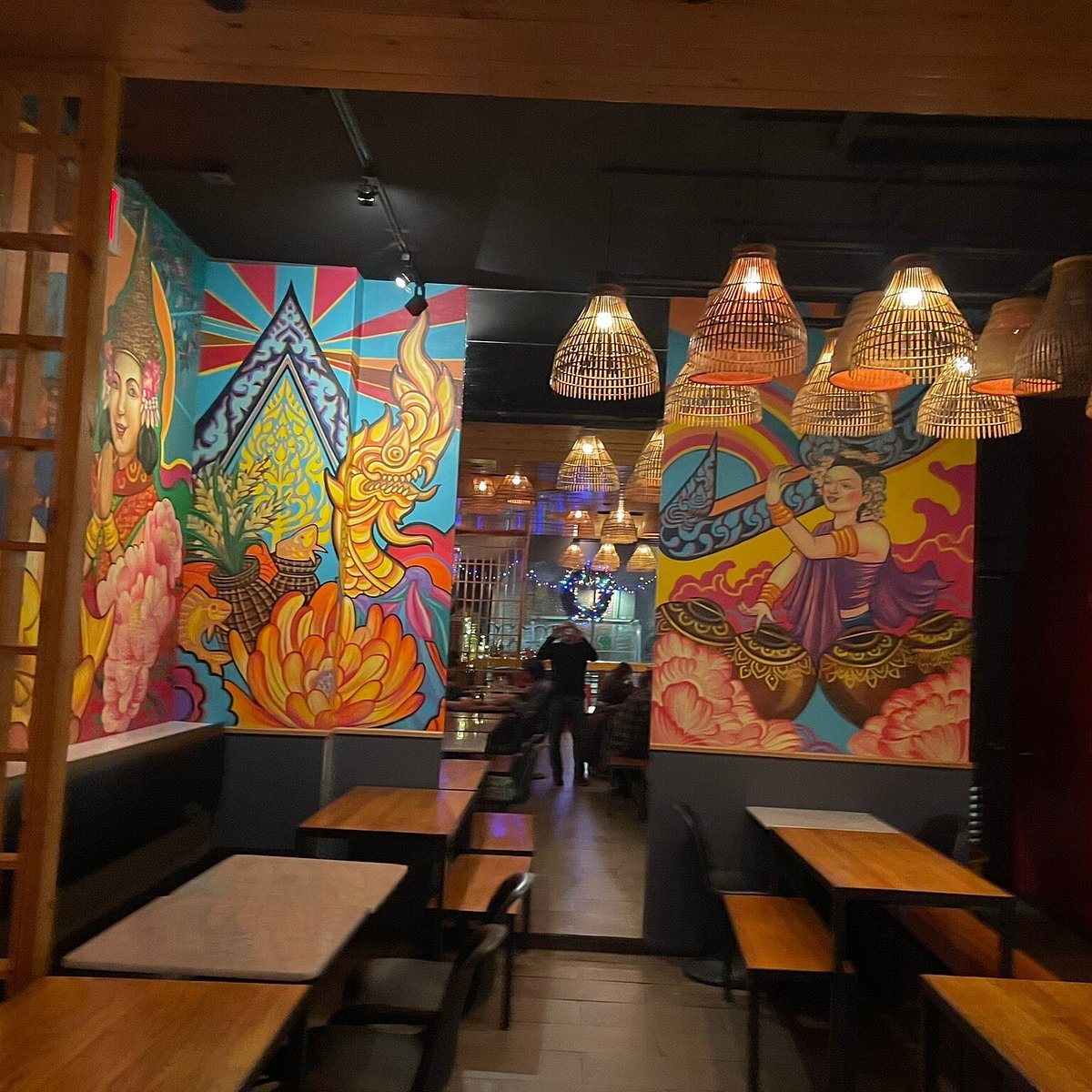
About Somtum Der
Somtum Der on Avenue A has held its ground as one of the East Village's most focused Thai kitchens since its New York opening, with a menu rooted in Isan-style cooking and a drinks program that punches above its neighbourhood tier. The address sits in a corridor that has seen turnover on all sides, which says something about the kitchen's consistency and the crowd it keeps.
Avenue A and the Isan Tradition in New York
Thai cooking arrived in New York in waves, and for decades the city's Thai restaurants clustered around a mid-market consensus — pad thai, green curry, a short wine list, bottles of Singha. The more regionalist current, one that draws sharper distinctions between the chilli-forward Isan tradition of Thailand's northeast and the coconut-sweetened cooking of the central plains, took longer to establish itself in Manhattan. Somtum Der, operating from 85 Avenue A in the East Village, belongs to that regionalist wave. The name itself is a signal: som tum is the green papaya salad most closely associated with Isan cuisine, and leading with it is a declaration of culinary intent that separates the kitchen from the generic Thai category.
The East Village has historically been the borough's testing ground for independent operators willing to work at lower margins for a crowd that reads menus carefully. That neighbourhood context matters. A restaurant running a focused Isan program on Avenue A is not competing with Midtown hotel Thai or the tourist-facing Thai Town of Hell's Kitchen — it is competing for a dining public that already knows what laab is and has an opinion about fermented fish paste. That specificity narrows the audience and sharpens the kitchen's obligation to get it right.
Drinks in a Regionalist Thai Kitchen
The editorial angle that matters most at a restaurant like Somtum Der is not, strictly speaking, the wine list in the classical sense. Isan cooking, built on dried chillis, lime, fish sauce, and toasted rice powder, does not sit comfortably against Old World Burgundy or tannic Bordeaux. What a serious drinks program in this context looks like is a curated beer and spirits selection, a short but purposeful natural wine presence, and , critically , a cocktail and spirit offering that can handle high-acidity, high-heat food without flattening it.
New York's craft cocktail culture has matured to the point where the conversation around food-and-drink pairing is no longer confined to fine dining. Bars like Amor y Amargo have demonstrated that bitters-forward, lower-ABV formats can hold their own as serious drinks programs, and venues like Attaboy NYC have shown what hospitality-led, unlisted-menu service looks like at its most refined. The standard against which East Village and Lower East Side drinks programs are now measured has risen accordingly. A focused Thai kitchen that wants to be taken seriously in 2025 cannot treat its bar as an afterthought.
The broader pattern holds across cities. Kumiko in Chicago has built one of the country's most discussed drinks programs around Japanese spirits and liqueurs in a way that complements rather than competes with its food. Bar Leather Apron in Honolulu applies similar discipline to a Pacific context. When a kitchen is doing genuinely regional cooking, the drinks program either rises to meet it or exposes the gap. At Somtum Der, the drinks list is worth ordering from with the same attention you give the food menu.
The Neighbourhood and Its Peer Set
Avenue A in 2025 sits in a different position than it did when many of the street's most-discussed restaurants first opened. The East Village independent dining scene has thinned , rents moved up, some of the neighbourhood's defining operators relocated or closed. The restaurants that remain on this corridor have either found a loyal regular base or have benefited from the foot traffic that comes with longevity. Somtum Der has done both.
Its peer set is not the obvious one. The comparison is less useful to the block's other Thai options and more useful when placed against the East Village's wider roster of independent kitchens with genuine regional specificity. Dirty French, operating in a different price tier and culinary tradition entirely, represents the kind of cooking that comes with a press office and a reservation backlog. Somtum Der operates in the opposite mode: lower profile, more walk-in friendly, and better understood by the people who seek it out than by those who stumble in.
For visitors approaching New York's drinking and dining scene through a cocktail-first lens, the East Village is a short walk from some of the city's most considered bar programs. Angel's Share, the East Village's long-standing Japanese-influenced bar, has operated from its second-floor address on East 9th since the 1990s and remains a useful reference for what sustained, disciplined bar culture looks like at neighbourhood scale. Superbueno brings a Latin-American drinks lens to the area. The corridor between these addresses and Somtum Der is walkable, and an evening that starts or ends at one flows naturally to the other.
Regional Context: Isan Cooking and What It Demands
Isan cuisine is the cooking of Thailand's northeastern plateau, sharing cultural ground with Laos and shaped by a drier climate than the rice paddies of the central plains. The flavour profile is assertive: fermented and dried proteins, aggressive lime acidity, toasted spice, and chilli heat that sits in the back of the throat rather than on the tip of the tongue. Som tum, the green papaya salad that gives Somtum Der its name, is one of the most-consumed dishes in Thailand by volume, yet it appears on relatively few New York menus with any regional specificity. Most kitchens flatten it toward sweetness or reduce the fish sauce to a whisper for a broader audience.
A kitchen that commits to the Isan register in a New York setting is making a choice that costs it some of the city's more cautious dining public. It is also making a choice that earns loyalty from diners who have eaten this food in Thailand or in the Isan-dominated restaurants of Los Angeles and have been waiting for a Manhattan equivalent. That trade-off is part of what gives Somtum Der its identity in the broader New York City restaurant scene.
For comparison, the way that Jewel of the South in New Orleans draws on the city's specific cocktail history to give its drinks program coherence, or the way Julep in Houston centres a Southern spirits tradition in a contemporary format, Somtum Der uses regional culinary specificity as an editorial position. The cooking is the argument. Similarly, Allegory in Washington, D.C. and ABV in San Francisco use curation and category discipline to define what kind of room they are. The through-line is intentionality: knowing what you are and running that position clearly.
Planning a Visit
Somtum Der is at 85 Avenue A in the East Village, Manhattan. The L train's First Avenue stop is the closest subway access, placing the restaurant a short walk from the station. The East Village dining pattern tends toward earlier seatings on weeknights and later arrivals on weekends; arriving before 7pm on a weekday generally reduces any wait. For visitors building a longer East Village evening, the proximity to Avenue A's remaining independent restaurants and the nearby bar programs mentioned above makes this a logical anchor for a multi-stop itinerary. The drinks list rewards ordering from it alongside the food rather than after.
Internationally minded visitors who appreciate the kind of technical bar culture represented by The Parlour in Frankfurt on the Main will find that New York's East Village equivalent tier is concentrated within a few blocks of this address.
Quick reference: 85 Avenue A, East Village, Manhattan. L train to First Avenue. Walk-ins taken; booking recommended for groups or weekend evenings.
Frequently Asked Questions
- What's the signature drink at Somtum Der?
- The drinks program is calibrated to work with Isan cooking, which means formats that handle high acidity and chilli heat without sweetening or softening the food. The short cocktail and spirits selection is the better reference point for drinks at this address than a conventional wine list, given the cuisine's flavour profile. Order from the bar with the same attention you give the menu.
- What's the defining thing about Somtum Der?
- The defining characteristic is regional specificity. In a city where Thai restaurants have historically defaulted to a central-plains consensus, Somtum Der has held a consistent Isan position on its menu since opening. That specificity is what earns it a different kind of loyalty than the average Avenue A operator.
- Should I book Somtum Der in advance?
- For two people on a weeknight, arriving early often works without a reservation. For groups of four or more, or for a Friday or Saturday evening, booking ahead removes the uncertainty. The East Village fills quickly on weekend nights and the restaurant has a regular base that fills seats early.
- What kind of traveler is Somtum Der a good fit for?
- The fit is strongest for diners who already have a frame of reference for regional Thai cooking and want a Manhattan address that takes the Isan tradition seriously. It also suits visitors building an East Village evening around the neighbourhood's independent dining and cocktail scene rather than a single high-profile reservation.
- Is Somtum Der related to the Bangkok original, and does that affect what's on the menu?
- Somtum Der in New York shares its name and concept lineage with a Bangkok restaurant of the same name, which built its reputation on Isan cooking for a city audience that knew the tradition well. That origin means the New York kitchen is not translating Isan food for a foreign audience from scratch; it is extending a program that was already calibrated for an urban, restaurant-literate crowd. The connection places the New York address in a peer set that includes Bangkok's own regionalist dining scene, not just the New York Thai category.
More bars in New York City
- (SUB)MERCER(SUB)MERCER occupies a basement address on Mercer Street in SoHo, positioning it as a deliberate destination rather than a drop-in. The subterranean format tends to keep ambient noise lower than street-level alternatives, making it a reasonable call for groups of four or more. Book ahead for weekends and confirm group capacity directly with the venue.
- 1 OR 81 OR 8 on DeKalb Avenue is a low-key Fort Greene bar that works best for two people on a weeknight when the room is quiet enough for conversation. Walk-ins are easy, no advance planning required. If a specialist cocktail program is your priority, Attaboy or Amor y Amargo offer more defined experiences — but for a neighbourhood drink without the fuss, this delivers.
- 230 Fifth Rooftop Bar230 Fifth is the easiest rooftop bar in Midtown to walk into, and the Empire State Building views justify the trip. The crowd skews groups and tourists, and the drinks are solid rather than craft-focused. Go early on a weekday for the best version of the experience; after 9 PM on weekends it tips firmly into party-group territory.
- 4 Charles Prime Rib4 Charles Prime Rib is a compact, reservation-required West Village dining room built around a focused prime rib format. It works well for dates and pairs but is too small for groups of four or more. Booking is easy relative to Manhattan peers, and the narrow menu signals a kitchen that executes one thing consistently well.
- 44 & X Hell's KitchenA low-key Hell's Kitchen neighborhood bar-restaurant that earns its place for easy weeknight dates and pre-theatre dinners. Booking is simple, the room is intimate enough for conversation, and there's no dress pressure. Not a cocktail destination, but a reliable, pressure-free option in Midtown West when you want comfort over spectacle.
- 58-22 Myrtle Ave58-22 Myrtle Ave is a low-key Ridgewood neighborhood spot that rewards return visits more than first impressions. Easy to get into, with no reservation headaches, it suits regulars looking for an unpretentious room rather than a structured cocktail program. If a strong drinks list or kitchen ambition matters to you, look to Attaboy or Amor y Amargo instead.
Related editorial
- Best Fine Dining Restaurants in ParisFrom three-Michelin-star icons to the next generation of Parisian chefs pushing boundaries, these are the restaurants that define fine dining in the world's culinary capital.
- Best Luxury Hotels in RomeFrom rooftop terraces overlooking ancient ruins to Michelin-starred hotel dining, these are the luxury hotels that make Rome unforgettable.
- Best Cocktail Bars in KyotoFrom sleek lounges to hidden speakeasies, Kyoto's cocktail scene blends Japanese precision with global influence in ways you won't find anywhere else.
Save or rate Somtum Der on Pearl
Keep this venue in your Pearl passport, rate it after you visit, and track it alongside every other place you collect.