
Bar in New York City, United States
Soho KTV
100ptsPrivate-Room Karaoke Format
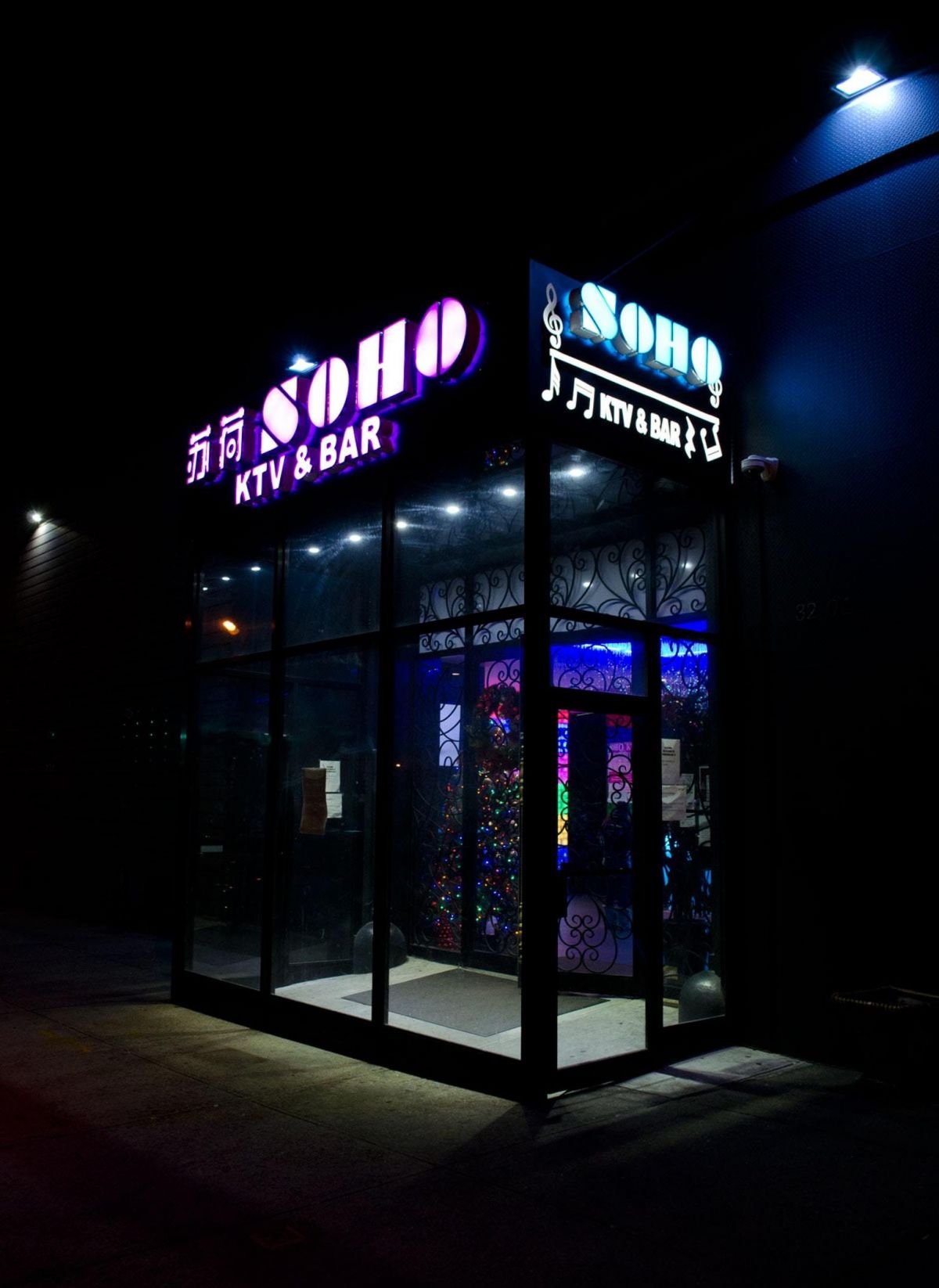
About Soho KTV
A Flushing institution in New York City's most densely Korean-influenced commercial corridor, Soho KTV sits at the intersection of late-night karaoke culture and the social architecture that defines how the outer boroughs unwind. The private-room format that dominates Asian entertainment districts makes this address a reference point for understanding how New York's karaoke scene operates at street level, far from the polished Manhattan versions.
Flushing's Karaoke Infrastructure and Where Soho KTV Sits Within It
Karaoke arrived in the United States through Japanese and Korean immigrant communities long before it became a novelty night-out format for Manhattan bar-hoppers. In Flushing, Queens, the format never needed to be repackaged or made ironic. The private-room KTV model, borrowed directly from East Asian entertainment culture, took hold here because the community that built Flushing's commercial core on Main Street and its surrounding blocks was the same community for whom singing in a reserved room with friends is simply how an evening ends. Soho KTV, addressed at 32-03 Farrington Street, operates within that tradition rather than as a departure from it.
The address places it in a part of Flushing that sits a short distance from the loudest commercial activity on Main Street. That slight remove is characteristic of the borough's KTV clusters, which tend to occupy upper floors of mixed-use buildings or side-street addresses where the real estate economics allow for the room-heavy floor plans the format requires. The physical container of a KTV venue is its defining feature: not a bar with a stage, not a lounge with screens, but a segmented building where a dozen or more private rooms run simultaneously, each functioning as its own contained social event.
The Architecture of the Private Room Format
Understanding what a KTV space actually looks like from the inside matters here, because the design logic is entirely different from Western entertainment venues. Where a cocktail bar like Angel's Share in the East Village builds its identity around a shared public room and bar-counter choreography, a KTV venue inverts that entirely. The corridor is functional; the room is the destination. Each private space typically includes upholstered seating arranged in a horseshoe or U-shape around a central table, a large-format screen mounted opposite, microphones on the table, and a touchscreen or tablet interface for song selection. The acoustic logic matters too: rooms are treated for sound isolation, meaning what happens in one room is inaudible in the next. The social contract is one of sealed privacy, not public performance.
This design structure produces a very specific kind of evening. Without a bartender circulating, without ambient music curating the mood, without the social pressure of a public audience, the dynamic inside a private KTV room is governed entirely by the group. It is a format built for existing social circles rather than for meeting strangers, which is precisely why it has maintained deep cultural traction in communities where group cohesion and face-saving are social priorities. You are not being watched by anyone who did not choose to be in that room with you.
New York's KTV scene divides roughly along two lines: the Koreatown cluster on West 32nd Street in Manhattan, which skews toward later hours and a younger, more mixed demographic, and the Flushing cluster, which runs deeper into the outer borough residential community it serves and where Chinese and Korean patronage overlap significantly. Soho KTV belongs to the Flushing tier. That distinction has practical implications for atmosphere, pricing norms, and the clientele mix on any given evening.
Flushing as a Dining and Entertainment District
Any honest account of Soho KTV has to situate it within Flushing's broader evening economy, because the KTV visit rarely stands alone. Flushing's food infrastructure is one of the most concentrated in North America for Chinese regional cuisine, with Sichuan, Shanghainese, Fujianese, and Cantonese options within blocks of each other. A KTV session typically follows a meal, and the availability of late-night dining within walking distance is part of what makes the Flushing format work as a self-contained evening without needing to travel back to Manhattan. The neighborhood absorbs the entire arc of a social evening: dinner, drinks, singing, and a late-night snack.
For those building a broader understanding of New York's drinking and entertainment culture, our full New York City restaurants guide maps the city's food and drink scene across boroughs and price tiers. The contrast between a Flushing KTV address and cocktail-program venues like Superbueno or Amor y Amargo in Manhattan illustrates how fractured and borough-specific New York's nightlife actually is. These are not competing formats; they draw on entirely different social functions and community ties.
For comparative reference across U.S. cities, the bar and entertainment scene in places like Bar Leather Apron in Honolulu, Jewel of the South in New Orleans, Julep in Houston, Kumiko in Chicago, ABV in San Francisco, and Allegory in Washington, D.C. all reflect how entertainment culture varies by city character. Internationally, a venue like The Parlour in Frankfurt shows how European evening culture channels its own distinct logic. KTV sits outside all of those frameworks, which is part of its specificity. And closer to home, Attaboy NYC represents the bartender-led, no-menu cocktail format that has become shorthand for a certain Manhattan sophistication. Soho KTV is in dialogue with none of that. It operates in a parallel economy.
Planning a Visit
The KTV format in Flushing generally operates on a room-rental model rather than a cover charge: groups pay per hour for the private space, with drinks and snacks ordered separately at rates that tend to be lower than Manhattan equivalents. Evening hours typically run into the early morning, with weekend demand peaking after 10 p.m. Larger groups benefit from booking ahead; smaller walk-in groups may find availability more easily on weeknights. Flushing is accessible via the 7 train to Flushing-Main Street, the final stop on the line from Midtown Manhattan.
Quick reference: 32-03 Farrington St, Flushing, NY 11354. Accessible by 7 train to Flushing-Main Street. Private-room KTV format; room rental pricing applies.
Frequently Asked Questions
- What should I drink at Soho KTV?
- KTV venues in Flushing typically operate a bottle-service or à la carte drinks model within the private room. The convention leans toward beer, soju, and mixed drinks rather than a curated cocktail program. If a crafted cocktail experience is what you are after, venues like Angel's Share in the East Village or Attaboy NYC in the Lower East Side represent the Manhattan end of that spectrum. At a KTV, the drink is secondary to the room.
- What is the defining thing about Soho KTV?
- The private-room format is the defining architectural and social feature. Unlike karaoke bars with open stages, Soho KTV operates within the East Asian KTV tradition where groups rent sealed, soundproofed rooms by the hour. That format makes it a Flushing community institution rather than a novelty entertainment concept. Pricing typically runs below comparable Manhattan options, and the address on Farrington Street places it within Flushing's broader evening economy of late-night dining and entertainment.
- Is Soho KTV in Flushing suitable for groups unfamiliar with the KTV format?
- The private-room KTV model is self-contained enough that first-timers adapt quickly once inside. Song libraries at Flushing KTV venues typically span Mandarin, Cantonese, Korean, Japanese, and English catalogues, covering a wide demographic range. Groups of four to ten tend to get the most from the format, as the room dynamic depends on enough people to keep the energy circulating. Arriving with a group rather than as a couple or solo visitor is the standard approach in this format across both Flushing and the wider East Asian KTV tradition.
More bars in New York City
- (SUB)MERCER(SUB)MERCER occupies a basement address on Mercer Street in SoHo, positioning it as a deliberate destination rather than a drop-in. The subterranean format tends to keep ambient noise lower than street-level alternatives, making it a reasonable call for groups of four or more. Book ahead for weekends and confirm group capacity directly with the venue.
- 1 OR 81 OR 8 on DeKalb Avenue is a low-key Fort Greene bar that works best for two people on a weeknight when the room is quiet enough for conversation. Walk-ins are easy, no advance planning required. If a specialist cocktail program is your priority, Attaboy or Amor y Amargo offer more defined experiences — but for a neighbourhood drink without the fuss, this delivers.
- 230 Fifth Rooftop Bar230 Fifth is the easiest rooftop bar in Midtown to walk into, and the Empire State Building views justify the trip. The crowd skews groups and tourists, and the drinks are solid rather than craft-focused. Go early on a weekday for the best version of the experience; after 9 PM on weekends it tips firmly into party-group territory.
- 4 Charles Prime Rib4 Charles Prime Rib is a compact, reservation-required West Village dining room built around a focused prime rib format. It works well for dates and pairs but is too small for groups of four or more. Booking is easy relative to Manhattan peers, and the narrow menu signals a kitchen that executes one thing consistently well.
- 44 & X Hell's KitchenA low-key Hell's Kitchen neighborhood bar-restaurant that earns its place for easy weeknight dates and pre-theatre dinners. Booking is simple, the room is intimate enough for conversation, and there's no dress pressure. Not a cocktail destination, but a reliable, pressure-free option in Midtown West when you want comfort over spectacle.
- 58-22 Myrtle Ave58-22 Myrtle Ave is a low-key Ridgewood neighborhood spot that rewards return visits more than first impressions. Easy to get into, with no reservation headaches, it suits regulars looking for an unpretentious room rather than a structured cocktail program. If a strong drinks list or kitchen ambition matters to you, look to Attaboy or Amor y Amargo instead.
Related editorial
- Best Fine Dining Restaurants in ParisFrom three-Michelin-star icons to the next generation of Parisian chefs pushing boundaries, these are the restaurants that define fine dining in the world's culinary capital.
- Best Luxury Hotels in RomeFrom rooftop terraces overlooking ancient ruins to Michelin-starred hotel dining, these are the luxury hotels that make Rome unforgettable.
- Best Cocktail Bars in KyotoFrom sleek lounges to hidden speakeasies, Kyoto's cocktail scene blends Japanese precision with global influence in ways you won't find anywhere else.
Save or rate Soho KTV on Pearl
Keep this venue in your Pearl passport, rate it after you visit, and track it alongside every other place you collect.