
Bar in New York City, United States
SHINN EAST
100ptsNeighbourhood-Rooted Wine Program
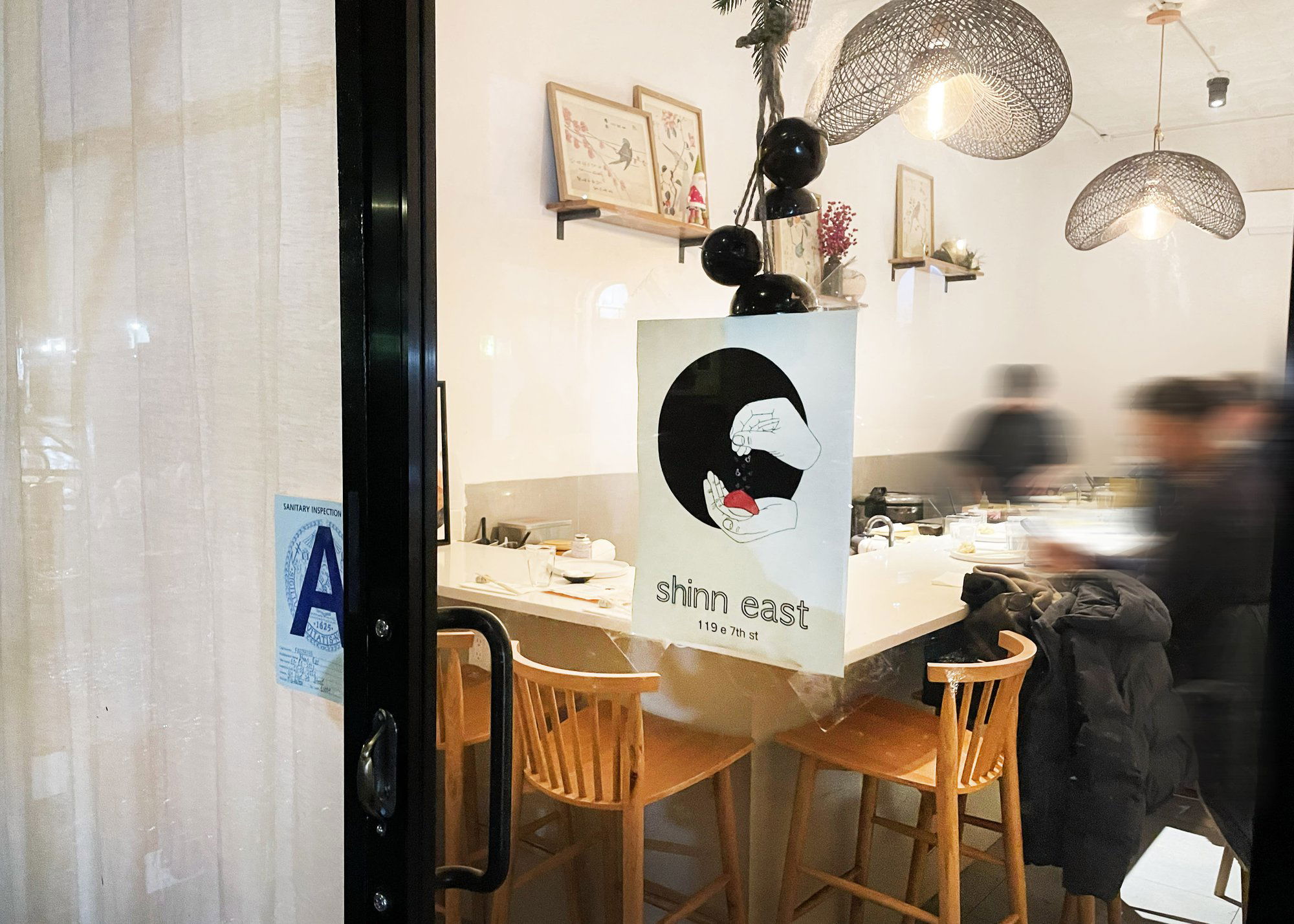
About SHINN EAST
SHINN EAST occupies a specific address in the East Village wine bar tier, where cellar curation and glass-pour depth set the competitive standard. Positioned among a New York cohort that takes wine seriously as a standalone offering rather than a dining supplement, it draws a neighborhood crowd that returns for the list rather than the occasion.
East Village Wine, by the Glass and by the Bottle
The East Village has never been a natural home for formal wine culture, which is precisely why the wine bars that have taken root there operate on different terms than their Midtown or West Village counterparts. The neighborhood's drinking tradition runs toward the casual and the convivial, and the wine bars that survive in it tend to earn loyalty through curation depth rather than room atmosphere or chef prestige. SHINN EAST, at 119 East 7th Street, sits inside that tradition: a wine-forward address where the list is the primary argument and the setting supports rather than competes with it.
The address itself carries context. East 7th Street in the East Village is a street defined by close-quarters bars and restaurants, a block pattern that puts multiple options within walking distance and sharpens the case each place has to make for a return visit. In this part of the city, wine bars don't survive on occasion traffic. They survive on the regulars who come back because the pour-by-glass selection changes, the bottles move in interesting directions, and the person behind the counter knows the list well enough to steer a conversation rather than recite it.
Where SHINN EAST Sits in the New York Wine Bar Tier
New York's wine bar category has fragmented considerably over the past decade. The entry tier is crowded: any neighborhood restaurant with a decent by-the-glass list now competes loosely for the same early-evening customer. The middle tier, where SHINN EAST operates, requires a more deliberate cellar position. These are places where the list has a discernible point of view, where the producer names on the menu signal something about geography and method, and where the conversation between staff and guest is expected to go somewhere. The top tier is rarer still: destination wine programs with deep vertical holdings, sommelier teams with international credentials, and price points that reflect both.
SHINN EAST holds its position in the middle tier through what the East Village specifically rewards: accessibility of format paired with seriousness of selection. The neighborhood's dining and drinking culture has always favored places that don't require a reservation weeks in advance or a particular dress code to feel at home in. A wine bar in this part of Manhattan succeeds when it makes the list approachable without dumbing it down, and when the space itself feels like something between a serious wine shop and a neighborhood bar rather than a performance venue.
For comparison, the broader downtown wine bar cohort includes places like Amor y Amargo, where the focus shifts entirely to bitters and amaro-driven drinking, and Angel's Share, which operates in the cocktail-forward Japanese-influenced tier two neighborhoods over. SHINN EAST's competitive set is more narrowly wine, and more specifically the kind of wine list that rewards someone who wants to explore rather than simply order.
The Wine List as the Editorial Point
In New York's serious wine bar tier, the list is the argument. A well-constructed wine program at this level typically signals its philosophy in two places: the by-the-glass selection and the depth of the bottle list in whatever the house specialty happens to be. By-the-glass programs at this level rarely exceed fifteen to twenty options, because breadth past that point usually indicates a list built for turnover rather than rotation. The better programs cycle selections frequently, use the glass pour as a way to introduce producers or regions the guest may not self-select from a full list, and price individual pours in a way that rewards exploration rather than defaulting to the cheapest option.
The East Village wine bar customer is generally more wine-literate than the format might suggest. The neighborhood draws a younger professional cohort that came of age during the natural wine surge of the 2010s and has since developed stronger opinions about producer names, skin-contact whites, and low-intervention methods. SHINN EAST's address puts it inside that customer base by default, but holding that customer requires a list that continues to move and surprise.
Across the broader American wine bar scene, the venues that sustain serious reputations over time tend to be the ones that treat the list as a living document rather than a fixed menu. Kumiko in Chicago applies this principle through a Japanese-influenced framework; ABV in San Francisco has built a comparable reputation in a different market through vermouth and aperitif depth. In New York, the same principle applies: the wine bars with staying power are the ones where coming back three months later produces a meaningfully different experience at the glass.
The East Village Drinking Context
The East Village's bar culture is dense and competitive, and the venues that have built lasting reputations there tend to operate with a clarity of purpose that the neighborhood's options-per-block density demands. Superbueno anchors the agave-forward tier a few blocks away. Attaboy NYC has operated in the cocktail-first, no-menu format for over a decade and holds a specific position in the neighborhood's drinking history. Each of these venues has defined a lane, and SHINN EAST's lane is the wine bar one.
This part of Manhattan also benefits from the kind of foot traffic that produces spontaneous visits: a customer who walks past, sees the space, and decides to stop in rather than committing to a reservation. That dynamic rewards a format that can accommodate both the walk-in and the regular with equal competence. For wine bars specifically, it also raises the stakes on staff knowledge, since the introductory conversation with a first-time guest is often the deciding factor in whether that person returns.
For those planning a broader East Village or downtown Manhattan evening, SHINN EAST fits naturally into a longer itinerary that might include a cocktail program like Allegory in Washington, D.C. as a reference point for what serious beverage programming looks like at the program level, or consult our full New York City restaurants guide for a wider map of the city's drinking tiers.
Planning a Visit
SHINN EAST is a walk-in-friendly East Village wine bar at 119 East 7th Street, New York, NY 10009. The format suits spontaneous visits as well as planned evenings, and the East Village location means it sits within easy reach of the broader Lower East Side and Alphabet City bar circuits. For those building a wider evening, nearby options across cocktail and spirits-forward formats include the addresses noted above. Price and hours information is leading confirmed directly before visiting, as East Village venues in this tier tend to adjust their programs seasonally.
Quick reference: 119 East 7th Street, East Village, New York, NY 10009. Wine bar format, walk-in accessible, wine-forward list in a mid-tier East Village setting.
Frequently Asked Questions
- What's the signature drink at SHINN EAST?
- SHINN EAST is a wine bar rather than a cocktail venue, so the signature experience is navigating the bottle and by-the-glass list rather than ordering a single named drink. The selection reflects the East Village wine bar tradition, where the by-the-glass rotation and producer-focused bottle list are the primary draws. Specific current selections are leading checked directly with the venue.
- What makes SHINN EAST worth visiting?
- In a neighborhood as bar-dense as the East Village, SHINN EAST holds a specific position as a wine-forward address where the list is the primary draw rather than a supporting element. New York's mid-tier wine bar cohort is competitive, and an East Village address that maintains a serious cellar position while keeping the format accessible earns a distinct place in that category.
- How far ahead should I plan for SHINN EAST?
- The East Village format typically accommodates walk-in traffic, and wine bars in this neighborhood tier generally do not require advance reservations in the way that tasting-menu restaurants do. That said, peak hours on Friday and Saturday evenings can fill smaller East Village venues quickly. Checking the venue's current booking approach before visiting is advisable, particularly for groups larger than two or three.
- What's the leading use case for SHINN EAST?
- SHINN EAST fits leading as a wine-focused stop on a longer East Village evening, or as a destination for someone who wants a serious by-the-glass conversation in a neighborhood setting rather than a formal dining room. It suits solo drinkers and pairs as well as small groups, and the East Village location makes it a natural anchor for a broader downtown itinerary.
- Is SHINN EAST worth visiting?
- For a wine-focused evening in the East Village, yes. The mid-tier New York wine bar category is crowded, and an address that holds a clear position through list seriousness rather than room spectacle or celebrity association is worth the detour. Those who prioritize glass-pour rotation and producer-led curation over cocktail programming will find it better suited to their priorities than the neighborhood's cocktail-forward alternatives.
- Does SHINN EAST have a connection to a winery or wine production operation?
- The SHINN name has associations with the Shinn Estate Vineyards tradition on Long Island's North Fork, a wine-producing area that helped establish the region's credibility for Bordeaux-style varieties and serious viticulture outside of California. Whether SHINN EAST maintains a direct programmatic or ownership connection to that winery heritage is worth confirming directly with the venue, as the association would place it inside a distinct story about New York-grown wine culture and how the East Village bar scene intersects with in-state production.
More bars in New York City
- (SUB)MERCER(SUB)MERCER occupies a basement address on Mercer Street in SoHo, positioning it as a deliberate destination rather than a drop-in. The subterranean format tends to keep ambient noise lower than street-level alternatives, making it a reasonable call for groups of four or more. Book ahead for weekends and confirm group capacity directly with the venue.
- 1 OR 81 OR 8 on DeKalb Avenue is a low-key Fort Greene bar that works best for two people on a weeknight when the room is quiet enough for conversation. Walk-ins are easy, no advance planning required. If a specialist cocktail program is your priority, Attaboy or Amor y Amargo offer more defined experiences — but for a neighbourhood drink without the fuss, this delivers.
- 230 Fifth Rooftop Bar230 Fifth is the easiest rooftop bar in Midtown to walk into, and the Empire State Building views justify the trip. The crowd skews groups and tourists, and the drinks are solid rather than craft-focused. Go early on a weekday for the best version of the experience; after 9 PM on weekends it tips firmly into party-group territory.
- 4 Charles Prime Rib4 Charles Prime Rib is a compact, reservation-required West Village dining room built around a focused prime rib format. It works well for dates and pairs but is too small for groups of four or more. Booking is easy relative to Manhattan peers, and the narrow menu signals a kitchen that executes one thing consistently well.
- 44 & X Hell's KitchenA low-key Hell's Kitchen neighborhood bar-restaurant that earns its place for easy weeknight dates and pre-theatre dinners. Booking is simple, the room is intimate enough for conversation, and there's no dress pressure. Not a cocktail destination, but a reliable, pressure-free option in Midtown West when you want comfort over spectacle.
- 58-22 Myrtle Ave58-22 Myrtle Ave is a low-key Ridgewood neighborhood spot that rewards return visits more than first impressions. Easy to get into, with no reservation headaches, it suits regulars looking for an unpretentious room rather than a structured cocktail program. If a strong drinks list or kitchen ambition matters to you, look to Attaboy or Amor y Amargo instead.
Related editorial
- Best Fine Dining Restaurants in ParisFrom three-Michelin-star icons to the next generation of Parisian chefs pushing boundaries, these are the restaurants that define fine dining in the world's culinary capital.
- Best Luxury Hotels in RomeFrom rooftop terraces overlooking ancient ruins to Michelin-starred hotel dining, these are the luxury hotels that make Rome unforgettable.
- Best Cocktail Bars in KyotoFrom sleek lounges to hidden speakeasies, Kyoto's cocktail scene blends Japanese precision with global influence in ways you won't find anywhere else.
Save or rate SHINN EAST on Pearl
Keep this venue in your Pearl passport, rate it after you visit, and track it alongside every other place you collect.