
Bar in New York City, United States
Sant Ambroeus Lafayette
100ptsMilanese Aperitivo Counter
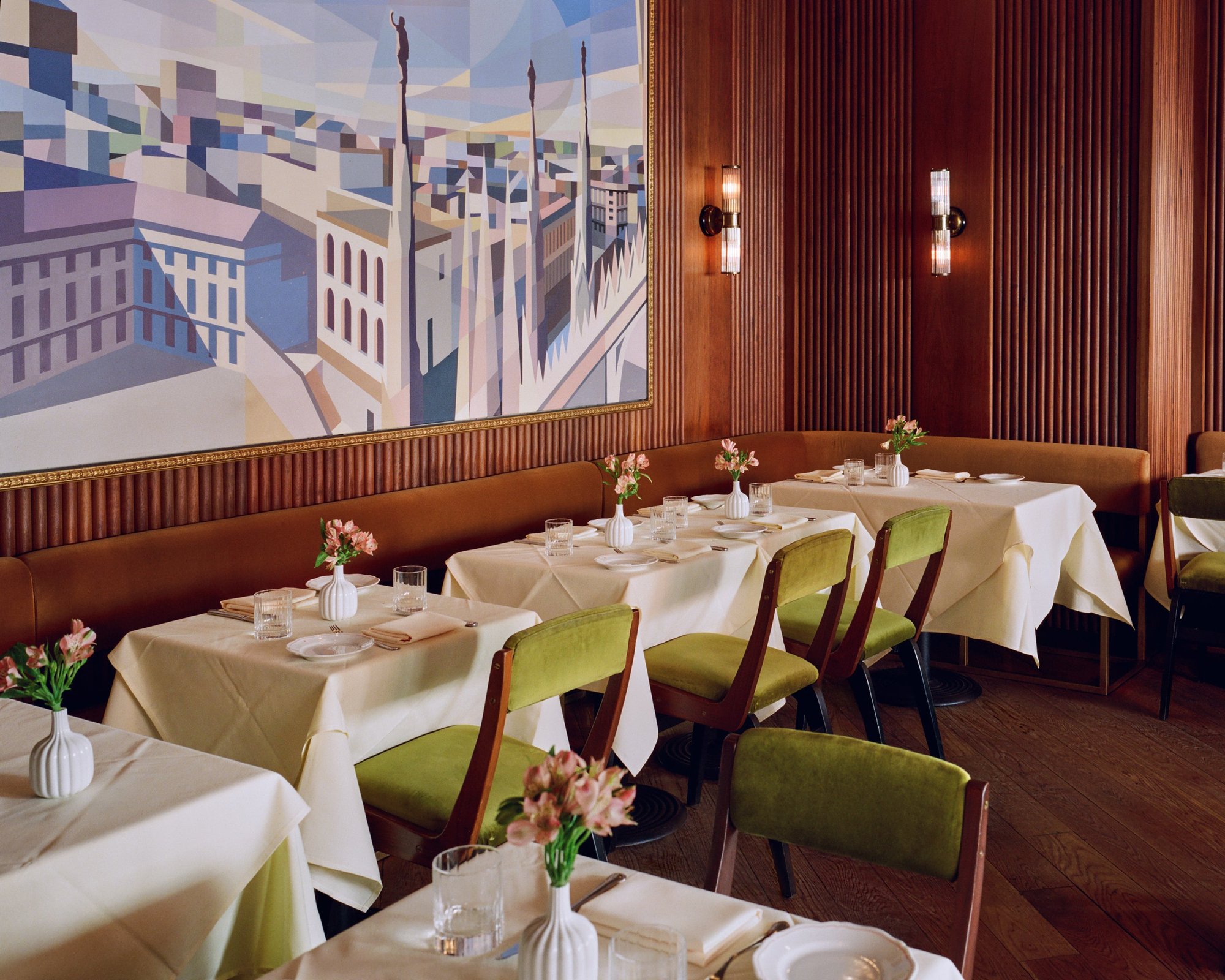
About Sant Ambroeus Lafayette
Sant Ambroeus Lafayette carries the Italian café lineage that made the brand a fixture of Manhattan's uptown social circuit into the SoHo-adjacent corridor of Lafayette Street. The bar program here sits within a broader New York moment where aperitivo culture and European café drinking rituals have found serious, technically minded local interpreters. For a city that has absorbed every European drinking tradition and made it harder to book, Sant Ambroeus Lafayette occupies a recognizable niche: civilized, Italian-accented, and chronically in demand.
The Italian Café Tradition Arrives Downtown
The Sant Ambroeus name entered New York's café consciousness well before the current aperitivo revival made Campari-spiked drinks a fixture on nearly every bar menu south of 14th Street. The original Sant Ambroeus opened in Milan in 1936, and the brand's Manhattan expansion beginning in the 1980s introduced a specific register of Italian café culture to a city that had plenty of espresso but little of the measured, ritual-driven drinking that defines the Milanese late afternoon. The Lafayette Street location extends that lineage into a neighbourhood that has shifted considerably over the past two decades, moving from light industrial to one of the denser concentrations of design-aware hospitality in the city.
SoHo and its immediate surrounds have long attracted a particular kind of café and bar operator: those who understand that the room does significant work before anyone orders a drink. Sant Ambroeus Lafayette sits in that tradition. The Italian café format, at its leading, treats the bar counter as a social structure rather than a transaction point, and that sensibility distinguishes the better practitioners in this part of Manhattan from the cocktail bars that prioritise technique over atmosphere, or vice versa.
Where the Bar Programme Fits in the Downtown Drinking Map
Lower Manhattan's cocktail scene has developed along several distinct tracks over the past decade. One track runs through the technically ambitious bars that emerged from the speakeasy era and have since moved toward transparency and ingredient specificity. Attaboy NYC represents this current well, with a no-menu format that places full weight on the bartender's read of the customer. Amor y Amargo occupies a narrower but deeply committed niche, running an almost exclusively bitter-focused programme that functions as both bar and education in amaro culture. Angel's Share, operating in the East Village since 1994, remains the clearest example of Japanese bar discipline applied to a New York context.
Sant Ambroeus Lafayette operates on a different register from all of these. Where the technically focused bars foreground craft and process, the Italian café model foregrounds occasion. The spritz, the Negroni, the Americano — these are drinks whose recipes are not disputed and whose pleasure comes from execution, setting, and the hour at which they are consumed rather than from novelty or invention. That is a harder case to make in a city where cocktail bars compete heavily on originality, and it is why the Sant Ambroeus format attracts a different kind of drinker than the bars listed above.
Elsewhere in the United States, bars working in related traditions of European-influenced, occasion-led drinking include Kumiko in Chicago, which draws on Japanese whisky culture and measured pacing, and Jewel of the South in New Orleans, which works within a classic American cocktail inheritance. ABV in San Francisco and Allegory in Washington, D.C. each take a distinct local approach to bars that prioritise drinking as a considered ritual rather than a performance. Internationally, Bar Leather Apron in Honolulu and The Parlour in Frankfurt on the Main operate in the same broader register of bars where the occasion architecture matters as much as what is in the glass.
Aperitivo Culture and Its New York Interpreters
The aperitivo hour is structurally different from the cocktail hour as New York has traditionally understood it. In the Milanese original, it functions as a bridge between the working day and the evening, with drinks calibrated to stimulate appetite rather than accelerate intoxication. Campari, Aperol, Cynar, and their relatives dominate not because they are fashionable but because bitterness serves a physiological function in that context. The ritual is not complicated, but it requires a room that understands pace.
New York has produced a small number of bars that have absorbed this seriously. Superbueno approaches the aperitivo instinct from a Latin-American angle, with agave spirits doing some of the work that bitter Italian liqueurs do elsewhere. The Sant Ambroeus approach is more directly Milanese in its reference points, which makes it a useful counterpoint in a city where the aperitivo category often gets softened for local palates.
The drinks most associated with the Sant Ambroeus bars — spritzes, Negronis, and variations on the Americano , are not drinks that reward dramatic reinvention. The bar programme's value lies in sourcing, proportion, and the judgement to serve them at the right moment in the right glass. For drinkers accustomed to bars like Julep in Houston, where the cocktail programme reflects a deep regional tradition and a specific point of view, the Italian café model offers something complementary: a set of drinks so embedded in their own tradition that the craft is invisible.
The Lafayette Street Address and What It Signals
265 Lafayette Street sits in a corridor that connects SoHo's retail density to the quieter blocks of NoLIta. The address places Sant Ambroeus Lafayette within walking distance of a concentration of design studios, independent publishers, and the kind of industry lunch that has defined this neighbourhood's midday economy for years. Dinner and evening trade here draws from a broader radius, but the afternoon hour, which is where the aperitivo tradition does its clearest work, is supported by the neighbourhood's professional composition in a way that few other Manhattan locations could replicate as naturally.
The SoHo corridor has seen considerable bar and restaurant turnover in the years since the pandemic reorganised hospitality economics in Manhattan, and the Sant Ambroeus name has provided more continuity than most. Brand recognition at this level functions as a form of pre-qualification: the customer arriving for the first time already carries expectations about register, price point, and atmosphere that the room either confirms or complicates. In this case, the brand's Italian café identity is specific enough to function as a genuine curatorial signal rather than generic reassurance.
For a broader map of where Sant Ambroeus Lafayette fits within the city's current dining and drinking context, our full New York City restaurants guide covers the competitive field in more detail.
Planning Your Visit
Sant Ambroeus Lafayette is located at 265 Lafayette Street in Manhattan, positioned between SoHo and NoLIta. The aperitivo window, roughly mid-afternoon through early evening, is the period when the Italian café format operates at its most coherent, and timing a visit accordingly will return more than arriving at peak dinner service. Reservations, walk-in policy, current hours, and pricing are leading confirmed directly with the venue before visiting, as these details can shift with season and demand.
Address: 265 Lafayette St, New York, NY 10012
Frequently Asked Questions
What is Sant Ambroeus Lafayette known for?
Sant Ambroeus Lafayette carries the Italian café tradition established by the brand's Milan original in 1936 into one of Manhattan's most design-conscious neighbourhoods. In New York's downtown bar scene, where technically driven cocktail programmes dominate the conversation, it occupies a distinct position: drinks calibrated to occasion and ritual, with aperitivo-hour formats, including Negronis, spritzes, and Americano-style serves, at the centre of its identity. The address on Lafayette Street places it at the intersection of SoHo's commercial density and NoLIta's quieter professional character, which suits the Italian café's appetite for a specific kind of afternoon crowd.
What's the must-try cocktail at Sant Ambroeus Lafayette?
The Sant Ambroeus bars are most closely associated with the classic aperitivo repertoire: Negronis, Aperol and Campari spritzes, and Americano variations. These are not drinks that change dramatically between outposts or seasons, and the bar's value proposition rests on the consistency and proportion of established classics rather than a rotating menu of signature inventions. In a city where bars from Attaboy to Amor y Amargo compete on novelty and specificity, Sant Ambroeus offers a different argument, that the Negroni, made correctly and served in the right setting, does not need improvement.
How hard is it to get in to Sant Ambroeus Lafayette?
Sant Ambroeus locations in Manhattan have a history of drawing consistent crowds, particularly during the aperitivo window and weekend brunch periods when the Italian café format aligns with the neighbourhood's social rhythms. Walk-in availability varies by day and hour, and the Lafayette Street location sits in a dense corridor where foot traffic from SoHo and NoLIta keeps demand relatively high. Specific booking requirements and wait times are leading confirmed directly with the venue, as the brand's New York outposts have evolved their reservation policies over time.
How does Sant Ambroeus Lafayette compare to other Italian café bars in New York City?
The Sant Ambroeus brand is among the longest-running Italian café operations in Manhattan, with a history in the city stretching back to the 1980s. That continuity distinguishes it from newer aperitivo-focused venues that have emerged as part of the broader European drinking revival of the past decade. The Lafayette Street location specifically serves a neighbourhood with fewer direct Italian café competitors than the Upper East Side or West Village outposts, giving it a more distinct position within its immediate catchment area and making it a reference point rather than one option among several for drinkers seeking that specific register of civilised, unhurried Italian-style drinking in lower Manhattan.
More bars in New York City
- (SUB)MERCER(SUB)MERCER occupies a basement address on Mercer Street in SoHo, positioning it as a deliberate destination rather than a drop-in. The subterranean format tends to keep ambient noise lower than street-level alternatives, making it a reasonable call for groups of four or more. Book ahead for weekends and confirm group capacity directly with the venue.
- 1 OR 81 OR 8 on DeKalb Avenue is a low-key Fort Greene bar that works best for two people on a weeknight when the room is quiet enough for conversation. Walk-ins are easy, no advance planning required. If a specialist cocktail program is your priority, Attaboy or Amor y Amargo offer more defined experiences — but for a neighbourhood drink without the fuss, this delivers.
- 230 Fifth Rooftop Bar230 Fifth is the easiest rooftop bar in Midtown to walk into, and the Empire State Building views justify the trip. The crowd skews groups and tourists, and the drinks are solid rather than craft-focused. Go early on a weekday for the best version of the experience; after 9 PM on weekends it tips firmly into party-group territory.
- 4 Charles Prime Rib4 Charles Prime Rib is a compact, reservation-required West Village dining room built around a focused prime rib format. It works well for dates and pairs but is too small for groups of four or more. Booking is easy relative to Manhattan peers, and the narrow menu signals a kitchen that executes one thing consistently well.
- 44 & X Hell's KitchenA low-key Hell's Kitchen neighborhood bar-restaurant that earns its place for easy weeknight dates and pre-theatre dinners. Booking is simple, the room is intimate enough for conversation, and there's no dress pressure. Not a cocktail destination, but a reliable, pressure-free option in Midtown West when you want comfort over spectacle.
- 58-22 Myrtle Ave58-22 Myrtle Ave is a low-key Ridgewood neighborhood spot that rewards return visits more than first impressions. Easy to get into, with no reservation headaches, it suits regulars looking for an unpretentious room rather than a structured cocktail program. If a strong drinks list or kitchen ambition matters to you, look to Attaboy or Amor y Amargo instead.
Related editorial
- Best Fine Dining Restaurants in ParisFrom three-Michelin-star icons to the next generation of Parisian chefs pushing boundaries, these are the restaurants that define fine dining in the world's culinary capital.
- Best Luxury Hotels in RomeFrom rooftop terraces overlooking ancient ruins to Michelin-starred hotel dining, these are the luxury hotels that make Rome unforgettable.
- Best Cocktail Bars in KyotoFrom sleek lounges to hidden speakeasies, Kyoto's cocktail scene blends Japanese precision with global influence in ways you won't find anywhere else.
Save or rate Sant Ambroeus Lafayette on Pearl
Keep this venue in your Pearl passport, rate it after you visit, and track it alongside every other place you collect.