
Bar in New York City, United States
Pastis
100ptsGansevoort Brasserie Revival
About Pastis
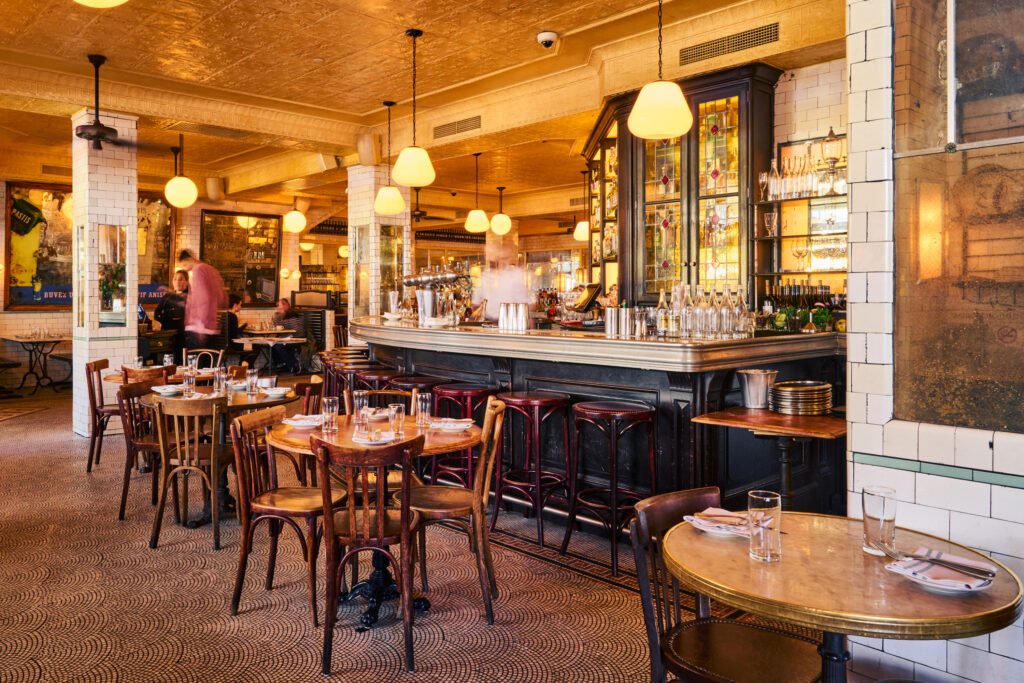
Pastis on Gansevoort Street returns the Meatpacking District to its French brasserie roots, operating as a full-scale bistro where zinc counters, mirrored walls, and a long bar set the frame for classic French cooking. The room runs loud and intentional, pitched at a Manhattan crowd that wants somewhere to be rather than somewhere to eat quietly. It is a neighbourhood institution that has outlasted several of its own reinventions.
Gansevoort Street and the Grammar of the French Brasserie
Walk down Gansevoort Street on a weekday evening and the shift is audible before you reach the door. The Meatpacking District has cycled through nightclub excess, boutique retail, and glossy hotel-bar culture over the past two decades, and through most of that period Pastis sat somewhere near the centre of its identity. The address at 52 Gansevoort is not a quiet one: the street is wide, the foot traffic is constant, and the room that greets you inside is built to hold a crowd rather than to muffle one. Zinc bar, tile floors, mirrored walls, bentwood chairs arranged in the manner of a Parisian arrondissement brasserie rather than a contemporary dining room designed to photograph well. The aesthetic grammar is deliberate and it predates almost every design trend that has passed through lower Manhattan since the restaurant first opened.
What the French Brasserie Format Means on American Soil
The French brasserie is one of the most exported formats in dining history and also one of the most frequently diluted. In Paris, the format is defined as much by timing and utility as by menu: a brasserie serves continuously through the afternoon when bistros are closed, sustains a working bar trade alongside a full kitchen, and carries a wine list weighted toward by-the-glass practicality rather than collector depth. When that format lands in New York, the successful versions tend to hold those structural commitments rather than simply borrowing the aesthetic. The room has to function as a bar, as a dinner destination, and as a place where a solo guest at the counter does not feel out of place. The sourcing logic that works leading in this format is similarly practical: bread baked nearby, produce from farmers markets with the kind of seasonal rotation that mirrors what a Paris brasserie would draw from Rungis. The French kitchen tradition at this scale is less about rare ingredients than about what you do with the common ones, how butter is handled, how a simple green salad gets dressed, how the frites arrive.
Pastis occupies that tradition with reasonable fidelity. The room operates at a scale that recalls the original Balthazar model from Spring Street, which Keith McNally built into one of the most referenced brasserie formats in American dining through the 1990s. Pastis, also a McNally property, carried similar DNA to its Meatpacking address and became, for a period, the after-dark meeting point for a neighbourhood that had not yet figured out what it wanted to be. The restaurant closed in 2014 when its lease ran out and the building was redeveloped, then reopened in 2019 in an updated but structurally faithful version of the original room.
Sourcing and the Kitchen Logic Underneath the Bistro Surface
French brasserie cooking in New York has a sourcing problem that the format in France does not share: the supply chain is longer, the dairy and bread traditions are different, and the ingredients that make a steak frites or a croque monsieur feel correct in Lyon require deliberate sourcing decisions rather than default ones. The kitchens that handle this well tend to work with local farms for produce and eggs, import or source domestically made French-style butter rather than using commodity dairy, and build their charcuterie and cheese selections around a narrower range of consistently handled suppliers rather than a wide and variable one. Whether a glass of Muscadet or a carafe of Côtes du Rhône arrives alongside matters too: the brasserie wine format is inseparable from the food format, and the by-the-glass program reflects the kitchen's own sourcing confidence.
At Pastis, the physical environment makes a strong argument for the format. The room does not ask you to eat lightly or to contemplate. It asks you to order the onion soup and the roast chicken and to take your time. That is the editorial promise of the brasserie as a category, and it is worth measuring any specific version of it against what the format is supposed to do rather than against the contemporary fine-dining benchmarks that operate in a different tier entirely.
Placing Pastis in the New York French Dining Picture
New York's French restaurant category has stratified considerably since the brasserie boom of the late 1990s. At the leading sits a small group of tasting-menu or haute-format rooms that price against international peers. Below that, a mid-tier of neighbourhood bistros and wine-bar-adjacent French rooms, several of which have absorbed natural wine lists and a more casual service posture. The brasserie format that Pastis represents is distinct from both: it is higher in volume and lower in price than the tasting-menu tier, but more formal in its physical grammar than the neighbourhood bistro. The closest comparator in the current New York landscape is Dirty French on Ludlow Street, which operates a similar full-scale room with French roots but incorporates more global technique. The Long Island Bar in Cobble Hill sits in a different borough but addresses a similar instinct for a room that functions as both bar and kitchen without requiring you to choose between them.
For drinking alongside the food, the brasserie format rewards a certain kind of wine thinking: carafes over bottles, regional French over prestige appellations, something with enough acidity to work across a table ordering at different speeds. New York's cocktail scene operates mostly in a separate register from the brasserie, but if you are moving through the neighbourhood before or after, the bars worth noting are within reach. Superbueno and Amor y Amargo operate in the bitter and spirit-forward register that pairs well with a post-dinner detour. Angel's Share in the East Village and Attaboy NYC on Eldridge Street both run technique-led programs that complement an evening that started with something more traditional. If you are benchmarking New York's bar scene more broadly before visiting, the EP Club guides to Bar Leather Apron in Honolulu, Jewel of the South in New Orleans, Julep in Houston, Kumiko in Chicago, ABV in San Francisco, Allegory in Washington, D.C., and The Parlour in Frankfurt on the Main provide useful calibration across markets. Our full New York City restaurants guide maps the broader dining picture across neighbourhoods and price tiers.
Planning a Visit
Address: 52 Gansevoort St, New York, NY 10014, in the Meatpacking District, within walking distance of the High Line and the Whitney Museum. Reservations: The room runs at high volume on weekends; booking ahead is advisable for dinner, and the bar area typically accommodates walk-ins across the week. Timing: Weekday lunch offers a more measured pace that suits the brasserie format better than a Saturday peak service. Dress: The Meatpacking District skews toward dressed-up casual; the room does not require formality but rewards it less awkwardly than a louder nightlife-adjacent venue might. Budget: Pricing information is not confirmed in our current data; plan for a mid-range to upper-mid-range New York brasserie spend and verify current pricing directly with the venue.
Frequently Asked Questions
- What should I drink at Pastis?
- A French brasserie format rewards wine choices that work continuously across a meal rather than anchoring to a single course. A carafe of something Loire or Rhône-adjacent, with enough acidity to hold up against both a charcuterie start and a roast main, is the format's own answer. If you want something before sitting, the surrounding Meatpacking District and nearby West Village have serious cocktail options within a short walk.
- What's the standout thing about Pastis?
- The room itself carries more weight than any single dish or price point. The combination of the zinc bar, the tile floors, and the mirrored walls produces an environment that the Meatpacking District does not replicate elsewhere, and the format's continuity through service hours means the room functions consistently rather than peaking only at prime dinner sittings. In a neighbourhood that has tilted heavily toward hotel lobbies and nightlife venues, a full-scale working brasserie operating at that address is a meaningful data point on its own.
- What's the leading way to book Pastis?
- If the venue's current reservation system accepts online bookings, that is the safest route for a weekend dinner given the room's volume. For smaller parties during weekday lunch, walk-in availability at the bar tends to be more accessible. Confirm current booking options directly with the venue, as our database record does not include confirmed booking method details.
- Is Pastis better for first-timers or repeat visitors?
- First-timers get the most from a dinner sitting, when the room is operating at full capacity and the brasserie format is most legible. Repeat visitors tend to migrate toward the bar and the lunch format, where the pacing slows and the room reveals itself more clearly as a neighbourhood anchor than as a destination. Both readings of the space are valid, but they produce different experiences of the same address.
- Does Pastis have a history of closing and reopening, and does that affect what you find there now?
- Pastis originally opened in the Meatpacking District in 1999 under Keith McNally and closed in 2014 when its lease expired during a period of significant neighbourhood redevelopment. It reopened at 52 Gansevoort in 2019, returning to a room designed to replicate the original's physical and operational character. The reopening placed it inside a wave of McNally restaurant revivals that also included updates to other properties, meaning the current version draws on a documented original rather than reinventing the format from scratch. That continuity of intent is worth factoring in when assessing what the room is trying to do.
More bars in New York City
- (SUB)MERCER(SUB)MERCER occupies a basement address on Mercer Street in SoHo, positioning it as a deliberate destination rather than a drop-in. The subterranean format tends to keep ambient noise lower than street-level alternatives, making it a reasonable call for groups of four or more. Book ahead for weekends and confirm group capacity directly with the venue.
- 1 OR 81 OR 8 on DeKalb Avenue is a low-key Fort Greene bar that works best for two people on a weeknight when the room is quiet enough for conversation. Walk-ins are easy, no advance planning required. If a specialist cocktail program is your priority, Attaboy or Amor y Amargo offer more defined experiences — but for a neighbourhood drink without the fuss, this delivers.
- 230 Fifth Rooftop Bar230 Fifth is the easiest rooftop bar in Midtown to walk into, and the Empire State Building views justify the trip. The crowd skews groups and tourists, and the drinks are solid rather than craft-focused. Go early on a weekday for the best version of the experience; after 9 PM on weekends it tips firmly into party-group territory.
- 4 Charles Prime Rib4 Charles Prime Rib is a compact, reservation-required West Village dining room built around a focused prime rib format. It works well for dates and pairs but is too small for groups of four or more. Booking is easy relative to Manhattan peers, and the narrow menu signals a kitchen that executes one thing consistently well.
- 44 & X Hell's KitchenA low-key Hell's Kitchen neighborhood bar-restaurant that earns its place for easy weeknight dates and pre-theatre dinners. Booking is simple, the room is intimate enough for conversation, and there's no dress pressure. Not a cocktail destination, but a reliable, pressure-free option in Midtown West when you want comfort over spectacle.
- 58-22 Myrtle Ave58-22 Myrtle Ave is a low-key Ridgewood neighborhood spot that rewards return visits more than first impressions. Easy to get into, with no reservation headaches, it suits regulars looking for an unpretentious room rather than a structured cocktail program. If a strong drinks list or kitchen ambition matters to you, look to Attaboy or Amor y Amargo instead.
Related editorial
- Best Fine Dining Restaurants in ParisFrom three-Michelin-star icons to the next generation of Parisian chefs pushing boundaries, these are the restaurants that define fine dining in the world's culinary capital.
- Best Luxury Hotels in RomeFrom rooftop terraces overlooking ancient ruins to Michelin-starred hotel dining, these are the luxury hotels that make Rome unforgettable.
- Best Cocktail Bars in KyotoFrom sleek lounges to hidden speakeasies, Kyoto's cocktail scene blends Japanese precision with global influence in ways you won't find anywhere else.
Save or rate Pastis on Pearl
Keep this venue in your Pearl passport, rate it after you visit, and track it alongside every other place you collect.