
Bar in New York City, United States
Moody Tongue Sushi
100ptsWest Village Counter Omakase
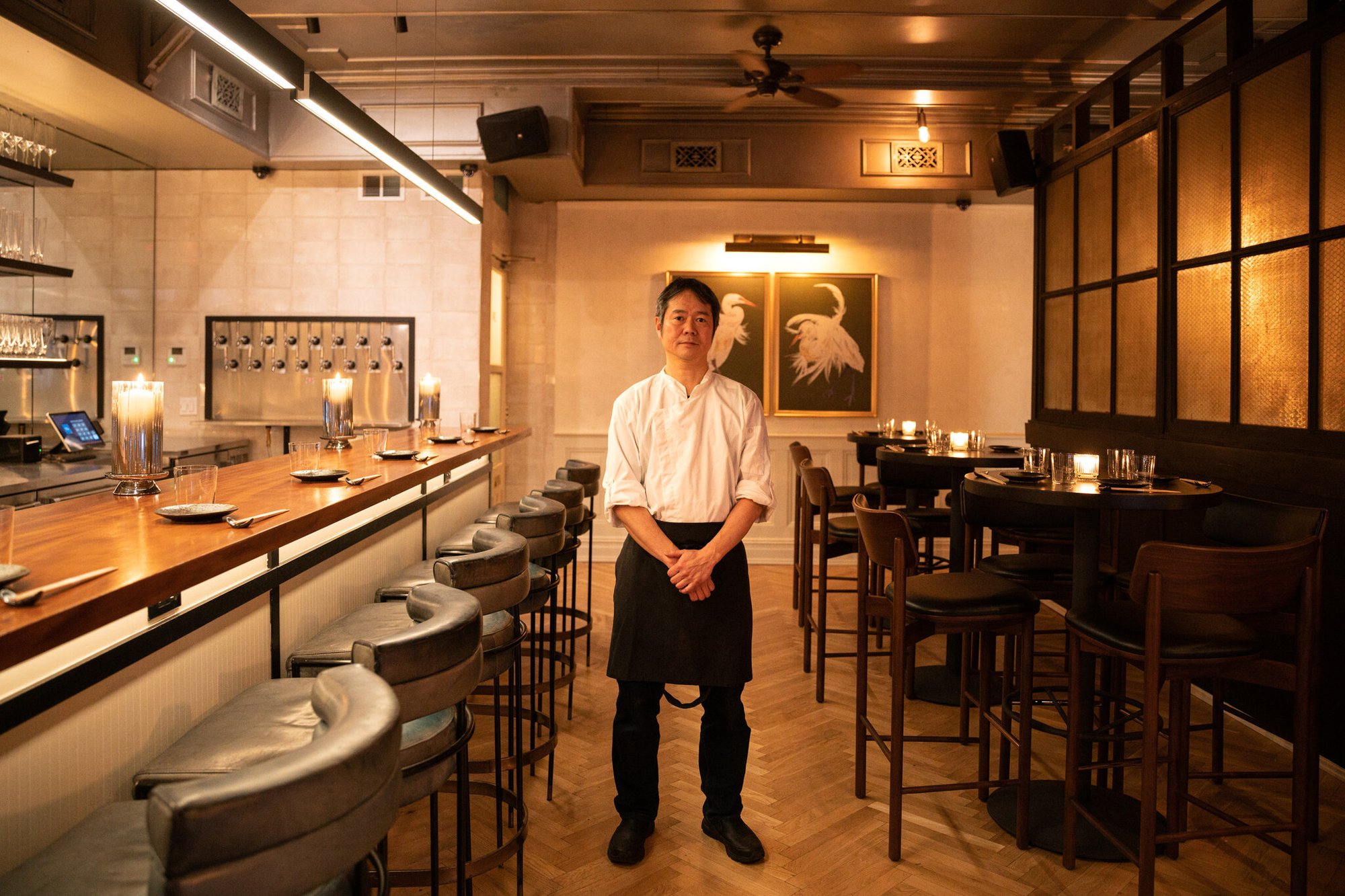
About Moody Tongue Sushi
Moody Tongue Sushi occupies a West Village address that places it squarely in one of New York's most closely watched omakase corridors. The format follows the counter-dining ritual that has reshaped how the city approaches Japanese cuisine at the premium tier, where pacing and sequence carry as much weight as the fish itself. Book well ahead; seats at this price point and address do not sit idle.
The Counter as Ceremony
West 10th Street in the West Village sits within a few blocks of some of the most deliberate dining in New York City. The neighbourhood has attracted a tier of restaurants that treat the meal as a structured event rather than a transaction, and omakase counters fit that sensibility precisely. Moody Tongue Sushi at 150 W 10th St occupies that same cultural space: a format built on sequence, silence in the right moments, and the understanding that the diner surrenders the menu to the chef. That surrender is the whole point.
The omakase ritual arrived in New York from Japan with its conventions largely intact. You sit, you trust, and the progression of courses does the work that a printed menu would otherwise do. What has changed, city by city and decade by decade, is the surrounding context: the room, the beverage program, the pacing of service, and the degree to which the counter feels like theatre or like a private conversation. New York's premium omakase tier has sorted itself along exactly those lines.
What the West Village Asks of a Sushi Counter
The West Village is not a neighbourhood that forgives mediocrity quietly. Its restaurant density is high, its regulars are attentive, and word travels fast among the kind of diner who books months in advance and compares notes. A counter in this postcode competes not just against other omakase formats but against the full spectrum of serious dining within walking distance, from wine-led bistros to hyper-seasonal tasting menus.
That competitive pressure shapes what counters in this part of the city must do well. The room needs to earn its intimacy. The fish quality must justify the premium over the city's mid-tier omakase options, which have expanded considerably over the past several years. And the ritual of the meal itself, the way courses are introduced, the tempo between bites, the attention to what is happening at each seat, has to hold up over the full duration of the sitting. An omakase that loses its pacing in the middle courses loses the diner's trust, regardless of what the final piece of toro looks like.
For a broader view of where Moody Tongue Sushi sits within the city's wider dining and drinking scene, our full New York City restaurants guide maps the key neighbourhoods and formats.
The Dining Ritual at the Premium Counter
At any serious omakase counter, the meal follows a grammar that most regulars learn to read without being told. Lighter preparations come first: delicate white fish, perhaps a cured or lightly aged piece, something that asks the palate to pay attention before the richer cuts arrive. Nigiri portions are calibrated to be eaten in one or two bites, not dissected. Soy and wasabi, when offered, are applied by the chef. Conversation happens between courses, not during. These are not arbitrary rules; they reflect a set of values about attention and craft that the format was built to express.
New York's upper-tier omakase counters have largely preserved this grammar while adapting the surrounding experience to the city's expectations around beverage pairing and service warmth. The leading of them manage to feel rigorous without feeling cold, and ceremonial without tipping into performance. That balance is genuinely difficult to achieve in a city where diners arrive with strong opinions and high baseline expectations.
The Moody Tongue name connects to a brewing and hospitality group known for pairing fermented beverages with precision food formats, a broader trend in American fine dining where the drink program is treated as structurally equal to the kitchen's output rather than an afterthought. Whether that lineage shapes the beverage approach at the West 10th Street counter specifically is something the room itself will answer.
Booking, Timing, and the Seasonal Factor
Autumn and winter are when the omakase format earns its most devoted following in New York. The shorter days and sharper cold push diners toward slower, more enveloping meals, and the counter format delivers exactly that: a fixed duration, a warm room, a progression that does not ask you to make decisions beyond showing up. Spring brings lighter preparations and a different energy at the counter, with the fish sourcing often shifting to reflect what is running well in the markets.
Seats at premium counters in the West Village typically require advance planning. The format by definition limits capacity, and the dinner sittings at the upper-tier level are rarely walk-in territory. Checking the booking channel directly and having flexible dates will serve you better than waiting for a specific evening.
Reservations: Book directly through the venue's current booking platform; advance notice of several weeks is standard for this format and address. Dress: Smart casual is the neighbourhood norm; the counter format rewards a degree of care without requiring formality. Budget: Premium omakase counters in New York's current market run from roughly $150 to $350 per person before beverages; verify current pricing at time of booking.
Beyond the Counter: The West Village Drinking Circuit
The West Village and the wider downtown Manhattan circuit support a strong bar culture that pairs well with an omakase evening. Before or after the counter, the neighbourhood connects easily to some of the city's more considered cocktail programs. Amor y Amargo is a bitters-focused operation that rewards the kind of attention a counter dinner asks of you. Angel's Share in the East Village operates with the same quiet discipline that omakase formats prize. Attaboy NYC runs a no-menu format that mirrors the trust-the-practitioner ethos of the omakase ritual itself.
If you are building a broader itinerary around precision drinking programs, Superbueno offers a different register entirely, while programs like Kumiko in Chicago, Bar Leather Apron in Honolulu, Jewel of the South in New Orleans, Julep in Houston, ABV in San Francisco, Allegory in Washington, D.C., and The Parlour in Frankfurt on the Main show how the same instinct toward craft and sequence plays out across different cities and traditions.
Frequently Asked Questions
- What's the leading thing to order at Moody Tongue Sushi?
- The omakase format removes that question by design. The sequence is set by the kitchen, which means the progression from lighter to richer preparations, and the selection of fish for any given evening, reflects what the chef has sourced and chosen to highlight. Arriving with specific requests is less useful than arriving with appetite and attention. The format rewards diners who engage with what is placed in front of them rather than those who arrive with a fixed idea of what they want to eat.
- What should I know about Moody Tongue Sushi before I go?
- The West 10th Street address places this counter in one of New York's most competitive dining blocks, where the baseline expectation is high and the price point at the premium omakase tier reflects that. Booking in advance is standard practice for this format across the city. The Moody Tongue name has a background in precision beverage pairing, so the drink side of the evening is likely to receive serious attention alongside the food. Come with time; counter dinners at this tier are not built for speed.
- How does Moody Tongue Sushi fit into New York's broader omakase scene?
- New York's omakase tier has expanded and stratified significantly over the past decade, with a clear split between high-volume formats and small-counter operations where the chef-to-diner ratio is narrow and the sourcing is treated as a competitive differentiator. Moody Tongue Sushi's West Village address and the brand's background in beverage-led fine dining place it in the more deliberate, lower-capacity cohort, where the full ritual of the counter, from room design to service pacing to the beverage program, carries as much editorial weight as the fish quality itself.
More bars in New York City
- (SUB)MERCER(SUB)MERCER occupies a basement address on Mercer Street in SoHo, positioning it as a deliberate destination rather than a drop-in. The subterranean format tends to keep ambient noise lower than street-level alternatives, making it a reasonable call for groups of four or more. Book ahead for weekends and confirm group capacity directly with the venue.
- 1 OR 81 OR 8 on DeKalb Avenue is a low-key Fort Greene bar that works best for two people on a weeknight when the room is quiet enough for conversation. Walk-ins are easy, no advance planning required. If a specialist cocktail program is your priority, Attaboy or Amor y Amargo offer more defined experiences — but for a neighbourhood drink without the fuss, this delivers.
- 230 Fifth Rooftop Bar230 Fifth is the easiest rooftop bar in Midtown to walk into, and the Empire State Building views justify the trip. The crowd skews groups and tourists, and the drinks are solid rather than craft-focused. Go early on a weekday for the best version of the experience; after 9 PM on weekends it tips firmly into party-group territory.
- 4 Charles Prime Rib4 Charles Prime Rib is a compact, reservation-required West Village dining room built around a focused prime rib format. It works well for dates and pairs but is too small for groups of four or more. Booking is easy relative to Manhattan peers, and the narrow menu signals a kitchen that executes one thing consistently well.
- 44 & X Hell's KitchenA low-key Hell's Kitchen neighborhood bar-restaurant that earns its place for easy weeknight dates and pre-theatre dinners. Booking is simple, the room is intimate enough for conversation, and there's no dress pressure. Not a cocktail destination, but a reliable, pressure-free option in Midtown West when you want comfort over spectacle.
- 58-22 Myrtle Ave58-22 Myrtle Ave is a low-key Ridgewood neighborhood spot that rewards return visits more than first impressions. Easy to get into, with no reservation headaches, it suits regulars looking for an unpretentious room rather than a structured cocktail program. If a strong drinks list or kitchen ambition matters to you, look to Attaboy or Amor y Amargo instead.
Related editorial
- Best Fine Dining Restaurants in ParisFrom three-Michelin-star icons to the next generation of Parisian chefs pushing boundaries, these are the restaurants that define fine dining in the world's culinary capital.
- Best Luxury Hotels in RomeFrom rooftop terraces overlooking ancient ruins to Michelin-starred hotel dining, these are the luxury hotels that make Rome unforgettable.
- Best Cocktail Bars in KyotoFrom sleek lounges to hidden speakeasies, Kyoto's cocktail scene blends Japanese precision with global influence in ways you won't find anywhere else.
Save or rate Moody Tongue Sushi on Pearl
Keep this venue in your Pearl passport, rate it after you visit, and track it alongside every other place you collect.