
Bar in New York City, United States
Little Prince
100ptsNeighbourhood Counter Restraint
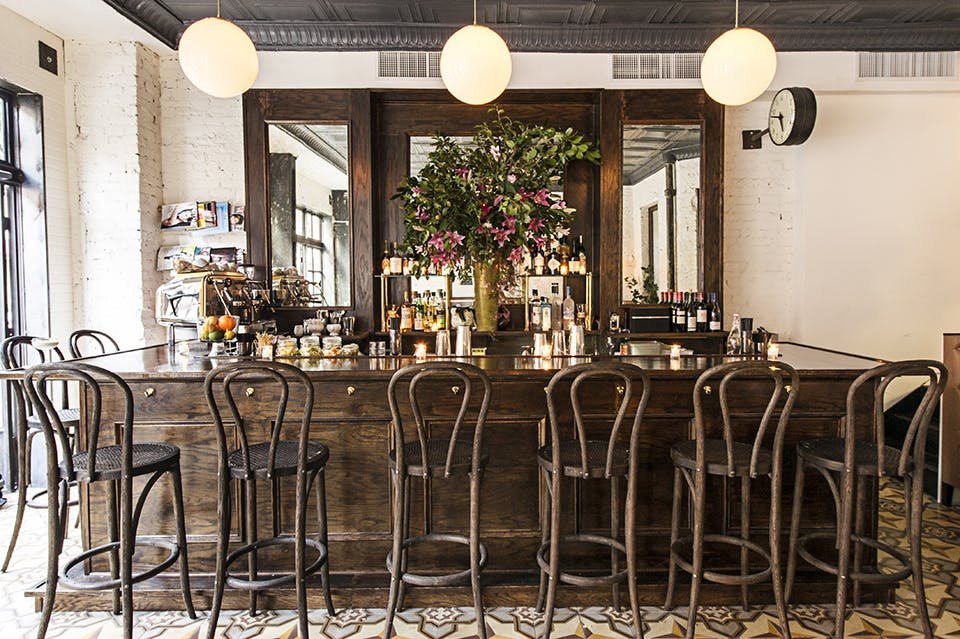
About Little Prince
Little Prince occupies a SoHo address on Prince Street that places it squarely within one of lower Manhattan's most considered bar neighbourhoods. The venue operates in a tier where cocktail craft, sourcing transparency, and neighbourhood fit carry as much weight as the drink itself. Visitors looking for a bar that reads the room without performing for it will find Little Prince worth the detour.
SoHo's Quieter Register
Prince Street in SoHo sits at an odd intersection of cast-iron heritage and contemporary retail pressure. The blocks between West Broadway and Sullivan have shed and regained identity several times over the past two decades, and the bars that survive that churn tend to do so by resisting the neighbourhood's louder commercial instincts. Little Prince, at 199 Prince St, operates in that quieter register. The address alone signals something: this is not a venue positioned for the foot traffic spilling off Spring Street's busier corridor, but one that requires a deliberate turn.
SoHo's cocktail scene has always occupied a strange middle ground in the broader New York conversation. It lacks the density of the East Village's bar cluster or the credentialled seriousness of spots like Amor y Amargo, where a commitment to amaro and bitters-forward drinking has defined an entire subculture. It also sits apart from the reservation-only formality of Angel's Share in the East Village, which has operated as one of New York's more disciplined Japanese-influenced cocktail counters for decades. Little Prince draws from neither extreme, which in a city of strong genre positioning is itself a stance.
The Environmental Dimension That Now Defines Serious Bars
Across the broader North American cocktail scene, the conversation around sustainability has moved from peripheral talking point to operational baseline. Bars that once treated waste reduction as a marketing gesture now build it into procurement, production, and menu architecture. In cities like Chicago, Kumiko has made Japanese-influenced minimalism and ingredient discipline central to its identity. In San Francisco, ABV built its reputation partly on a kitchen-meets-bar model that treats every ingredient as a shared resource rather than a single-use purchase. In Washington D.C., Allegory has used narrative-led menus to draw attention to sourcing choices that might otherwise go unnoticed.
The direction of travel is consistent: bars in the upper tier of their respective city markets are increasingly expected to account for where ingredients come from, what happens to the unused portions, and how seasonal availability shapes the menu rather than being worked around it. For a venue on Prince Street, operating in a neighbourhood that attracts an audience accustomed to this level of transparency from its restaurants and retailers, that expectation is not incidental. It is load-bearing.
Little Prince occupies a SoHo address that already carries associations with considered consumption. The neighbourhood's independent food and drink operators have long positioned themselves in contrast to the area's luxury retail, and a bar that takes sourcing seriously fits that positioning more naturally here than it might elsewhere in Manhattan.
How Little Prince Sits Within the New York Peer Set
New York's cocktail bars have sorted themselves into reasonably legible tiers over the past decade. At one end, venues like Attaboy NYC on Eldridge Street operate as no-menu, guest-responsive counters where the bartender's read of the customer determines what arrives in the glass. At the other end, Superbueno in Williamsburg has built a distinct identity around Latin American spirits and flavour profiles that point outward rather than inward. Both approaches are legible as market positions. Little Prince, with limited publicly available data on its specific program, sits in the more opaque middle of that spectrum: a neighbourhood bar with a SoHo address and a name that suggests literary awareness without announcing it aggressively.
That opacity is worth noting for the reader making a deliberate choice. In a city where comparable options carry more documented trail, including press coverage, awards recognition, and the kind of bartender lineage that functions as a trust signal, a venue with a lighter public footprint asks the visitor to work from first principles. What the address, the neighbourhood context, and the bar's apparent positioning suggest is a room built for repeat visitors rather than first-time destination drinkers.
Comparable bars in other markets that operate with similar restraint include Jewel of the South in New Orleans, which pairs cocktail seriousness with a deliberately unshowy presentation, and Julep in Houston, which built a focused identity around Southern spirits without requiring the reader to decode it. Bar Leather Apron in Honolulu and The Parlour in Frankfurt on the Main demonstrate that this register, serious without being severe, translates across very different market contexts.
Planning a Visit
The practical information publicly available for Little Prince is limited. No booking window, price tier, or confirmed hours appear in current editorial records, which places it in the category of venues leading approached by walking in rather than planning around. For SoHo specifically, that is not unusual: the neighbourhood's bar culture tends toward the ambient rather than the appointment-driven, and a Tuesday or Wednesday evening visit carries less risk of a wait than a Friday or Saturday approach.
| Venue | Neighbourhood | Format | Booking | Known For |
|---|---|---|---|---|
| Little Prince | SoHo | Neighbourhood bar | Walk-in (unconfirmed) | Prince St address, considered positioning |
| Attaboy NYC | Lower East Side | No-menu counter | Walk-in | Guest-responsive bartending |
| Amor y Amargo | East Village | Bitters-focused bar | Walk-in | Amaro programme depth |
| Angel's Share | East Village | Japanese-influenced cocktail bar | Walk-in (limited capacity) | Restraint, longevity |
| Superbueno | Williamsburg | Latin American spirits bar | Walk-in | Distinct spirits identity |
For a fuller orientation to New York's bar and restaurant scene across neighbourhoods, the EP Club New York City guide maps the city's key drinking and dining corridors with the specificity that a single-venue page cannot provide.
Frequently Asked Questions
What cocktail do people recommend at Little Prince?
Specific cocktail recommendations for Little Prince are not confirmed in current editorial records, which makes it difficult to point to a signature with confidence. In bars operating at this address tier in SoHo, the programme tends to reflect seasonal availability and bartender discretion rather than a fixed hero drink. Arriving without a fixed expectation and asking what is drinking well that evening is the approach that tends to yield the most from bars in this format, as demonstrated by the no-menu model popularised by venues like Attaboy NYC and recognised across the New York awards circuit.
What makes Little Prince worth visiting?
The case for Little Prince rests on its neighbourhood positioning rather than a documented awards record. SoHo retains a small cluster of bars that operate for the area's resident and repeat-visitor audience rather than its tourist foot traffic, and 199 Prince St places the venue within that cluster. In a city where many cocktail bars at this price tier carry explicit credentials, a bar that earns its place through atmosphere and neighbourhood fit rather than press noise appeals to a specific kind of visitor: one who already knows New York well enough to choose off the expected path.
How hard is it to get in to Little Prince?
No reservation system or confirmed capacity data appears in current records for Little Prince. If the venue operates on a walk-in basis, as is common for SoHo bars at this format level, early-evening timing on a weekday is the lower-risk approach. Weekend evenings in SoHo carry consistent foot traffic that can affect wait times at smaller venues regardless of their profile. Without confirmed capacity figures, treating this as a spontaneous stop rather than a fixed anchor for an evening's itinerary is the more practical framing.
When does Little Prince make the most sense to choose?
Little Prince makes most sense as an early-evening or mid-week choice for visitors already moving through SoHo rather than a destination requiring cross-borough travel. The neighbourhood's character shifts considerably between afternoon and late night, and a bar at this address is likely better experienced in the earlier, quieter window when the area's retail and restaurant crowd is transitioning. Visitors anchoring a New York bar itinerary around documented programmes, specific spirits categories, or award-tracked venues will find more confirmed intelligence at bars like Amor y Amargo or Attaboy NYC, where the editorial record is more detailed.
Does Little Prince live up to the hype?
The honest answer is that Little Prince does not carry a documented hype cycle of the kind that attaches to award-listed or heavily press-covered venues. That absence cuts both ways: there is no inflated expectation to disappoint, and no queue of destination drinkers to compete with. A bar in this position earns its repeat visitors through the quality of the room and the drink rather than through external validation, which in the long run is a more durable operating model than award-season visibility.
Is Little Prince suitable for a quiet drink without a reservation in SoHo?
Based on its positioning as a neighbourhood bar on Prince Street rather than a high-profile destination counter, Little Prince appears suited to the kind of unplanned visit that SoHo's ambient bar culture accommodates. No confirmed reservation requirement appears in current records. For visitors who want to pair Little Prince with a planned itinerary, it sits within reasonable proximity to SoHo's broader dining corridor, and the EP Club New York City guide covers the surrounding options in more detail.
More bars in New York City
- (SUB)MERCER(SUB)MERCER occupies a basement address on Mercer Street in SoHo, positioning it as a deliberate destination rather than a drop-in. The subterranean format tends to keep ambient noise lower than street-level alternatives, making it a reasonable call for groups of four or more. Book ahead for weekends and confirm group capacity directly with the venue.
- 1 OR 81 OR 8 on DeKalb Avenue is a low-key Fort Greene bar that works best for two people on a weeknight when the room is quiet enough for conversation. Walk-ins are easy, no advance planning required. If a specialist cocktail program is your priority, Attaboy or Amor y Amargo offer more defined experiences — but for a neighbourhood drink without the fuss, this delivers.
- 230 Fifth Rooftop Bar230 Fifth is the easiest rooftop bar in Midtown to walk into, and the Empire State Building views justify the trip. The crowd skews groups and tourists, and the drinks are solid rather than craft-focused. Go early on a weekday for the best version of the experience; after 9 PM on weekends it tips firmly into party-group territory.
- 4 Charles Prime Rib4 Charles Prime Rib is a compact, reservation-required West Village dining room built around a focused prime rib format. It works well for dates and pairs but is too small for groups of four or more. Booking is easy relative to Manhattan peers, and the narrow menu signals a kitchen that executes one thing consistently well.
- 44 & X Hell's KitchenA low-key Hell's Kitchen neighborhood bar-restaurant that earns its place for easy weeknight dates and pre-theatre dinners. Booking is simple, the room is intimate enough for conversation, and there's no dress pressure. Not a cocktail destination, but a reliable, pressure-free option in Midtown West when you want comfort over spectacle.
- 58-22 Myrtle Ave58-22 Myrtle Ave is a low-key Ridgewood neighborhood spot that rewards return visits more than first impressions. Easy to get into, with no reservation headaches, it suits regulars looking for an unpretentious room rather than a structured cocktail program. If a strong drinks list or kitchen ambition matters to you, look to Attaboy or Amor y Amargo instead.
Related editorial
- Best Fine Dining Restaurants in ParisFrom three-Michelin-star icons to the next generation of Parisian chefs pushing boundaries, these are the restaurants that define fine dining in the world's culinary capital.
- Best Luxury Hotels in RomeFrom rooftop terraces overlooking ancient ruins to Michelin-starred hotel dining, these are the luxury hotels that make Rome unforgettable.
- Best Cocktail Bars in KyotoFrom sleek lounges to hidden speakeasies, Kyoto's cocktail scene blends Japanese precision with global influence in ways you won't find anywhere else.
Save or rate Little Prince on Pearl
Keep this venue in your Pearl passport, rate it after you visit, and track it alongside every other place you collect.