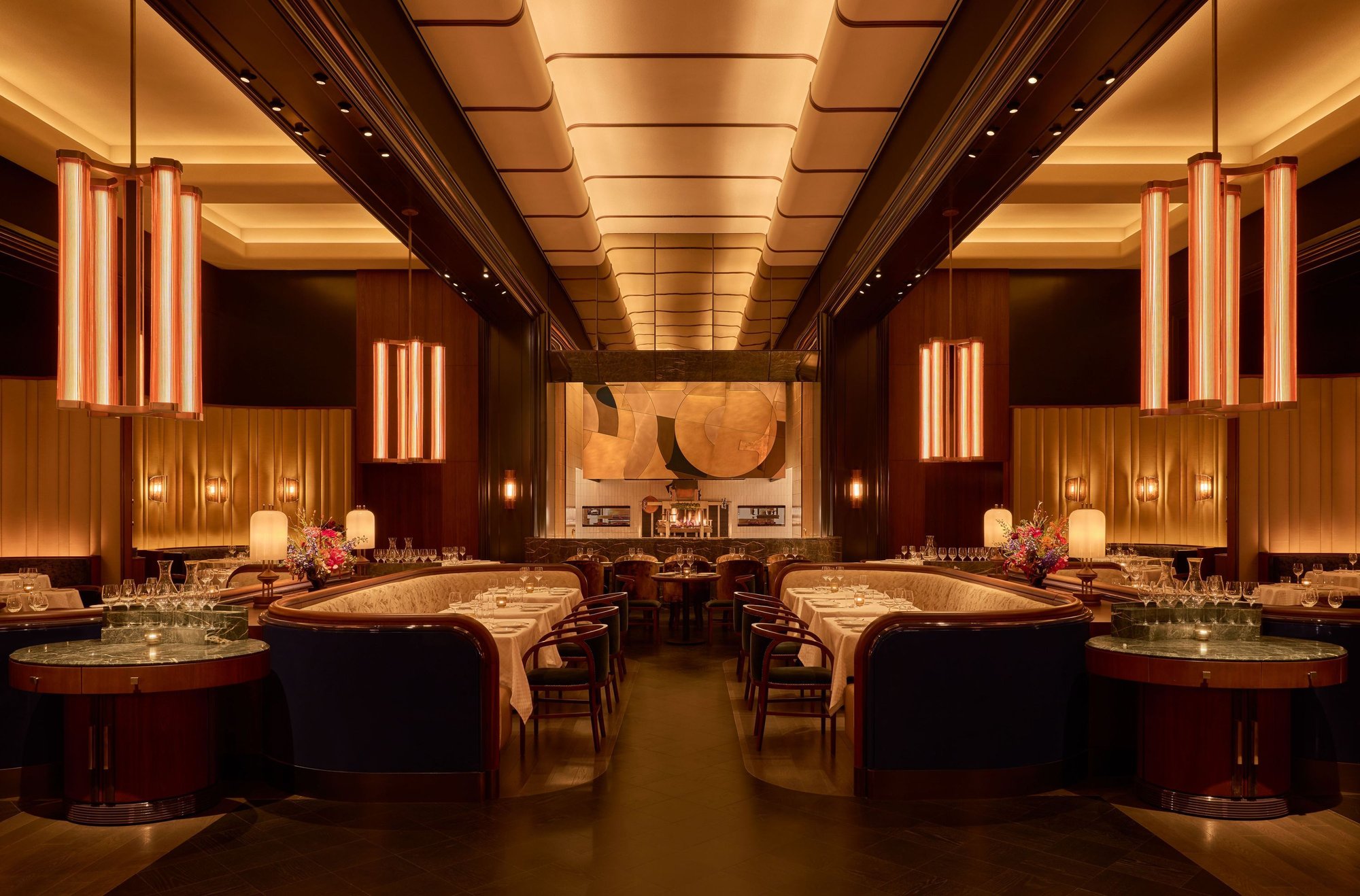
Bar in New York City, United States
La Tête d'Or by Daniel
100ptsFrench-Named Bar Precision

About La Tête d'Or by Daniel
On Park Avenue South, La Tête d'Or by Daniel occupies a corner of Flatiron that reads as a serious bar program rather than a casual drop-in. The address connects it to a broader Daniel Boulud hospitality network that prizes technique and culinary rigor, placing it in a peer set where the drink list is structured with the same intention as a restaurant menu.
What Park Avenue South Does With a French Name and a Bar Format
The Flatiron district has spent the better part of two decades sorting itself into tiers. At street level, the stretch of Park Avenue South between Madison Square Park and Gramercy operates as a density of hospitality options that range from casual neighborhood anchors to rooms where the kitchen and bar programs carry serious culinary pedigree. La Tête d'Or by Daniel sits in the latter category, and the name alone signals where it intends to compete. "La Tête d'Or" — the golden head — carries French classical weight, and the Daniel affiliation places it within a hospitality network whose restaurants hold multiple Michelin stars and have shaped the upper tier of New York fine dining for decades.
That context matters before you even look at the room. A venue bearing the Daniel name at 318 Park Avenue South is not a neighborhood experiment. It arrives with institutional backing, culinary DNA, and a guest expectation that the experience will be structured, not improvised.
How the Menu Architecture Works
The most revealing thing about any serious bar program is not what it makes, but how the menu is organized. In New York's current cocktail environment, menus have largely moved away from the classic categorical split , spirits-led columns, alphabetical listings , toward structures that communicate philosophy: by flavor arc, by base spirit category, by season, or by the technique applied to each drink. Where a bar places its organizing logic tells you how it thinks about the guest experience and what it considers primary.
The Daniel hospitality group has historically approached beverage programs the way it approaches food: as a structured composition with courses, balance, and a progression that rewards attention. That approach positions La Tête d'Or by Daniel closer to the technically oriented bar programs at places like Kumiko in Chicago or Allegory in Washington, D.C. , rooms where the menu reads as an editorial statement, not a catalog , than to the more casual, high-volume formats that dominate the surrounding blocks.
That structure also separates it from New York's most prominent cocktail formats. The bitters-forward, amaro-anchored program at Amor y Amargo is an exercise in depth through constraint. Attaboy NYC runs entirely without a fixed menu, relying on host-guest dialogue to shape each drink. Angel's Share occupies a Japanese whisky and precision tradition. Each of these programs has a defined logic. La Tête d'Or by Daniel's alignment with French fine dining heritage suggests a different organizing principle: one that draws on classical French technique, wine culture, and the kind of culinary cross-pollination that happens when a kitchen-first hospitality group builds a bar room.
The Flatiron Position and Its Competitive Peer Set
Flatiron and the surrounding Gramercy corridor have produced some of New York's more durable hospitality addresses. The neighborhood draws a professional and visitor mix that supports both destination dining and returning local clientele , a balance that tends to reward programs with clear identity over those chasing trends. In that environment, a bar attached to the Daniel brand is competing less with the cocktail-forward independents in the East Village or the Lower East Side, and more with hotel bar programs, high-end French restaurant bars, and rooms where the spirit list and the food-and-drink pairing logic is taken seriously.
For comparison, consider how the market reads across cities: Bar Leather Apron in Honolulu occupies a similar position in its market , technically grounded, hospitality-led, upscale without being performatively exclusive. Jewel of the South in New Orleans draws on a deep cultural culinary tradition to give its drink menu a regional anchor. Julep in Houston uses Southern spirits heritage as a structural framework. Each case demonstrates how the strongest bar programs in their markets are connected to a culinary or cultural logic that extends beyond the drink itself. La Tête d'Or by Daniel operates under a similar principle, with French fine dining as its organizing tradition.
That tradition implies a wine literacy that most bar rooms do not prioritize. French hospitality culture treats the aperitif, the digestif, and the wine-by-the-glass program as load-bearing parts of the meal structure, not afterthoughts. A room bearing this lineage would be expected to handle those categories with the same attention it gives to cocktails , and that extends the competitive peer set beyond strictly cocktail-focused bars to rooms where the full beverage program is the product.
New York's Current Bar Scene and Where This Fits
New York has cycled through several dominant bar formats in the past fifteen years. The hidden-door speakeasy model peaked and receded. The temple-of-technique era produced serious programs and then became a cliché. The current moment favors transparency: rooms that communicate clearly what they do well, price accordingly, and build menus that give the guest enough information to make an educated choice. Superbueno demonstrates this with its Latin spirits focus. ABV in San Francisco built its reputation on the same principle: a legible, smart menu that respects the guest's intelligence.
La Tête d'Or by Daniel addresses 318 Park Avenue South, in the Flatiron district, accessible by subway via the 6 train at 28th Street or the N, R, and W trains at 28th Street on Broadway. The Daniel group's hospitality standards suggest that reservations or at minimum an awareness of peak hours will make the visit more direct, particularly on weekend evenings when the Flatiron corridor draws significant foot traffic from the surrounding area. For a comprehensive look at the city's broader hospitality options, the EP Club New York City guide maps the full range.
Internationally, the format this bar represents , culinary-group-backed, French-influenced, technically serious , has parallels in rooms like The Parlour in Frankfurt on the Main, where European hospitality tradition and bar craft intersect in a way that American markets have historically undervalued. The Daniel organization's decision to build this kind of room in New York says something about where the market is heading: toward integration of culinary and beverage seriousness rather than treating them as parallel tracks.
Frequently Asked Questions
- What is the atmosphere like at La Tête d'Or by Daniel?
- The room sits on Park Avenue South in the Flatiron district, connected to the Daniel hospitality network whose other addresses run toward formal, composed spaces rather than casual or industrial formats. Expect an environment calibrated to a guest arriving for a considered drink experience rather than a drop-in , the kind of room where the lighting, the pace of service, and the physical layout support a conversation rather than competing with it.
- What is the must-try cocktail at La Tête d'Or by Daniel?
- Without current menu data, naming a specific drink would be speculative. What the Daniel group's culinary pedigree suggests is that any aperitif-style or wine-adjacent offering will reflect the French fine dining tradition that runs through the broader organization , a reasonable anchor point for a first visit. Asking the bar team for their current house recommendation is the more reliable approach, particularly as programs at this level tend to rotate seasonally.
- What is La Tête d'Or by Daniel leading at?
- The bar's position within the Daniel hospitality group places it in a peer set where the integration of food and drink logic is the differentiating factor. Rather than a standalone cocktail program, expect a beverage approach that draws on French culinary tradition, with particular depth in wine-adjacent and aperitif categories. That orientation separates it from the spirit-forward or amaro-focused programs that dominate much of the New York independent bar scene.
- How does La Tête d'Or by Daniel differ from other French-influenced bars in New York City?
- The Daniel affiliation is the operative difference. Where most French-influenced bar programs in New York operate independently and signal their heritage through menu vocabulary or spirit selection, La Tête d'Or by Daniel is embedded within a multi-Michelin-starred hospitality organization whose standards are set at the restaurant level and applied across the group. That institutional backing changes the context: beverage decisions are made alongside culinary decisions rather than in isolation, which tends to produce more integrated menus. The Park Avenue South address also places it in a neighborhood where that seriousness is commercially viable , the Flatiron guest tends to expect and reward programmatic depth.
More bars in New York City
- (SUB)MERCER(SUB)MERCER occupies a basement address on Mercer Street in SoHo, positioning it as a deliberate destination rather than a drop-in. The subterranean format tends to keep ambient noise lower than street-level alternatives, making it a reasonable call for groups of four or more. Book ahead for weekends and confirm group capacity directly with the venue.
- 1 OR 81 OR 8 on DeKalb Avenue is a low-key Fort Greene bar that works best for two people on a weeknight when the room is quiet enough for conversation. Walk-ins are easy, no advance planning required. If a specialist cocktail program is your priority, Attaboy or Amor y Amargo offer more defined experiences — but for a neighbourhood drink without the fuss, this delivers.
- 230 Fifth Rooftop Bar230 Fifth is the easiest rooftop bar in Midtown to walk into, and the Empire State Building views justify the trip. The crowd skews groups and tourists, and the drinks are solid rather than craft-focused. Go early on a weekday for the best version of the experience; after 9 PM on weekends it tips firmly into party-group territory.
- 4 Charles Prime Rib4 Charles Prime Rib is a compact, reservation-required West Village dining room built around a focused prime rib format. It works well for dates and pairs but is too small for groups of four or more. Booking is easy relative to Manhattan peers, and the narrow menu signals a kitchen that executes one thing consistently well.
- 44 & X Hell's KitchenA low-key Hell's Kitchen neighborhood bar-restaurant that earns its place for easy weeknight dates and pre-theatre dinners. Booking is simple, the room is intimate enough for conversation, and there's no dress pressure. Not a cocktail destination, but a reliable, pressure-free option in Midtown West when you want comfort over spectacle.
- 58-22 Myrtle Ave58-22 Myrtle Ave is a low-key Ridgewood neighborhood spot that rewards return visits more than first impressions. Easy to get into, with no reservation headaches, it suits regulars looking for an unpretentious room rather than a structured cocktail program. If a strong drinks list or kitchen ambition matters to you, look to Attaboy or Amor y Amargo instead.
Related editorial
- Best Fine Dining Restaurants in ParisFrom three-Michelin-star icons to the next generation of Parisian chefs pushing boundaries, these are the restaurants that define fine dining in the world's culinary capital.
- Best Luxury Hotels in RomeFrom rooftop terraces overlooking ancient ruins to Michelin-starred hotel dining, these are the luxury hotels that make Rome unforgettable.
- Best Cocktail Bars in KyotoFrom sleek lounges to hidden speakeasies, Kyoto's cocktail scene blends Japanese precision with global influence in ways you won't find anywhere else.
Save or rate La Tête d'Or by Daniel on Pearl
Keep this venue in your Pearl passport, rate it after you visit, and track it alongside every other place you collect.