
Bar in New York City, United States
La Rotisserie
100ptsSingle-Method Spit Cooking
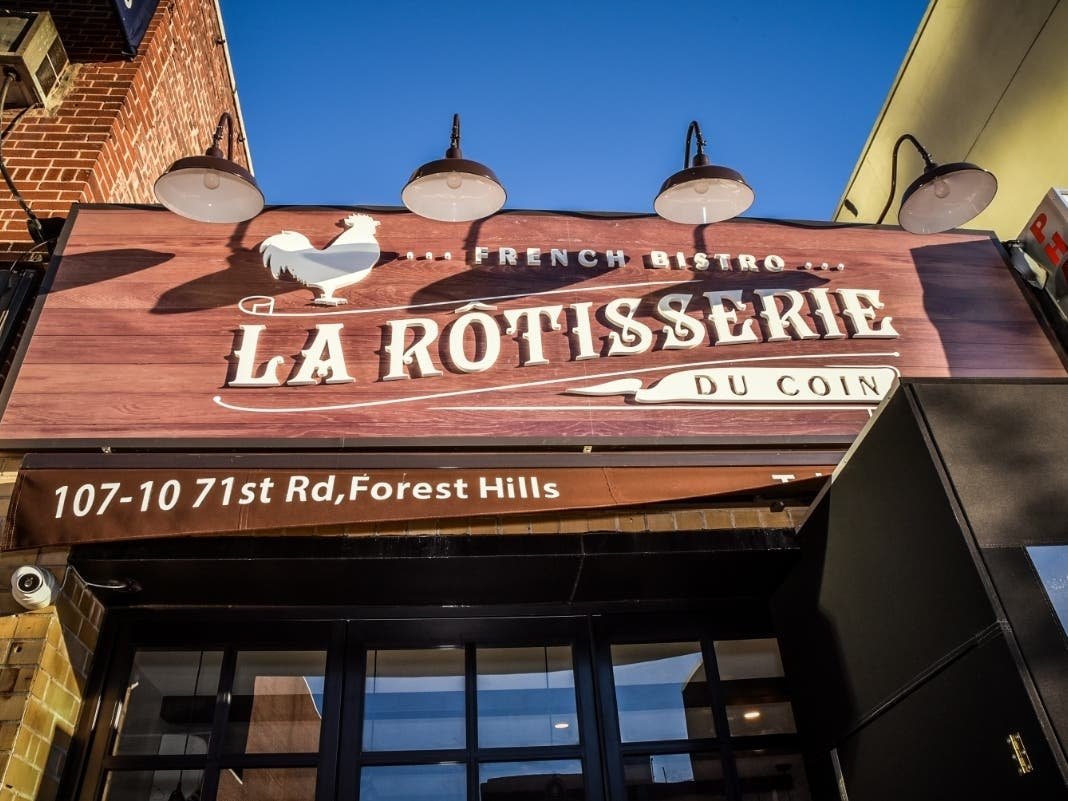
About La Rotisserie
La Rotisserie occupies a telling address on East 20th Street in the Flatiron District, where New York's appetite for rotisserie-anchored cooking sits at the intersection of French bistro tradition and American comfort. The menu architecture here does the editorial work: a single cooking method, applied with discipline, structures everything from the bar program to the sides. For those tracking where Manhattan's mid-century roast traditions are being reconsidered, this is a reference point worth noting.
Rotisserie as Structure: How a Single Cooking Method Defines a Menu
New York's relationship with the rotisserie is longer and more complicated than the city's current obsession with open-fire cooking suggests. French-inflected rôtisseries were fixtures of mid-century Manhattan dining rooms, their turning spits a statement of culinary seriousness rather than novelty. When that format largely disappeared in favour of the tasting-menu boom and the small-plates era, it left a gap that only a handful of addresses have since moved to fill. La Rotisserie, at 30 East 20th Street in the Flatiron District, represents one answer to what a rotisserie-first menu looks like when reconstructed for a contemporary New York dining room.
What makes the rotisserie format editorially interesting is that it is, at its core, a commitment to a cooking method over a cuisine category. This is not a steakhouse, not a brasserie, not a wood-fire grill room, though it shares DNA with all three. The rotisserie imposes its own logic on everything around it: the sides exist to complement rendered fat and crisp skin, the wine list is shaped by what pairs with roasted protein, and the pacing of service follows the turning of the spit rather than the whims of an à la carte kitchen. Menus structured this way tend to be shorter, more confident, and more honest about what the kitchen actually does well.
The Flatiron Address and What It Signals
The Flatiron District has spent the last decade consolidating its identity as one of Manhattan's more reliable dining corridors. The neighbourhood sits between the louder ambitions of Midtown and the chef-driven density of the West Village and NoHo, and its clientele tends to skew toward professionals who eat out often enough to have opinions. Restaurants in this zip code are priced against a competitive peer set that includes long-standing French and Italian mid-market rooms alongside newer concepts testing more specific formats. An address on East 20th Street places La Rotisserie within walking distance of Madison Square Park and the office density of the surrounding blocks, which shapes both the lunchtime and dinner trade.
For those consulting our full New York City restaurants guide, the Flatiron's dining character is worth understanding before booking: this is not a neighbourhood built around destination dining in the way that the West Village or the East Village are. It rewards the repeat visitor rather than the special-occasion seeker, and restaurants that thrive here tend to do so because they've built a reliable regular trade rather than relying on out-of-neighbourhood buzz.
Reading the Menu as Architecture
The editorial angle that a rotisserie-anchored menu offers is one of unusual clarity. Where many contemporary New York menus attempt to signal ambition through range — fermented this, aged that, foraged the other — a rotisserie format disciplines the kitchen into depth over breadth. The proteins are the argument; the sides and sauces are the supporting evidence. Accompaniments in this format carry more weight than they do on a sprawling à la carte list, because there is nowhere else for the kitchen to show its range. A properly constructed jus, a gratin that holds its structure, a salad dressed with the rendered drippings: these details become the text through which a kitchen is actually read.
This architecture also has implications for the bar program. Rooms built around roasted protein tend to anchor their wine lists in the old-world mid-register: Burgundy negociant bottles, Rhône reds, Loire whites, and the kind of Champagne-by-the-glass that sits at a price point for mid-week consumption rather than celebration. The cocktail menu, where it exists in this format, is usually kept to a short list of aperitif-mode drinks designed to open appetite rather than compete with the food. New York bars that have made this aperitif-first discipline their entire identity , Amor y Amargo being a specific reference point in this regard , show what happens when a single philosophy structures an entire program. A rotisserie room's bar operates on a similar narrowing principle, though in service of the kitchen rather than as an end in itself.
Where La Rotisserie Sits in the Current New York Roast Tradition
The city's appetite for format-specific cooking has sharpened considerably since the mid-2010s. The rise of restaurants structured around a single protein, a single technique, or a single regional tradition has made New York's dining map more legible, even as it has made individual venues harder to categorise for casual visitors. La Rotisserie slots into this trend as a method-first proposition, in the same way that the city's leading yakitori rooms are anchored by the binchotan rather than the specific bird, or the way that the most serious ramen houses treat the broth as the conceptual centre of everything else on the menu.
The comparison set for a rotisserie-first room in Manhattan includes Dirty French, which handles the French-American translation at a higher price point and with a louder room, and The Long Island Bar, which leans into a different kind of American vernacular comfort. La Rotisserie's positioning, at East 20th Street, suggests a middle register: specific enough to have a point of view, accessible enough to function as a regular rather than a destination.
Drinking Well Here: The Bar Dimension
Rooms built around fire and fat tend to reward guests who think about the drink order before they sit down. The classic pairing logic for rotisserie cooking runs through medium-bodied reds with enough acidity to cut rendered fat , Burgundy, Beaujolais cru, northern Rhône Syrah at lighter extractions , and through whites with enough texture to hold up to roasted juices, particularly white Burgundy and aged white Rioja. If the bar program includes a house cocktail meant as an aperitif, that is usually the correct place to start, since rotisserie kitchens are built around the anticipation of the main event rather than grazing. For context on what disciplined bar programs in the broader New York scene look like, Attaboy NYC and Angel's Share both illustrate different poles of the city's cocktail seriousness, while Superbueno shows what a format-specific program looks like when the drink list is built around a specific culinary tradition rather than technique for its own sake.
Beyond New York, the format-first principle applies to the bar programs at Kumiko in Chicago, ABV in San Francisco, Allegory in Washington, D.C., Jewel of the South in New Orleans, Julep in Houston, and Bar Leather Apron in Honolulu , all of which demonstrate that the most coherent drinking experiences tend to begin with a clear editorial point of view about what the room is trying to do. The Parlour in Frankfurt on the Main extends this observation internationally, showing that format discipline in bar programming is not an American phenomenon.
Practical Notes for Visitors
La Rotisserie sits at 30 East 20th Street, reachable from the 23rd Street subway stops on the N/R/W and 6 lines, with the 14th Street-Union Square hub a short walk south. The Flatiron corridor is at its most animated on weekday evenings, when the office trade gives the neighbourhood a momentum that weekend lunch rarely matches. For a room built around a method rather than a moment, the mid-week dinner is the natural visit: the kitchen is in rhythm, the room has purpose, and the rotisserie has had the full service to demonstrate what it does. Specific hours, booking policy, and current pricing were not available at time of publication; the venue's address at East 20th Street is the reliable constant for planning purposes.
Frequently Asked Questions
- What should I drink at La Rotisserie?
- Rotisserie cooking pairs leading with wines that have enough acidity to cut rendered fat without overwhelming the delicacy of roasted skin. Medium-bodied reds in the Burgundy and Beaujolais cru register, and textured whites such as aged white Rioja or white Burgundy, are the logical anchors. If the bar offers an aperitif-format cocktail, that is the correct opening move in a room built around anticipating the main event.
- What's the defining thing about La Rotisserie?
- The defining quality is the menu architecture itself: a single cooking method , the rotisserie , that disciplines every other decision in the room, from the sides and sauces to the drink list. In a New York dining scene where menus often attempt to signal ambition through range, a method-first format is a specific editorial commitment. The Flatiron address places it in a competitive tier that rewards regulars over destination seekers, at a price point calibrated to mid-market Manhattan rather than the tasting-menu bracket.
- Can I walk in to La Rotisserie?
- Walk-in availability at New York restaurants in this format and neighbourhood varies significantly by night of the week and season. Mid-week evenings tend to offer more flexibility than Friday and Saturday service. Since current booking policy, hours, and contact details were not available at time of publication, checking directly with the venue before arriving without a reservation is the practical approach, particularly for parties of more than two.
- Is La Rotisserie a good option for a solo dinner at the bar?
- Rotisserie-format rooms in New York have historically been well-suited to solo dining, since the bar or counter position often provides a direct sightline to the kitchen and a natural point of conversation with the service team. A method-first menu with a shorter, more structured list is also easier to navigate alone than a sprawling à la carte. Whether La Rotisserie specifically maintains bar seating for walk-ins or solo diners is a detail to confirm with the venue, but the format itself is one that has traditionally rewarded the single diner in the Flatiron's mid-market restaurant tier.
More bars in New York City
- (SUB)MERCER(SUB)MERCER occupies a basement address on Mercer Street in SoHo, positioning it as a deliberate destination rather than a drop-in. The subterranean format tends to keep ambient noise lower than street-level alternatives, making it a reasonable call for groups of four or more. Book ahead for weekends and confirm group capacity directly with the venue.
- 1 OR 81 OR 8 on DeKalb Avenue is a low-key Fort Greene bar that works best for two people on a weeknight when the room is quiet enough for conversation. Walk-ins are easy, no advance planning required. If a specialist cocktail program is your priority, Attaboy or Amor y Amargo offer more defined experiences — but for a neighbourhood drink without the fuss, this delivers.
- 230 Fifth Rooftop Bar230 Fifth is the easiest rooftop bar in Midtown to walk into, and the Empire State Building views justify the trip. The crowd skews groups and tourists, and the drinks are solid rather than craft-focused. Go early on a weekday for the best version of the experience; after 9 PM on weekends it tips firmly into party-group territory.
- 4 Charles Prime Rib4 Charles Prime Rib is a compact, reservation-required West Village dining room built around a focused prime rib format. It works well for dates and pairs but is too small for groups of four or more. Booking is easy relative to Manhattan peers, and the narrow menu signals a kitchen that executes one thing consistently well.
- 44 & X Hell's KitchenA low-key Hell's Kitchen neighborhood bar-restaurant that earns its place for easy weeknight dates and pre-theatre dinners. Booking is simple, the room is intimate enough for conversation, and there's no dress pressure. Not a cocktail destination, but a reliable, pressure-free option in Midtown West when you want comfort over spectacle.
- 58-22 Myrtle Ave58-22 Myrtle Ave is a low-key Ridgewood neighborhood spot that rewards return visits more than first impressions. Easy to get into, with no reservation headaches, it suits regulars looking for an unpretentious room rather than a structured cocktail program. If a strong drinks list or kitchen ambition matters to you, look to Attaboy or Amor y Amargo instead.
Related editorial
- Best Fine Dining Restaurants in ParisFrom three-Michelin-star icons to the next generation of Parisian chefs pushing boundaries, these are the restaurants that define fine dining in the world's culinary capital.
- Best Luxury Hotels in RomeFrom rooftop terraces overlooking ancient ruins to Michelin-starred hotel dining, these are the luxury hotels that make Rome unforgettable.
- Best Cocktail Bars in KyotoFrom sleek lounges to hidden speakeasies, Kyoto's cocktail scene blends Japanese precision with global influence in ways you won't find anywhere else.
Save or rate La Rotisserie on Pearl
Keep this venue in your Pearl passport, rate it after you visit, and track it alongside every other place you collect.