
Bar in New York City, United States
La Colombe Coffee Workshop
100ptsNitrogen-Pressure Counter Service
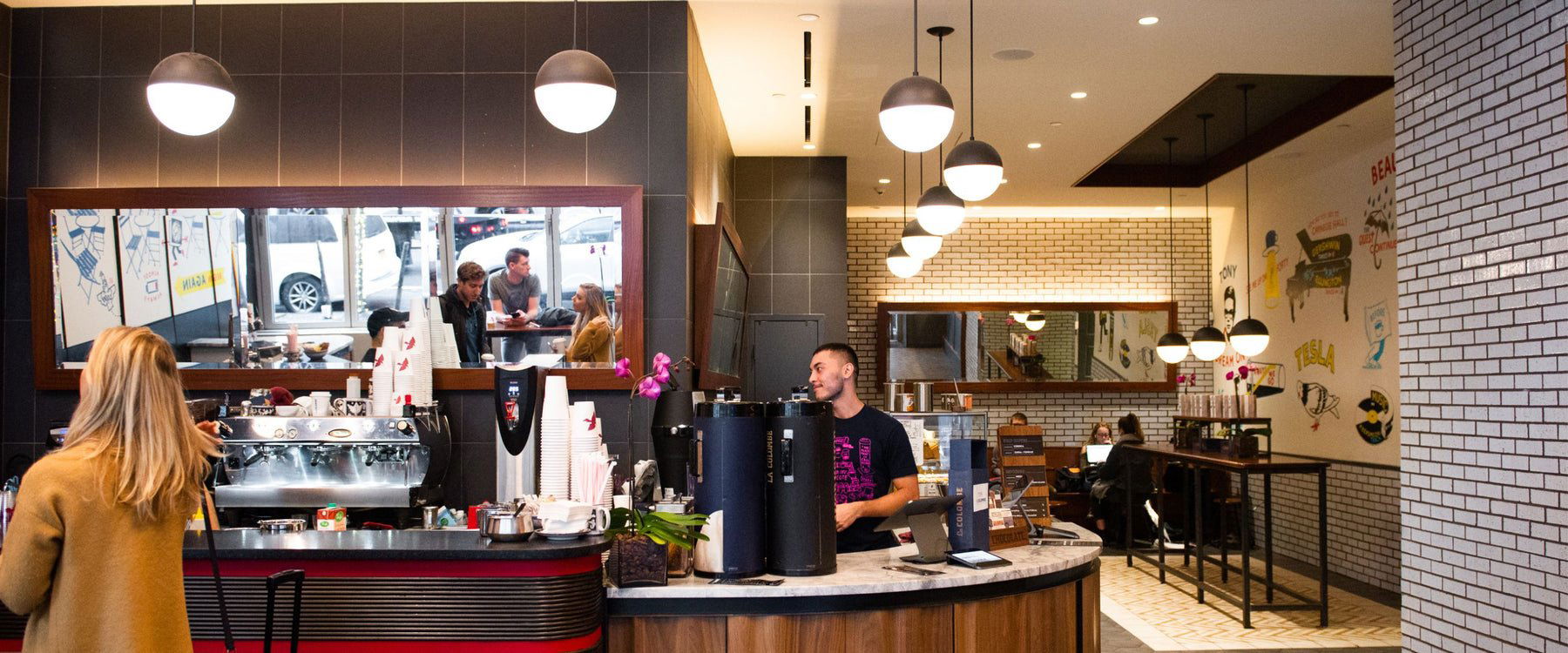
About La Colombe Coffee Workshop
La Colombe Coffee Workshop on Lafayette Street sits at the intersection of SoHo and NoLita, where New York's specialty coffee culture has long operated at its most self-serious. The draft latte that put La Colombe on the national map was developed here, and the Lafayette Street location remains one of the brand's most visited. A focused drinks programme pairs with a tight food offering calibrated to the neighbourhood's working pace.
Where New York's Specialty Coffee Scene Learned to Take Itself Seriously
When La Colombe began its New York expansion in the early 2010s, the city's specialty coffee conversation was already fractured between third-wave minimalism and the older Italian-inflected counter culture of the outer boroughs. SoHo and NoLita, where 270 Lafayette Street sits at their shared edge, had become the territory where that tension played out most visibly. Roasters with national ambitions planted flags here not just for foot traffic, but for the cultural signalling that comes with a Lafayette Street address. La Colombe arrived carrying Philadelphia credibility built over two decades, and the New York outpost inherited a brand already fluent in the language of serious coffee.
That history matters because it shaped what the Lafayette Street location became: less a standard café and more a format that the brand called a Workshop, signalling a working environment rather than a sit-and-stay destination. In an era when coffee shops were competing on sofa depth and playlist curation, the Workshop model pushed in the opposite direction, prioritising the drink itself and the rituals around making it well.
The Drink That Defined a Decade of American Coffee Bars
Few products in specialty coffee have been as consequential to American bar culture as the La Colombe draft latte. Introduced commercially in canned form in 2016 after years of development, the cold-pressed espresso and frothed milk format under nitrogen pressure was not simply a convenience product — it was a reference point that changed how the broader industry thought about cold coffee service. The Workshop format on Lafayette Street predates that commercialisation, and visiting here means drinking in the environment where that product logic was stress-tested at counter scale.
In terms of food and drink pairing, the Workshop operates within a logic familiar to serious cocktail bars: the drinks programme leads, and food exists to extend the session rather than compete with it. New York's better cocktail bars have long understood this hierarchy. Places like Amor y Amargo in the East Village built their reputation on a similar premise — a focused, technically driven drinks list that positions everything else as secondary. The Workshop applies that same discipline to coffee, where the extraction method, the milk temperature, and the roast origin carry the weight that a spirits selection carries elsewhere.
SoHo's Counter Culture and Where La Colombe Fits
The block of Lafayette between Prince and Spring has seen enough coffee concepts open and close to constitute a minor case study in neighbourhood saturation. What distinguishes survivors in this stretch is not novelty but operational consistency: the ability to execute the same cup at volume across the morning rush without visible compromise. La Colombe's Workshop format was designed with that pressure in mind. The counter is a production environment, and the service rhythm reflects that.
That consistency positions the Lafayette location differently from the experiential coffee formats that have proliferated in New York over the same period. Compare it to the quieter, more considered pacing at Angel's Share in the East Village, where the building-within-a-building format enforces a particular slowness, or the technical focus at Attaboy NYC, where the no-menu approach demands a different kind of attention from both sides of the bar. La Colombe's Workshop is the high-volume counterpoint: technically serious but operationally fast.
Nationally, the template finds parallels in how certain bar programmes have used a tightly controlled format to generate consistent quality at scale. ABV in San Francisco and Kumiko in Chicago both demonstrate how a disciplined format , in their case spirits-led, here coffee-led , creates a distinct identity without requiring theatrics. The Workshop shares that logic across a very different category.
Food as Complement, Not Centrepiece
The editorial angle of food and drink pairing is worth pressing on here, because the Workshop model makes a specific argument about how coffee and food should relate. In most café formats, food carries half the revenue and therefore half the menu real estate. At a Workshop, the food offering is deliberately compressed: items selected to work alongside the drinks, not to anchor a separate eating occasion. This is the same logic that Superbueno applies to its snack programme, or that Jewel of the South in New Orleans uses to position its kitchen as a supporting act to a serious cocktail programme.
When food exists to extend rather than anchor, the pairing relationship becomes more deliberate. A cortado and a single pastry occupy different functional territory than a flat white and a full brunch plate. The Workshop format implicitly asks the visitor to think about what they are there to drink, then to choose food accordingly. That inversion of the usual café hierarchy is itself a statement about what the brand values.
Beyond New York: La Colombe in the Context of American Coffee Bar Culture
Understanding where the Lafayette Street location sits requires a view of how American coffee bar culture has segmented over the past decade. At one end, high-volume airport and hotel formats have absorbed third-wave language without the operational substance. At the other, micro-roasters with six-seat counters have made scarcity part of the value proposition. La Colombe occupies a middle tier that resists both: national in scale, but committed to a Workshop quality standard that its airport competitors cannot replicate.
That positioning draws comparison to how Bar Leather Apron in Honolulu or Allegory in Washington, D.C. have managed to maintain craft credibility inside broader commercial operations, or how Julep in Houston uses a defined format to hold a specific position in a competitive market. The Workshop name is doing real work: it promises a production standard rather than an atmosphere.
For visitors working through our full New York City restaurants guide, the Lafayette Street location functions leading as an orientation point for understanding how SoHo's daytime food and drink culture operates , fast, technically capable, and more interested in the drink than the room. The Parlour in Frankfurt on the Main offers a useful European reference: a bar that similarly treats its drinks programme as the primary text and manages food accordingly.
Planning Your Visit
270 Lafayette Street sits on the SoHo-NoLita boundary, walkable from the Broadway-Lafayette subway station and within a short distance of Spring Street. The Workshop format skews toward morning and midday use, consistent with how the neighbourhood operates on weekdays. No booking is required, and the counter service format means peak-hour waits are measured in minutes rather than tables. For those combining a coffee stop with a wider neighbourhood programme, the location sits between SoHo's retail core and the quieter residential blocks of NoLita , useful as either a starting point or a mid-route stop.
Frequently Asked Questions
What drink is La Colombe Coffee Workshop famous for?
La Colombe is most associated with the draft latte, a cold-pressed espresso and frothed milk drink served under nitrogen pressure. The product was developed and tested at counter level before its commercial launch in 2016 and became a reference point for cold coffee service across the American specialty coffee industry. The Lafayette Street Workshop was part of the environment in which that format was refined.
What is La Colombe Coffee Workshop known for?
In New York, La Colombe's Lafayette Street location is known as a high-volume, technically serious coffee counter operating within what the brand calls a Workshop format. The address in SoHo-NoLita places it at the centre of the city's specialty coffee geography, and the Philadelphia-rooted brand carries two decades of credibility into the New York market. Pricing sits within the premium end of the city's independent coffee tier, consistent with the neighbourhood.
Is La Colombe Coffee Workshop reservation-only?
No. The Workshop operates as a counter-service format with no booking required. Walk-in access is standard, and the high-throughput design of the Lafayette Street location means the space turns over quickly even during peak periods. For those with specific timing needs, mornings on weekdays tend to reflect the neighbourhood's working population more than weekend leisure patterns.
What's the leading use case for La Colombe Coffee Workshop?
If you are spending time in SoHo or NoLita and want a technically consistent coffee stop without the slower pace of a sit-down café, the Workshop format is well-suited to that need. It functions less as a destination in its own right and more as a quality anchor for a wider neighbourhood programme, particularly for those who prioritise the drink over the experience of lingering. The food offering is calibrated to accompany rather than replace a meal elsewhere.
How does La Colombe Coffee Workshop compare to other serious coffee counters in downtown Manhattan?
Downtown Manhattan's specialty coffee market has consolidated around a handful of formats: the micro-roaster with limited seating, the European-style standing bar, and the Workshop-style high-volume counter. La Colombe on Lafayette sits firmly in the third category, distinguishing itself from smaller single-origin-focused operations through scale and consistency rather than rarity. The brand's national presence and its development of the draft latte as a widely recognised product give it a different kind of credibility than newer, smaller downtown entrants.
More bars in New York City
- (SUB)MERCER(SUB)MERCER occupies a basement address on Mercer Street in SoHo, positioning it as a deliberate destination rather than a drop-in. The subterranean format tends to keep ambient noise lower than street-level alternatives, making it a reasonable call for groups of four or more. Book ahead for weekends and confirm group capacity directly with the venue.
- 1 OR 81 OR 8 on DeKalb Avenue is a low-key Fort Greene bar that works best for two people on a weeknight when the room is quiet enough for conversation. Walk-ins are easy, no advance planning required. If a specialist cocktail program is your priority, Attaboy or Amor y Amargo offer more defined experiences — but for a neighbourhood drink without the fuss, this delivers.
- 230 Fifth Rooftop Bar230 Fifth is the easiest rooftop bar in Midtown to walk into, and the Empire State Building views justify the trip. The crowd skews groups and tourists, and the drinks are solid rather than craft-focused. Go early on a weekday for the best version of the experience; after 9 PM on weekends it tips firmly into party-group territory.
- 4 Charles Prime Rib4 Charles Prime Rib is a compact, reservation-required West Village dining room built around a focused prime rib format. It works well for dates and pairs but is too small for groups of four or more. Booking is easy relative to Manhattan peers, and the narrow menu signals a kitchen that executes one thing consistently well.
- 44 & X Hell's KitchenA low-key Hell's Kitchen neighborhood bar-restaurant that earns its place for easy weeknight dates and pre-theatre dinners. Booking is simple, the room is intimate enough for conversation, and there's no dress pressure. Not a cocktail destination, but a reliable, pressure-free option in Midtown West when you want comfort over spectacle.
- 58-22 Myrtle Ave58-22 Myrtle Ave is a low-key Ridgewood neighborhood spot that rewards return visits more than first impressions. Easy to get into, with no reservation headaches, it suits regulars looking for an unpretentious room rather than a structured cocktail program. If a strong drinks list or kitchen ambition matters to you, look to Attaboy or Amor y Amargo instead.
Related editorial
- Best Fine Dining Restaurants in ParisFrom three-Michelin-star icons to the next generation of Parisian chefs pushing boundaries, these are the restaurants that define fine dining in the world's culinary capital.
- Best Luxury Hotels in RomeFrom rooftop terraces overlooking ancient ruins to Michelin-starred hotel dining, these are the luxury hotels that make Rome unforgettable.
- Best Cocktail Bars in KyotoFrom sleek lounges to hidden speakeasies, Kyoto's cocktail scene blends Japanese precision with global influence in ways you won't find anywhere else.
Save or rate La Colombe Coffee Workshop on Pearl
Keep this venue in your Pearl passport, rate it after you visit, and track it alongside every other place you collect.