
Bar in New York City, United States
Koloman
100ptsEuropean Cafe Counter
About Koloman
Koloman occupies a considered position in the Flatiron drinking scene, where the craft behind the bar carries as much weight as the room itself. Located at 16 West 29th Street, the venue draws on a European hospitality tradition that treats the counter as the point of the experience. For drinkers who want technique and intention in equal measure, it warrants serious attention.
The Counter as the Point
New York's bar scene has moved, over the past decade, away from theatrical concealment toward programs where transparency of technique is the draw. The hidden-door speakeasy format that dominated the 2010s gave way to something quieter and, in many ways, more demanding: bars where what happens behind the counter has to carry the room on its own. Koloman, at 16 West 29th Street in the Flatiron district, belongs to that second wave. The address places it in a stretch of Manhattan that has accumulated serious hospitality over recent years, and the format aligns with a broader shift in how premium bars in the city present themselves.
The Flatiron and NoMad corridor has become one of the more interesting zones for this kind of drinking. It sits between the density of Midtown and the looseness of downtown, and it has drawn a particular type of operator: properties that take the bar program as seriously as the kitchen, without necessarily advertising the fact. Koloman fits that description. The European inflection in its approach connects it to a tradition that prioritises the host relationship over the spectacle of the pour.
The Bartender's Register
Across the international bar circuit, certain training lineages carry weight in the same way culinary pedigrees do at restaurant counters. The distinction between a program built around personality and one built around craft is usually legible within the first exchange at the bar. Koloman operates in the latter register. The hospitality approach here draws on a Central European cafe tradition, where the person behind the bar is expected to read the room, adjust the pace, and hold the conversation without performing it.
That tradition sits in instructive contrast to the more maximalist New York bar styles. Compare it to the high-energy mezcal and rum-forward intensity of Superbueno, or the sharp bitter-focused philosophy that defines Amor y Amargo. Both of those bars wear their editorial positions openly. Koloman's point of view is quieter but no less deliberate. The analog is closer to what Angel's Share established in the East Village in the 1990s: a program predicated on restraint and attention to the guest rather than the performance of complexity.
Among New York bars that have built sustained reputations on craft and hospitality discipline rather than concept novelty, Attaboy NYC remains the clearest reference point. Koloman operates in a different register aesthetically, but the underlying premise is similar: the quality of the interaction at the counter matters as much as what is in the glass.
A Wider Frame: The Craft Bar as Sustained Commitment
The bars that age well in any city tend to be those where the program is built around knowledge that compounds over time rather than a concept that exhausts itself. Across the United States, a handful of bar programs have demonstrated that longevity. Jewel of the South in New Orleans connects to a documented historical lineage that gives its cocktail list an anchor beyond trend. Julep in Houston built its identity around a specific regional tradition. Kumiko in Chicago fused Japanese hospitality culture with American ingredients in a way that holds up because the cultural knowledge behind it is genuine. ABV in San Francisco positioned itself around food-friendliness and ingredient sourcing rather than theatre.
What connects these programs is that the person behind the bar is trained to host, not just to mix. The same expectation applies at Bar Leather Apron in Honolulu and at Allegory in Washington, D.C., both of which have built reputations on the quality of the counter relationship. Internationally, The Parlour in Frankfurt on the Main operates from a similar premise in a European context. Koloman's positioning in New York fits within this pattern: a bar whose value proposition rests on depth of hospitality knowledge rather than novelty of concept.
The Room and the Setting
The Flatiron address is worth understanding in practical terms. West 29th Street sits within walking distance of Madison Square Park, and the surrounding blocks have seen a concentration of hotel-adjacent food and drink programming that has raised the overall quality of the area's hospitality. That context benefits Koloman: the area draws a clientele that expects precision, and the bar is calibrated for exactly that kind of guest.
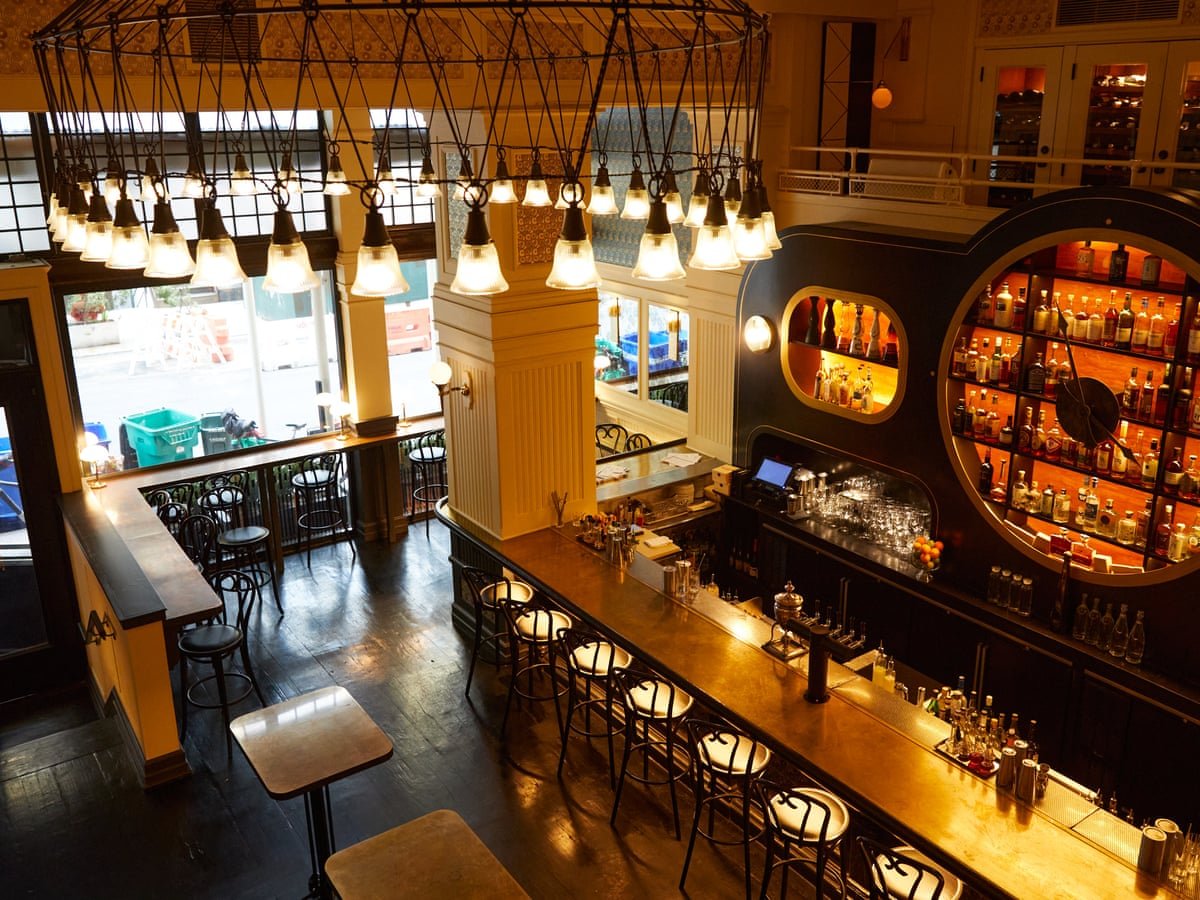
The European cafe inflection in the room's sensibility distinguishes it from the more aggressively modern bar formats that have proliferated in New York over the same period. Where much of the city's premium bar design has leaned into raw materials and industrial references, Koloman's register is warmer and more considered, which shapes the pace of the evening. This is not a quick-drink venue. The format rewards guests who arrive with time to settle.
Planning a Visit
Koloman is located at 16 West 29th Street in the Flatiron district, accessible from the 28th Street subway stations on the N, R, W, and 6 lines. For guests approaching from Midtown, the walk from Penn Station is under ten minutes. The bar sits on a block that has become a reference point for considered hospitality in this part of Manhattan, which means it can draw well on evenings when the neighbourhood is busy. Reservations or early arrival are worth factoring in for weekend visits. For a fuller picture of where Koloman sits within the city's broader drinking and dining scene, see our full New York City restaurants guide.
Frequently Asked Questions
What is the leading thing to order at Koloman?
Given the bar's European cafe hospitality approach, the most direct path into what Koloman does well is to let the bartender guide the order based on the moment. Programs built around counter hospitality of this kind are typically stronger when the guest arrives open-ended rather than with a fixed order. The depth of the drink list reflects the same deliberate positioning that the venue holds in the wider New York bar scene.
What is the defining thing about Koloman?
The defining characteristic is the hospitality register at the counter. In a New York bar market that has moved between theatrical concealment and maximalist ingredient-forward programs, Koloman operates from a quieter and more host-focused position. The European cafe tradition behind that approach gives the venue a distinct competitive footing against its Flatiron-area peers, without requiring a high-concept frame to justify it.
Is Koloman a good choice for someone new to the New York craft cocktail scene?
Yes, and arguably more so than bars that front-load their identity with concept complexity. The hospitality approach at Koloman is calibrated for genuine engagement at the counter, which means a first-time visitor is more likely to leave with a drink they actually wanted rather than one that suited the bar's editorial position. In a city where craft bar programs can skew toward insider legibility, that accessibility is a substantive quality rather than a compromise.
More bars in New York City
- (SUB)MERCER(SUB)MERCER occupies a basement address on Mercer Street in SoHo, positioning it as a deliberate destination rather than a drop-in. The subterranean format tends to keep ambient noise lower than street-level alternatives, making it a reasonable call for groups of four or more. Book ahead for weekends and confirm group capacity directly with the venue.
- 1 OR 81 OR 8 on DeKalb Avenue is a low-key Fort Greene bar that works best for two people on a weeknight when the room is quiet enough for conversation. Walk-ins are easy, no advance planning required. If a specialist cocktail program is your priority, Attaboy or Amor y Amargo offer more defined experiences — but for a neighbourhood drink without the fuss, this delivers.
- 230 Fifth Rooftop Bar230 Fifth is the easiest rooftop bar in Midtown to walk into, and the Empire State Building views justify the trip. The crowd skews groups and tourists, and the drinks are solid rather than craft-focused. Go early on a weekday for the best version of the experience; after 9 PM on weekends it tips firmly into party-group territory.
- 4 Charles Prime Rib4 Charles Prime Rib is a compact, reservation-required West Village dining room built around a focused prime rib format. It works well for dates and pairs but is too small for groups of four or more. Booking is easy relative to Manhattan peers, and the narrow menu signals a kitchen that executes one thing consistently well.
- 44 & X Hell's KitchenA low-key Hell's Kitchen neighborhood bar-restaurant that earns its place for easy weeknight dates and pre-theatre dinners. Booking is simple, the room is intimate enough for conversation, and there's no dress pressure. Not a cocktail destination, but a reliable, pressure-free option in Midtown West when you want comfort over spectacle.
- 58-22 Myrtle Ave58-22 Myrtle Ave is a low-key Ridgewood neighborhood spot that rewards return visits more than first impressions. Easy to get into, with no reservation headaches, it suits regulars looking for an unpretentious room rather than a structured cocktail program. If a strong drinks list or kitchen ambition matters to you, look to Attaboy or Amor y Amargo instead.
Related editorial
- Best Fine Dining Restaurants in ParisFrom three-Michelin-star icons to the next generation of Parisian chefs pushing boundaries, these are the restaurants that define fine dining in the world's culinary capital.
- Best Luxury Hotels in RomeFrom rooftop terraces overlooking ancient ruins to Michelin-starred hotel dining, these are the luxury hotels that make Rome unforgettable.
- Best Cocktail Bars in KyotoFrom sleek lounges to hidden speakeasies, Kyoto's cocktail scene blends Japanese precision with global influence in ways you won't find anywhere else.
Save or rate Koloman on Pearl
Keep this venue in your Pearl passport, rate it after you visit, and track it alongside every other place you collect.