
Bar in New York City, United States
Jajaja Mexicana
100ptsPlant-Based Agave Table
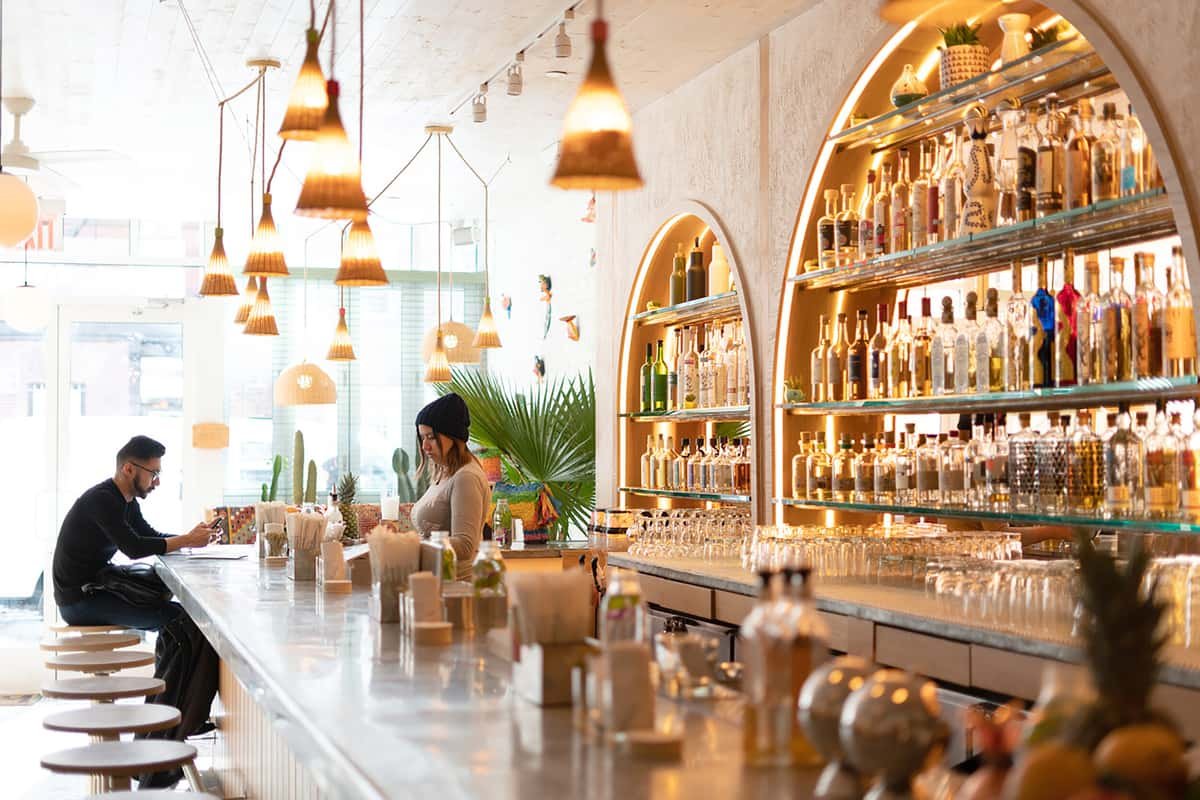
About Jajaja Mexicana
Jajaja Mexicana on Carmine Street brings plant-based Mexican cooking into a West Village that has long rewarded casual, neighbourhood-rooted restaurants over destination fine dining. The menu is structured around familiar Mexican formats reread through a fully vegan lens, placing it in a growing tier of New York Mexican restaurants where ingredient sourcing and format discipline matter as much as price point.
Plant-Based Mexican in the West Village: Where Jajaja Fits the Neighbourhood
When Jajaja Mexicana opened on Carmine Street, the West Village already had a settled hierarchy of casual Mexican dining in New York City, a category that had long been dominated by taqueria formats at the low end and a handful of more ambitious regional Mexican kitchens at the leading. Jajaja entered that conversation from an angle that was, at the time of its founding, still relatively uncommon in the borough: a fully plant-based Mexican menu designed not as a compromise for non-meat-eaters, but as a distinct culinary position in its own right. That framing matters because it explains how the restaurant is leading understood, not as a vegetarian workaround for a cuisine built around carnitas and birria, but as part of a broader shift in how New York's Mexican dining tier treats ingredient sourcing and menu architecture.
How the Menu Is Built, and What That Tells You
The menu at Jajaja operates within recognisable Mexican formats: tacos, bowls, nachos, and shareable plates that track the casual register New Yorkers associate with neighbourhood Mexican dining. What distinguishes it at the structural level is that every component across those formats has been rebuilt from a plant-based foundation. This is not a menu with a vegan section appended to a conventional one. The architecture assumes no animal products at the outset, which changes how the kitchen has to approach fat, texture, and depth of flavour. In Mexican cooking, those qualities are traditionally delivered through lard-rendered beans, braised meats, and dairy-heavy sauces. Replacing those load-bearing elements while keeping the format legible to diners who have expectations shaped by conventional Mexican restaurants requires genuine menu work, not just substitution.
That discipline is what separates Jajaja from the broader category of plant-based restaurants that treat Mexican food as an easy template. The taco format, in particular, demands a filling that delivers structural contrast against the tortilla and enough flavour concentration to not rely on cheese or sour cream for finish. Whether the kitchen achieves that consistently is the right critical question to ask, and the restaurant's longevity on Carmine Street, a street that has cycled through significant restaurant turnover, suggests it has found an answer the neighbourhood accepts.
West Village Context: The Street and Its Standards
Carmine Street sits at the southern edge of the West Village, a few blocks from Bleecker and within easy walking distance of the blocks that contain some of New York's most visited casual dining. The neighbourhood's restaurant density is high and the competition for repeat local customers is genuine. Restaurants on this stretch do not survive on tourist traffic alone; they earn neighbourhood regulars or they close. Jajaja's positioning as a plant-based option in a neighbourhood with a health-conscious and environmentally attentive residential base is not incidental. The West Village has historically rewarded restaurants that offer a clear point of view without the formality or price point of the city's destination dining tier.
For anyone building a broader West Village evening, Jajaja sits within reasonable distance of several bars worth knowing. Amor y Amargo on East 6th Street runs one of the city's most focused amaro and bitters programs, a post-dinner option that pairs well with a lighter meal. Angel's Share in the East Village, while a different neighbourhood, remains one of the city's most considered Japanese-influenced cocktail bars and is worth the crosstown walk for the right occasion. Closer to the cocktail bar tier that has developed around Mexican and Latin-influenced drinking, Superbueno brings a technically ambitious approach to agave-forward cocktails that aligns well with a dinner at a Mexican restaurant. For those who want to extend the evening into the broader New York craft cocktail scene, Attaboy NYC on the Lower East Side runs a no-menu format that rewards the kind of diner who knows what they like and can describe it.
The Drink Question at a Plant-Based Mexican Table
The drinks program at a plant-based Mexican restaurant typically anchors around agave spirits, and for good reason. Mezcal and tequila have an affinity with the smoky, earthy, and citrus-forward flavour profiles that plant-based Mexican kitchens tend to build toward. Margarita variations, palomas, and mezcal-based cocktails are the logical starting point at a table like this. Non-alcoholic options at plant-based restaurants in New York have also become more sophisticated in recent years, with agua frescas and house-made soft drinks filling a role that beer once held by default in casual Mexican dining. The absence of venue-specific drinks data here means the precise list cannot be confirmed, but the format strongly suggests an agave-led program. If you are looking for more detail on what serious agave cocktail programs look like in New York, the broader New York City restaurants and bars guide provides useful framing.
How Jajaja Compares Across the US Plant-Based Dining Tier
New York's plant-based Mexican restaurants do not operate in isolation from what is happening nationally. Cities with strong plant-based dining cultures, including San Francisco and Chicago, have developed their own versions of this format. ABV in San Francisco represents a different end of the California approach to ingredient-led casual dining, while Kumiko in Chicago shows how Midwestern cities have built out their own thoughtful, format-disciplined hospitality programs. What links these venues across different categories is an attention to menu architecture and a resistance to the generic. Jajaja sits in that broader current: a restaurant whose structure makes an argument about what Mexican food can be, not just what it avoids.
For reference, cocktail programs worth knowing in other US cities that share this format-conscious sensibility include Bar Leather Apron in Honolulu, Jewel of the South in New Orleans, Julep in Houston, and Allegory in Washington, D.C. Each represents a city's answer to the same question Jajaja poses in New York: what does a restaurant or bar with a real point of view look like at the casual-to-mid tier? Internationally, The Parlour in Frankfurt on the Main is worth noting as a European example of how format discipline at the neighbourhood level builds durable reputations without destination-dining infrastructure.
Planning a Visit: What to Know Before You Go
Jajaja Mexicana is at 63 Carmine Street in the West Village. The address puts it in a walkable cluster of restaurants and bars, accessible by subway from multiple lines serving the West 4th Street or Christopher Street stops. For a casual dinner in this neighbourhood, the general West Village pattern applies: arrive early or be prepared to wait, as the more established casual spots on this stretch do not typically take reservations for small parties. Booking ahead where possible, or arriving at opening, is the practical approach for any West Village restaurant with a neighbourhood following. Specific hours and booking policies are not confirmed in available data, so checking directly before visiting is advisable.
Frequently Asked Questions
- What should I drink at Jajaja Mexicana?
- Agave-forward drinks, tequila and mezcal-based cocktails and margarita variations, are the natural pairing for the menu's flavour profile. Plant-based Mexican kitchens tend to build toward smoky, citrus, and earthy notes that work well with both mezcal and lighter tequila expressions. Non-alcoholic options at this tier of New York restaurant have improved significantly, and agua frescas or house soft drinks are worth asking about if you are skipping spirits.
- What is Jajaja Mexicana leading at?
- The restaurant's core competence is in rebuilding familiar Mexican formats, tacos especially, from a fully plant-based foundation rather than simply removing meat from a conventional menu. In New York's mid-tier Mexican dining category, that structural commitment to the format is what distinguishes it from casual Mexican restaurants with a vegan section bolted on. It occupies a position in the West Village where price point and neighbourhood accessibility are as important as any award credential.
- Should I book Jajaja Mexicana in advance?
- Carmine Street restaurants with established neighbourhood followings in the West Village typically fill quickly on weekday evenings and become difficult on weekends without a plan. If the restaurant accepts reservations, booking ahead is advisable. If it operates on a walk-in basis, arriving at or near opening is the reliable alternative. Specific booking information is not confirmed in available data, so checking the restaurant directly before your visit is the practical step.
- When does Jajaja Mexicana make the most sense to choose?
- It makes most sense as a casual weeknight dinner when you want a neighbourhood Mexican restaurant with a clear format identity rather than a fine-dining destination. It is particularly well suited for plant-based diners who do not want to make a separate calculation about what is available to them on the menu, and for groups where at least some diners are avoiding animal products, since the fully vegan architecture removes the usual menu negotiation. It sits at the casual end of New York's Mexican dining tier, which means it is not the right choice when the occasion calls for a formal or celebratory format.
- Is Jajaja Mexicana suitable for non-vegan diners who are not specifically seeking plant-based food?
- This is a reasonable question for any fully plant-based restaurant in a cuisine category where meat and dairy are structural defaults. The answer depends on whether you are open to the format on its own terms: the menu is built around Mexican cooking conventions, not around health food conventions, so the reference points are tacos and shareable plates rather than salads and grain bowls. Non-vegan diners who approach it as a Mexican restaurant rather than as a dietary compromise tend to find it more satisfying, and the West Village neighbourhood context suggests its regulars are not exclusively plant-based eaters.
More bars in New York City
- (SUB)MERCER(SUB)MERCER occupies a basement address on Mercer Street in SoHo, positioning it as a deliberate destination rather than a drop-in. The subterranean format tends to keep ambient noise lower than street-level alternatives, making it a reasonable call for groups of four or more. Book ahead for weekends and confirm group capacity directly with the venue.
- 1 OR 81 OR 8 on DeKalb Avenue is a low-key Fort Greene bar that works best for two people on a weeknight when the room is quiet enough for conversation. Walk-ins are easy, no advance planning required. If a specialist cocktail program is your priority, Attaboy or Amor y Amargo offer more defined experiences — but for a neighbourhood drink without the fuss, this delivers.
- 230 Fifth Rooftop Bar230 Fifth is the easiest rooftop bar in Midtown to walk into, and the Empire State Building views justify the trip. The crowd skews groups and tourists, and the drinks are solid rather than craft-focused. Go early on a weekday for the best version of the experience; after 9 PM on weekends it tips firmly into party-group territory.
- 4 Charles Prime Rib4 Charles Prime Rib is a compact, reservation-required West Village dining room built around a focused prime rib format. It works well for dates and pairs but is too small for groups of four or more. Booking is easy relative to Manhattan peers, and the narrow menu signals a kitchen that executes one thing consistently well.
- 44 & X Hell's KitchenA low-key Hell's Kitchen neighborhood bar-restaurant that earns its place for easy weeknight dates and pre-theatre dinners. Booking is simple, the room is intimate enough for conversation, and there's no dress pressure. Not a cocktail destination, but a reliable, pressure-free option in Midtown West when you want comfort over spectacle.
- 58-22 Myrtle Ave58-22 Myrtle Ave is a low-key Ridgewood neighborhood spot that rewards return visits more than first impressions. Easy to get into, with no reservation headaches, it suits regulars looking for an unpretentious room rather than a structured cocktail program. If a strong drinks list or kitchen ambition matters to you, look to Attaboy or Amor y Amargo instead.
Related editorial
- Best Fine Dining Restaurants in ParisFrom three-Michelin-star icons to the next generation of Parisian chefs pushing boundaries, these are the restaurants that define fine dining in the world's culinary capital.
- Best Luxury Hotels in RomeFrom rooftop terraces overlooking ancient ruins to Michelin-starred hotel dining, these are the luxury hotels that make Rome unforgettable.
- Best Cocktail Bars in KyotoFrom sleek lounges to hidden speakeasies, Kyoto's cocktail scene blends Japanese precision with global influence in ways you won't find anywhere else.
Save or rate Jajaja Mexicana on Pearl
Keep this venue in your Pearl passport, rate it after you visit, and track it alongside every other place you collect.