
Bar in New York City, United States
Dons Bogam
100ptsServer-Assisted Table Grill
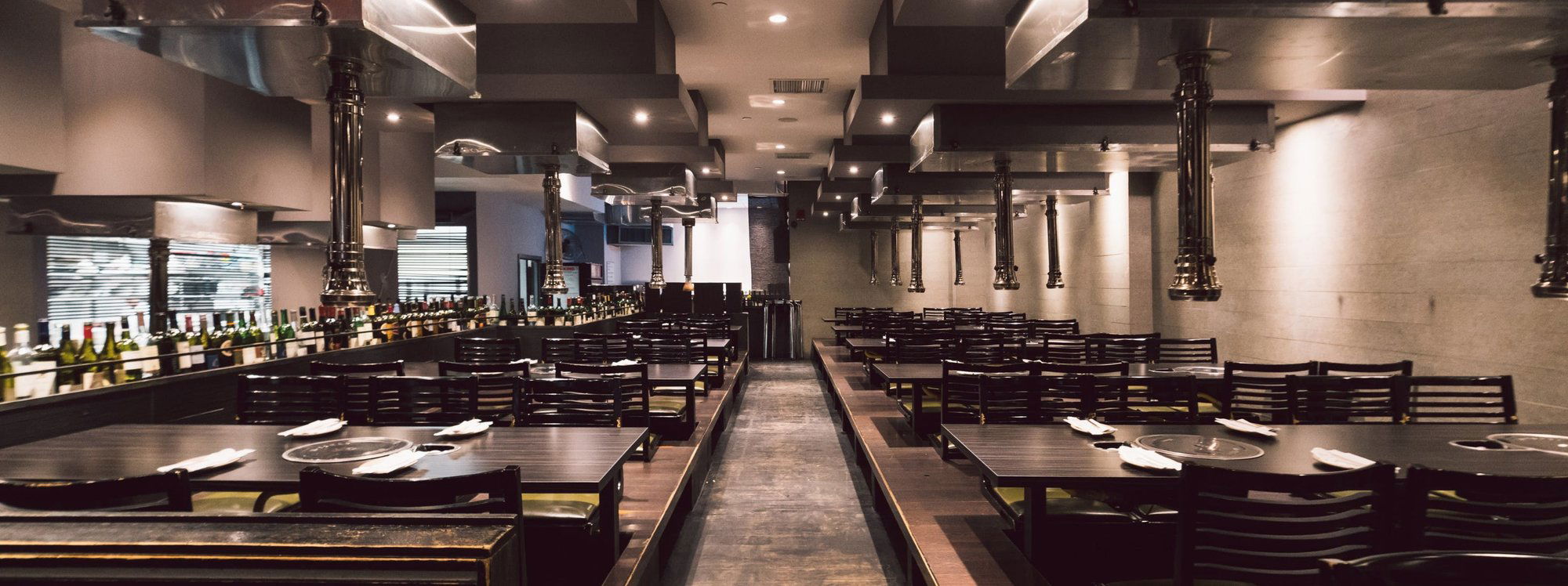
About Dons Bogam
On East 32nd Street in Koreatown, Dons Bogam occupies a well-worn place in one of Manhattan's most concentrated dining corridors. The restaurant is associated with Korean BBQ, a format that asks as much of the diner as it does the kitchen. For those who know how the ritual works, it rewards patience and attention in roughly equal measure.
The Block That Runs Its Own Rules
East 32nd Street between Fifth and Madison Avenues operates on a logic distinct from the rest of Midtown. The block is dense with Korean restaurants, barbecue houses, and late-night spots that keep hours more associated with Seoul's Mapo-gu than with the office-lunch rhythms of the surrounding neighbourhood. Dons Bogam sits within that corridor, at number 17, as part of a dining tradition that has made this stretch of Manhattan genuinely useful to a specific kind of eater: one who wants tableside cooking, long meals, and the structured sociability that Korean BBQ demands.
Korean BBQ is among the more ritualised dining formats in New York's broader restaurant culture. It is not a cuisine where the kitchen does all the work and the diner simply receives. The charcoal or gas grill embedded in the table is as much a piece of equipment as anything behind the pass, and the meal's pacing is determined as much by the guests as by the kitchen. Meat arrives raw or lightly marinated, and the act of cooking it, monitoring its colour, flipping it at the right moment, is part of the contract of the meal. For first-time participants, this can feel instructional. For regulars, it becomes automatic, a rhythm as natural as pouring wine.
The Architecture of a Korean BBQ Meal
What gives Korean BBQ its structural coherence is the system of banchan, the small side dishes that arrive before and alongside the grilled items. These are not garnishes or afterthoughts. In a well-run Korean BBQ house, the banchan spread functions as a map of the meal: fermented vegetables, seasoned greens, cold tofu, egg preparations, and pickles calibrated to offset the richness of the meat. The number of banchan dishes offered is often taken, by those who eat Korean food regularly, as a rough indicator of the kitchen's seriousness. A cursory spread of three or four items tells one story; a wider array tells another.
The proteins themselves carry their own hierarchy. Chadolbaegi, thinly sliced beef brisket, cooks in seconds and is among the more approachable entry points. Galbi, the short rib cut, takes longer and benefits from more attention at the grill. Samgyeopsal, thick-cut pork belly, is perhaps the most forgiving for those still calibrating their timing. The sequence in which a table orders and cooks these proteins shapes the whole arc of the evening, which is why the most experienced Korean BBQ diners rarely rush the early courses.
Koreatown's restaurants, including Dons Bogam, sit in a market where this format has been refined over decades. The block's dining culture is not recent; it predates the broader Western enthusiasm for Korean food that followed the global reach of Korean popular culture in the 2010s. The restaurants here were operating at full capacity long before Korean cuisine became a recurring subject in English-language food media, which gives the corridor a kind of confidence that newer, trend-adjacent spots often lack.
How the Meal Actually Flows
A Korean BBQ dinner at a house like Dons Bogam does not move at a single pace. The early part of the meal is slower: banchan arrives, drinks are poured, the grill heats. Then there is a period of active engagement as the first meats go on. Then, as the meal progresses and the table settles into its rhythm, the pace often loosens. Conversation fills the gaps between cooking intervals. More drinks are ordered. A second round of proteins might come. The meal stretches.
This is a format that rewards tables of three or more. A party of two can manage it, but the economics of ordering and the social function of the grill both benefit from a larger group. Korean BBQ is, structurally, a communal format: the grill belongs to the table, not to any individual diner, and the leading meals at any Koreatown BBQ house are ones where the group has settled into an easy division of labour around the fire.
The drink pairing in this context is worth considering carefully. Soju, the Korean distilled spirit, is the conventional choice, and it is designed to be consumed in this way: small glasses, poured for others rather than for oneself, refreshed frequently. Beer, particularly Korean lager, is also standard. The combination of soju and beer, known colloquially as somaek, is ubiquitous across Koreatown and suits the fatty richness of the grilled meats in a way that wine rarely manages. Those looking for a more considered cocktail program after the meal might look elsewhere in the city: Attaboy NYC, Angel's Share, or Amor y Amargo each run programs with a different technical emphasis. For those interested in how American bars are treating cocktail craft more broadly, the EP Club has mapped comparable programs in cities including Kumiko in Chicago, ABV in San Francisco, Allegory in Washington, D.C., Jewel of the South in New Orleans, Julep in Houston, Bar Leather Apron in Honolulu, and The Parlour in Frankfurt on the Main. Closer to Koreatown, Superbueno offers a contrasting approach to the after-dinner drink question.
Where Dons Bogam Sits in the Koreatown Tier
Koreatown's 32nd Street has restaurants operating across a wide spread of price and formality. The more casual end skews toward student and late-night traffic; the higher end, to which Dons Bogam is generally understood to belong, attracts diners who want a more composed version of the same format. This means better-quality cuts, more attentive grill management from servers who will step in and assist with the cooking, and a room that is slightly more considered in its layout. It does not mean the meal becomes less participatory; the grill is still at the table. But the surrounding conditions are more controlled.
For a broader survey of where Korean BBQ sits among the city's other dining priorities, the full New York City restaurants guide maps the neighbourhood alongside comparable formats and price tiers.
Planning the Visit
Koreatown restaurants on 32nd Street tend to run late, with many serving well past midnight, which makes the block useful for post-theatre or late-work dinners when other Midtown options have closed. The format suits groups; solo diners or couples will find the experience manageable but the menu economics are better spread across a larger party. Booking ahead for Dons Bogam is advisable on weekends, when the block operates at its highest density and walk-in waits can extend significantly. Address: 17 E 32nd St, New York, NY 10016.
Frequently Asked Questions
What is Dons Bogam known for?
Dons Bogam is associated with Korean BBQ on Manhattan's Koreatown strip, East 32nd Street, where it occupies the higher-end tier of a competitive restaurant corridor. The format centres on tableside grilling of marinated and unmarinated meats alongside a spread of banchan. It draws both the Korean-American community and diners from across the city who come to 32nd Street specifically for the BBQ format.
What's the signature drink at Dons Bogam?
Korean BBQ houses like Dons Bogam are built around soju, the clear distilled Korean spirit served in small poured glasses, and Korean lager. The combination of the two, known as somaek, is the conventional pairing with grilled meats. These are the drinks the format is designed around, and the kitchen's banchan and proteins are calibrated to work with them.
Can I walk in to Dons Bogam?
Walk-ins are possible, particularly on weekday evenings, but the 32nd Street corridor runs at high volume on weekends and public holidays. If your party is larger than two, a reservation reduces the risk of a significant wait. The block's restaurants are popular with late diners, so later walk-in attempts on weeknights tend to have better odds than prime-time Saturday arrivals.
What's the leading use case for Dons Bogam?
The format suits group dinners where the table wants to engage with the meal rather than simply receive it. Korean BBQ is a social eating structure, and Dons Bogam's position in the upper Koreatown tier makes it a reasonable choice for business meals or celebrations where the quality of the ingredients and the service attentiveness matter. It is less suited to quick, solitary dining.
How does Dons Bogam compare to other Koreatown restaurants on the same block?
The 32nd Street strip runs from casual, counter-service operations to full-table Korean BBQ houses with premium cuts and server-assisted grilling. Dons Bogam is generally positioned toward the latter end of that range, which means the per-person spend is higher than at the block's more casual neighbours, but the cuts, banchan depth, and tableside service reflect that positioning. For diners who want the Korean BBQ ritual done at a higher level of material quality, it represents a reasonable choice within a corridor where the competition is consistent and the standards have been set by decades of operation.
More bars in New York City
- (SUB)MERCER(SUB)MERCER occupies a basement address on Mercer Street in SoHo, positioning it as a deliberate destination rather than a drop-in. The subterranean format tends to keep ambient noise lower than street-level alternatives, making it a reasonable call for groups of four or more. Book ahead for weekends and confirm group capacity directly with the venue.
- 1 OR 81 OR 8 on DeKalb Avenue is a low-key Fort Greene bar that works best for two people on a weeknight when the room is quiet enough for conversation. Walk-ins are easy, no advance planning required. If a specialist cocktail program is your priority, Attaboy or Amor y Amargo offer more defined experiences — but for a neighbourhood drink without the fuss, this delivers.
- 230 Fifth Rooftop Bar230 Fifth is the easiest rooftop bar in Midtown to walk into, and the Empire State Building views justify the trip. The crowd skews groups and tourists, and the drinks are solid rather than craft-focused. Go early on a weekday for the best version of the experience; after 9 PM on weekends it tips firmly into party-group territory.
- 4 Charles Prime Rib4 Charles Prime Rib is a compact, reservation-required West Village dining room built around a focused prime rib format. It works well for dates and pairs but is too small for groups of four or more. Booking is easy relative to Manhattan peers, and the narrow menu signals a kitchen that executes one thing consistently well.
- 44 & X Hell's KitchenA low-key Hell's Kitchen neighborhood bar-restaurant that earns its place for easy weeknight dates and pre-theatre dinners. Booking is simple, the room is intimate enough for conversation, and there's no dress pressure. Not a cocktail destination, but a reliable, pressure-free option in Midtown West when you want comfort over spectacle.
- 58-22 Myrtle Ave58-22 Myrtle Ave is a low-key Ridgewood neighborhood spot that rewards return visits more than first impressions. Easy to get into, with no reservation headaches, it suits regulars looking for an unpretentious room rather than a structured cocktail program. If a strong drinks list or kitchen ambition matters to you, look to Attaboy or Amor y Amargo instead.
Related editorial
- Best Fine Dining Restaurants in ParisFrom three-Michelin-star icons to the next generation of Parisian chefs pushing boundaries, these are the restaurants that define fine dining in the world's culinary capital.
- Best Luxury Hotels in RomeFrom rooftop terraces overlooking ancient ruins to Michelin-starred hotel dining, these are the luxury hotels that make Rome unforgettable.
- Best Cocktail Bars in KyotoFrom sleek lounges to hidden speakeasies, Kyoto's cocktail scene blends Japanese precision with global influence in ways you won't find anywhere else.
Save or rate Dons Bogam on Pearl
Keep this venue in your Pearl passport, rate it after you visit, and track it alongside every other place you collect.