

Clover Club
Carroll Gardens-Cobble Hill-Gowanus-Red Hook, New York City
Bar in New York City, United States
 Book with Pearl
The Read
Victorian Sour Precision
Price
$30–50per person
Why go
Clover Club is the Brooklyn pick when the night needs a polished cocktail room rather than a quick bar stop. Recognition from Top 500 Bars and World's 50 Best Bars lists gives it real credibility, but the practical case is simpler: book it for dates, small groups, and cocktail-led evenings where the room is part of the value.
About Clover Club
Clover Club is a New York City venue with a smart casual dress code and a record of bar-list recognition. Accolades include World's 50 Best Bars #35 in 2014, World's 50 Best North America's Best Bars #46 in 2023, and Top 500 Bars Best Bars #149 in 2025.
Plan around what is known rather than assuming specific service formats, menu details, seating arrangements, prices, or reservation policies. The clearest planning signal is its recognition history and smart casual positioning.
Choose this for a polished New York City night, not a casual backup plan
The stronger move is to treat Clover Club as a deliberate stop rather than a loosely chosen backup. Its recognition gives it enough pedigree to justify planning ahead, while the smart casual dress code makes it better suited to a more considered evening than an improvised one.
Do not build the plan around specific menu formats, signature drinks, food offerings, seating setups, or exact booking difficulty. If those details matter for your night, confirm them directly with the venue before committing.
What to do if the timing does not line up
If the date is fixed and flexibility is low, have another New York City plan ready rather than relying on assumptions. For a broader night out, keep Our full New York City bars guide open alongside Our full New York City restaurants guide so dinner and drinks do not work against each other. If the trip is wider than one evening, the same planning logic applies across Our full New York City hotels guide, Our full New York City wineries guide, and Our full New York City experiences guide.
Clover Club is best understood as a recognized New York City venue with a smart casual dress code; compare other unnamed New York City dining and drinking options based on the practical details you can confirm for your date.
Quick reference: prioritize it when recognized pedigree and a smart casual New York City setting fit the occasion; confirm current operational details directly before you go.
Planning details
- Location
- 210 Smith St, Brooklyn, NY 11201
- Reservations
- Book on Resy
- Website
- cloverclubny.com
- Phone
- +1 718-855-7939
The take
The Take
The Vibe
Clover Club reads as a seminal Brooklyn cocktail bar that helped define the city’s modern cocktail culture. It arrives in the copy as both practitioner and influencer: a neighborhood address that earned global recognition by treating historical practice with rigor. The program leans on pre‑Prohibition techniques, favoring balance, botanical complexity, and a disciplined approach to drink construction rather than spectacle. That focus gives the bar a quietly authoritative tone—an intimate, polished room where craft and tradition govern the experience rather than trend-chasing theatrics.
Best For
This is a destination for serious evening drinking—ideal for a focused date night, a refined after‑work stop, or a late‑night session with friends who appreciate classic cocktails. Its reputation and disciplined program make it a good pick for small group outings where conversation and drink detail matter. The bar’s history and consistent craft orientation also suit visitors who want to sample the trajectory of the American cocktail revival rather than a loud, turnstile nightlife spot.
Ordering Tips
Ask for historically minded cocktails and let the bartenders draw on pre‑Prohibition recipes and techniques; the menu consistently emphasizes balance and botanical complexity. The bar’s namesake, the Clover Club, is explicitly noted as a gin-based drink with raspberry and egg white—try it if you want a canonical example of the bar’s approach. If you're unsure, ask the bartender for a balanced, spirit-forward recommendation rooted in classic technique rather than novelty; the team’s early prominence signals deep expertise.
Venue details
Ambiance
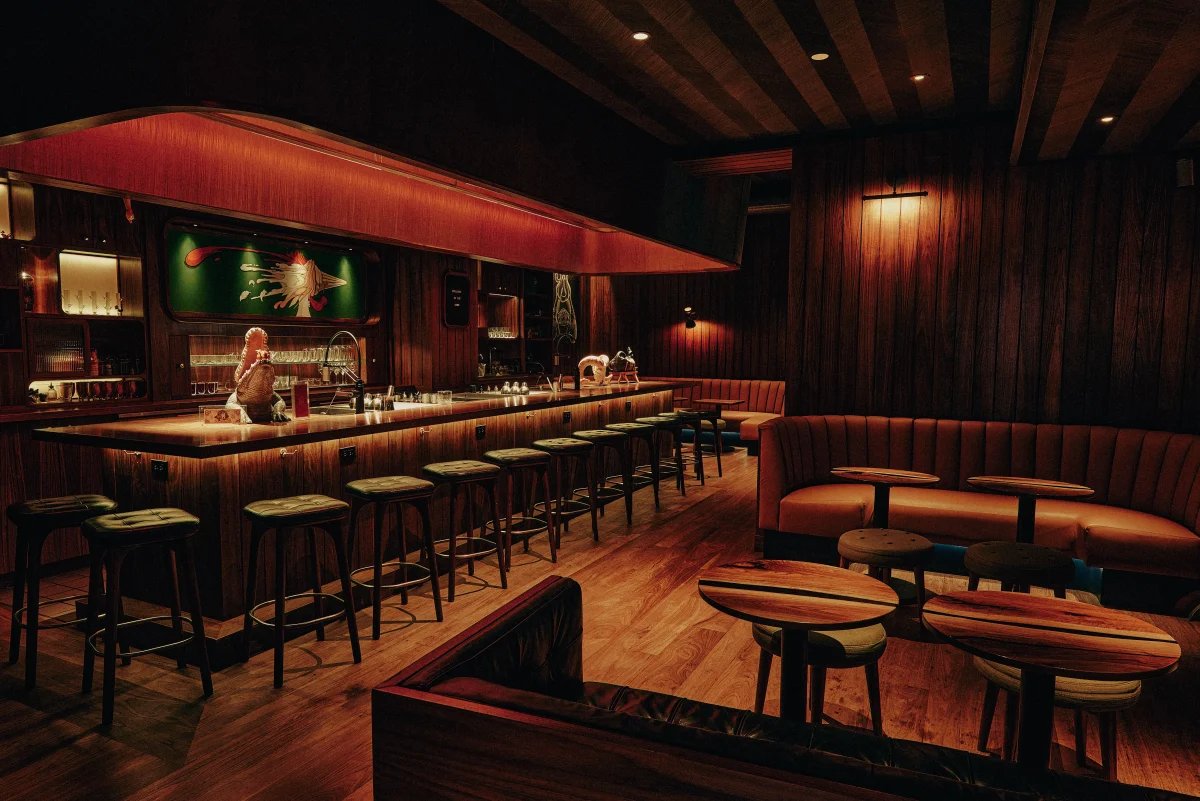
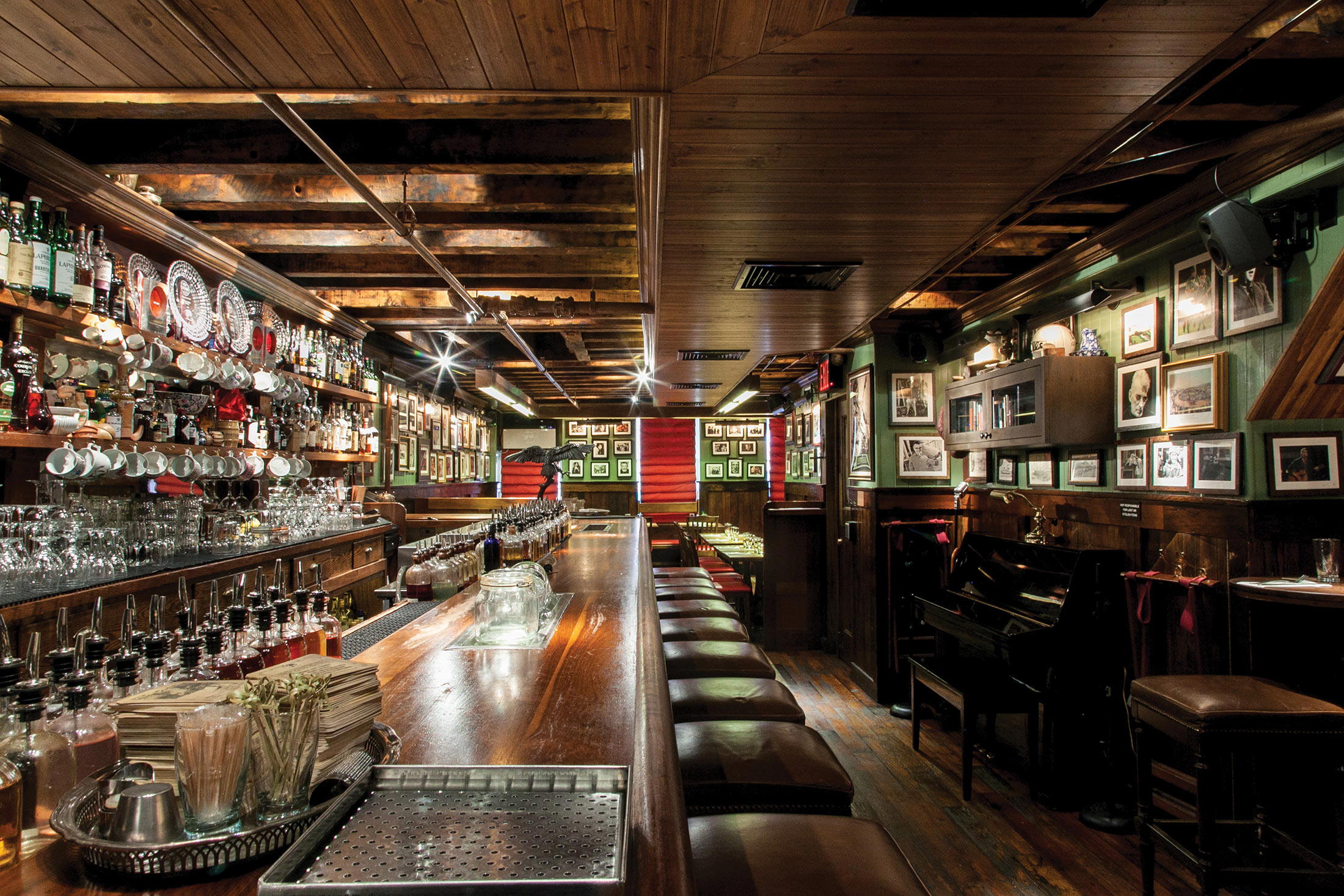
Cozy, dark, woody atmosphere with a speakeasy vibe, featuring a well-stocked bar and intimate seating.
Tags
Vibe
Best For
Experience
Format
At the Bar
- Bar Category
- Cocktail Bar
- Late Night
- Open Until 4am
- Music
- Jazz
- Live Music
- Yes
- Spirits Focus
- Rum, Bourbon, Mezcal
Signature Pours
- Mary Read
- Oh Calypso
Know before you go
Know Before You Go
- Getting there
- 210 Smith St, Brooklyn, NY 11201
Planning details
Location
Recognition and awards

Also consider
Also Consider
- Bar Rêve, Notable alternative
- Barely Disfigured, Notable alternative
- June, Notable alternative
- Wingbar, Notable alternative
- Sociale, Notable alternative
Bar context
How Clover Club compares with nearby cocktail options
Clover Club is the stronger choice when the night needs a polished Brooklyn cocktail room with a serious drinks focus and enough recognition to justify planning around it. Barely Disfigured is the more flexible Brooklyn alternative if the mood is looser and the booking pressure matters more than list prestige. For a repeat visitor, Clover Club is the better anchor; Barely Disfigured is the easier fallback.
June makes more sense when wine-bar energy and a neighborhood meal-adjacent night are the priority. Clover Club is better for a cocktail-first date or a small group that wants the drink list to lead. Sociale is better suited to a lighter, lower-stakes plan, while Clover Club asks for more intent and rewards guests who want a room built around cocktails rather than just a drink before dinner.
Wingbar is the value-minded move for casual groups that care more about ease and energy than cocktail-program depth. Bar Rêve sits outside the metro set, so treat it as a different-trip comparison rather than a same-night substitute. If the decision is New York only, Clover Club is the splurge-on-planning pick; Wingbar and Sociale are the practical backups.
Explore New York City
Around this place
Discover more on Pearl
Unlock the full Clover Club guide in Pearl, including awards, comparisons, FAQs, planning details, and nearby places.
Compare Clover Club
| Venue | Location | Awards |
|---|---|---|
| Clover Club | New York City | Top 500 Bars 2025 · #1492023 World's 50 North America's Best Bars · #462022 North America's 50 Best Bars · #432014 World's 50 Best Bars · #352013 World's 50 Best Bars · #312012 World's 50 Best Bars · #182011 World's 50 Best Bars · #282009 World's 50 Best Bars · #31 |
| Bar Rêve | Brooklyn | No published awards |
| Barely Disfigured | New York City | Pearl Recommended Bars |
| June | New York City | No published awards |
| Wingbar | New York City | No published awards |
| Sociale | New York City | No published awards |

How Clover Club New York City compares with similar nearby venues.
FAQ
Frequently Asked Questions
Is Clover Club good for groups?
Group suitability is worth confirming directly with the venue before planning around party size or seating. The record includes World's 50 Best Bars #35 in 2014 and Top 500 Bars Best Bars #149 in 2025. For another option to compare, consider Wingbar.
Is Clover Club good for a date?
It can be a strong candidate for a date if a smart casual New York City venue with recognized pedigree fits the plan. Do not assume specific seating, menu, or service details without checking directly. June is another venue to compare.
What's the crowd like at Clover Club?
The exact crowd is not described here. What is confirmed is the venue's recognition, including World's 50 Best North America's Best Bars #46 in 2023, along with a smart casual dress code. Barely Disfigured is another option to check.
Do I need a reservation at Clover Club?
Reservation requirements are worth confirming directly with the venue if your timing is fixed. Its recognition includes Top 500 Bars Best Bars #149 in 2025. Sociale is another option to check.