
Bar in New York City, United States
Claud
100ptsCellar-Driven Neighbourhood Dining
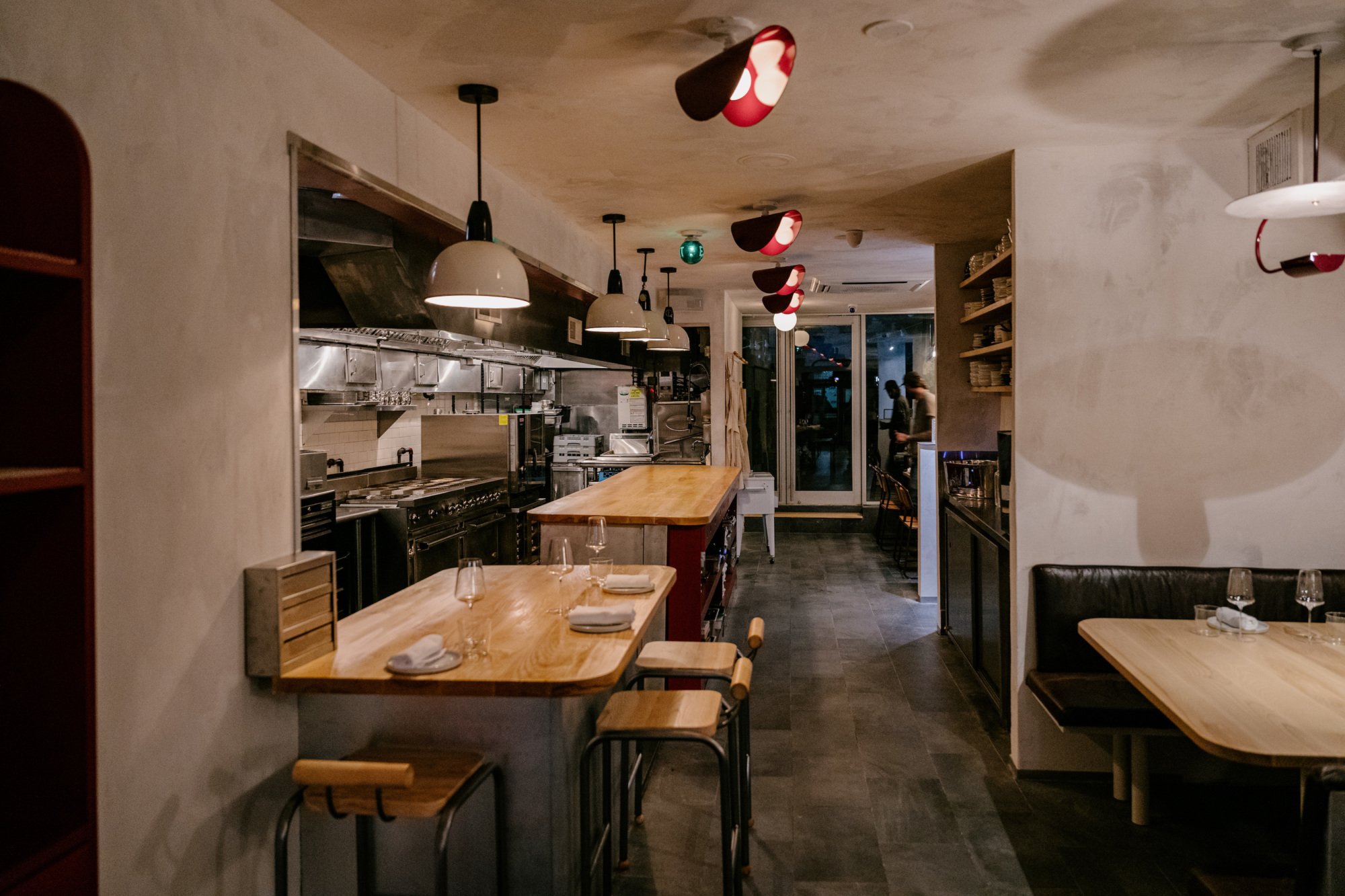
About Claud
Claud occupies a ground-floor address on East 10th Street in the East Village, positioning itself within a neighbourhood that has steadily matured from dive-bar territory into a serious destination for wine-forward dining and considered spirits programs. The room rewards those who arrive without a rigid agenda, and the back bar signals a curation depth that separates it from the casual wine-bar tier.
East Village, Grown Up
East 10th Street sits at the quieter southern edge of the East Village, a block where the neighbourhood's long transition from scrappy to considered feels most complete. The storefronts here lack the performative grit of St. Marks Place and the self-conscious polish of the West Village a few miles west. What they offer instead is a kind of earned calm — rooms where the fit-out cost was spent on bottles and produce rather than on a lighting designer's invoice. Claud, at number 90, reads as a product of exactly that sensibility.
New York's wine-bar-with-serious-food category has expanded substantially since the mid-2010s, driven by a generation of operators who trained in restaurant kitchens before deciding that the rigid tasting-menu format was less interesting than a shorter, rotational list eaten at the bar or a small table. That shift produced a recognisable format across the city: natural-leaning wine list, a menu that changes with market availability, a spirits selection treated with the same editorial attention as the cellar. Claud sits inside that tradition, at an address that gives it the neighbourhood credibility the format demands.
The Back Bar as Argument
In bars and restaurants where the spirits program is taken seriously, the back bar functions less as decoration and more as a position statement. The bottles that appear — and, more tellingly, the bottles that do not , communicate something about the operator's point of view: which distilleries they trust, which categories they consider worth depth, which trends they have chosen to ignore.
The East Village has historically been fertile ground for this kind of curation. Amor y Amargo, a few blocks north on East 6th Street, built its entire identity around bitters and amaro, turning a single category into a program deep enough to anchor a full evening. Angel's Share, in the neighbourhood's northern reaches, has maintained a Japanese whisky and spirits focus since the 1990s, long before that category became a fixture on every premium back bar in the city. These are venues that made an argument through their selection , and in doing so, trained a local audience to read the back bar as editorial content rather than inventory.
Claud enters that conversation from a wine-first position, which shapes how the spirits collection functions within the room. Rather than operating as the headline, the spirits here function as punctuation: the aperitif that frames the meal, the digestif that closes it, the glass that sits alongside rather than instead of the bottle on the table. That positioning reflects a broader European-influenced hospitality model that has taken hold in New York's more considered dining rooms over the past decade.
Where It Fits in New York's Drinking Geography
New York's cocktail and spirits scene has sorted itself into reasonably distinct tiers. At one end, high-volume hotel bars and rooftop programs move spirit-forward cocktails at scale. At the other, a smaller cohort of venues treats the spirits program with something closer to a sommelier's discipline , small allocations, seasonal rotations, producers selected for craft reasons rather than marketing budgets. Attaboy, in the Lower East Side, operates in that specialist register. Superbueno, in the East Village itself, brings a similar analytical rigour to agave spirits specifically.
Internationally, the same specialist model appears in bars as different in format as Kumiko in Chicago, where the Japanese spirits and liqueur program is structured around a tasting progression, or Bar Leather Apron in Honolulu, which applies a similar depth-over-breadth philosophy to its whisky selection. Domestically, ABV in San Francisco and Jewel of the South in New Orleans represent the same tendency: rooms where the spirits list rewards the guest who asks questions and is willing to be guided. Julep in Houston and Allegory in Washington, D.C. extend that pattern into their respective cities. Even further afield, The Parlour in Frankfurt on the Main demonstrates that this format , considered selection, hospitality-led service, editorial back bar , has become a recognisable international posture rather than a purely American phenomenon.
Claud's East Village address places it in a neighbourhood already home to several of these venues, which raises the competitive bar but also signals that the local audience is literate in what a considered program looks like. That audience does not need to be sold on the concept; it needs to be given a reason to choose one room over another.
The Room and the Format
Wine-bar-adjacent dining rooms in New York have converged on a set of format conventions that Claud shares: a relatively compact footprint, counter seating that allows visibility into the kitchen or the bar, lighting levels that sit below the restaurant average and above the cocktail-bar average. The effect is a room that functions across the evening , early for a glass and something small, later for a full progression through food and bottle.
The East Village address on East 10th Street gives Claud pedestrian proximity to the rest of the neighbourhood's dining corridor, which means it draws from both the local resident base and from downtown visitors who are spending an evening across multiple venues rather than committing to a single destination. That geographic reality shapes the format: the room needs to work for the guest staying two hours and the guest staying four.
Planning a Visit
The East Village is most easily reached via the L train to First or Third Avenue, or the 6 train to Astor Place. The neighbourhood's dining rooms tend to fill Thursday through Saturday by 7:30pm, and venues in this format , smaller rooms, no large-group infrastructure , generally do not hold space for long. Booking ahead for weekend evenings is advisable; midweek visits offer more flexibility.
| Venue | Neighbourhood | Format | Primary Focus |
|---|---|---|---|
| Claud | East Village | Wine bar / dining room | Wine-forward, spirits depth |
| Amor y Amargo | East Village | Specialist cocktail bar | Bitters and amaro |
| Angel's Share | East Village | Hidden-entry cocktail bar | Japanese spirits, classics |
| Attaboy | Lower East Side | No-menu cocktail bar | Guest-led, market-driven |
| Superbueno | East Village | Cocktail bar | Agave spirits |
For a broader orientation to the city's dining and drinking options, the EP Club New York City guide covers the full range of categories and neighbourhoods.
Frequently Asked Questions
What's the signature drink at Claud?
Claud operates in the wine-forward dining tradition of the East Village, which means the drinks program is built around the cellar rather than a single headline cocktail. The spirits selection functions as a complement to the wine list , aperitifs and digestifs that frame the meal rather than compete with the bottle on the table. Guests who want something specific should ask the team what has arrived recently; rooms in this format tend to rotate what they're pouring by the glass in response to what the wine and spirits buyers have brought in.
What should I know about Claud before I go?
Claud is a wine-bar-adjacent dining room on East 10th Street in the East Village, a neighbourhood that has developed a concentrated cluster of serious wine and spirits venues over the past decade. The format rewards guests who arrive without rigid expectations: the list changes, the menu moves with availability, and the service model is hospitality-led rather than scripted. Reservations are the sensible approach for weekend evenings.
Can I walk in to Claud?
Walk-ins depend heavily on the day and time. Like most small-format rooms in the East Village, Claud fills quickly on Thursday through Saturday evenings. Earlier sittings and midweek visits offer a better chance of securing a seat without a booking. The venue's compact footprint means that even a small surge in covers removes the option entirely, so checking availability in advance , particularly for groups of more than two , is the practical approach.
Who tends to like Claud most?
The East Village's wine-forward dining rooms attract a guest who already knows what a grower Champagne is and has opinions about natural wine, but who is equally comfortable being guided rather than directing the experience themselves. Claud fits that profile: it appeals to guests who treat the drinks list as seriously as the food, who prefer a room that feels earned rather than designed, and who would rather spend two hours at a counter with a good bottle than manage a formal tasting-menu progression.
Is Claud worth visiting?
For guests oriented toward wine and spirits depth in a neighbourhood-scale room, the East 10th Street address delivers what the East Village's better dining rooms have been refining for years: a considered list, a kitchen working with market availability, and a back bar that rewards the curious guest. The venue sits in a peer set , Amor y Amargo, Angel's Share, Attaboy nearby , that sets a high bar for specialist programming, which is itself a signal that the neighbourhood takes this format seriously.
Does Claud have a particular strength in any specific spirits category?
Claud's position within the East Village's wine-forward dining tradition suggests a spirits program oriented around European categories , amaro, vermouth, Cognac, and aged spirits that complement rather than compete with a cellar-driven list. The neighbourhood's existing specialist bars cover agave (Superbueno), bitters (Amor y Amargo), and Japanese whisky (Angel's Share) with considerable depth, which means Claud's back bar is more likely to occupy the digestif and aperitif register than to attempt a competing specialist focus. Guests with specific category interests are well-served by treating an evening in the East Village as a circuit across multiple rooms.
More bars in New York City
- (SUB)MERCER(SUB)MERCER occupies a basement address on Mercer Street in SoHo, positioning it as a deliberate destination rather than a drop-in. The subterranean format tends to keep ambient noise lower than street-level alternatives, making it a reasonable call for groups of four or more. Book ahead for weekends and confirm group capacity directly with the venue.
- 1 OR 81 OR 8 on DeKalb Avenue is a low-key Fort Greene bar that works best for two people on a weeknight when the room is quiet enough for conversation. Walk-ins are easy, no advance planning required. If a specialist cocktail program is your priority, Attaboy or Amor y Amargo offer more defined experiences — but for a neighbourhood drink without the fuss, this delivers.
- 230 Fifth Rooftop Bar230 Fifth is the easiest rooftop bar in Midtown to walk into, and the Empire State Building views justify the trip. The crowd skews groups and tourists, and the drinks are solid rather than craft-focused. Go early on a weekday for the best version of the experience; after 9 PM on weekends it tips firmly into party-group territory.
- 4 Charles Prime Rib4 Charles Prime Rib is a compact, reservation-required West Village dining room built around a focused prime rib format. It works well for dates and pairs but is too small for groups of four or more. Booking is easy relative to Manhattan peers, and the narrow menu signals a kitchen that executes one thing consistently well.
- 44 & X Hell's KitchenA low-key Hell's Kitchen neighborhood bar-restaurant that earns its place for easy weeknight dates and pre-theatre dinners. Booking is simple, the room is intimate enough for conversation, and there's no dress pressure. Not a cocktail destination, but a reliable, pressure-free option in Midtown West when you want comfort over spectacle.
- 58-22 Myrtle Ave58-22 Myrtle Ave is a low-key Ridgewood neighborhood spot that rewards return visits more than first impressions. Easy to get into, with no reservation headaches, it suits regulars looking for an unpretentious room rather than a structured cocktail program. If a strong drinks list or kitchen ambition matters to you, look to Attaboy or Amor y Amargo instead.
Related editorial
- Best Fine Dining Restaurants in ParisFrom three-Michelin-star icons to the next generation of Parisian chefs pushing boundaries, these are the restaurants that define fine dining in the world's culinary capital.
- Best Luxury Hotels in RomeFrom rooftop terraces overlooking ancient ruins to Michelin-starred hotel dining, these are the luxury hotels that make Rome unforgettable.
- Best Cocktail Bars in KyotoFrom sleek lounges to hidden speakeasies, Kyoto's cocktail scene blends Japanese precision with global influence in ways you won't find anywhere else.
Save or rate Claud on Pearl
Keep this venue in your Pearl passport, rate it after you visit, and track it alongside every other place you collect.