
Bar in New York City, United States
Bar Jamon
100ptsTaberna-Format Iberian Counter
About Bar Jamon
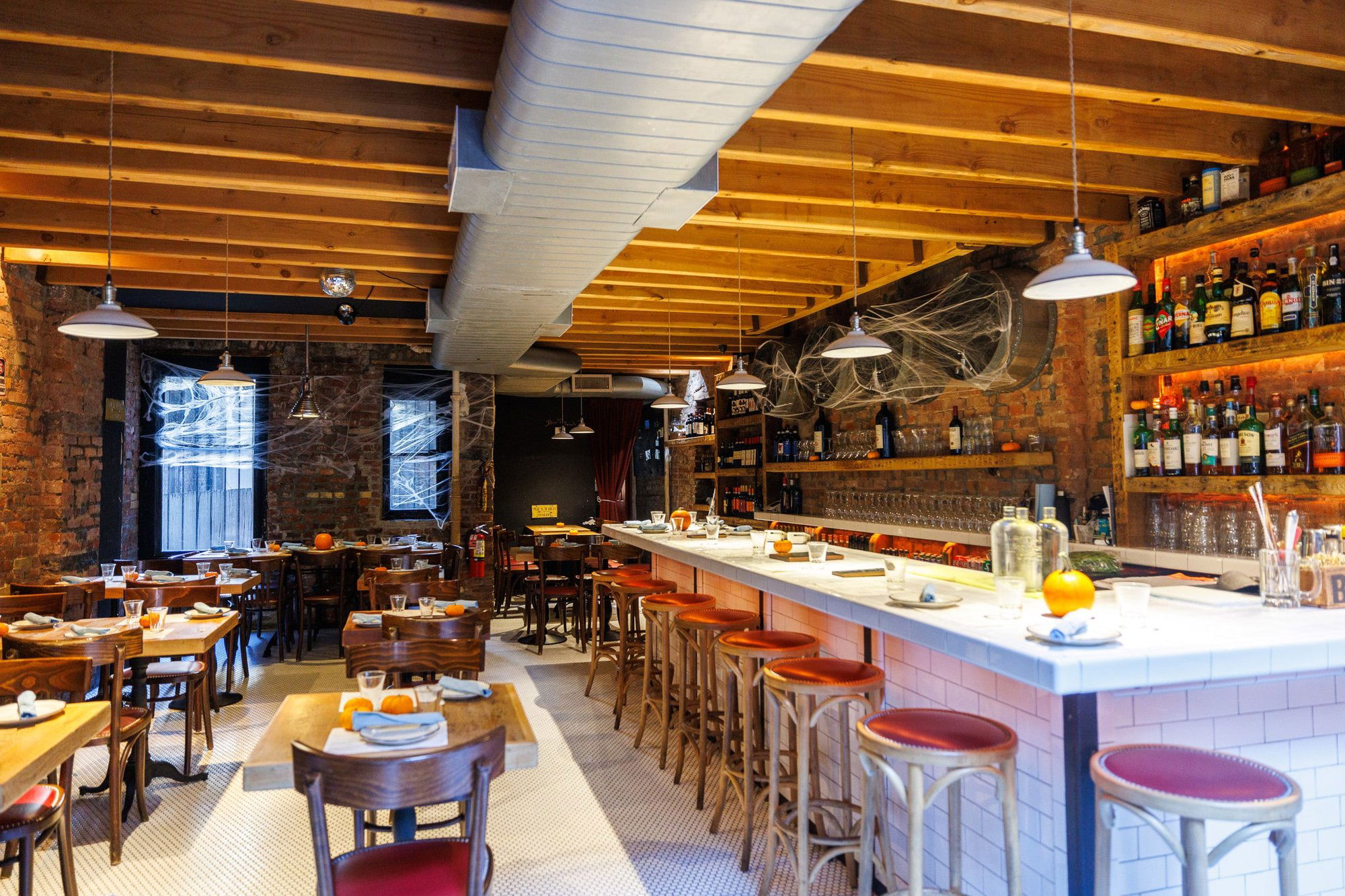
Bar Jamon at 125 E 17th St occupies a specific corner of New York's wine-and-small-plates scene, trading in Spanish-inflected hospitality where the back bar and cured provisions do the talking. The format is compact and intentional, closer to a Madrid taberna than a conventional New York bar. Check current hours and availability before visiting, as operating details are subject to change.
Where the Iberian Back Bar Meets the Flatiron Block
New York's Spanish drinking culture has never mapped neatly onto the city's broader bar taxonomy. While the cocktail-forward tier consolidated around technical programs and sourced spirits, a parallel strand of tapas-and-wine rooms developed a different vocabulary: cured jamón, fino sherries poured cold, and a back bar built less around flair than around the depth of what's on the shelf. Bar Jamon, at 125 E 17th Street in the Flatiron District, belongs to that second tradition. Its address alone — half a block from the original Casa Mono, its larger sibling — tells you something about how this corner of Manhattan thinks about Spanish hospitality: smaller rooms, less ceremony, more emphasis on what's in the glass and on the plate.
The Logic of a Curated Back Bar
The bar programs that have earned sustained credibility in New York tend to share a structural quality: the selection reflects a point of view, not an attempt to please everyone. Across the city, venues like Amor y Amargo have built their reputations on extreme editorial discipline , a menu so focused on bitters-forward drinks that the format itself becomes the argument. Angel's Share made a similar case for Japanese whisky and precision service inside a deliberately difficult-to-find room. What these programs have in common is that the back bar is a statement, not a default.
Bar Jamon operates on a related logic, oriented toward Iberian wine and spirits rather than American cocktail culture. The back bar here draws from Spanish and Portuguese traditions , sherries from the Marco de Jerez, regional wines from Galicia and the Basque country, the kind of category depth that signals a buyer who knows the source material. In the broader context of New York bars, this is a narrower thesis than most, which is precisely its value. You don't arrive at Bar Jamon uncertain about what the room is arguing for.
Flatiron as a Context for Spanish Hospitality
The Flatiron and Gramercy neighborhoods have supported a denser cluster of European-influenced rooms than most New York districts. The proximity of the Union Square Greenmarket, which draws chef-buyers from across the city, has historically made this corridor more ingredient-conscious than average. Spanish and Italian operators in particular found the area receptive to formats that center provisions , cured meats, cheese programs, wine lists built around small producers , over theatrical service or destination-driven menus.
That context matters for understanding Bar Jamon's format. The room is compact in the way that good Madrid tabernas are compact: not because the operators ran out of space, but because the format requires density. Standing at a narrow bar with a glass of manzanilla and a plate of jamón ibérico is a different experience than sitting at a restaurant table with a seven-course menu. The compression is the point. Elsewhere in the city, Superbueno has applied a similarly focused format to a Latin American drinks program, and the success of both suggests that New York drinkers have developed an appetite for rooms with strong editorial commitments rather than broad coverage.
Spirits Depth and the Back Bar as Argument
Across the American bar scene, the venues that generate lasting conversation are typically those whose back bars function as arguments about a category. Kumiko in Chicago built its program around Japanese spirits and liqueurs with a specificity that resisted easy comparison. Bar Leather Apron in Honolulu staked its reputation on Japanese whisky depth. Jewel of the South in New Orleans constructed its identity around historical cocktail research and the spirits that research required. ABV in San Francisco oriented itself around craft spirits before the category had mainstream recognition. What these rooms share is a willingness to make the selection itself the editorial statement, rather than deferring to a default spirits matrix.
Bar Jamon's version of that commitment runs through the Iberian wine and sherry tradition. For drinkers accustomed to approaching a bar as a cocktail-first room, the emphasis here can require adjustment , but that adjustment is informative. Sherry in particular has had a complicated relationship with the American market. For decades it was understood primarily as a sweet, cheap product with limited application. The fino, manzanilla, palo cortado, and amontillado styles that make up serious sherry service represent a fundamentally different argument: dry, complex, often savory wines with the kind of structural range that rewards attention. A room that presents those categories seriously is doing something that most New York bars do not.
For comparison, Allegory in Washington, D.C. and Attaboy NYC have each made their marks through curatorial intelligence applied to cocktail programs, while The Parlour in Frankfurt and Julep in Houston demonstrate how a focused spirits thesis translates across geographies and category traditions. The lesson across all of them is consistent: the bar that knows what it is tends to outperform the bar that tries to be everything.
Who This Room Is For
Bar Jamon is not a destination for someone who wants a classic New York cocktail experience. The room rewards drinkers who approach the Iberian wine and spirits tradition with some prior orientation, or at minimum a willingness to take direction from whoever is behind the bar. It also rewards the kind of eating that happens alongside drinking rather than before or after it , jamón, cheese, small plates that function as counterweights to sherry rather than as courses in a structured meal.
For anyone working through our full New York City restaurants guide, Bar Jamon sits in a specific tier: not a cocktail bar, not a wine bar in the conventional sense, but a room with a distinct Iberian identity that earns its place through category depth and format discipline rather than scale or spectacle.
Planning Your Visit
Address: 125 E 17th St, New York, NY 10003. Reservations: Walk-in format typical of the taberna model; confirm current policy directly with the venue, as details are not publicly confirmed at time of writing. Budget: Pricing is not publicly listed; expect a mid-range spend consistent with a Spanish wine-and-provisions room in Flatiron. Hours: Verify current operating hours before visiting, as these are subject to change. Getting there: The 14th Street-Union Square transit hub (4, 5, 6, L, N, Q, R, W lines) is within easy walking distance of the E 17th St address.
Frequently Asked Questions
What's the leading thing to order at Bar Jamon?
The room's identity is built around Iberian provisions and wine rather than a cocktail program, so the most coherent order is one that reflects that. Sherry , particularly dry styles like fino or manzanilla , paired with jamón ibérico is the format the room is designed around. That combination represents the core argument of what Bar Jamon does, and ordering anything that bypasses it misses the point of the room.
What's Bar Jamon leading at?
Among Spanish-inflected rooms in New York, Bar Jamon's strength is format clarity. It operates in a specific Iberian register , provisions, wine, sherry , with enough category depth to satisfy drinkers who know the source material. In a city where most bars default to a broad spirits matrix, the specificity of this program is its distinguishing quality. It is not the place to come for an elaborate cocktail menu, but for the right drinker, it offers something that very few New York rooms do.
Should I book Bar Jamon in advance?
Bar Jamon's compact format, consistent with the taberna model, tends to fill during peak evening hours on weekends. Walk-in access is generally part of how this type of room operates, but the size of the space means timing matters. Arriving early on a weekend evening or during off-peak weekday hours gives you a better chance of securing a spot without a wait. Confirm current booking policy directly, as no formal reservation system is publicly listed.
Is Bar Jamon comparable to other Spanish wine bars in New York?
Spanish wine rooms in New York occupy a narrow tier, and Bar Jamon's connection to the Casa Mono operation gives it a culinary credibility that more casual tapas bars do not share. The Iberian wine and sherry focus places it in a peer set that values category depth over volume, similar in orientation (if different in format) to the sherry-forward programs that have gained ground in cities like San Francisco and Chicago over the past decade. For New York drinkers building familiarity with Spanish wine culture, it functions as a useful reference point.
More bars in New York City
- (SUB)MERCER(SUB)MERCER occupies a basement address on Mercer Street in SoHo, positioning it as a deliberate destination rather than a drop-in. The subterranean format tends to keep ambient noise lower than street-level alternatives, making it a reasonable call for groups of four or more. Book ahead for weekends and confirm group capacity directly with the venue.
- 1 OR 81 OR 8 on DeKalb Avenue is a low-key Fort Greene bar that works best for two people on a weeknight when the room is quiet enough for conversation. Walk-ins are easy, no advance planning required. If a specialist cocktail program is your priority, Attaboy or Amor y Amargo offer more defined experiences — but for a neighbourhood drink without the fuss, this delivers.
- 230 Fifth Rooftop Bar230 Fifth is the easiest rooftop bar in Midtown to walk into, and the Empire State Building views justify the trip. The crowd skews groups and tourists, and the drinks are solid rather than craft-focused. Go early on a weekday for the best version of the experience; after 9 PM on weekends it tips firmly into party-group territory.
- 4 Charles Prime Rib4 Charles Prime Rib is a compact, reservation-required West Village dining room built around a focused prime rib format. It works well for dates and pairs but is too small for groups of four or more. Booking is easy relative to Manhattan peers, and the narrow menu signals a kitchen that executes one thing consistently well.
- 44 & X Hell's KitchenA low-key Hell's Kitchen neighborhood bar-restaurant that earns its place for easy weeknight dates and pre-theatre dinners. Booking is simple, the room is intimate enough for conversation, and there's no dress pressure. Not a cocktail destination, but a reliable, pressure-free option in Midtown West when you want comfort over spectacle.
- 58-22 Myrtle Ave58-22 Myrtle Ave is a low-key Ridgewood neighborhood spot that rewards return visits more than first impressions. Easy to get into, with no reservation headaches, it suits regulars looking for an unpretentious room rather than a structured cocktail program. If a strong drinks list or kitchen ambition matters to you, look to Attaboy or Amor y Amargo instead.
Related editorial
- Best Fine Dining Restaurants in ParisFrom three-Michelin-star icons to the next generation of Parisian chefs pushing boundaries, these are the restaurants that define fine dining in the world's culinary capital.
- Best Luxury Hotels in RomeFrom rooftop terraces overlooking ancient ruins to Michelin-starred hotel dining, these are the luxury hotels that make Rome unforgettable.
- Best Cocktail Bars in KyotoFrom sleek lounges to hidden speakeasies, Kyoto's cocktail scene blends Japanese precision with global influence in ways you won't find anywhere else.
Save or rate Bar Jamon on Pearl
Keep this venue in your Pearl passport, rate it after you visit, and track it alongside every other place you collect.