
Winery in Zwettl, Austria
Mühlbauer Distillery
250ptsGranite-Terroir Distilling
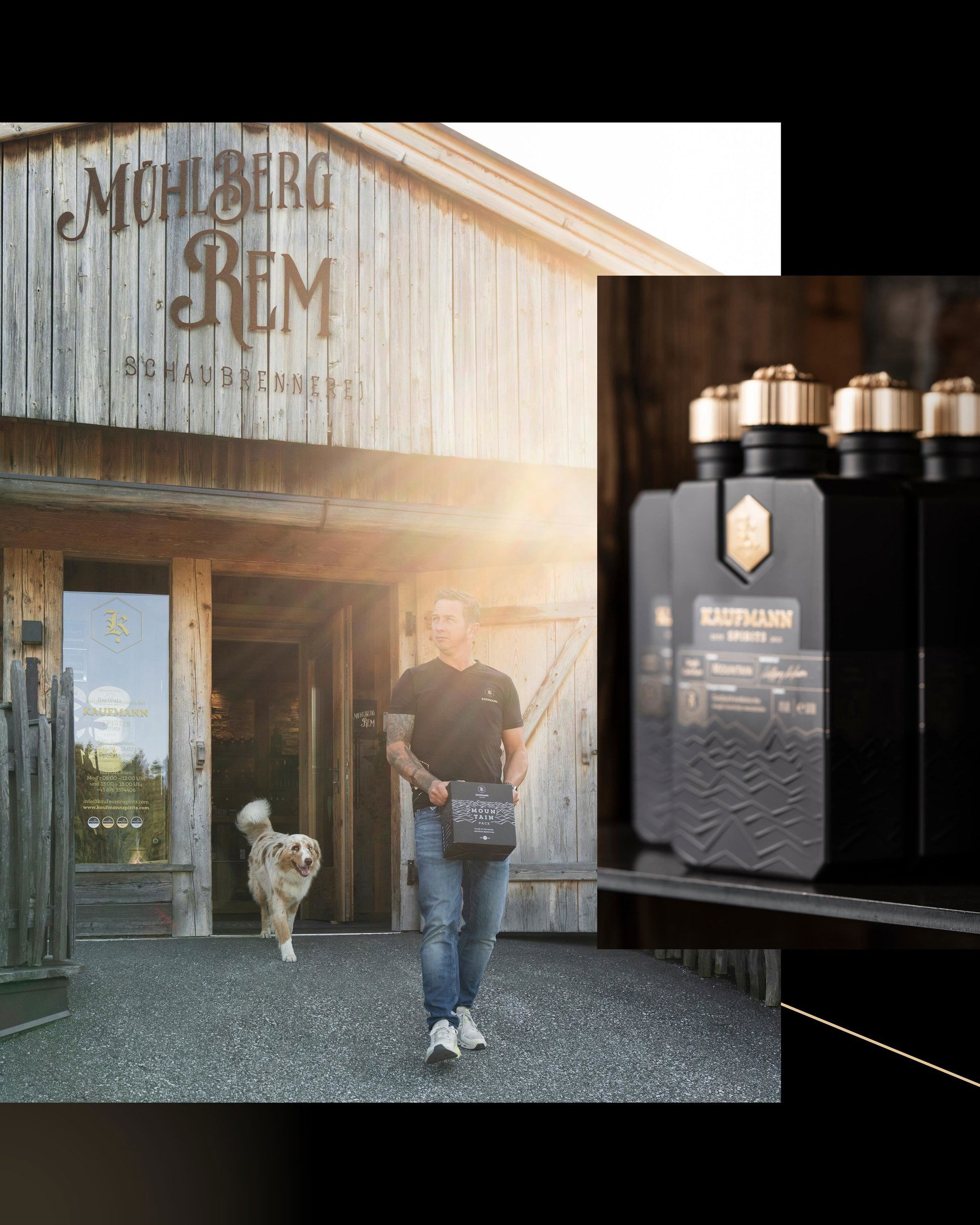
About Mühlbauer Distillery
Mühlbauer Distillery operates out of Zwettl in Lower Austria's Waldviertel, a region better known for its granite soils and rye cultivation than for the wine corridors to its south. Holder of a Pearl 1 Star Prestige award in 2025, the distillery places itself in Austria's growing tier of terroir-focused spirits producers, where raw material origin carries as much weight as technique.
Waldviertel as Raw Material: The Region Behind the Spirit
Lower Austria's Waldviertel sits at an altitude and latitude that most Austrian wine producers would consider marginal. The granite-heavy soils, cool continental temperatures, and short growing seasons that define the plateau around Zwettl have historically made it better suited to rye, potatoes, and forest cultivation than viticulture. For the distillers who work here, that is not a limitation — it is a source. The crops that thrive under these conditions carry a mineral austerity and starch density that translate directly into spirit character, producing distillates with a profile that warmer, richer agricultural zones cannot replicate.
Mühlbauer Distillery works within this tradition. Its 2025 Pearl 1 Star Prestige award places it in the recognised tier of Austrian spirits producers whose output is assessed not just on technical execution but on the coherence between place and product. That recognition matters in a country where the distilling category has matured considerably over the past two decades, with serious producers operating across Styria, Burgenland, and the northern alpine zones. The Waldviertel contingent occupies a distinct niche within that broader Austrian picture — cooler, starker, and rooted in grain and fruit rather than wine-adjacent grape distillation.
How Waldviertel Granite Shapes the Distillery's Context
To understand what Mühlbauer Distillery represents, it helps to understand what Zwettl's terroir demands of its producers. Granite soils drain quickly and retain little heat, which means the crops grown on them mature slowly and accumulate flavour compounds differently than those grown in the loess or limestone soils of the Wachau or Kamptal valleys to the south. Austrian wine estates like Weingut Bründlmayer in Langenlois or Weingut Emmerich Knoll in Dürnstein build their reputations around the textural precision that cooler-climate stone soils impart to Grüner Veltliner and Riesling. Distillers working the Waldviertel plateau are applying a comparable logic to a different set of raw materials.
This is not a rhetorical parallel. The terroir-expression argument in spirits has moved well beyond marketing language in Austria. Producers who can demonstrate traceability from a specific region's agricultural output to the character in the glass are increasingly assessed by the same critical vocabulary used for wine. That the Austrian spirits scene now has enough structure to support a tiered recognition system , producing results like Mühlbauer's 2025 award , reflects how seriously that argument has been taken in recent years.
The Austrian Distilling Tier: Where Mühlbauer Sits
Austria's premium distillery category is not a single homogenous group. It splits roughly along geographic and raw-material lines. Burgenland producers, some operating alongside wine estates such as Weingut Pittnauer in Gols or Weingut Kracher in Illmitz, often work with fruit and grape-based distillates shaped by pannonian warmth. Styrian producers, including the wine-and-spirits hybrid model seen at Weingut Wohlmuth in Kitzeck, work within a tradition of orchard-forward distillation that reflects their cooler hillside microclimates. The Waldviertel sits apart from both, with a rougher agricultural character and a colder continental influence that pushes producers toward grain-based and strong root-crop distillates.
Within Austria's recognised distillery network, comparison venues include 1310 Spirit of the Country Distillery in Sierning, A. Batch Distillery in Bergheim, and Abfindungsbrennerei Franz in Leithaprodersdorf , each operating from a distinct regional base and raw material set. The Austrian spirits scene has also produced internationally referenced producers such as Weingut Scheiblhofer Distillery in Andau, which demonstrates the breadth of the category. Mühlbauer's Pearl 1 Star Prestige recognition in 2025 places it in that tier of acknowledged producers rather than in the broader craft-spirits field where quality signals are more diffuse.
For additional context on European distilling traditions across different regional frames, the 1404 Manufacturing Distillery in Sankt Peter-Freienstein, the 1516 Brewing Company Distillery in Vienna, and internationally, Aberlour in Aberlour and Accendo Cellars in St. Helena show how the terroir-expression argument functions across different product categories and geographies. The common thread in the premium tier is consistent: origin specificity, traceable raw materials, and production choices that preserve rather than mask regional character.
Approaching the Distillery: What to Expect in Zwettl
Zwettl is not a hospitality destination in the same way that Krems or Dürnstein attracts day-trippers from Vienna along the Wachau. The town sits deeper into the Waldviertel forest plateau, where the pace is slower and the tourism infrastructure is oriented toward the region's Cistercian monastery, its reservoir, and the quiet agricultural landscape rather than toward wine tourism trails. Visiting Mühlbauer Distillery requires intentionality , this is a working producer in a working rural town, not a purpose-built visitor experience set up to receive tour groups off a highway exit. That distinction is worth holding when planning a visit.
Because specific visiting hours, booking requirements, and tour formats are not confirmed in the available record, visitors should approach contact through the distillery directly before making a dedicated journey from Vienna, which sits roughly 100 kilometres to the southeast. The Waldviertel is accessible by train from Vienna's Franz-Josefs-Bahnhof via Gmünd, though the final approach to Zwettl itself benefits from a car. Pairing a visit here with the broader Waldviertel circuit , the monastery, the reservoir landscape, the regional markets , makes more practical sense than treating it as a standalone destination from the capital.
Peer Context: How Recognition Signals Value
The Pearl 1 Star Prestige designation Mühlbauer received in 2025 belongs to a recognition framework that assesses spirits producers across production quality, regional character, and consistency. In a market where craft distillery branding has outpaced quality differentiation in some segments, formal recognition of this kind provides a calibration point. It positions Mühlbauer above the general craft category without placing it in the ultra-premium export tier occupied by producers with decades of international distribution history. For a visitor comparing options across Weingut Heinrich Hartl in Oberwaltersdorf and other Lower Austrian producers, the award is a useful signal that quality discipline is present at Mühlbauer even when detailed production data is not publicly available.
For a fuller picture of what Lower Austria and the surrounding regions offer across wine and spirits production, our full Zwettl restaurants and producers guide maps the Waldviertel context with broader regional coverage.
Planning Your Visit
Given the rural position of Zwettl and the limited publicly available detail on visitor hours and booking, a direct approach to the distillery before travelling is advisable. The Waldviertel is leading visited in late summer through early autumn, when the regional harvest context is most active and the landscape is at its most readable as an agricultural terroir. Spring visits are quieter and cooler, reflecting the austerity of the granite plateau more honestly than the compressed warmth of a July afternoon. Either season rewards the visitor who is coming specifically to understand how this corner of Lower Austria produces spirits that carry a distinct regional signature , which is, in the end, the only good reason to travel this far into the forest.
Frequently Asked Questions
What is the general vibe at Mühlbauer Distillery?
Mühlbauer operates from Zwettl, a town on the Waldviertel granite plateau in Lower Austria , a setting that is rural, deliberate, and oriented toward production rather than hospitality theatre. The distillery holds a Pearl 1 Star Prestige award for 2025, which places it in Austria's recognised tier of serious spirits producers. Visitors should expect a working-producer environment rather than a visitor-centre experience, and should contact the distillery directly to confirm what access is available.
What is the signature bottle at Mühlbauer Distillery?
Specific product details are not available in the public record at this time. What the 2025 Pearl 1 Star Prestige recognition does confirm is that the distillery's output meets a formal quality benchmark within the Austrian spirits assessment framework. For a producer in the Waldviertel, the regional raw materials , rye, root crops, and orchard fruit grown in granite-soil, cool-continental conditions , typically define the character of the distillate more than any single format choice. Contacting the distillery directly will provide current product availability.
What should I know before visiting Mühlbauer Distillery?
Zwettl is approximately 100 kilometres northwest of Vienna and is more practical to reach by car than by public transport for the final leg of the journey. The distillery's visiting hours and booking requirements are not confirmed in the available record, so advance contact is necessary before planning a dedicated trip. The Pearl 1 Star Prestige award (2025) is the clearest quality signal available publicly. Pairing the visit with Zwettl's Cistercian monastery and the broader Waldviertel landscape gives the trip more structural depth than the distillery alone would support.
Related editorial
- Best Fine Dining Restaurants in ParisFrom three-Michelin-star icons to the next generation of Parisian chefs pushing boundaries, these are the restaurants that define fine dining in the world's culinary capital.
- Best Luxury Hotels in RomeFrom rooftop terraces overlooking ancient ruins to Michelin-starred hotel dining, these are the luxury hotels that make Rome unforgettable.
- Best Cocktail Bars in KyotoFrom sleek lounges to hidden speakeasies, Kyoto's cocktail scene blends Japanese precision with global influence in ways you won't find anywhere else.
Save or rate Mühlbauer Distillery on Pearl
Keep this venue in your Pearl passport, rate it after you visit, and track it alongside every other place you collect.