
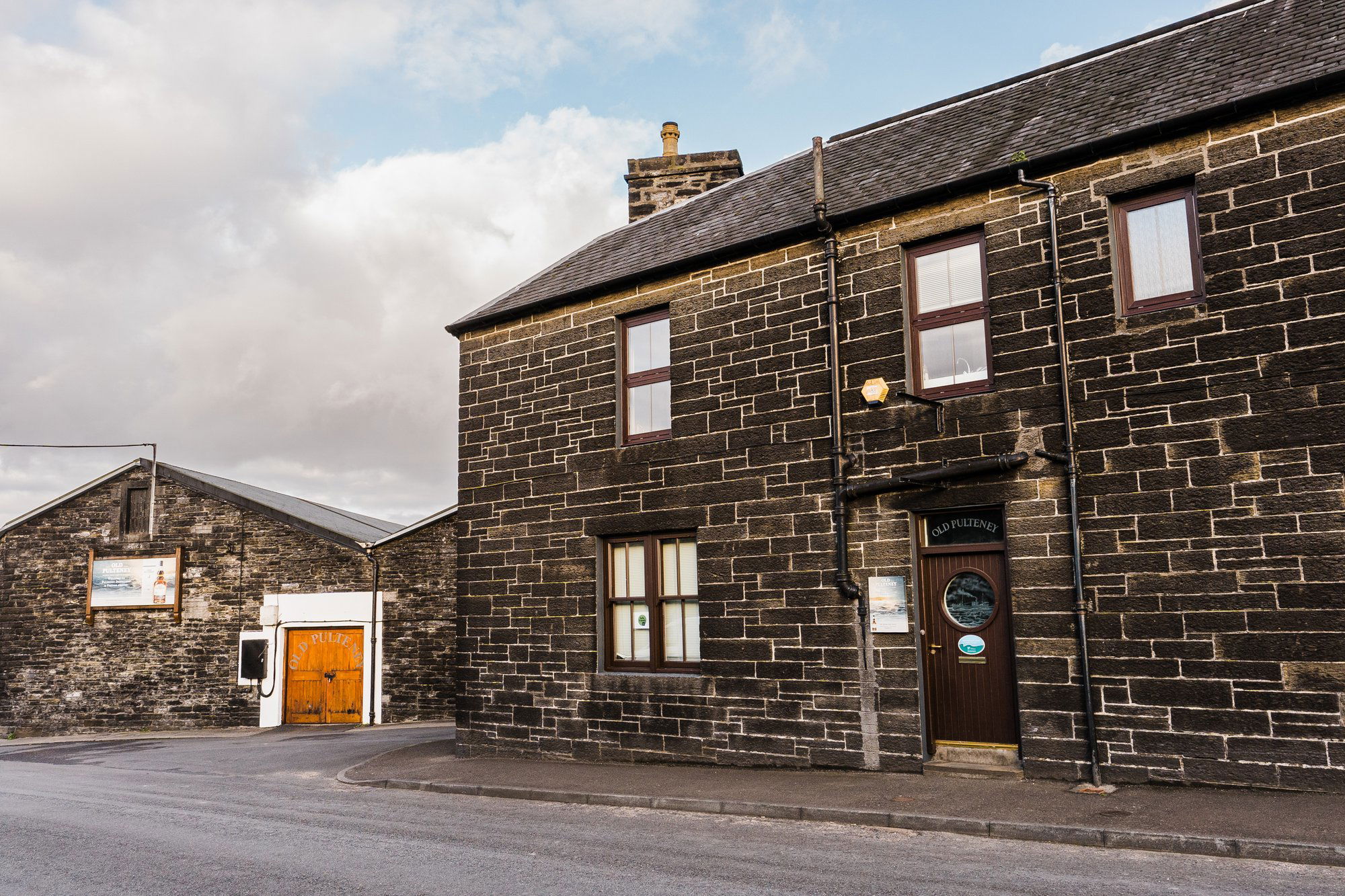
Winery in Wick, United Kingdom
Old Pulteney
750ptsNorth Sea Coastal Distilling

About Old Pulteney
Old Pulteney sits at the northern edge of Scotland's distilling map, in Wick on the Caithness coast, where the North Sea climate leaves a traceable mark on every cask matured here. Holder of a Pearl 3 Star Prestige award in 2025, it represents one of the most geographically distinct expressions in Highland whisky. The distillery on Huddart Street is the logical starting point for any serious exploration of Scotland's far north.
The North Sea at the Bottom of the Glass
Scotland's distilling geography tends to concentrate in the well-trodden corridors of Speyside and Islay, where visitor infrastructure is polished and the names are familiar from decades of global marketing. Caithness sits well outside that corridor. Wick, the largest town in the county, sits at roughly 58.4 degrees north, making Old Pulteney one of the most northerly distilleries on the Scottish mainland. That position is not incidental to the whisky. Maritime climate, persistent North Sea wind, and the particular quality of Atlantic-influenced air at this latitude all bear on the maturation conditions that shape what ends up in the bottle. When critics and collectors speak about terroir in Scotch whisky, Caithness is among the more compelling cases because the environmental argument is relatively easy to trace.
This is the framing that places Old Pulteney in a distinct competitive set. Comparable coastal expressions from the Highland north tend to operate in a niche where salinity, waxiness, and a drier, more austere profile separate them from the honeyed fruit registers of mid-Speyside. Clynelish Distillery in Brora, roughly 60 kilometres to the southwest along the A9, is the closest geographic peer and shares some of that coastal waxy character, though the two houses resolve differently in the glass. Balblair Distillery in Edderton offers another north Highland reference point, more orchard-fruit driven but similarly positioned outside the mainstream Speyside conversation. Old Pulteney occupies its own place in that northern tier.
Wick as a Whisky Town
Wick's association with whisky production runs deep. The town was, in the nineteenth century, a significant herring fishing port, and the distillery was established in 1826 to serve what was then a busy working population. That industrial and maritime history is embedded in how the distillery presents itself and in why the character of the spirit carries saltier, brine-touched registers that reviewers have consistently noted. Understanding this context matters for visitors, because Wick is not a tourist-polished destination in the way that, say, Dufftown or Craigellachie functions for Speyside travellers. It takes commitment to get here: the town sits beyond Inverness on routes that require either a long drive on the A9 or a connecting flight. That relative inaccessibility is part of what keeps the experience away from the high-volume visitor patterns that have reshaped distilleries further south.
For those planning the journey, Wick sits approximately 105 kilometres north of Inverness by road, and Wick Airport operates limited connections to Edinburgh and Inverness. The distillery address on Huddart Street places it within the town itself, which is more urban and functional in character than the open glen settings common to Speyside. The surrounding landscape is flat, windswept Caithness moorland, historically flagstone country rather than forest, and the quality of light here in summer has a particular northern bleakness that is worth factoring into timing. Visiting in late spring through early autumn gives the leading conditions for the coastal walk context that many visitors pair with the distillery stop. For the broader north Scotland circuit, pairing Old Pulteney with Dornoch Distillery to the southwest makes geographic sense.
A 2025 Pearl 3 Star Prestige: What the Recognition Signals
Old Pulteney's Pearl 3 Star Prestige award in 2025 positions it within a tier of distilleries recognised for production quality and consistency at a high level. Within the broader Scottish distilling peer set, this places the house alongside operations that have moved beyond regional curiosity status into the range where allocation-conscious buyers and collectors track releases. The Highland north has historically been underweighted in prestige recognition relative to Islay and Speyside, so the award carries additional weight as a signal of quality from a part of the map that rewards patient attention.
Across Scotland's northern distilling circuit, the award landscape is genuinely competitive. Houses like Ardnahoe in Port Askaig on Islay represent a newer wave of recognized production, while established names such as Aberlour in Aberlour anchor the Speyside prestige tier. Old Pulteney's recognition in 2025 puts it in conversation with those houses on merit grounds rather than geographic familiarity. For a full view of what EP Club recognises across Scottish distilling, our full Wick restaurants guide maps the wider picture.
Terroir Expression: How Caithness Registers in the Spirit
The terroir argument in Scotch whisky is contested in ways that it is not in viticulture, partly because the role of barley provenance, water source, and cask policy all complicate a clean environmental reading. That said, the case for coastal influence at Old Pulteney is among the more defensible in the category. The distillery sits close enough to the North Sea that prevailing winds off the water affect warehouse conditions year-round. Maturation in maritime air, where salt content is measurably refined relative to inland sites, produces progressive changes in cask interaction that reviewers and distillers in this geographic cluster consistently link to the saline, waxy registers the spirit is known for.
Compared to the fruiter, more approachable registers of Lowland producers like Auchentoshan Distillery in Clydebank or the sweeter, heavier profile associated with Bladnoch Distillery in Bladnoch, Old Pulteney's coastal north Highland positioning produces something drier and more austere at its core. That austerity is not a flaw; it is the point. The spirit rewards attention in the way that high-acid, mineral-driven white wines do: it is built for context and comparison rather than immediate, uncomplicated pleasure. Within that structural category, it sits closer to Glen Garioch Distillery in Oldmeldrum in terms of character register than to the richer, more sherry-inflected houses of Speyside.
What to Taste and How to Approach the Range
The core range at Old Pulteney spans age statements that reflect how maturation in this climate affects oak extraction over time. Younger expressions carry the maritime character most directly, with a briny, slightly waxy leading note that distinguishes them within Highland production. Older age statements tend to show more oak integration and complexity, though the coastal signature remains traceable through extended maturation in a way that genuinely differentiates this house from inland peers. For a first encounter with the range, the 12-year expression is the standard reference point in trade contexts; it is widely available and serves as the clearest introduction to the coastal terroir argument without the scarcity friction of limited releases.
For collectors building a northern Scotland comparison set, pairing Old Pulteney releases with expressions from Cardhu in Knockando, Deanston in Deanston, or Dunphail Distillery in Dunphail builds a geographic argument about how latitude and coastal proximity shape spirit character across the Highland and Speyside zones. For those whose reference points sit outside Scotland entirely, Glen Scotia in Campbeltown offers the closest analogous coastal maritime profile in a different Scottish region, and the comparison clarifies what is specifically Caithness about Old Pulteney's expression versus what is broadly coastal-Scottish.
Planning the Visit
Old Pulteney is located at Huddart Street, Wick KW1 5BA. The distillery sits within Wick town, which makes it accessible on foot from accommodation in the town centre. Given the limited hospitality infrastructure in Wick relative to the more visitor-developed distillery regions, planning the trip as part of a broader north Scotland circuit makes practical sense. Inverness serves as the most logical base for multi-day touring, with Old Pulteney positioned as a half-day or full-day northern extension. The drive north on the A9 and A99 takes roughly two hours from Inverness, and the road quality and scenery of the Caithness coastal route are themselves worth factoring into the itinerary as context for understanding why this is genuinely remote distilling territory. For international visitors, flights to Inverness Airport connect to major UK hubs, with onward connections to Wick Airport available for those prioritising minimal driving. The 2025 Pearl 3 Star Prestige recognition makes this worth the logistics for anyone whose interest in Scotch extends to geographic and terroir-driven differentiation rather than label familiarity alone. For additional context on what the wider area offers, see our full Wick guide.
Frequently Asked Questions
How would you describe the overall feel of Old Pulteney?
Old Pulteney sits in a working northern town rather than a scenic glen, which gives it a character that is functional and historically grounded rather than visitor-curated. Wick is a real place with an industrial past, and the distillery's presence there reflects that. The 2025 Pearl 3 Star Prestige places it in a serious production tier, but the experience is less polished than the major Speyside visitor centres and more rewarding for it if you are looking for a northern Scottish distillery that feels connected to its actual setting. Expect maritime light, modest surroundings, and a spirit whose quality is earned through climate and craft rather than marketing infrastructure. For international visitors considering the north Scotland distillery circuit alongside broader European producer visits, references like Accendo Cellars in St. Helena or Achaia Clauss in Patras illustrate how place-specific production credentials translate across categories.
What should I taste at Old Pulteney?
The core range is the place to start. The 12-year expression is the established reference within the house style: coastal, slightly waxy, drier than most Highland peers, and a reliable marker of what north Caithness maturation produces. The 2025 Pearl 3 Star Prestige recognition signals consistent quality at the upper end of the range, so older age statements are worth the step-up if you are building a comparison set across northern Scottish distillers. There is no winemaker in the conventional sense here, and the spirit does not fit a Speyside template; approach it as you would any terroir-expressive producer where the environment, not the house style alone, is doing meaningful work.
Related editorial
- Best Fine Dining Restaurants in ParisFrom three-Michelin-star icons to the next generation of Parisian chefs pushing boundaries, these are the restaurants that define fine dining in the world's culinary capital.
- Best Luxury Hotels in RomeFrom rooftop terraces overlooking ancient ruins to Michelin-starred hotel dining, these are the luxury hotels that make Rome unforgettable.
- Best Cocktail Bars in KyotoFrom sleek lounges to hidden speakeasies, Kyoto's cocktail scene blends Japanese precision with global influence in ways you won't find anywhere else.
Save or rate Old Pulteney on Pearl
Keep this venue in your Pearl passport, rate it after you visit, and track it alongside every other place you collect.
