

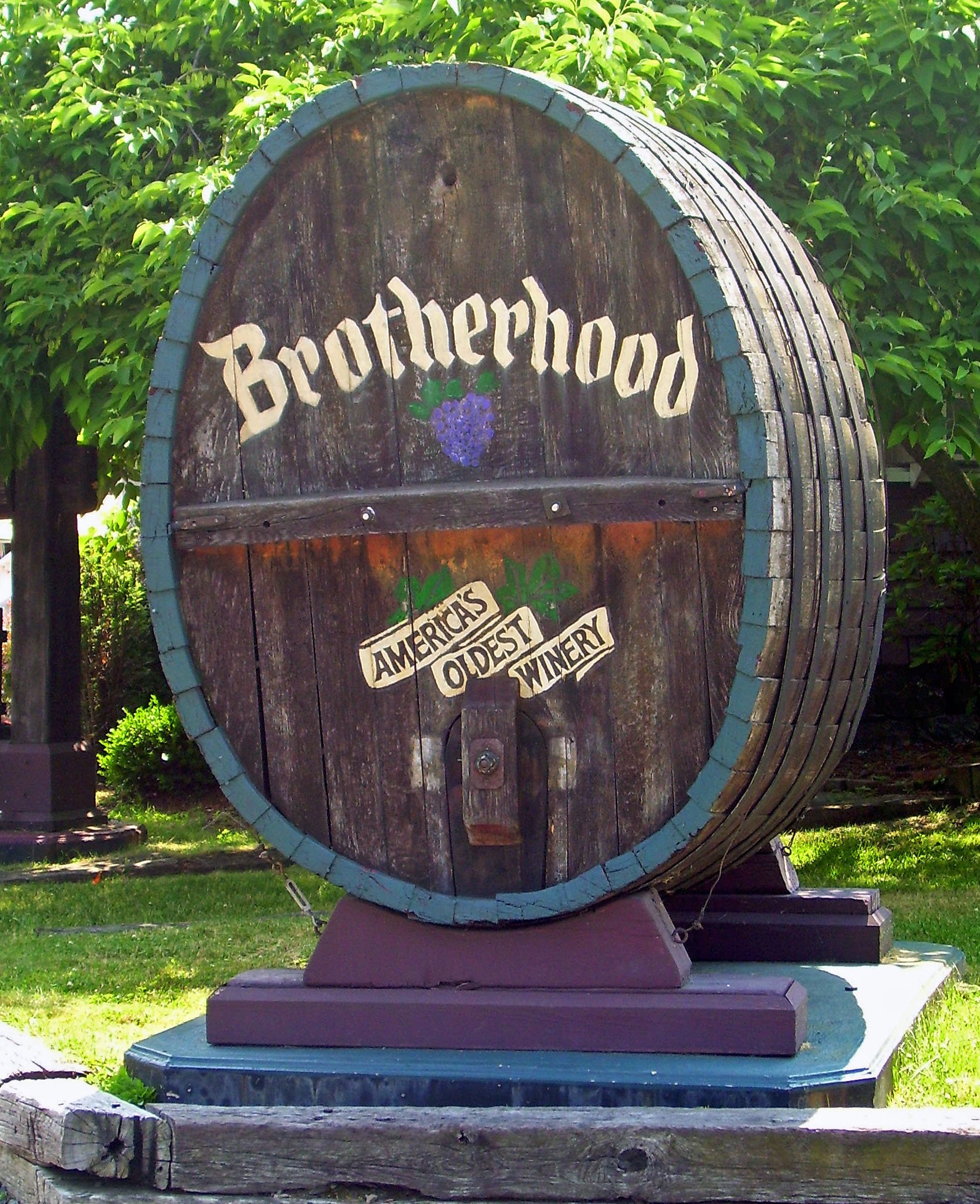
Brotherhood Winery
Hudson Valley, Washingtonville
Winery in Washingtonville, United States
 Book with Pearl
The Read
Continuous-Production Heritage
Price
$20–30tasting
Why go
Brotherhood Winery is the stronger Washingtonville choice for a planned wine-led celebration than for a casual drop-in. Treat it as an advance-plan visit, confirm current food options if pairing matters, and compare it with Benmarl Winery for another wine-focused outing or Tuthilltown Spirits (Hudson Whiskey) if the group prefers spirits.
About Brotherhood Winery
Brotherhood Winery is a Washingtonville venue with a casual dress code and a 2025 Pearl 3 Star Prestige recognition. For specifics such as service format, current food options, hours, reservations, group policies, or pricing, check directly with the venue before planning a visit.
The practical verdict: consider Brotherhood Winery when you specifically want a Washingtonville winery option. If you are comparing beverage-focused venues more broadly, Benmarl Winery is another winery name to consider, while Denning's Point Distillery, Orange County Distillery, Nahmias et Fils Distillery, and Tuthilltown Spirits (Hudson Whiskey) are spirits-focused alternatives.
A Washingtonville winery with practical planning details to check
The safest way to plan around Brotherhood Winery is to start with the essentials: the dress code is casual, and the venue has a 2025 Pearl 3 Star Prestige recognition. Check current details on food, specific tasting formats, reservations, and event arrangements before you build an outing around them.
Who should compare it with other beverage venues
Choose Brotherhood Winery for a Washingtonville winery option with casual dress and notable recognition. If the group is comparing beverage-focused venues more broadly, Benmarl Winery is the most relevant winery comparison, while Denning's Point Distillery, Orange County Distillery, Nahmias et Fils Distillery, and Tuthilltown Spirits (Hudson Whiskey) are better framed as distillery alternatives rather than direct winery substitutes.
For readers comparing beyond Washingtonville, keep the comparison general and focus on whether you want a winery or distillery experience. Brotherhood Winery and Benmarl Winery belong on the winery side of that decision, while Denning's Point Distillery, Orange County Distillery, Nahmias et Fils Distillery, and Tuthilltown Spirits (Hudson Whiskey) belong on the spirits side.
Bottom line: Brotherhood Winery is a yes if you are looking for a Washingtonville winery with casual dress and a 2025 Pearl 3 Star Prestige recognition. Check current operational details directly before relying on any specific food, reservation, group, or service expectations.
Planning details
- Location
- 100 Brotherhood Plaza Dr, Washingtonville, NY 10992
- Website
- brotherhood-winery.com
- Phone
- +1 845-496-3661
The take
The Take
The Vibe
Brotherhood Winery presents a palpable sense of continuity and place. As the nation’s longest continually operating winemaking site, the property reads less like a new project and more like a living archive: cellars, site and terroir all bear the weight of generations. The writing emphasizes history without nostalgia alone—this is a working winery embedded in Hudson Valley viticulture, and its character is anchored by that uninterrupted lineage. Visitors encounter a quietly scenic, characterful setting that privileges substance over flash, an environment where the cellar and the landscape tell the story.
Best For
Brotherhood is ideal for travelers who care about history, context and learning. Its status as an entry point to Hudson Valley wine country makes it a sensible stop for first-time visitors coming up from New York City and for groups organizing a wine-country outing. The focus on terroir and continuous production also suits anyone seeking an educational tasting or a deeper sense of regional viticulture rather than a trend-driven tasting room experience. In short, it’s best for history-minded wine lovers, group visits and those mapping the Valley’s wineries.
Venue details
Ambiance
Historic, dimly lit underground cellar atmosphere with a spacious tasting-room experience and a heritage-focused setting.
Tags
Vibe
Best For
Experience
View
At the Vineyard
- Varietals
- red, white, sparkling, rosé
- Tour Duration
- 60-90 minutes
- Tour Languages
- English, Spanish
- Visits
- Walk-ins welcome
- Production
- Large producer
- Wine Styles
- Still Red, Still White, Still Rose, Sparkling
- Founded
- 1839
- Wine Club
- Not available
Know before you go
Know Before You Go
- Getting there
- 100 Brotherhood Plaza Dr, Washingtonville, NY 10992
Planning details
Location
100 Brotherhood Plaza Dr, Washingtonville, NY 10992 · Directions
Also consider
Where to Go If You Can't Get In
Try Benmarl Winery first if the plan still needs to feel wine-focused. If the group is open to spirits instead, Tuthilltown Spirits (Hudson Whiskey) is the stronger pivot than forcing a winery booking that does not fit the date.
Winery context
How It Compares
Brotherhood Winery is the more occasion-friendly pick if the group wants wine, a slower pace, and a setting that feels suitable for a date or celebration. Denning's Point Distillery and Orange County Distillery make more sense for a spirits-first stop where the visit can be shorter and less formal.
For value, the better choice depends on the format the group actually wants. Choose Brotherhood Winery when the value comes from a wine-led experience and the occasion matters. Choose Tuthilltown Spirits (Hudson Whiskey) when whiskey is the draw, or Nahmias et Fils Distillery when a distillery visit is the point rather than wine tasting.
Benmarl Winery is the cleanest wine-to-wine cross-shop. If Brotherhood Winery is difficult to secure for the date you want, Benmarl is the first alternative to check before switching the plan toward spirits.
Explore Washingtonville
Around this place
Discover more on Pearl
Unlock the full Brotherhood Winery guide in Pearl, including awards, comparisons, FAQs, planning details, and nearby places.
Compare Brotherhood Winery
| Venue | Location | Awards |
|---|---|---|
| Brotherhood Winery | Washingtonville | No published awards |
| Denning’s Point Distillery | Beacon | No published awards |
| Orange County Distillery | Goshen | No published awards |
| Benmarl Winery | Marlboro | No published awards |
| Tuthilltown Spirits (Hudson Whiskey) | Gardiner | No published awards |
| Nahmias et Fils Distillery | Yonkers | No published awards |
How Brotherhood Winery Washingtonville compares with similar nearby venues.
FAQ
Frequently Asked Questions
When is the best time to visit Brotherhood Winery?
Can Brotherhood Winery handle large groups?
What other beverage venues can I compare with Brotherhood Winery?
Benmarl Winery is the clearest winery comparison named here. For spirits-focused alternatives, compare Denning's Point Distillery, Orange County Distillery, Nahmias et Fils Distillery, or Tuthilltown Spirits (Hudson Whiskey).
Does Brotherhood Winery have a wine club?
If you are interested in a club or membership option, ask Brotherhood Winery directly for current terms before deciding.