
Winery in Vienna, Austria
Weingut Fuhrgassl-Huber
500ptsCity-Vineyard Heuriger
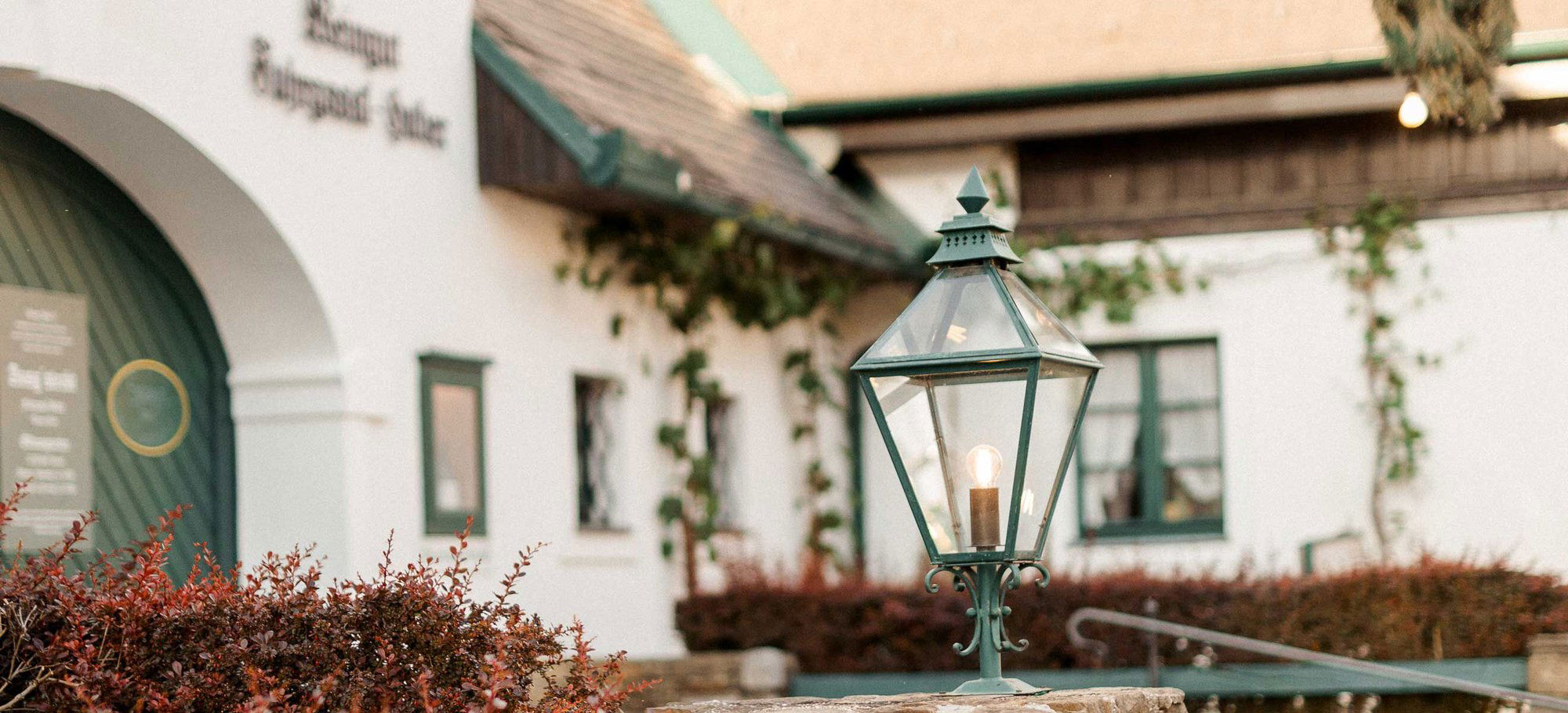
About Weingut Fuhrgassl-Huber
Weingut Fuhrgassl-Huber sits at Neustift am Walde in Vienna's 19th district, operating within the city's rare tradition of estate wineries producing directly inside municipal boundaries. Recognised with a Pearl 2 Star Prestige award in 2025, it occupies the upper tier of Vienna's Heuriger scene, where local Grüner Veltliner and Riesling are poured in a setting shaped by working vineyard land rather than urban hospitality design.
Vienna's Working Vineyard Belt and Where Fuhrgassl-Huber Sits Within It
The 19th district of Vienna — Döbling — contains one of the more unusual agricultural facts about any European capital: functioning wine estates within the city limits, producing and selling under Austrian Heuriger law on the same land where the vines grow. Neustift am Walde, a village-like pocket of the district pressed against the Wienerwald, sits at the northern edge of this wine corridor. The address at number 68 places Weingut Fuhrgassl-Huber squarely in that working landscape, where the transition from vineyard slope to tasting table happens within a few hundred metres.
This matters for context. Vienna's wine estates are not rural producers running satellite tasting rooms in the city. They are city producers, subject to Vienna's own viticultural identity, which has been shaped for decades by a relatively small planted area, high land costs, and a Heuriger culture that ties estate hospitality to strict rules: licensed houses may only serve wine they have produced themselves, along with simple cold food, for limited periods each year. That constraint produces a different hospitality register than a conventional restaurant or dedicated wine bar. The experience at Fuhrgassl-Huber belongs to that tradition, not to the broader Austrian fine dining or wine tourism circuit.
Among Vienna's estate producers, Fuhrgassl-Huber sits in a peer set that includes Weingut Fritz Wieninger, Weingut Mayer am Pfarrplatz, and Weingut Rainer Christ, all of which operate within similar geographic and regulatory parameters. The 2025 Pearl 2 Star Prestige recognition places Fuhrgassl-Huber in the upper bracket of that local group rather than in the broader Austrian wine hierarchy anchored by Wachau or Kamptal producers. For reference, the Wachau comparison set would include estates like Weingut Emmerich Knoll in Dürnstein, while Kamptal's benchmark names are led by Weingut Bründlmayer in Langenlois. The Vienna estates occupy a distinct category: producers whose terroir story is inseparable from the city itself.
Approaching the Estate: What the Setting Communicates
Arriving at Neustift am Walde from central Vienna means leaving the urban density of the Ring or the Josefstadt behind and travelling north into a district where the street grid gradually softens into lanes lined with older residential buildings and garden walls. The upper reaches of the neighbourhood give way to vineyard rows visible on hillsides, the Wienerwald tree line rising behind them. The approach to Fuhrgassl-Huber at number 68 is recognisably that of a working wine property in a residential-rural fringe rather than a polished hospitality venue in the city centre.
That physical character sets the tone before anything is poured. Heuriger culture in Vienna has historically depended on this transition: the guest leaves the city and enters, briefly, something closer to a farm context. The wine served is an expression of that specific geography, not a curated list assembled for a target demographic. The atmospheric registers are quiet, rooted in seasonal outdoor seating, and shaped by the property's own production cycle rather than by hospitality design conventions.
The Cellar Logic Behind Vienna Estate Wines
The editorial angle worth examining at an estate like Fuhrgassl-Huber is what happens between harvest and glass rather than what arrives at the table. Vienna's city wines, produced from vineyards on the Nussberg, Bisamberg, and the slopes around Neustift, are overwhelmingly white: Grüner Veltliner and Riesling dominate, with Gemischter Satz , the traditional field blend of multiple varieties co-planted and co-harvested , holding particular cultural significance. Each of these varieties responds differently to aging decisions.
Grüner Veltliner from Vienna's sandy, loamy, and limestone soils tends toward a tighter, more mineral profile than the richer expressions from Kremstal or Wachau's terraced granite. Young Vienna Grüner is often poured fresh, its peppery, herbal character still intact, with minimal oxygen exposure and early bottling preserving that aromatic brightness. The question for an estate operating at the Pearl 2 Star Prestige tier is whether the cellar programme extends beyond that early-release model: whether selected parcels receive extended lees contact, whether any barrique work is applied to Chardonnay or red varieties, and whether the property holds back small lots for vertical depth. The database record for Fuhrgassl-Huber does not specify these details, and responsible editorial practice means acknowledging that gap rather than filling it with assumption.
What the 2025 award recognition does signal is that the estate's output is being evaluated against a quality standard that implies cellar discipline. Awards at the Prestige tier within the Pearl system are not issued for drinkable, pleasant wines; they indicate wines that demonstrate structure, typicity, and consistency across vintages , the product of considered decisions made during and after fermentation, not only during the growing season. For comparison, estates across Austria's other premium regions operating at equivalent award tiers, such as Weingut Pittnauer in Gols or Weingut Wohlmuth in Kitzeck, typically carry identifiable cellar signatures in their top-range bottlings.
Vienna's Wine Scene in Relation to the Broader Austrian Map
Placing Fuhrgassl-Huber on a wider Austrian wine map clarifies its competitive position. The Burgenland estates to the east, including Weingut Kracher in Illmitz and Weingut Scheiblhofer Distillery in Andau, operate in a warmer climate with very different variety profiles , sweet wine and Blaufränkisch rather than cool-climate Riesling. Vienna's estates are not competing in that register. Similarly, the distillery-adjacent producers in the city, including 1516 Brewing Company Distillery and Weingut Walter Wien Distillery, represent a different segment where craft spirits and wine production sometimes overlap but serve distinct occasions.
The Vienna wine estate model is closer, in hospitality terms, to an appellation with very few producers and very tight geographic boundaries. There are roughly 700 hectares of vineyard within the city, and the licensed estates that operate under Heuriger law form a small, identifiable group. Fuhrgassl-Huber's location in Neustift am Walde places it among a cluster of that group. For visitors approaching Vienna's wine scene for the first time, the full Vienna guide contextualises how estate wineries, Heuriger, and the city's broader drinking culture interact across its different districts.
Planning a Visit: Timing, Format, and What to Expect
The Heuriger calendar matters more at an estate like Fuhrgassl-Huber than at a conventional restaurant or bar. Under Austrian law, licensed Heuriger operations run on seasonal schedules: producers open for specific periods determined by the house, typically signalled by a pine branch hung above the entrance , a custom that predates most modern hospitality signalling conventions. Late spring through autumn represents the primary window when gardens are open and the vintage cycle creates a natural tempo from fresh wines of the new year through to more developed expressions from previous harvests.
Format is self-evidently casual by the standards of Vienna's wine bar or restaurant tier. Guests choose wines directly from the estate's range, combine them with cold buffet or simple platters, and sit for as long as the session warrants. There is no tasting menu, no sommelier pairing structure, and no progression of courses in the culinary sense. This is the Heuriger model operating as intended, and comparing it to Vienna's restaurant scene would be a category error. The peer set is other licensed estate houses in the same part of Döbling, not the city's dining circuit.
For those building a broader Austrian wine itinerary from Vienna, Neustift am Walde is accessible without a car via public transport , the 35A bus route connects the district to the city centre with reasonable frequency , making Fuhrgassl-Huber practicable as an afternoon session rather than requiring dedicated transport planning. The estate's award recognition at Pearl 2 Star Prestige level in 2025 gives visiting wine drinkers a calibrated point of reference for the quality tier they are entering, even without published tasting notes or formal booking infrastructure.
Frequently Asked Questions
Is Weingut Fuhrgassl-Huber more formal or casual?
It operates as a licensed Heuriger, which places it firmly in the casual register. The Heuriger format is defined by Austrian law and tradition: estate wine served alongside simple cold food, in a garden or rustic interior, without service formality. The Pearl 2 Star Prestige award (2025) speaks to the quality of the wine itself, not to any shift toward fine dining conventions. If you are arriving from a Vienna restaurant booking or a wine bar visit, reset expectations accordingly: this is an outdoor afternoon drinking culture, not a tasting room with guided flights.
What's the leading wine to try at Weingut Fuhrgassl-Huber?
The database record does not specify current releases or flagship bottlings, so naming a specific wine would be speculative. What the Vienna terroir and the estate's award-tier positioning suggest is that the Grüner Veltliner and Riesling from the Neustift vineyards are the logical starting points: these are the varieties that carry the city's appellation identity, and a Pearl 2 Star Prestige recognition implies consistent quality across the range. Gemischter Satz, the traditional Viennese field blend, is worth asking about if available, as it is specific to the city's viticultural tradition and not produced elsewhere in Austria at the same scale.
What's the defining thing about Weingut Fuhrgassl-Huber?
The combination of city location and working estate status is the distinguishing fact. Very few wine capitals in the world have licensed producers operating within their municipal boundaries who pour their own wines on-site under a regulated traditional format. Vienna is one of them, and Fuhrgassl-Huber in Neustift am Walde is part of that small group. The 2025 Pearl 2 Star Prestige award places the estate within the higher-quality tier of Vienna city producers rather than the broader, more accessible Heuriger field.
How hard is it to get in to Weingut Fuhrgassl-Huber?
No booking data is available in the current record, and neither phone nor website details are listed. Heuriger estates in Vienna's 19th district generally operate on a walk-in basis during open periods rather than a reservation system, though this varies by house and season. The safest approach for a planned visit is to confirm opening dates and hours through direct contact before travelling, particularly outside the main April-to-October window when seasonal schedules are most unpredictable. Weekends during good weather bring higher footfall to Neustift am Walde as a whole, so midweek visits or earlier in the day tend to be less pressured.
Related editorial
- Best Fine Dining Restaurants in ParisFrom three-Michelin-star icons to the next generation of Parisian chefs pushing boundaries, these are the restaurants that define fine dining in the world's culinary capital.
- Best Luxury Hotels in RomeFrom rooftop terraces overlooking ancient ruins to Michelin-starred hotel dining, these are the luxury hotels that make Rome unforgettable.
- Best Cocktail Bars in KyotoFrom sleek lounges to hidden speakeasies, Kyoto's cocktail scene blends Japanese precision with global influence in ways you won't find anywhere else.
Save or rate Weingut Fuhrgassl-Huber on Pearl
Keep this venue in your Pearl passport, rate it after you visit, and track it alongside every other place you collect.