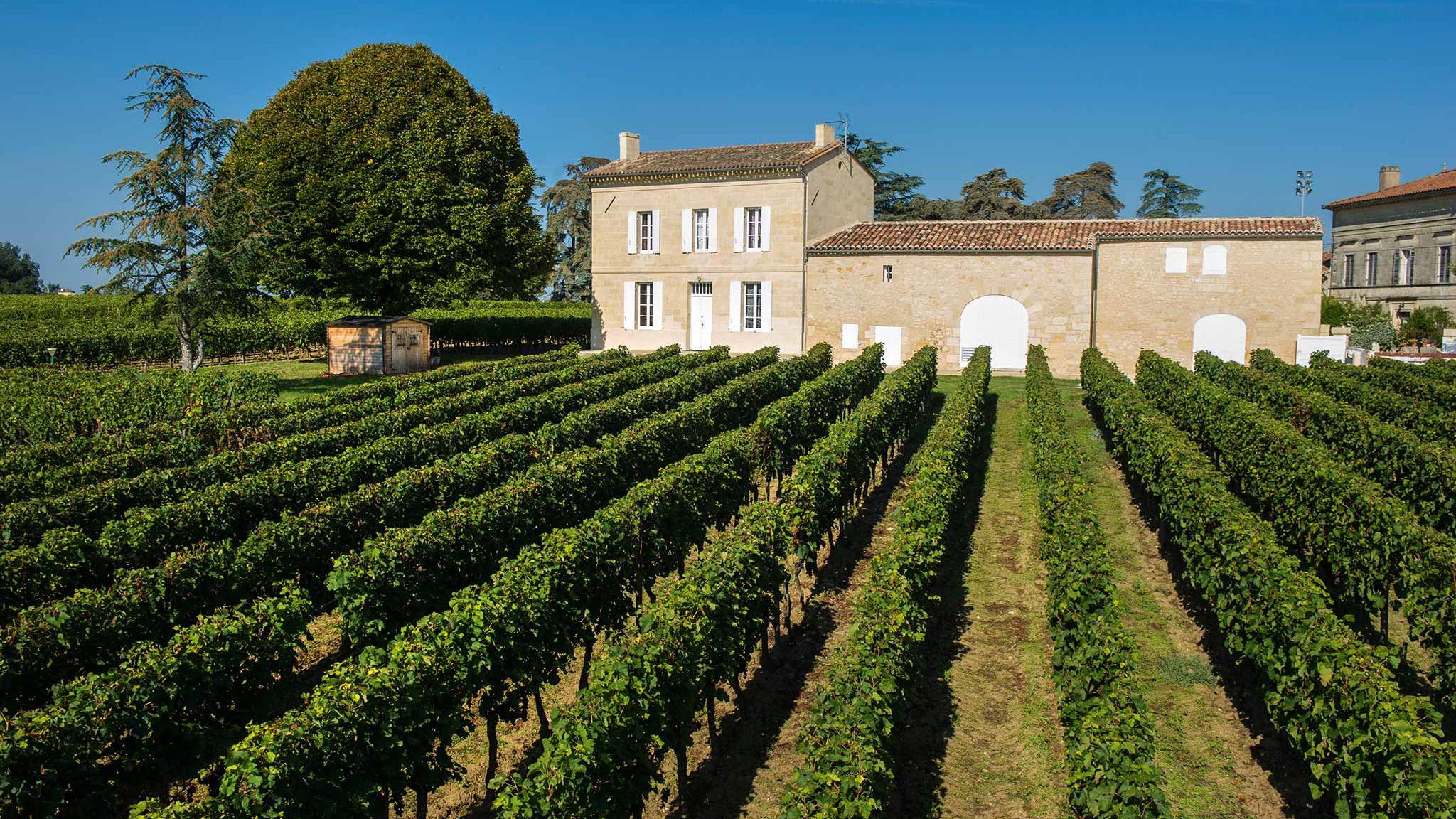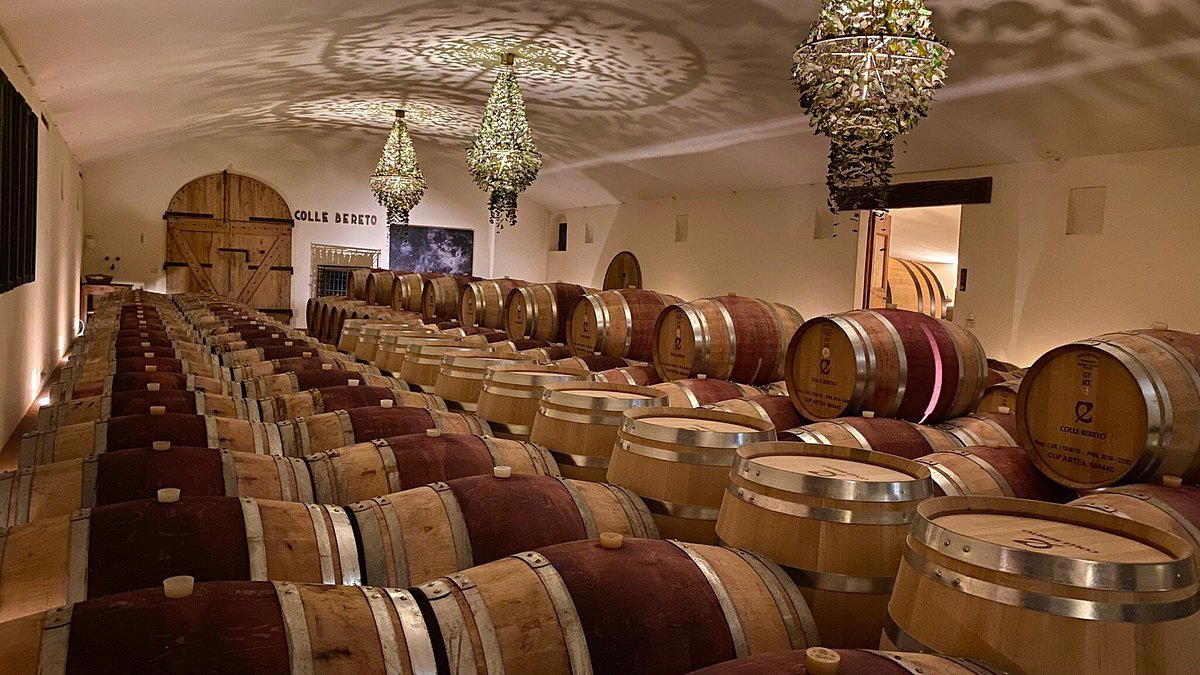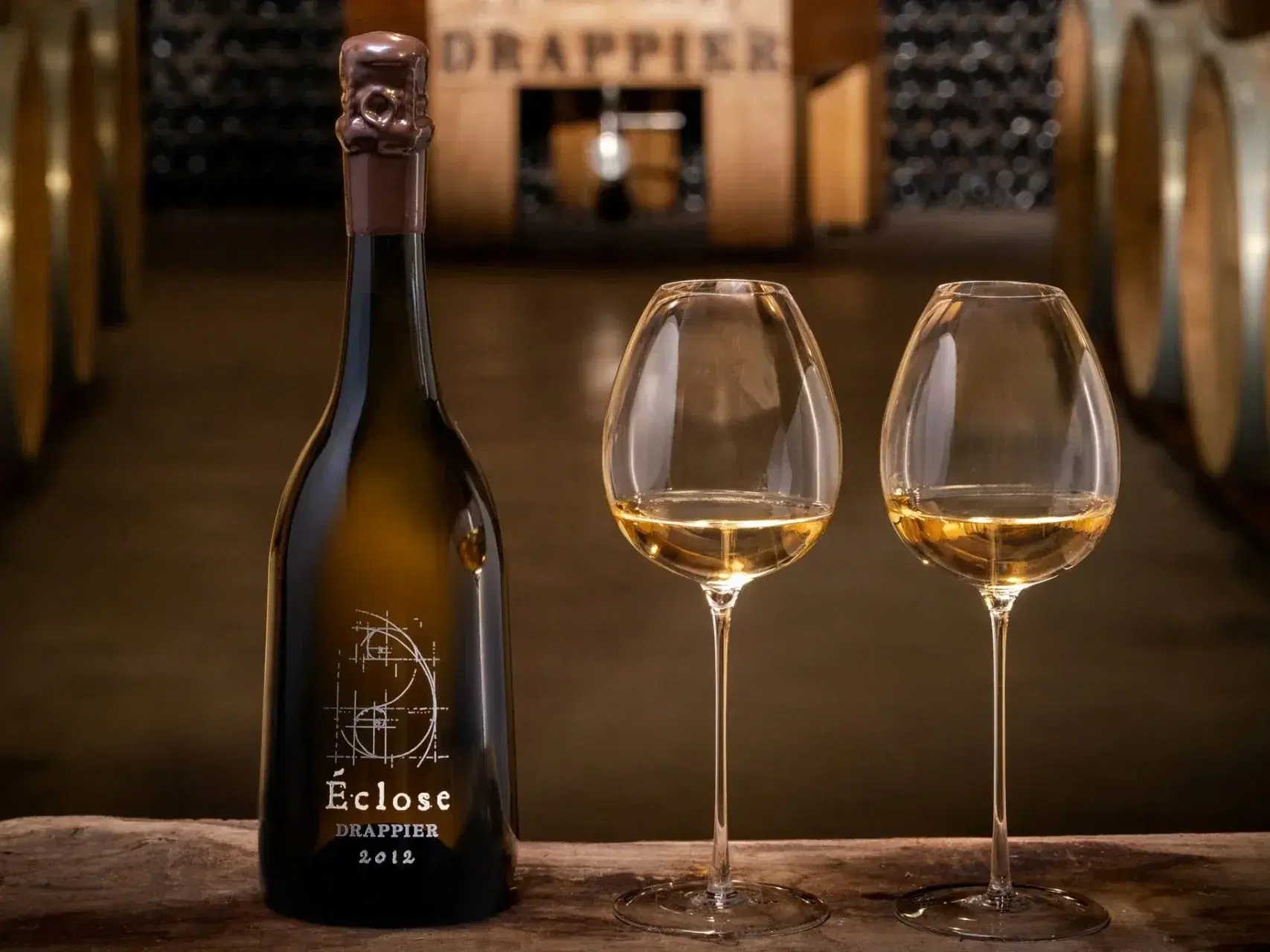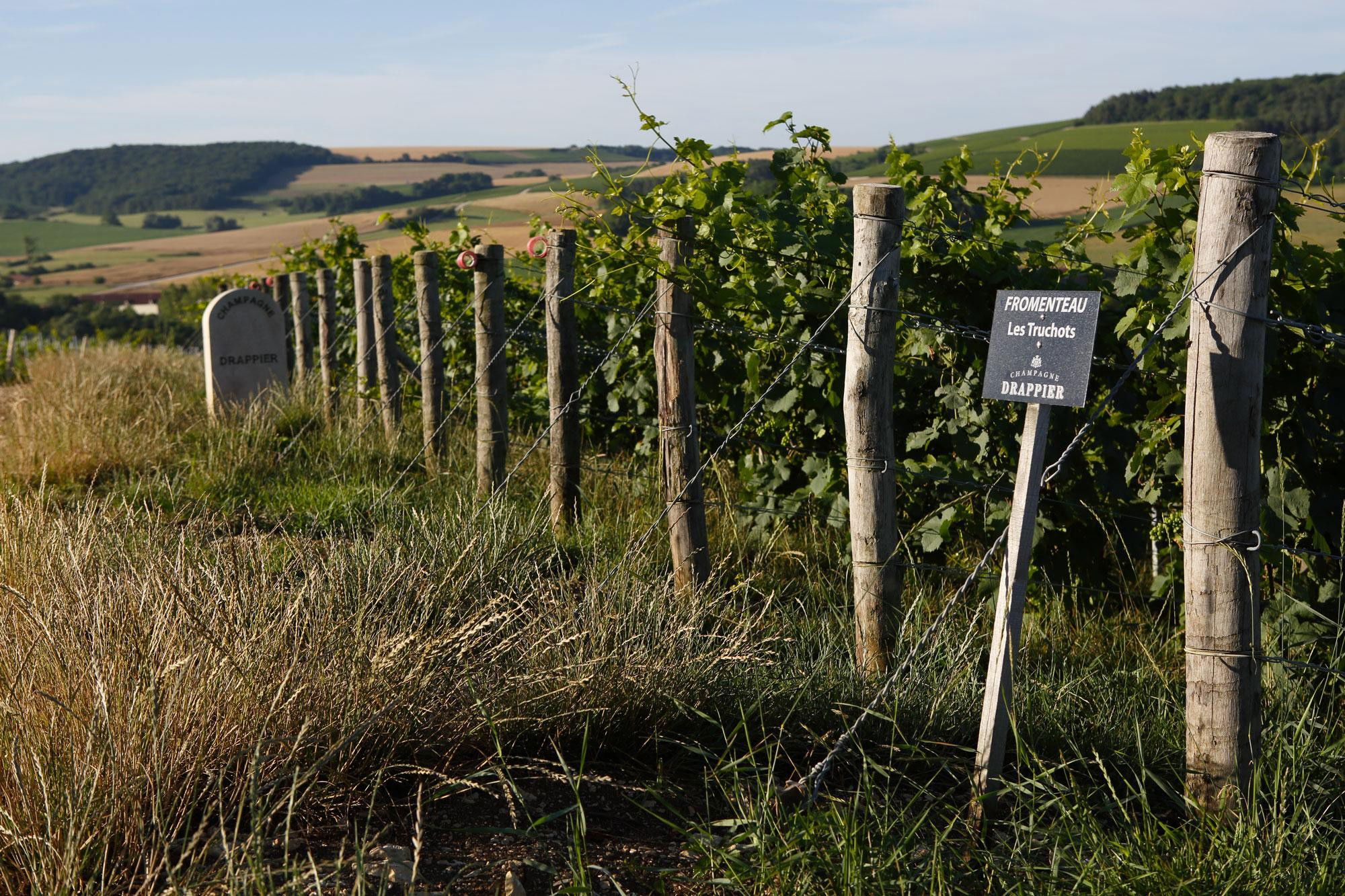


Winery in Urville, France
Drappier
750ptsAube Terroir Continuity

About Drappier
Drappier has been making Champagne from Urville in the Aube since 1808, placing it among the oldest family-owned houses in the region. Under winemaker Michel Drappier, the estate has built a reputation for Pinot Noir-dominant blends drawn from its home village terroir. EP Club awarded Drappier its Pearl 3 Star Prestige rating in 2025.
Aube Terroir, Two Centuries in Place
The village of Urville sits in the Aube, the southernmost and most quietly consequential of Champagne's sub-regions. While the Marne Valley and Montagne de Reims attract the majority of visitor and critical attention, the Aube has been producing serious Pinot Noir-driven Champagne on its Kimmeridgian clay-limestone soils for as long as the appellation has existed. Drappier, whose first vintage dates to 1808, is the clearest argument that the Aube's relative obscurity is a matter of geography and marketing history, not wine quality. EP Club's Pearl 3 Star Prestige award in 2025 places the house in a peer set that rewards sustained consistency and provenance depth over trend-driven positioning.
That Kimmeridgian subsoil, shared with Chablis across the departmental border, gives Aube Pinot Noir a particular mineral register, cooler and more mineral-driven than the chalky Côte des Blancs expression. It is a terroir that rewards patience in the cellar and restraint in the winery, and the house at 14 Rue des Vignes has had more than two centuries to understand it. Among French winemaking families who have stayed on the same ground for that length of time, the list is short; for comparison, estates like Château Batailley in Pauillac and Château Branaire Ducru in St-Julien carry similar claims to deep, site-specific continuity.
What the Aube Adds to Champagne's Map
Understanding Drappier requires some context about where the Aube fits in Champagne's internal hierarchy. For much of the twentieth century, the region's classification system formally disadvantaged Aube growers, whose villages were excluded from the grand cru and premier cru designations reserved for the Marne. The practical consequence was that Aube fruit fed the blending vats of large négociant houses, its contribution invisible in finished bottles. The gradual reassertion of Aube identity, led by growers who elected to vinify and bottle their own fruit, has been one of French wine's more important recent shifts. Drappier's age and family continuity gave it a head start in that reassertion: the house was already making its own Champagne when grower identity politics were still decades away.
Geologically, the Kimmeridgian limestone that runs through the Aube shares its character with the soils beneath Chablis, Sancerre, and parts of Burgundy's Auxerre. This continuity of substrate connects the Aube to the broader limestone arc of northern France, a geological fact that matters when Pinot Noir is the primary grape. The variety expresses differently here than on the chalky belemnite soils of Épernay or Reims: tighter in fruit profile, with more saline and mineral persistence, and with a structural backbone that ages well without the richness that chalk can provide. For estates in other premium French regions navigating similar terroir questions, the editorial parallel is instructive: Albert Boxler in Niedermorschwihr and Château Bélair-Monange in Saint-Emilion both operate in frameworks where geological specificity is the primary editorial claim.
Michel Drappier and the House's Current Positioning
Winemaker Michel Drappier represents a continuity of family stewardship across generations that is unusual even by Champagne's family-estate standards. His name appears in the context of a house whose modern identity is built around Pinot Noir clarity and low-dosage practice, the latter a direction that aligns Drappier with the broader Champagne shift toward drier, more terroir-transparent styles that accelerated through the 2000s. Low-dosage Champagne strips away the residual sugar that can smooth over site-specific character, a technical choice that only makes sense when the base wine and the terroir are strong enough to stand without it.
That positioning places Drappier in a specific competitive tier within Champagne: houses that prioritise place over house style, that source primarily or entirely from their home terroir, and that present winemaker identity as secondary to vineyard identity. This is a smaller group than the prestige cuvée tier of the grandes marques, and its members compete on different terms: allocation access, terroir transparency, and the patience required to understand wines that can seem austere on release. The Pearl 3 Star Prestige recognition from EP Club reflects that specific value proposition rather than a generalised quality claim.
Placing Drappier Among French Estate Producers
Across France's premium wine regions, the houses that have maintained single-family, single-terroir continuity for more than two centuries form a narrow group. The practical implications of that continuity are material: deep knowledge of how individual parcels behave across vintages, access to old-vine material that cannot be replicated, and a house style that has been refined rather than reinvented with each ownership change. Estates like Château Clinet in Pomerol, Château Boyd-Cantenac in Cantenac, and Château Cantemerle in Haut-Médoc each carry their own versions of this long-arc story, though Drappier's 1808 foundation predates most.
The question of what a 200-year-old Champagne house actually tastes like in the glass is partly geological and partly generational. The Kimmeridgian clay-limestone of Urville imposes its mineral signature on every vintage. The accumulation of old-vine blocks deepens complexity without requiring intervention. And the family's choice to remain in Urville rather than relocate or expand into higher-classified Marne terroir is itself a terroir statement: the wines are what this place produces, not what the market expects Champagne to taste like.
For context on how different French regions express terroir through similarly patient, single-estate approaches, Château Dauzac in Labarde, Château d'Arche in Sauternes, and Château d'Esclans in Courthézon each offer instructive editorial comparisons. Beyond France, the long-continuity model appears in distilling traditions as well: Aberlour in Aberlour and Chartreuse in Voiron both make the case that production continuity and site specificity compound into something that newer operations cannot replicate on a short timeline. Accendo Cellars in St. Helena and Château Bastor-Lamontagne in Preignac represent the newer-estate end of that spectrum, where terroir identity is still being established rather than confirmed over centuries.
Planning a Visit to Drappier
Urville is a small agricultural village roughly two hours southeast of Paris by road, positioned in the Côte des Bar, the Aube's principal wine-producing zone. The village is not set up for drop-in tourism in the way that Épernay's Avenue de Champagne is: visits to Drappier are cellar-door experiences at an active family estate rather than polished hospitality operations. Contacting the estate directly to arrange a visit is the appropriate approach, and the estate's address at 14 Rue des Vignes provides the physical reference point. The Aube is leading approached as a deliberate destination rather than a casual detour, which filters the visitor profile toward those with a genuine interest in the sub-region's specific terroir character. For further context on what to expect from the Urville area, see our full Urville guide.
Frequently Asked Questions
- Is Drappier more low-key or high-energy?
- Drappier is firmly at the low-key end of the Champagne visitor spectrum. Urville is a working agricultural village in the Aube, not a showcase destination designed around high-volume tourism. The estate's Pearl 3 Star Prestige recognition from EP Club in 2025 reflects quality credentials rather than hospitality scale, and the experience here is closer to a serious estate visit than a polished brand showcase. Pricing and capacity information are leading confirmed directly with the estate.
- What wine is Drappier famous for?
- Drappier is primarily associated with Pinot Noir-dominant Champagne sourced from its home terroir in Urville, Aube. The house's approach, guided by winemaker Michel Drappier, leans toward low-dosage styles that express the mineral character of the Kimmeridgian limestone subsoil rather than a heavily constructed house style. The 1808 foundation date gives the estate one of the longest continuous production histories in Champagne, a provenance claim that distinguishes it within its regional peer set. EP Club awarded the house its Pearl 3 Star Prestige rating in 2025.
- What's the defining thing about Drappier?
- The defining characteristic is continuity of place: the same family, the same village in the Aube, producing Champagne from the same Kimmeridgian limestone terroir since 1808. That depth of site-specific experience, recognised by EP Club's Pearl 3 Star Prestige award in 2025, is what separates Drappier from newer estates attempting to build an Aube identity from scratch. For visitors travelling to Urville, the estate represents one of the clearest arguments for the sub-region's distinct geological and stylistic identity within Champagne.
Recognized By
Related editorial
- Best Fine Dining Restaurants in ParisFrom three-Michelin-star icons to the next generation of Parisian chefs pushing boundaries, these are the restaurants that define fine dining in the world's culinary capital.
- Best Luxury Hotels in RomeFrom rooftop terraces overlooking ancient ruins to Michelin-starred hotel dining, these are the luxury hotels that make Rome unforgettable.
- Best Cocktail Bars in KyotoFrom sleek lounges to hidden speakeasies, Kyoto's cocktail scene blends Japanese precision with global influence in ways you won't find anywhere else.
Save or rate Drappier on Pearl
Keep this venue in your Pearl passport, rate it after you visit, and track it alongside every other place you collect.