
Winery in Tinos, Greece
Varsamis Distillery
250ptsCycladic Artisan Distillation
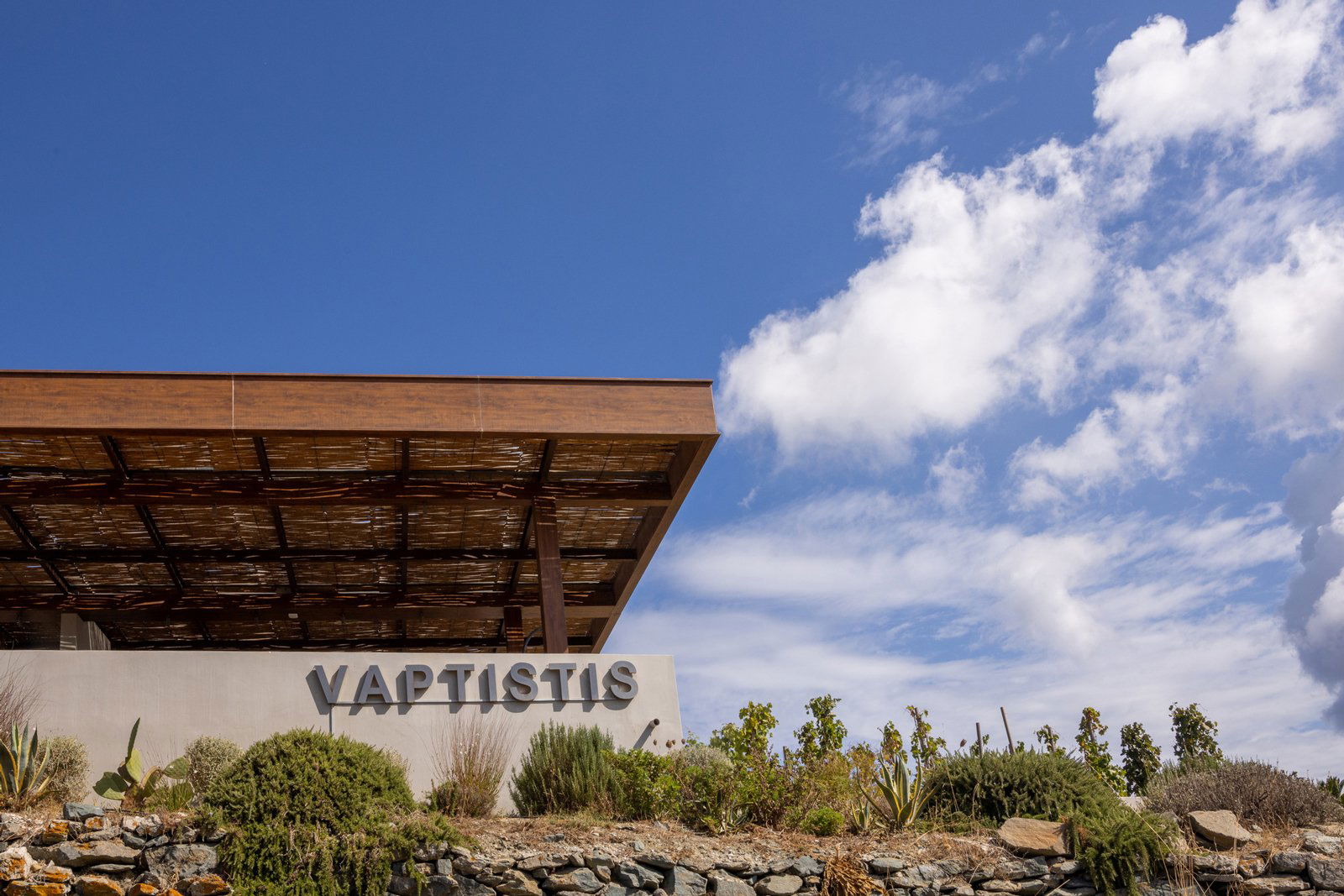
About Varsamis Distillery
Varsamis Distillery operates on Tinos, the Cycladic island whose volcanic granite and Aegean winds have long shaped its agricultural identity. Awarded a Pearl 1 Star Prestige in 2025, the distillery sits within a Greek spirits tradition that is drawing serious attention from producers and collectors alike. For anyone tracing the regional character of Greek distillation, Tinos offers a compelling and underexplored context.
Tinos and the Case for Island Distillation
The Cyclades have spent decades defined by wine, and Santorini's volcanic terroir has absorbed most of the critical attention. Tinos operates differently. The island's geology runs to granite and gneiss rather than pumice and ash, its interior villages surrounded by dry-stone walls, dovecotes, and terraced plots that have sustained small-scale agriculture for centuries. That agrarian intensity, combined with Aegean wind exposure and a temperature range that shifts sharply between summer and winter, creates conditions that feed into spirits production in ways that differ markedly from the wine-dominant islands to the south. Varsamis Distillery has emerged from this context as one of the operations drawing scrutiny from within the Greek artisan spirits conversation, earning a Pearl 1 Star Prestige recognition in 2025.
Understanding what Tinos contributes to a distillery's output means understanding the island's relationship with its raw materials. Cycladic grain, herbs that grow low and dense against the wind, and fruit harvested from terraced plots at varying altitudes all carry the island's character. The link between terroir and distillate is less codified in spirits than in wine, but the principle holds: what grows in the ground and how it is treated before it reaches the still leaves a mark on what ends up in the glass. Greek distilleries that operate from this position occupy a different tier from production-scale ouzo or commercial tsipouro operations. They are making a point about place, and the 2025 Pearl recognition at Varsamis signals that the point is landing.
Where Varsamis Sits in the Greek Spirits Field
Greek distillation has a broader map than most international visitors realise. The country has a documented tradition of tsipouro and tsikoudia production going back centuries, and the ouzo category carries protected geographical indications across several regions. What has changed in the past decade is the emergence of a tier of producers who are applying winery-grade attention to their sourcing, fermentation, and distillation decisions. For context on the range of approaches across Greek production, operations like Apostolakis Distillery in Volos represent the mainland tradition, while Varsamis pursues a distinctly island interpretation from Tinos.
The award tier Varsamis occupies in 2025 places it alongside a cohort of Greek producers who have moved the conversation beyond category compliance and toward quality signals that resonate with international spirits buyers and collectors. This is not the same as the institutional weight carried by a house like Achaia Clauss in Patras, whose history stretches across more than a century and a half. Varsamis is operating in a more contemporary register, where recognition is earned through production integrity rather than legacy. The Pearl 1 Star Prestige designation in a competitive year positions it clearly within the premium artisan tier of Greek spirits.
For comparison within the broader Greek producer field, the range of ambition is instructive. Winemakers like Alpha Estate in Amyntaio and Artemis Karamolegos in Santorini have demonstrated what rigorous site-specific production looks like in Greek wine. The spirits producers who earn equivalent recognition are applying a parallel discipline. Varsamis's positioning within that frame is what makes the 2025 award meaningful as a signal rather than merely as a credential.
Terroir and Distillation: The Tinos Argument
The terroir argument for spirits is contested in academic circles but is practically understood by any producer who has worked with the same raw materials across different growing seasons. Tinos presents a specific set of conditions. The granite subsoil drains fast and stresses plants into compact, aromatic growth. The meltemi wind that scours the Cyclades through summer reduces yields and concentrates sugars and essential oils. The island sits far enough north of Santorini to have a cooler mean temperature during the growing season, which affects fermentation behaviour and the aromatic profile of the base material entering the still.
These are not abstract considerations. They are the reasons why producers based on Tinos make different choices about their raw materials than producers on Rhodes, Crete, or the Peloponnese. The Abraam's Vineyards approach in Komninades and the Acra Winery work in Nemea illustrate how Greek producers across different regions have built identity through site-specific sourcing decisions. In distillation, that same logic applies at the point of raw material selection, before the still is even lit. Varsamis's presence on Tinos is not incidental; the island's character is, at least in principle, what the operation is working to translate.
The Greek Artisan Spirits Map in 2025
The year 2025 has seen a cluster of Greek spirits producers receive formal recognition at a level that was less visible even five years ago. This reflects two things simultaneously: an improvement in production quality across the artisan tier, and an increase in the critical infrastructure needed to evaluate and document that quality. Pearl recognitions, alongside international spirits competition results, are now providing the kind of external benchmarking that Greek wine has had through Decanter and the Wine Advocate for decades.
For a visitor building a Greek spirits itinerary, the geography matters. Mainland producers such as Anatolikos Vineyards in Xanthi and Avantis Estate in Chalkida offer different regional expressions. Island producers like Varsamis are accessible by ferry from Piraeus, with Tinos served regularly from Rafina, making a visit logistically feasible as part of a Cycladic itinerary. The island itself receives a fraction of the tourist traffic of Mykonos, which sits nearby, and that quieter register carries through to the visitor experience at any producer-level site on the island. Tinos rewards the traveller who treats the island as a destination in its own right rather than a day trip from a busier neighbour. For a fuller picture of what the island offers beyond the distillery, our full Tinos restaurants guide maps the broader food and drink scene.
Other Greek producers worth tracking in the same research sweep include Aiolos Winery in Palaio Faliro, Akrathos Newlands Winery in Panagia, Aoton Winery in Peania, and Artisans Vignerons de Naoussa in Stenimachos. Each occupies a distinct regional niche, and comparing their approaches to sourcing and production sharpens the lens for reading what Varsamis is doing on Tinos. For those whose Greek spirits interest extends to a broader international frame, Aberlour in Aberlour and Accendo Cellars in St. Helena represent the kind of production-integrity benchmarks that serious spirits and wine operations are measured against globally.
Planning a Visit
Specific operational details for Varsamis, including hours, booking arrangements, and pricing, are not publicly confirmed at time of writing and should be verified directly before travel. Tinos is reachable by high-speed ferry from Rafina in approximately two hours, and the island has enough of its own culinary and cultural infrastructure to justify a stay of two to three nights. The distillery's Pearl 1 Star Prestige status in 2025 suggests a production operation that takes its output seriously, and that typically corresponds to a visit experience that is substantive rather than purely commercial. Contacting the distillery in advance is the sensible approach for anyone who wants to ensure access rather than arriving speculatively.
Frequently Asked Questions
Is Varsamis Distillery more formal or casual?
Tinos operates at a register that is more considered than Mykonos but less institutionalised than a major appellation winery on the mainland. A Pearl 1 Star Prestige operation in 2025 typically presents with production-led seriousness rather than hospitality theatre. The island's character overall runs toward quiet and substantive, and that tends to be reflected in how producers there engage with visitors. Without confirmed operational details, specific format guidance is not available, but the award tier suggests an experience oriented around the production itself rather than commercial tourism.
What should I taste at Varsamis Distillery?
The distillery's recognition through the 2025 Pearl 1 Star Prestige award points toward production that merits close attention across whatever categories Varsamis makes available. Greek artisan distilleries in this tier tend to work with grape-based spirits, local botanicals, or regional grain depending on their focus. Without a confirmed product list from the venue, specific tasting recommendations would be speculative. The productive approach is to ask the producer directly what represents their core output and what reflects the island's terroir most directly, then let that guide the session.
What makes Varsamis Distillery worth visiting?
The combination of Tinos's specific agrarian and geological character with a 2025 Pearl 1 Star Prestige recognition makes Varsamis one of the more credentialled stops on any serious Greek spirits itinerary. The island itself is visited far less intensively than Santorini or Mykonos, which means access to producers there remains genuinely unhurried. For anyone building a picture of how Greek distillation is evolving at the artisan level, Tinos and Varsamis sit at an intersection that is worth the ferry crossing.
Related editorial
- Best Fine Dining Restaurants in ParisFrom three-Michelin-star icons to the next generation of Parisian chefs pushing boundaries, these are the restaurants that define fine dining in the world's culinary capital.
- Best Luxury Hotels in RomeFrom rooftop terraces overlooking ancient ruins to Michelin-starred hotel dining, these are the luxury hotels that make Rome unforgettable.
- Best Cocktail Bars in KyotoFrom sleek lounges to hidden speakeasies, Kyoto's cocktail scene blends Japanese precision with global influence in ways you won't find anywhere else.
Save or rate Varsamis Distillery on Pearl
Keep this venue in your Pearl passport, rate it after you visit, and track it alongside every other place you collect.