
Winery in Texas Hill Country, United States
William Chris Vineyards
800ptsLimestone-Driven Texas Viticulture

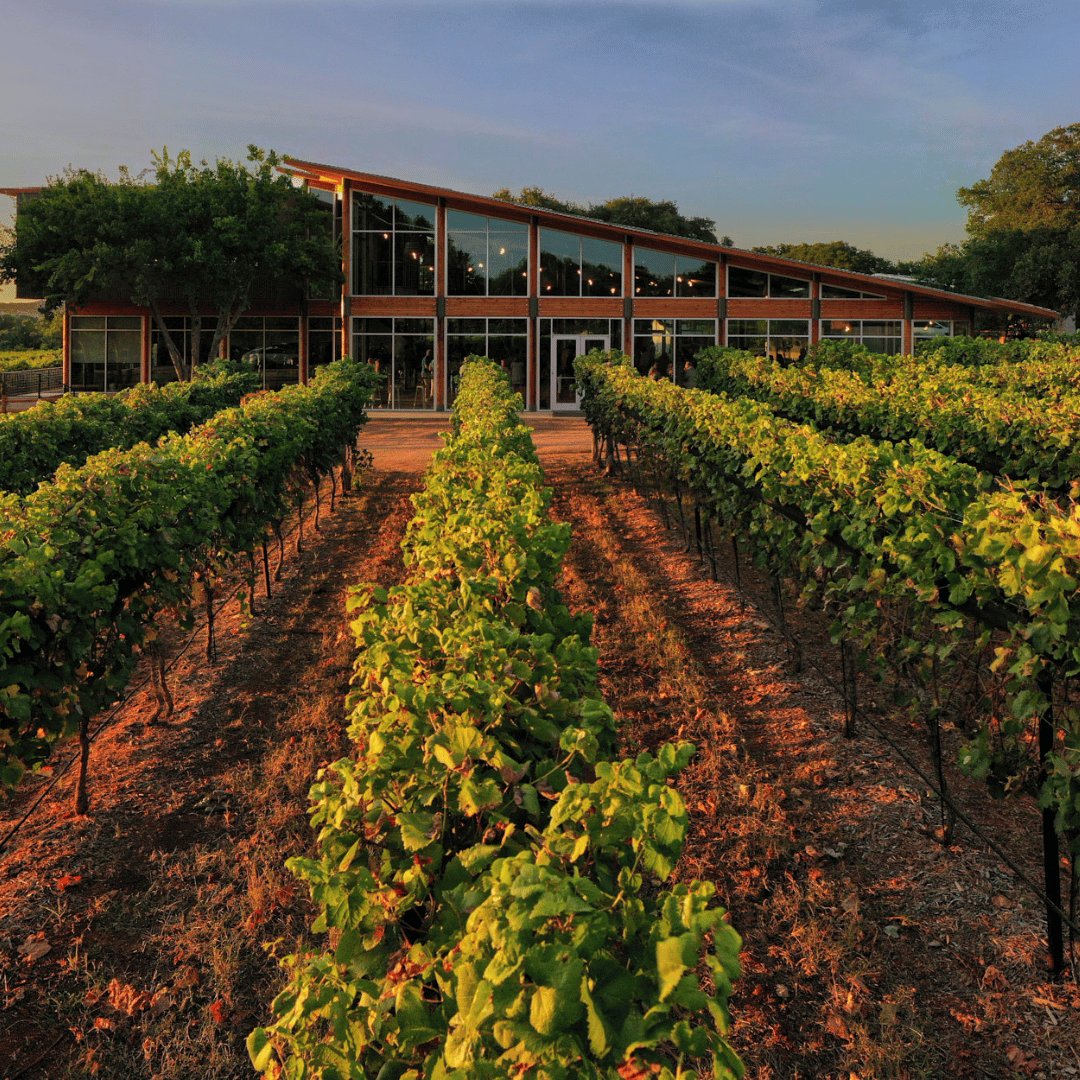
About William Chris Vineyards
On US-290 in Hye, William Chris Vineyards sits at the center of a Texas Hill Country wine conversation that has grown considerably more serious over the past decade. The estate holds a Pearl 2 Star Prestige rating (2025) and represents a strand of Texas winemaking that prioritizes site expression over varietal spectacle. For anyone tracing the Hill Country's shift toward restrained, land-driven wines, it is a logical first stop.
Where the Limestone Talks
The drive along US-290 between Johnson City and Fredericksburg passes through some of the most wine-active corridor in Texas, with tasting rooms arriving at regular intervals on either side of the road. William Chris Vineyards, at the Hye address, sits in the thicker part of that corridor, yet the property reads differently from neighbors that lead with spectacle or scale. What you encounter on arrival is land that insists on being looked at: thin, pale soils, cedar and live oak framing open sky, and a heat that has purpose rather than hospitality. This is the physical argument that Texas Hill Country winemakers have been making to skeptical American wine consumers for years, and the vineyards here contribute a specific chapter of that argument.
The Hill Country's geological signature is a complex of limestone, granite, and shallow clay soils that drain aggressively and force vines into low-yield stress. That stress is the point. Across well-documented growing regions from Burgundy to Priorat, the relationship between poor, fast-draining soils and concentrated, expressive fruit is the foundational premise of fine wine. Texas Hill Country operates on the same logic, though at higher temperatures and with a growing season that demands different varietal choices. At William Chris, the winemaking approach accepts those conditions rather than engineering around them, which is the defining split in contemporary Texas wine. For context on how that philosophy compares across American wine country, [Adelaida Vineyards in Paso Robles](https://www.enprimeurclub.com/wineries/adelaida-vineyards) offers a useful parallel: a warm-climate property where the case for terroir expression rests on similarly calcareous soils and a decision to farm in alignment with the site.
The Pearl 2 Star Prestige Assessment
In 2025, William Chris Vineyards received a Pearl 2 Star Prestige designation, placing it inside the upper tier of the EP Club's assessed Texas Hill Country producers. Within the regional context, that rating carries weight: the Hill Country appellation is not evaluated on the same scale as Napa or Willamette Valley in terms of critical volume, but the Pearl system applies consistent criteria across regions, meaning a 2 Star Prestige reflects genuine wine quality rather than regional grade inflation. The designation signals that the wines deliver on the terroir argument rather than simply making it.
For comparative reference, consider where similar 2 Star designations appear in California: [Artesa Vineyards and Winery in Napa](https://www.enprimeurclub.com/wineries/artesa-vineyards-and-winery), [Accendo Cellars in St. Helena](https://www.enprimeurclub.com/wineries/accendo-cellars), and [Adelsheim Vineyard in Newberg](https://www.enprimeurclub.com/wineries/adelsheim-vineyard-newberg-winery) each sit in established appellations where critical consensus has decades of data behind it. William Chris arriving at a comparable level of recognition within a newer, less-critiqued region is meaningful. It implies that the wines compete on their own terms rather than benefiting from a better-known address.
A Shared Winemaking Philosophy and What It Produces
The winery's founding partners, William Blackmon and Chris Brundrett, are identified in EP Club's own notes as sharing a winemaking philosophy and a vision for what Texas Hill Country wine can be. That alignment, between two producers working with the same land and the same set of constraints, is worth examining as a structural point about how serious wine operations tend to develop. The most credible regional wineries are rarely built around a single visionary but around a coherent approach that survives collaboration. Burgundy's domaine model, the partnership structures common in Napa, and co-operative production in many Southern Rhône villages all suggest that shared conviction produces more consistent results than individual experiment.
The Hill Country's warm-climate varietal palette tends toward Tempranillo, Mourvèdre, Grenache, Viognier, and Albariño, grapes with Iberian and Southern French origins that tolerate heat without losing structural acidity. These are not the varietals that built American wine's international reputation in the 1970s and 1980s, and that is precisely the point. Winemakers working in the Texas Hill Country have had to make a deliberate case for an alternative canon, and the most persuasive entries in that case come from properties that understand the soil chemistry and vine stress cycles well enough to let them direct the wine. [Alban Vineyards in Arroyo Grande](https://www.enprimeurclub.com/wineries/alban-vineyards) and [Andrew Murray Vineyards in Los Olivos](https://www.enprimeurclub.com/wineries/andrew-murray-vineyards) both built significant reputations around Rhône varietals in California before the consensus caught up with them. The Hill Country is at an earlier stage of the same trajectory.
Visiting Hye: Logistics and the Tasting Room
Address on US-290 in Hye puts William Chris within easy reach of Fredericksburg to the east and Johnson City to the west, both of which carry dining and accommodation options for visitors spending a weekend on the wine corridor. Hye itself is small enough that the winery is effectively the destination rather than part of a denser neighborhood grid. This is worth knowing when planning a day: the visit is an anchor, not a stop. Visitors should build time around it accordingly, rather than treating it as one of several quick tastings.
Because specific hours and booking requirements are not confirmed in EP Club's current data, the practical recommendation is to verify current tasting formats and reservation policies directly with the estate before visiting. Hill Country tasting rooms have shifted considerably toward appointment-based models over the past several years as demand on the corridor has grown, and walk-in availability is not guaranteed at most serious producers in the region. This is consistent with broader patterns in American wine tourism: properties in [our full Texas Hill Country restaurants guide](https://www.enprimeurclub.com/cities/texas-hill-country) and across comparable corridors in California have moved toward structured visits that allow more focused wine education rather than high-volume throughput.
The Hill Country wine corridor operates across varying price tiers. No confirmed pricing for William Chris tastings is available in current EP Club data, but the Pearl 2 Star Prestige positioning suggests it aligns with the upper-middle bracket of Hill Country tasting room fees, which in 2024 and 2025 have ranged broadly depending on format and inclusion of allocated or reserve wines. Budget accordingly rather than assuming a basic tasting fee.
Where William Chris Sits in the Texas Wine Story
Texas wine's credibility problem with national critics has been persistent and, in many ways, productive. It has forced producers who believe in the terroir to argue their case through the wine rather than through borrowed prestige. The Hill Country is now far enough into its development cycle that the argument is being heard. Properties like William Chris, with recognized critical ratings and a documented commitment to site-driven production, are the ones carrying the regional case forward.
For comparison with how other warm-climate American producers have handled similar positioning challenges, [Au Bon Climat in Santa Barbara](https://www.enprimeurclub.com/wineries/au-bon-climat-santa-barbara-winery) built a Burgundian case inside California at a time when that case seemed improbable. [Alpha Omega Winery in Rutherford](https://www.enprimeurclub.com/wineries/alpha-omega-winery-rutherford-winery), [Alexander Valley Vineyards in Geyserville](https://www.enprimeurclub.com/wineries/alexander-valley-vineyards-geyserville-winery), [Aubert Wines in Calistoga](https://www.enprimeurclub.com/wineries/aubert-wines), and [B.R. Cohn Winery in Glen Ellen](https://www.enprimeurclub.com/wineries/br-cohn-winery-glen-ellen-winery) all developed regional identities before their appellations held wide critical consensus. [Babcock Winery and Vineyards in Lompoc](https://www.enprimeurclub.com/wineries/babcock-winery-vineyards-lompoc-winery) and [Aberlour](https://www.enprimeurclub.com/wineries/aberlour-aberlour-winery) and [Achaia Clauss in Patras](https://www.enprimeurclub.com/wineries/achaia-clauss-patras-winery) represent the broader global pattern: that serious wine comes from producers who commit to a place rather than a market position. William Chris is at an identifiable point on that arc, and the 2025 Pearl 2 Star Prestige marks where the arc currently stands.
Frequently Asked Questions
What's the vibe at William Chris Vineyards?
The property sits on the US-290 wine corridor in Hye, within one of the Hill Country's most active stretches for wine tourism. The Pearl 2 Star Prestige rating (2025) places it in the upper tier of assessed Texas producers, which tends to correspond with a more deliberate, wine-focused visit format rather than a casual drop-in atmosphere. Visitors coming to the Hill Country specifically for wine, rather than as part of a broader Texas road trip, will find the approach here consistent with that intention. Pricing details are not confirmed in current EP Club data, so check directly with the estate before visiting.
What should I taste at William Chris Vineyards?
The Hill Country's most compelling wines are currently being made from Iberian and Southern French varietals, Tempranillo, Mourvèdre, Grenache, Albariño, and Viognier, that tolerate the regional heat while retaining acidity. William Chris, with a philosophy grounded in site expression rather than varietal correction, is the kind of producer where that category makes the strongest case. The 2025 Pearl 2 Star Prestige designation, aligned with EP Club's assessment of the winery's terroir-driven approach, suggests the wines that leading represent the land are the ones to seek out during a tasting. Specific current releases are not confirmed in EP Club's data, so ask the tasting room staff which bottlings leading reflect the limestone-driven character of the estate.
Recognized By

Related editorial
- Best Fine Dining Restaurants in ParisFrom three-Michelin-star icons to the next generation of Parisian chefs pushing boundaries, these are the restaurants that define fine dining in the world's culinary capital.
- Best Luxury Hotels in RomeFrom rooftop terraces overlooking ancient ruins to Michelin-starred hotel dining, these are the luxury hotels that make Rome unforgettable.
- Best Cocktail Bars in KyotoFrom sleek lounges to hidden speakeasies, Kyoto's cocktail scene blends Japanese precision with global influence in ways you won't find anywhere else.
Save or rate William Chris Vineyards on Pearl
Keep this venue in your Pearl passport, rate it after you visit, and track it alongside every other place you collect.