
Winery in Santorini, Greece
Boutari Winery (Santorini)
500ptsVolcanic-Terroir Assyrtiko
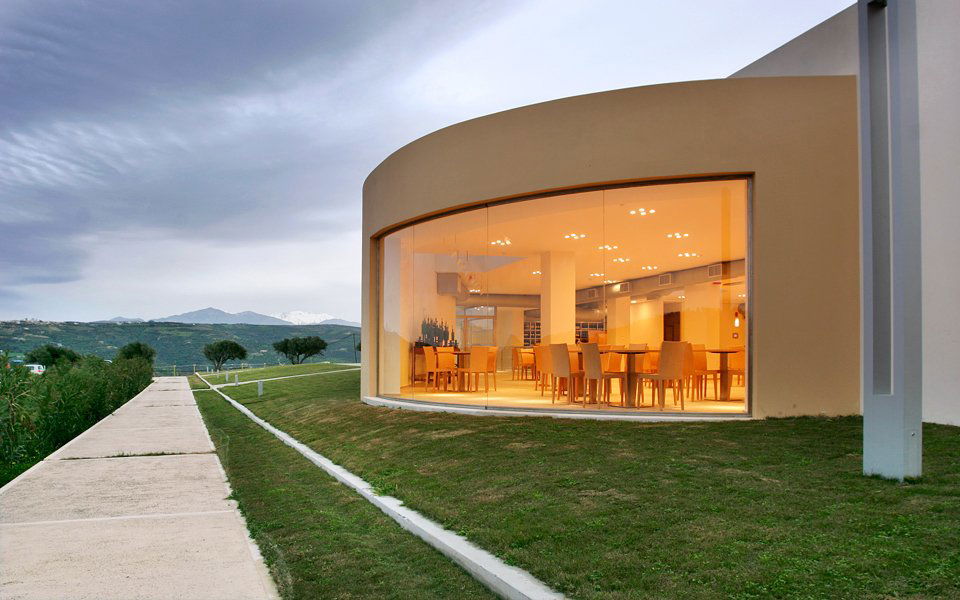
About Boutari Winery (Santorini)
Boutari Winery in Megalochori sits within Santorini's most structurally demanding wine tradition, where Assyrtiko grown on volcanic pumice and harvested by hand shapes everything that pours. Recognised with a Pearl 2 Star Prestige award in 2025, the winery operates at a tier where the island's geological identity and culinary pairing culture converge. It belongs in any serious itinerary of Santorini's wine circuit.
Volcanic Ground, Serious Wine
Approaching Megalochori from the caldera road, the landscape shifts. The postcard geometry of blue domes gives way to low-lying vineyards trained in the traditional kouloura basket weave, vines coiled close to the pumice earth to survive the meltemi winds that tear across the island each summer. This is the agricultural Santorini that pre-dates the tourism economy, and wineries operating here are embedded in that older logic rather than grafted onto it. Boutari Winery sits in this context: a Megalochori address, a 2025 Pearl 2 Star Prestige recognition from EP Club, and a place in the upper tier of the island's wine conversation.
Santorini's wine identity is shaped almost entirely by geology. The island sits on a caldera formed by one of the largest volcanic eruptions in recorded history, and its soils carry almost no clay or organic matter, which means phylloxera — the root louse that devastated European viticulture in the nineteenth century — never took hold here. Vines remain ungrafted on their original rootstocks, some several hundred years old, producing yields so low they force concentration into every berry. For producers working within this system, the terroir is not a selling point so much as a structural reality that defines what is possible in the glass.
Where Boutari Sits in the Island's Wine Tier
Santorini has a defined hierarchy among its wine producers. At the cooperative end, SantoWines (Santorini Coop) consolidates production from dozens of small growers and functions as an introduction to the island's range. In the mid-tier, operations like Koutsoyannopoulos Winery and Canava Santorini Distillery (1974) layer in heritage and distinct format. At the upper end, producers like Estate Argyros and Artemis Karamolegos Winery compete on critical recognition and allocation depth.
Boutari's 2025 Pearl 2 Star Prestige designation places it in that upper bracket, aligning it with a peer set defined by sustained critical engagement rather than volume or visibility. The Boutari name itself carries weight across Greek wine: the family operation has worked across multiple Greek appellations for generations, but the Santorini expression draws its credibility specifically from the volcanic terroir at Megalochori rather than from national brand recognition alone. That distinction matters in a wine region where terroir specificity is the primary currency.
Assyrtiko and the Culinary Context
The editorial angle that most rewards attention here is not the wine in isolation but the way it functions alongside food. Assyrtiko, the dominant white variety of Santorini, is structurally built for the table in a way that few other Mediterranean whites are. High natural acidity, mineral-driven salinity, and moderate to low residual sugar make it a natural partner for the seafood and legume-based cooking that defines the island's culinary tradition. The tension between the wine's lean frame and its capacity for textural richness when fermented or aged in oak positions it usefully across a range of dishes, from raw shellfish to richer, cream-adjacent preparations.
This pairing logic plays out across Santorini's dining circuit, where the better restaurants have moved away from pan-Mediterranean wine lists toward island-centric selections that put local producers, including those at the prestige tier, at the centre. For visitors treating the island seriously, the wine experience at a producer like Boutari is continuous with the meal that follows or precedes it, not a separate activity. Megalochori itself sits close enough to the island's interior villages to make an afternoon circuit of winery visits and a dinner at one of the village tavernas a coherent itinerary rather than a logistical stretch.
Vinsanto, the island's amber-hued late-harvest wine made from sun-dried Assyrtiko and Aidani grapes, sits at the other end of the pairing spectrum. Sweet, oxidative, and concentrated, it is one of the more historically significant dessert wines in Greek production and pairs in the traditional sense with melopita (honey cheesecake) and other local pastry work. Any serious wine programme on Santorini will offer access to Vinsanto, and understanding how it differs in structure and function from a dry Assyrtiko is part of what separates a purposeful visit to a Prestige-tier producer from a scenic tasting stop.
Planning a Visit from Santorini's Other Wine Stops
The Santorini wine circuit rewards a day structured around the island's southern and interior zones rather than the caldera-facing north, where the concentration of tourist infrastructure tends to dilute the agricultural atmosphere. Megalochori, where Boutari is based, is a practical anchor for a circuit that might also include a visit to Artemis Karamolegos Winery and the cooperage perspective at Estate Argyros. The village itself has a quieter character than Oia or Fira, and the architectural texture, low-rise whitewash, barrel-vaulted storage spaces, and wind-sheltered courtyards, gives the wine a more legible physical context.
Visitors planning around the harvest season, which typically runs from late August into September on Santorini given the island's heat and low-yield vines, will find the production landscape at its most active. Arriving outside peak tourist season, from October through April, generally means shorter waits and more substantive engagement with production staff, though opening schedules at individual producers should be confirmed directly before arrival. Contact and booking information for Boutari Winery is not currently listed in our database; checking the winery's own channels in advance is advisable, particularly during the winter months when Santorini's visitor economy contracts significantly.
For those building a broader Greek wine itinerary, the Boutari name connects to operations in other appellations across the country. Greece's wine geography is more varied than its international profile suggests: producers like Alpha Estate in Amyntaio work in the cooler northern zone with Xinomavro, while Acra Winery in Nemea draws on Agiorgitiko in the Peloponnese. The range of Achaia Clauss in Patras represents a different strand of Greek wine history, rooted in the nineteenth-century export economy. Each of these operations anchors a distinct regional tradition; Santorini's volcanic Assyrtiko remains the most internationally recognised expression, but it occupies one corner of a much wider picture.
For those extending beyond Greece entirely, the structural logic of volcanic-terroir winemaking has parallels in the Canary Islands, in Etna, and in parts of the Azores, where indigenous varieties on mineral-heavy soils produce wines with comparable tension and salinity. Closer in spirit, if not geography, are allocation-driven operations like Accendo Cellars in St. Helena, where scarcity and critical recognition define the tier rather than volume.
What EP Club's Pearl 2 Star Prestige Rating Signals
The 2025 Pearl 2 Star Prestige designation is EP Club's assessment marker for producers operating at a sustained level of quality and critical relevance. Within Santorini's competitive set, where multiple producers now carry international recognition and the appellation itself commands premium pricing across export markets, a Prestige-tier classification positions Boutari among the island's most serious operations rather than its most accessible ones. That distinction is useful for visitors trying to allocate limited time between producers: a Pearl 2 Star designation is a signal that the engagement will reward depth of attention rather than a quick pour and a view.
For the full picture of what to eat, drink, and experience across the island, see our full Santorini restaurants guide. Additional Greek winery perspectives worth reading alongside this entry include Abraam's Vineyards in Komninades, Aiolos Winery in Palaio Faliro, Akrathos Newlands Winery in Panagia, and Anatolikos Vineyards in Xanthi.
Frequently Asked Questions
What's the leading wine to try at Boutari Winery (Santorini)?
Santorini's most structurally significant wines are its dry Assyrtikos and its Vinsanto. Dry Assyrtiko from volcanic pumice soils carries high acidity, a saline mineral character, and the kind of concentration that comes from extremely low yields on old, ungrafted vines. Vinsanto is the island's late-harvest alternative: oxidative, amber-coloured, and built for dessert pairings. Boutari carries a Pearl 2 Star Prestige recognition in 2025, which places its production in the tier where both expressions are likely handled with seriousness. Either makes a worthwhile focus depending on whether you are visiting before or after a meal.
What's the defining thing about Boutari Winery (Santorini)?
The defining fact is the combination of location and recognition: a Megalochori address puts Boutari inside Santorini's agricultural core rather than on the tourist-facing caldera rim, and the 2025 Pearl 2 Star Prestige rating from EP Club confirms it operates at the upper tier of the island's producer set. Santorini wines command a premium in international markets because of the appellation's volcanic geology and ungrafted vine age, and a Prestige-tier producer is engaging with that tradition at depth rather than at scale.
How far ahead should I plan for Boutari Winery (Santorini)?
Santorini's high season runs from late June through August, when visitor pressure across the island is at its most intense and winery visits benefit from advance coordination. Contact and booking details for Boutari Winery are not currently in our database, so confirming availability directly through the winery's own channels before arrival is the practical first step. Visiting in shoulder season, May or early June, and again in September through October, generally offers more access and a quieter atmosphere at Prestige-tier producers. Winter opening hours contract significantly across the island, so planning ahead matters more from November onward.
Related editorial
- Best Fine Dining Restaurants in ParisFrom three-Michelin-star icons to the next generation of Parisian chefs pushing boundaries, these are the restaurants that define fine dining in the world's culinary capital.
- Best Luxury Hotels in RomeFrom rooftop terraces overlooking ancient ruins to Michelin-starred hotel dining, these are the luxury hotels that make Rome unforgettable.
- Best Cocktail Bars in KyotoFrom sleek lounges to hidden speakeasies, Kyoto's cocktail scene blends Japanese precision with global influence in ways you won't find anywhere else.
Save or rate Boutari Winery (Santorini) on Pearl
Keep this venue in your Pearl passport, rate it after you visit, and track it alongside every other place you collect.