
Winery in San Pedro de Atacama, Chile
Atacamasour Distillery
500ptsHigh-Altitude Desert Distillation
About Atacamasour Distillery
Atacamasour Distillery sits on Caracoles, San Pedro de Atacama's central strip, operating at an altitude and aridity that no Chilean valley producer can replicate. A 2025 EP Club Pearl 2 Star Prestige award places it in Chile's upper tier of spirits producers. For travellers passing through the Atacama Desert, the distillery offers a rare opportunity to taste spirits shaped entirely by extreme high-altitude terroir.
Spirits at the Edge of the Driest Place on Earth
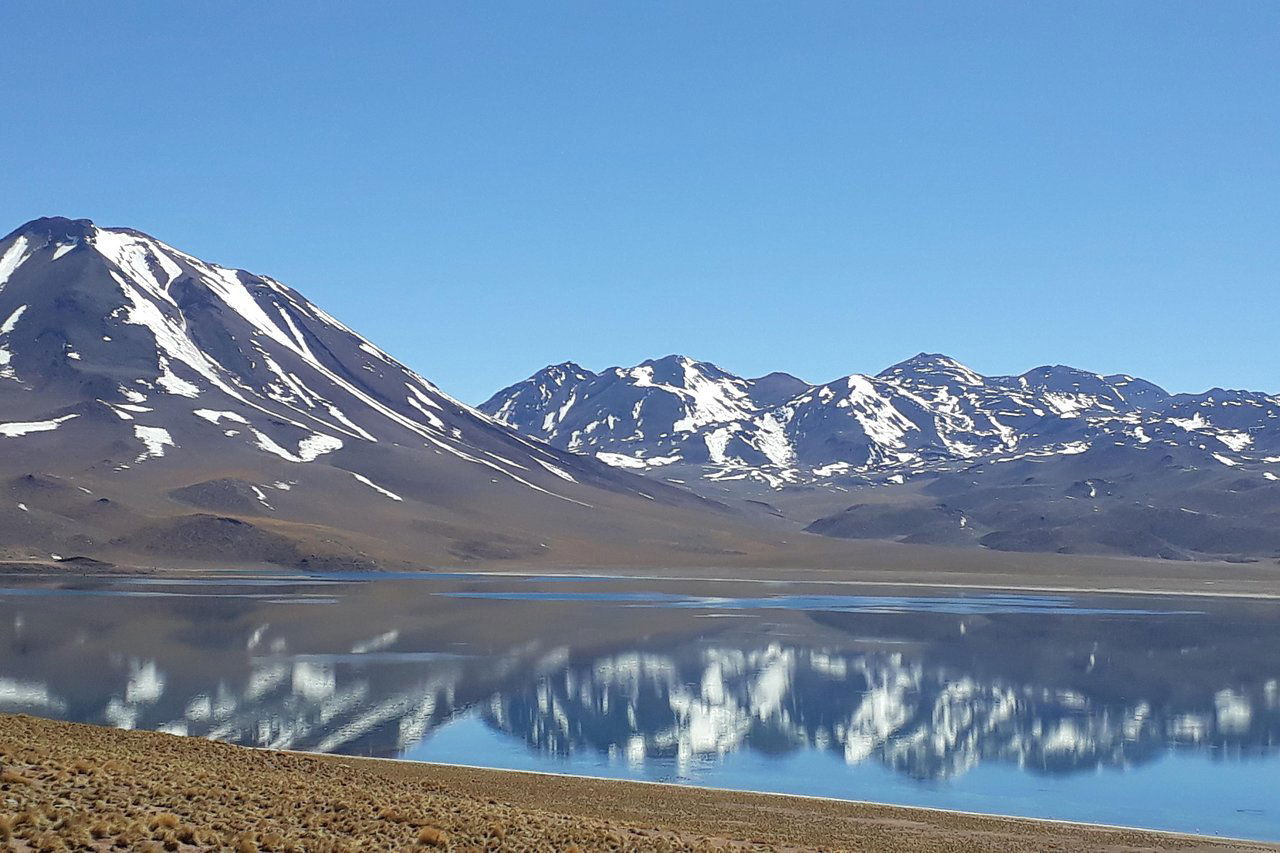
Approach Caracoles in the late afternoon and the light does something specific: it flattens across the adobe walls and turns the dust a shade of copper that coastal Chile never sees. San Pedro de Atacama sits at roughly 2,400 metres above sea level, surrounded by salt flats, volcanic peaks, and an atmosphere so dry that the Atacama Desert is classified alongside polar deserts as one of the least hospitable environments on the planet. It is in this context — not the verdant Central Valley, not the fog-cooled coastal ranges — that Atacamasour Distillery operates. The address, Caracoles 254-d, places it in the commercial and cultural heart of town, where travellers converge after days in the desert, but the raw material logic of this place is entirely dictated by what surrounds it.
Chile's distilling and winemaking conversation has historically centred far to the south: the Central Valley appellations, the Maipo and Colchagua producers, houses like Viña Casa Silva in San Fernando and Viña De Martino in Isla de Maipo, or the pisco producers operating through the Atacama and Coquimbo regions, such as Pisco Alto del Carmen Distillery in Huasco and Viña Falernia in Vicuña. Those producers work at altitude, but none of them operate at the extremes of San Pedro. Atacamasour Distillery is doing something categorically different in terms of environment, and that environmental distinction is the central story here.
What Extreme Altitude Does to Spirits Production
High-altitude distillation is not merely a marketing category. The physics of it are real. At elevations above 2,000 metres, atmospheric pressure drops, which lowers the boiling point of alcohol. A still operating in San Pedro de Atacama behaves differently from the same still at sea level: temperatures at which compounds transition change, evaporation rates shift, and the character of what passes through the condenser is altered. These are not marginal differences. High-altitude pisco production in northern Chile, particularly in the Elqui Valley, has been studied precisely because altitude-grown Muscat grapes develop differently than their low-elevation counterparts , higher UV exposure, larger diurnal temperature swings, and soil minerality from volcanic and pre-Andean geology all factor in. San Pedro takes that logic to its outer limit.
The concept of terroir, borrowed from wine but increasingly applied to spirits, becomes acute in environments this extreme. In the wine world, producers from Viña Seña in Panquehue to Accendo Cellars in St. Helena make site-specificity central to their proposition. The Atacama version of that argument has a harder edge: there is no comparable site. The combination of altitude, aridity, UV intensity, and Andean mineral geology that defines San Pedro de Atacama cannot be found in the Central Valley, and it cannot be found in most pisco-producing zones. What Atacamasour produces is, in environmental terms, a document of a place that has no analogue elsewhere in Chilean spirits production.
The EP Club Assessment
In 2025, Atacamasour Distillery was awarded a Pearl 2 Star Prestige rating by EP Club, positioning it in the upper bracket of Chilean producers recognised by the platform. That designation matters not just as a trust signal but as a comparative one. The EP Club rating system places Atacamasour in the same prestige tier as producers with deep Central Valley infrastructure and decades of international distribution. For a distillery operating in a desert outpost rather than an established appellation, that alignment with the national peer set is editorially significant.
For context on how Chilean producers sit within the broader EP Club framework, the platform also covers producers across multiple categories and regions, from Viña Undurraga in Talagante to Viña Valdivieso in Lontué, Viña Ventisquero in Santiago, Viña MontGras in Palmilla, and Viña Santa Rita in Buin. Atacamasour's 2025 recognition places it within that national conversation despite operating at the geographical and climatic extreme of the country.
San Pedro de Atacama as a Drinks Destination
San Pedro operates on a different logic from Chile's established wine tourism circuits. Where Valle de Colchagua or the Maipo appellation offer cellar-door experiences within easy reach of Santiago, San Pedro requires commitment: a flight to Calama and a 100-kilometre transfer through altiplano, or a road journey that most travellers spread across multiple days. The town is compact and the visitor population is self-selected. People arrive here for the Salar de Atacama, the Valle de la Luna, the geysers at El Tatio. The drinks scene is an addendum for most, which is precisely why a distillery operating at Pearl 2 Star Prestige level is worth noting on its own terms.
Caracoles, the main pedestrian strip where Atacamasour is located, concentrates the town's restaurants, bars, and shops within a walkable corridor. The address at 254-d places the distillery in accessible range of the central plaza without requiring transport. For travellers structuring a San Pedro itinerary, the evening hours , after the day's desert excursions and before the temperatures drop sharply , represent the natural window for visiting. The altitude affects alcohol metabolism at a noticeable level for most visitors; that is worth factoring into any tasting plan. You will feel two drinks here more than you would the same pour in Santiago.
For a broader view of what San Pedro's food and drink scene offers, our full San Pedro de Atacama restaurants guide maps the range of options across the town.
How Atacamasour Fits the Wider Chilean Spirits Conversation
Chile's spirits identity beyond pisco remains in an earlier phase than its wine culture. Producers like El Gobernador (Miguel Torres Chile) in Curicó and Balduzzi Winery in San Javier represent the estate tradition in the south, while international comparisons to single-malt producers such as Aberlour in Aberlour illustrate how distinct terroir can anchor a spirits category over time. Atacamasour's position is unusual within that map: it is not a pisco house in the conventional sense, nor a wine-adjacent producer in the Central Valley model. It occupies a category largely of its own geographic making.
That geographic specificity is both the distillery's strength and the reason its profile differs from most Chilean producers receiving EP Club recognition. The award validates the quality in the glass; the location explains why the glass tastes as it does. Those two things are, in this case, inseparable.
Planning a Visit
Atacamasour Distillery is located at Caracoles 254-d in San Pedro de Atacama, within walking distance of the town centre. Current phone and website details are not publicly listed in our database; visiting in person or checking locally on arrival is the most reliable approach for up-to-date hours and availability. San Pedro is busiest between June and August, when the Atacama's dry winter draws international visitors for its clear skies and accessible salt flats. The shoulder months of April-May and September-October offer thinner crowds on Caracoles without the colder evenings of midwinter. Regardless of when you visit, the altitude and aridity make hydration a logistical priority before any spirits tasting.
Frequently Asked Questions
What should I expect atmosphere-wise at Atacamasour Distillery?
Caracoles is San Pedro de Atacama's central pedestrian strip, and properties along it share a particular character: adobe construction, compact spaces, and an evening energy driven by travellers coming off full days in the desert. At 2,400 metres and with some of the lowest humidity readings on the planet, the air itself is a physical presence. The distillery carries the EP Club Pearl 2 Star Prestige designation for 2025, which signals a production standard that sits above the casual souvenir-spirits category common in tourist-heavy desert towns. Expect a focused rather than sprawling experience, shaped by the environmental logic of the place rather than the scaled infrastructure of a Central Valley estate.
What do visitors recommend trying at Atacamasour Distillery?
Without specific menu or product data in our current database, we are not in a position to recommend particular expressions by name. What the 2025 Pearl 2 Star Prestige rating from EP Club does confirm is that the output merits serious attention. Given the distillery's location in northern Chile's high-altitude pisco country, producers in this zone typically work with Muscat-family grapes grown under intense UV and wide diurnal temperature variation , conditions that tend to produce concentrated, aromatic source material. Any tasting should be approached with that environmental context in mind. For comparative reference across Chile's broader spirits and wine map, the Elqui Valley producers such as Viña Falernia in Vicuña offer useful context on what high-altitude northern Chilean production can achieve.
Related editorial
- Best Fine Dining Restaurants in ParisFrom three-Michelin-star icons to the next generation of Parisian chefs pushing boundaries, these are the restaurants that define fine dining in the world's culinary capital.
- Best Luxury Hotels in RomeFrom rooftop terraces overlooking ancient ruins to Michelin-starred hotel dining, these are the luxury hotels that make Rome unforgettable.
- Best Cocktail Bars in KyotoFrom sleek lounges to hidden speakeasies, Kyoto's cocktail scene blends Japanese precision with global influence in ways you won't find anywhere else.
Save or rate Atacamasour Distillery on Pearl
Keep this venue in your Pearl passport, rate it after you visit, and track it alongside every other place you collect.