Wildhorse (Barnard Griffin)
Richland
Winery in Richland, United States
 Book with Pearl
The Read
High-Desert Columbia Valley Pours
Price
$10–20tasting
Why go
Barnard Griffin Winery is worth considering as a focused Richland wine stop, especially for travelers building a broader Tri-Cities tasting day. It is a stronger fit for flexible couples or small groups than for anyone relying on a confirmed private or upgraded format without checking details first.
About Wildhorse (Barnard Griffin)
Deciding whether Wildhorse (Barnard Griffin) belongs on a carefully planned visit is the limiting factor in Richland. The profile is concise: the venue is in Richland, the dress code is casual, and it holds Pearl 2 Star Prestige recognition for 2025. Specific details about format, pricing, hours, food, private options, or featured offerings should be confirmed directly before planning around them.
The practical read: treat Wildhorse (Barnard Griffin) as a Richland venue to research and confirm, rather than assuming a particular visit structure or hospitality package. That caution is useful for travelers comparing several stops, groups coordinating timing, or anyone trying to build a special-occasion itinerary.
Use it as a focused Richland stop, not an all-day plan
For planning purposes, Wildhorse (Barnard Griffin) is best approached as a concise Richland entry with limited information. If the day also includes meals, lodging, or other activities in the city, keep broader Richland planning resources close while building the day.
The upgraded-experience question is where caution matters. If a private visit, appointment, or deeper guided format is the reason for going, confirm that directly before scheduling around it. Lacking details on those options or pricing, this is better approached as a venue whose exact visit experience should be checked in advance. Couples, small groups, and larger groups should all confirm timing and setup before committing.
Where it fits among serious itinerary planning
Compared with regional peers, Wildhorse (Barnard Griffin) is easiest to evaluate on its basics: Richland location, casual dress code, and Pearl 2 Star Prestige recognition in 2025. For a broader comparison set, consider Terra Blanca Winery, Kiona Vineyards, Hedges Family Estate, Fidelitas, or Woodward Canyon Winery while confirming the current details that matter most to your group.
For travelers comparing this stop with other notable venues, the decision should stay practical rather than depend on assumptions about a specific offering, format, or service style. Use the facts as the starting point, then check the venue directly for current visit details before making it the centerpiece of a route.
Bottom line: include Wildhorse (Barnard Griffin) if the route already points through Richland and the group values a Pearl 2 Star Prestige venue with a casual dress code. Do not make it the sole centerpiece of a special visit unless the exact format, timing, and group setup are confirmed in advance.
Planning details
- Location
- 878 Tulip Ln D, Richland, WA 99352
- Website
- barnardgriffin.com
- Phone
- +1 509-627-0266
The take
The Take
The Vibe
Wildhorse presents an intentionally elevated, terroir-forward personality that reads as both refined and grounded. The tasting room positions itself as a clear representative of Columbia Valley character — bright light, basalt soils and distinct diurnal swings — and the copy frames the experience as one that emphasizes structure and tension in the wines rather than lushness. A Pearl 2 Star Prestige designation underlines a commitment to quality, so the overall impression is of a sophisticated, classic tasting room where the landscape and winemaking tradition are central to the visitor experience.
Best For
Wildhorse is best for visitors who come to learn about Columbia Valley viticulture and to taste wines that articulate place. The copy explicitly frames the property as part of a regional conversation that rewards comparison and thoughtful tasting, so it suits wine-minded groups, educational visits and travelers prioritizing terroir-driven expressions. The Prestige rating also makes it a fitting stop for those seeking producers that operate above the local baseline and for people deciding between regional tasting-room options.
Tasting Tips
Treat the Prestige designation as a cue to plan ahead. The text advises readers to ‘unpack’ what the Pearl 2 Star Prestige rating signals before booking, so reserve your visit in advance when possible and ask staff about the Columbia Valley expressions on offer. Focus questions on vineyard sources and the wines’ acidity and diurnal influence — the piece highlights tension and structure as signature qualities — and prioritize a tasting that compares styles or sites to get the clearest sense of what this region produces.
Venue details
Ambiance
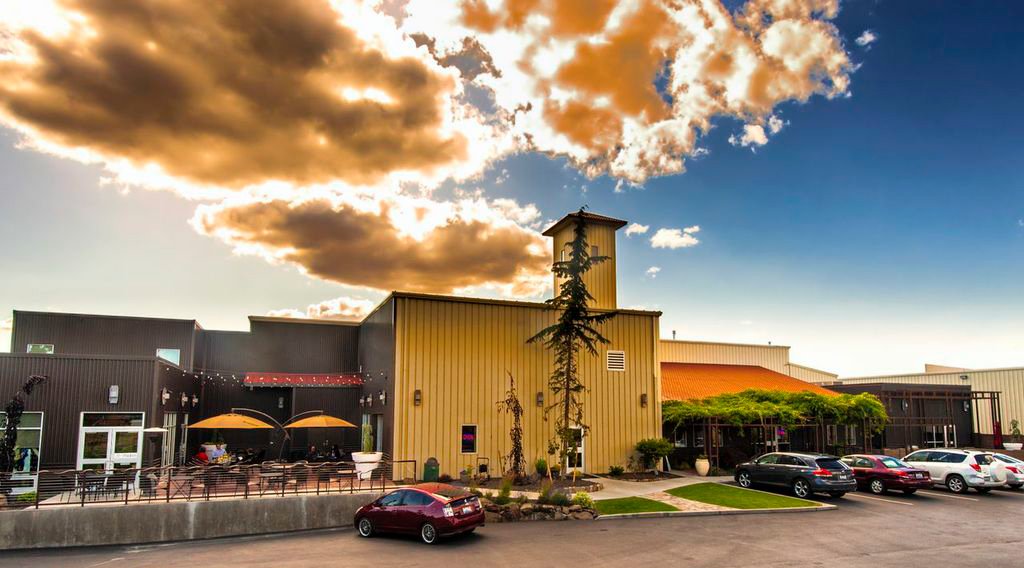
Pleasant and friendly tasting room with cozy outdoor patio area featuring umbrellas, grassy space, and gazebo, often described as comfortable and unpretentious.
Tags
Vibe
Best For
Experience
View
At the Vineyard
- Appellation
- Columbia Valley AVA
- Varietals
- Cabernet Sauvignon, Merlot, Syrah, Grenache, Chardonnay
- Tour Duration
- 30-60 minutes
- Visits
- Walk-ins welcome
- Farming
- Sustainable
- Production
- Mid-size producer
- Wine Styles
- Still Red, Still White, Still Rose, Dessert
- Food Pairing
- Offered
- Wine Club
- Available
Know before you go
Know Before You Go
- Getting there
- 878 Tulip Ln D, Richland, WA 99352
Planning details
Location
Also consider
Also Consider
- Hedges Family Estate, Notable alternative
- Kiona Vineyards, Notable alternative
- Fidelitas, Notable alternative
- Terra Blanca Winery, Notable alternative
- Woodward Canyon Winery, Notable alternative
Winery context
Wildhorse (Barnard Griffin) is the practical Richland pick when convenience and recognition matter more than a heavily scripted estate visit. Terra Blanca Winery is the better cross-shop if ambiance and a fuller destination feel are the priority, while Wildhorse (Barnard Griffin) makes more sense as one stop in a tighter city-based route.
For Red Mountain-focused tasting, Kiona Vineyards, Hedges Family Estate, and Fidelitas are stronger comparison points if the group wants a more vineyard-led frame. Choose Wildhorse (Barnard Griffin) when logistics are driving the day; choose those peers when the route is built around regional depth.
Woodward Canyon Winery belongs on the shortlist for travelers willing to range farther for a more established Washington wine itinerary. If booking access is tight, keep Terra Blanca Winery and Kiona Vineyards as practical backups rather than leaving the day dependent on one stop.
Explore Richland
Around this place
Discover more on Pearl
Unlock the full Wildhorse (Barnard Griffin) guide in Pearl, including awards, comparisons, FAQs, planning details, and nearby places.
Compare Wildhorse (Barnard Griffin)
| Venue | Location | Awards |
|---|---|---|
| Wildhorse (Barnard Griffin) | Richland | No published awards |
| Hedges Family Estate | Benton City | No published awards |
| Kiona Vineyards | Benton City | No published awards |
| Fidelitas | Benton City | No published awards |
| Terra Blanca Winery | Benton City | No published awards |
| Woodward Canyon Winery | Lowden | No published awards |
How Wildhorse (Barnard Griffin) Richland compares with similar nearby venues.
FAQ
Frequently Asked Questions
What other venues should I compare with Wildhorse (Barnard Griffin)?
If you are comparing stops in the broader area, Hedges Family Estate, Kiona Vineyards, Fidelitas, Terra Blanca Winery, and Woodward Canyon Winery are useful peers to consider. For Wildhorse (Barnard Griffin), confirm current details directly before building a route around it.
What should I expect at Wildhorse (Barnard Griffin)?
Information includes its Richland location, casual dress code, and Pearl 2 Star Prestige recognition for 2025. Do not build the visit around a specific offering unless you confirm it directly with the venue.
When is the best time to visit Wildhorse (Barnard Griffin)?
Hours or best-time guidance is not specified. Wildhorse (Barnard Griffin) is a Pearl 2 Star Prestige venue for 2025 with a casual dress code, but timing should be confirmed directly before you go.