



Domaine Jacques-Frédéric Mugnier
Chambolle-Musigny, Premeaux-Prissey
Winery in Premeaux-Prissey, France
 Book with Pearl
The Read
Monopole Minimalism
Why go
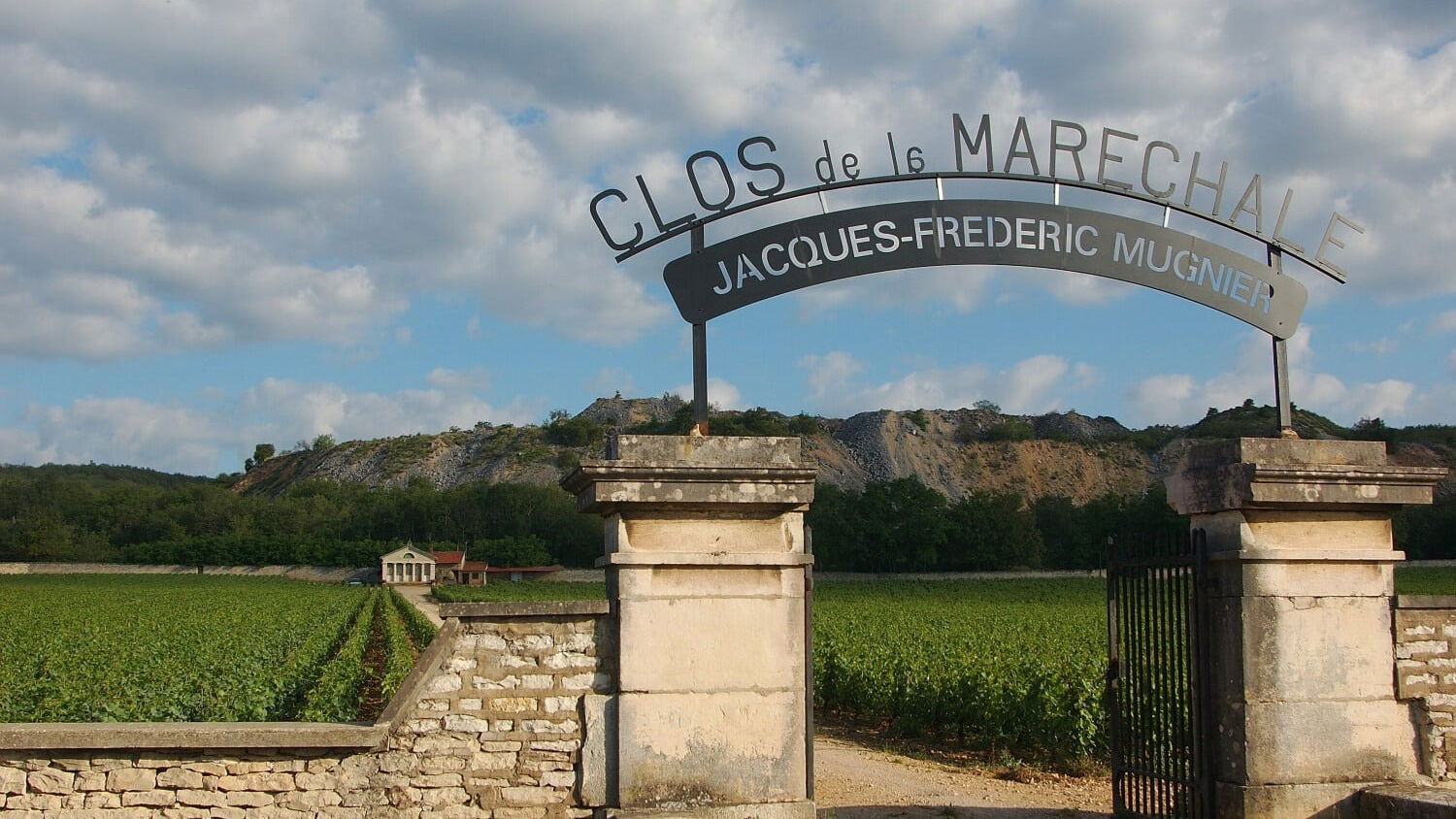
Domaine Jacques-Frédéric Mugnier is a wine estate associated with Clos de la Maréchale in Burgundy.
About Domaine Jacques-Frédéric Mugnier
Domaine Jacques-Frédéric Mugnier is a Premeaux-Prissey venue with a clearly high-end profile: it is listed with Pearl 5 Star Prestige recognition for 2025. The chef/owner detail is Frédéric Mugnier, and the dress code is smart casual.
Because the available record is limited, plan around confirmed essentials rather than assumed services or formats. Pearl does not have details here for public opening hours, prices, reservations, tastings, dining, shipping, group capacity, or a specific service style, so confirm practical arrangements directly before making firm plans.
Book for a confirmed Premeaux-Prissey venue profile
The strongest grounded reason to consider Domaine Jacques-Frédéric Mugnier is its Premeaux-Prissey setting and its Pearl 5 Star Prestige recognition. Keep expectations precise: the information supports a premium venue profile, not a detailed claim about the format of a visit.
If your itinerary depends on specific timing, access, purchases, food, or a guided experience, verify those details with the venue before building the day around it. Where details are not confirmed, treat them as open questions rather than assumptions.
Who should prioritize it
Domaine Jacques-Frédéric Mugnier is well suited to travelers who want to include a Pearl 5 Star Prestige venue in a carefully planned Premeaux-Prissey itinerary. The confirmed smart casual dress code also makes it a better fit for guests who are prepared for a polished experience.
For broader regional planning, you can compare it naturally with Domaine de la Vougeraie, Domaine Jérôme Chezeaux, Domaine de l'Arlot, Domaine Prieuré Roch, Domaine Camille Thiriet, and other regional options. For trip planning around the area, use our full Premeaux-Prissey venue guide, plus the local restaurants, hotels, bars, and experiences guides.
Planning details
- Location
- Clos de la Maréchale, 21700 Premeaux-Prissey
- Website
- mugnier.fr
- Phone
- +33380628539
The take
The Take
The Vibe
Domaine Jacques‑Frédéric Mugnier reads as a quietly authoritative Burgundy house. The writing highlights a walled monopole vineyard and a lineage that begins in 1870, underlining long institutional memory and an approach born of compounded site intelligence. It is discreet rather than theatrical: no roadside signage, no tasting rooms built for heavy foot traffic. The result is an experience that feels both historic and reserved — a place where scarcity and intention drive the character, and where the landscape and accumulated knowledge of parcels speak louder than promotion.
Best For
This domaine is best for visitors seeking deep context rather than casual tasting-room stops. It suits people interested in wine education, collectors or couples marking a special occasion, and solo explorers who come informed and attentive. The estate’s recognition and limited holdings mean visits reward focused attention: expect conversations about site, vine age and the compounding intelligence of long stewardship. If you appreciate provenance, continuity and wines that reflect closely tended parcels, this is a stop that delivers value to purposeful, deliberate visitors.
Tasting Tips
Plan your visit with orientation in mind: the domaine "does not announce itself" and is "not engineered for foot traffic," so arrive knowing the Clos de la Maréchale address and the surrounding geography. Expect scarcity and an experience tailored to informed guests — this is not a casual roadside stop. Allow extra time for navigation along the D974 and be prepared to prioritize specific bottlings or parcels if available. Approaching the visit with clear objectives and an appreciation for the estate's archival depth will make the most of what the domaine offers.
Venue details
Ambiance
Elegant and serene historic chateau setting with a focus on purity, precision, and graceful wines.
Tags
Vibe
Best For
Experience
Sourcing
View
At the Vineyard
- Appellation
- Chambolle-Musigny AOC
- Varietals
- Pinot Noir, Chardonnay
- Tour Duration
- 60-90 minutes
- Tour Languages
- French, English
- Visits
- By appointment only
- Farming
- Sustainable
- Wine Styles
- Still Red
- Wine Club
- Available
Know before you go
Know Before You Go
- Getting there
- Clos de la Maréchale, 21700 Premeaux-Prissey
Planning details
Location
Recognition and awards

Also consider
If you cannot secure it
Start with Domaine de la Vougeraie if the plan needs to stay in Prémeaux-Prissey. Add Domaine Jérôme Chezeaux as the second local fallback for a village-focused wine day.
Winery context
How it compares in Prémeaux-Prissey
Domaine Jacques-Frédéric Mugnier is the higher-commitment choice: pursue it when Burgundy pedigree and the Clos de la Maréchale setting are the main reasons for the trip. Domaine de la Vougeraie is the more practical cross-shop for visitors who want to stay within Prémeaux-Prissey and keep the itinerary workable, while Domaine Jérôme Chezeaux is the better backup if the priority is securing another local winery option rather than chasing a harder appointment.
For scarcity and collector appeal, this sits ahead of the easier fallback logic. Domaine Prieuré Roch is the peer to consider if the trip is built around rare Burgundy names rather than village convenience. Domaine de l'Arlot and Domaine Camille Thiriet make more sense as broader Burgundy alternatives if availability or routing makes Prémeaux-Prissey too narrow.
Value is less about tasting-room inclusions and more about whether access justifies the planning burden. For a celebration or collector-led visit, prioritize Mugnier first, then build backups around Vougeraie and Jérôme Chezeaux. For a group that needs predictable logistics, start with the more flexible local alternatives.
Explore Premeaux-Prissey
Around this place
Discover more on Pearl
Unlock the full Domaine Jacques-Frédéric Mugnier guide in Pearl, including awards, comparisons, FAQs, planning details, and nearby places.
Compare Domaine Jacques-Frédéric Mugnier
| Venue | Location | Awards |
|---|---|---|
| Domaine Jacques-Frédéric Mugnier | Premeaux-Prissey | 2026 Michelin 2 Grapes - Burgundy2026 Falstaff Winery Guide2025 Pearl 5 Star Prestige |
| Domaine de l'Arlot | Nuits-Saint-Georges | 2026 Falstaff Winery Guide |
| Domaine Prieuré Roch | Nuits-Saint-Georges | No published awards |
| Domaine de la Vougeraie | Premeaux-Prissey | 2026 Falstaff Winery Guide2025 Pearl 3 Star Prestige |
| Domaine Jérôme Chezeaux | Premeaux-Prissey | 2026 Falstaff Winery Guide |
| Domaine Camille Thiriet | Corgoloin | 2026 Falstaff Winery Guide2026 Michelin Grape Main Selection - Burgundy |

How Domaine Jacques-Frédéric Mugnier compares with similar nearby venues.
FAQ
Frequently Asked Questions
What other venues can I compare with Domaine Jacques-Frédéric Mugnier?
For a broader itinerary, compare it with Domaine de l'Arlot, Domaine Prieuré Roch, Domaine de la Vougeraie, Domaine Jérôme Chezeaux, and Domaine Camille Thiriet. Domaine Jacques-Frédéric Mugnier works as a Premeaux-Prissey anchor, while the other names can help with wider regional planning.
Does Domaine Jacques-Frédéric Mugnier offer a membership program?
Pearl does not have information about a membership program at Domaine Jacques-Frédéric Mugnier. If membership or access arrangements matter to your plans, confirm those details directly with the venue.
Do I need a reservation at Domaine Jacques-Frédéric Mugnier?
Pearl does not have reservation requirements for Domaine Jacques-Frédéric Mugnier. Because it is a Pearl 5 Star Prestige venue in Premeaux-Prissey, confirm access and timing directly before arranging your visit.
Does Domaine Jacques-Frédéric Mugnier offer shipping?
Pearl does not have shipping terms for Domaine Jacques-Frédéric Mugnier. If shipping or export arrangements are important, ask the venue directly before planning a purchase.
Can Domaine Jacques-Frédéric Mugnier handle large groups?
Pearl does not have group-capacity information for Domaine Jacques-Frédéric Mugnier. Confirm group size, timing, and any visit requirements directly with the venue before making plans.