
Winery in Oban, United Kingdom
Oban Distillery
750ptsCoastal Highland Production
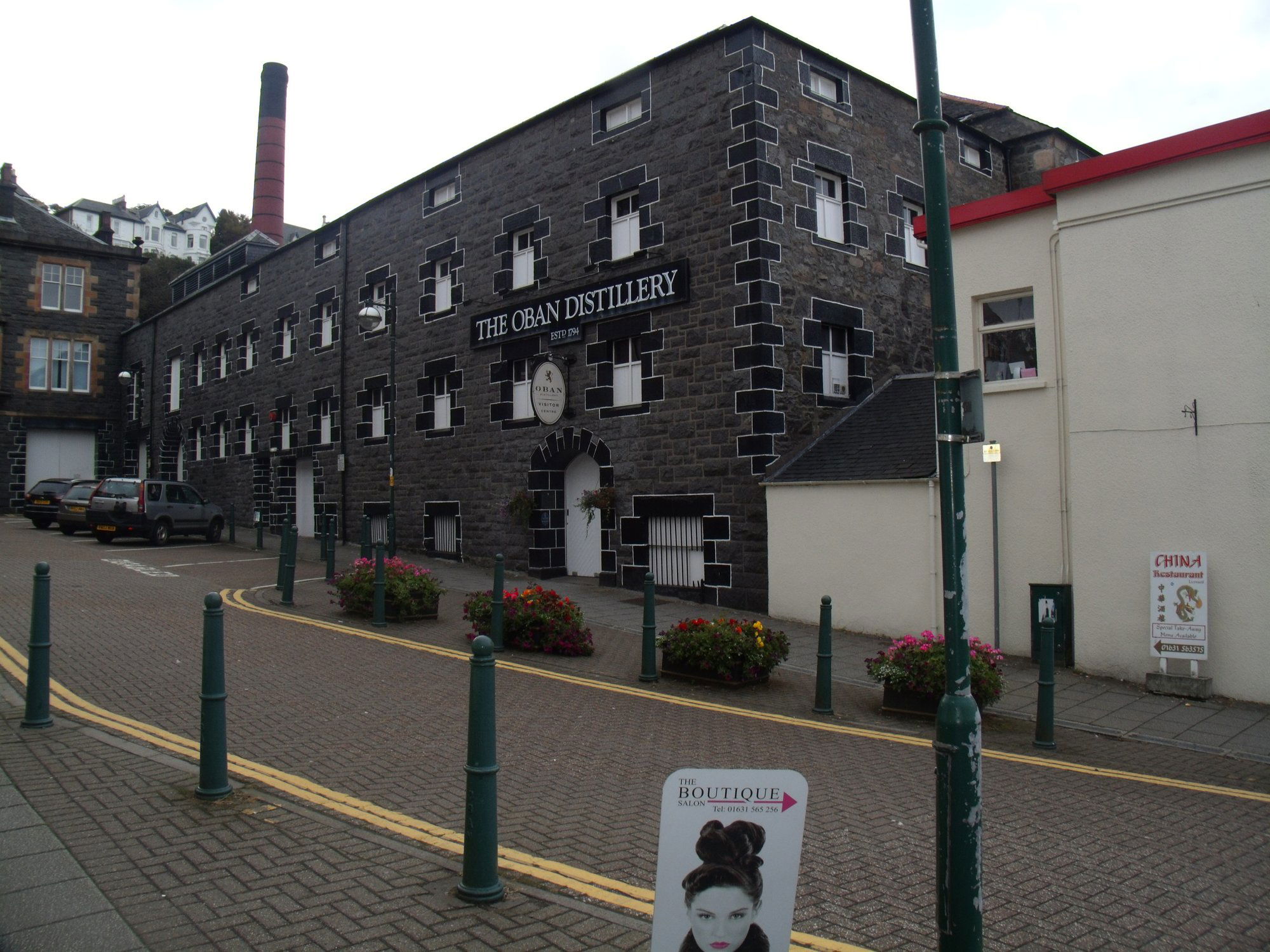
About Oban Distillery
One of Scotland's oldest working distilleries, Oban sits at the edge of the Western Highlands where salt air and coastal rock shape every aspect of its whisky character. Awarded Pearl 3 Star Prestige in 2025, it occupies a position among Scotland's most geographically distinctive producers. Its compact town-centre footprint and West Coast terroir make it a reference point for understanding Highland maritime single malt.
Where the Highlands Meet the Sea
Approach Oban on the A85 and the distillery appears before almost anything else in the town: a Victorian stone complex pressed up against the hillside, with the harbour and the Firth of Lorn visible just beyond the rooftops. This is not an accident of real estate. The location on Stafford Street places production almost at sea level, a few hundred metres from tidal water, and that proximity is the starting point for understanding what the whisky actually tastes like. In Scotland's single malt geography, distilleries are often categorised by region, but the more useful frame is physical: how the air, the water source, and the surrounding environment feed into the spirit. At Oban, the maritime influence is not a marketing phrase — it is a measurable consequence of where the stills have operated for well over two centuries.
Coastal Terroir and the West Highland Character
Scotland's whisky regions divide broadly into Highlands, Speyside, Islay, Campbeltown, and Lowlands, but the West Highland coastal pocket — a narrow strip running from the Mull of Kintyre north toward Ardnamurchan , produces a style that sits between the lighter Speyside house character and the heavily peated Islay tradition. Oban Distillery sits within that corridor, and its spirit carries the hallmarks of the zone: a saline edge from salt-laden Atlantic air during maturation, a waxy texture associated with the region's production methods, and a restrained use of peat that gives smoke as a background note rather than a dominant one. Compared to a distillery like Ardnahoe in Port Askaig on Islay, where oceanic influence combines with much heavier phenol levels, Oban reads as maritime but measured. Against an inland Highland producer such as Glen Garioch Distillery in Oldmeldrum, the coastal salinity is immediately apparent. The distillery has received a Pearl 3 Star Prestige award in 2025, a trust signal that places it within a peer group of recognised Scottish producers rather than the mass-market blended category.
The West Highland coast receives some of the highest rainfall in Britain, and that freshwater input shapes the distillery's water source in ways that alter mineral character in the new make spirit. This is the kind of terroir argument more commonly applied to wine , the notion that where water falls and what rock it passes through before reaching the production vessel matters to the final flavour , but it applies with equal validity to single malt. Distilleries along Scotland's northern coast, including Clynelish Distillery in Brora and Balblair Distillery in Edderton, share the logic of geography as flavour determinant, even if each arrives at a distinct house style.
A Production Setting Unlike Most Distilleries in Scotland
Most Scottish distilleries were built in valleys, beside burns, or in rural locations where land was cheap and water abundant. Oban is unusual in having urbanised around its distillery rather than the reverse: the town grew up alongside the operation, which means the site is now hemmed in on three sides by buildings, limiting any possibility of expansion. That constraint is not incidental to the character of the whisky. Small-scale production, with limited capacity to scale up output, keeps annual volumes relatively contained compared to major Speyside operations. Distilleries with constrained footprints , Dornoch Distillery in Dornoch is another compact example , tend to operate differently from industrial-scale producers, with less flexibility in fermentation timing, washback capacity, and cask throughput. The resulting whisky reflects those constraints as character rather than limitation.
The Victorian-era architecture is not simply aesthetic. The still house dimensions, dictated by the original building envelope, determine still shape and neck height , variables that directly influence how much copper contact the spirit achieves during distillation, which in turn affects the weight and oiliness of the new make. This is the point where heritage and terroir converge: the physical history of a site becomes inseparable from the flavour of what comes out of it.
Oban in the Context of Scotland's Coastal Distillery Tier
Scotland's whisky scene has increasingly divided between large-volume heritage brands optimised for blending supply and smaller, location-specific single malt producers whose identity is inseparable from geography. Oban sits in the latter group, sharing that positioning with producers as varied as Bladnoch Distillery in Bladnoch in the Lowlands, Glen Scotia in Campbeltown, and Auchentoshan Distillery in Clydebank , each representing a distinct regional character that cannot simply be replicated elsewhere. For visitors comparing distillery experiences across Scotland, this geographic specificity is the primary differentiator. A day at Oban is not interchangeable with a day on Speyside at Aberlour or Cardhu in Knockando. The house styles, the physical environments, and the visitor experience are categorically different in ways that go beyond marketing.
Within the West Highland and island corridor, the comparison set is tighter. Deanston in Deanston and Dunphail Distillery in Dunphail represent different Highland inflections , one converted from a cotton mill, one a new-build operation , but neither carries the specific coastal-urban combination that defines Oban's context. The 2025 Pearl 3 Star Prestige recognition positions Oban within a recognised prestige tier, which informs the visitor demographic: this is not primarily a stop for tourists seeking a branded merchandise shop, but a destination for those interested in understanding what West Highland maritime whisky production actually means in practice.
Planning a Visit
Oban is accessible by train from Glasgow Queen Street on the West Highland Line, a journey of roughly three hours that passes through Loch Lomond and Crianlarich , a practical route for visitors pairing distillery visits with broader West Highland travel. The distillery's town-centre address on Stafford Street means no car is required once in Oban, and the compact nature of the town allows the harbour, ferry terminal, and other local points of interest to be combined in a single day. For those building a wider Scottish distillery itinerary, the ferry connections from Oban to Mull and Islay make it a logical gateway before heading further into island whisky territory, including the Islay producers accessible via Port Askaig. Booking ahead for any ticketed distillery tour is advisable during the summer season, when the town receives significant visitor numbers as a ferry hub. For context on where Oban's food and drink scene sits more broadly, see our full Oban restaurants guide.
Frequently Asked Questions
- Is Oban Distillery more formal or casual?
- The distillery sits firmly in the casual-to-informed-enthusiast register. As a working town-centre facility in a harbour town, the atmosphere is approachable rather than ceremonial. That said, its Pearl 3 Star Prestige recognition in 2025 places it within a prestige tier of Scottish producers, so the visitor experience is substantive rather than purely touristic. There is no dress code expectation, and the setting , Stafford Street, Oban, facing toward the Firth of Lorn , is functional and historically layered rather than designed-for-Instagram.
- What is the signature bottle at Oban Distillery?
- Oban is most closely associated with its 14-year-old single malt, which has long served as the reference expression for West Highland maritime style within the Classic Malts range. The 14-year age statement allows sufficient maturation for the coastal character to integrate fully while preserving the lighter, waxy texture associated with the distillery's small-still production. The 2025 Pearl 3 Star Prestige award reflects the distillery's recognised standing in the premium single malt category. Specific current releases and limited editions should be confirmed directly with the distillery, as allocation varies.
- What is the main draw of Oban Distillery?
- The primary draw is the combination of geographic specificity and production history that cannot be found elsewhere in Scotland. Oban is one of very few operational distilleries built within a town centre, surrounded by Victorian-era architecture, with the Atlantic coast close enough to shape the maturation environment. For those interested in how location translates into flavour, the West Highland maritime character here , saline, waxy, lightly peated , is the point. The Pearl 3 Star Prestige award in 2025 signals that this is a producer whose output is taken seriously within the premium Scotch single malt category, not simply a heritage attraction.
Related editorial
- Best Fine Dining Restaurants in ParisFrom three-Michelin-star icons to the next generation of Parisian chefs pushing boundaries, these are the restaurants that define fine dining in the world's culinary capital.
- Best Luxury Hotels in RomeFrom rooftop terraces overlooking ancient ruins to Michelin-starred hotel dining, these are the luxury hotels that make Rome unforgettable.
- Best Cocktail Bars in KyotoFrom sleek lounges to hidden speakeasies, Kyoto's cocktail scene blends Japanese precision with global influence in ways you won't find anywhere else.
Save or rate Oban Distillery on Pearl
Keep this venue in your Pearl passport, rate it after you visit, and track it alongside every other place you collect.