





Domaine Faiveley
Nuits-Saint-Georges
Winery in Nuits-Saint-Georges, France
 Book with Pearl
The Read
Seven-Generation Côte de Nuits Stewardship
Why go
Domaine Faiveley is a winery on Rue du Tribourg in Nuits-Saint-Georges.
About Domaine Faiveley
Domaine Faiveley is a Nuits-Saint-Georges venue associated with Erwan Faiveley as owner. The dress code is smart casual, and the venue has Pearl 4 Star Prestige recognition for 2025 plus a World's 50 Best Vineyards #59 placement for 2025. Avoid assuming a specific visit format, menu, price, timetable, or service offering unless you have checked directly with the venue.
Domaine Faiveley is best considered as a serious Nuits-Saint-Georges stop with notable 2025 recognition. The useful planning question is whether you want one clearly recognized name in town, or whether your day is better spent comparing several Burgundy venues more broadly.
Choose it when you want Nuits-Saint-Georges with notable recognition
For a Burgundy itinerary, Domaine Faiveley can make sense as an anchor in Nuits-Saint-Georges because its recognition extends beyond a simple local listing: Pearl 4 Star Prestige in 2025 and World's 50 Best Vineyards #59 in 2025. Those facts support its inclusion for travelers who want a recognized name in the city without building the plan around assumptions about format, pricing, bottles, or availability.
If you are comparing related names, keep the plan focused rather than overbuilt. Domaine Henri Gouges, Domaine Bertrand Machard de Gramont, Domaine Jean-Marc Millot, Domaine Robert Chevillon, and Domaine Thibault Liger-Belair are natural reference points for a Burgundy-focused shortlist. For the wider map, use Our full Nuits-Saint-Georges wineries guide.
The better second-visit move is comparison, not collecting names
If this is a return trip to Burgundy, the smarter approach is to compare a small number of venues thoughtfully rather than stack too many names into one day. Domaine Faiveley belongs on that shortlist when 2025 recognition matters to the itinerary. Keep practical details out of the plan until you have checked them directly: tasting format, meal service, shipping policy, flagship bottle, price, hours, and address should all be confirmed with the venue before you rely on them.
Use the rest of the day to solve the practical parts of the trip separately. For dining around town, use Our full Nuits-Saint-Georges restaurants guide. For other planning needs, refer to the relevant Nuits-Saint-Georges guides and confirm current details directly with each venue before building a schedule.
Planning details
- Location
- 8 Rue du Tribourg, 21700 Nuits-Saint-Georges
- Website
- domaine-faiveley.com
- Phone
- +33 3 80 61 04 55
The take
The Take
The Vibe
Domaine Faiveley reads like a dossier of Côte de Nuits history — a multi‑generational family estate whose identity is inseparable from the slopes it tends. Founded in 1825 and stewarded by the seventh generation, the domaine sits amid the low stone walls and small shelters that give the landscape its UNESCO‑recognized character. The writing emphasizes lineage, terroir and the formal hierarchy of Burgundian appellations, lending the place a quiet gravitas: this is a serious, studied estate where history and the visual fabric of the vineyards feel present in every parcel.
Best For
This is a property for people who come to learn and to mark moments. The prose highlights closely studied wines, appellation hierarchy and the cultural system acknowledged by UNESCO — cues that make Faiveley a natural destination for wine education and for special occasions tied to terroir and tradition. Visitors interested in the historical sweep of Burgundy, or in tracing the distinctions between village, premier cru and grand cru sites, find a setting that foregrounds continuity, family stewardship and the meaning of place across generations.
Venue details
Ambiance
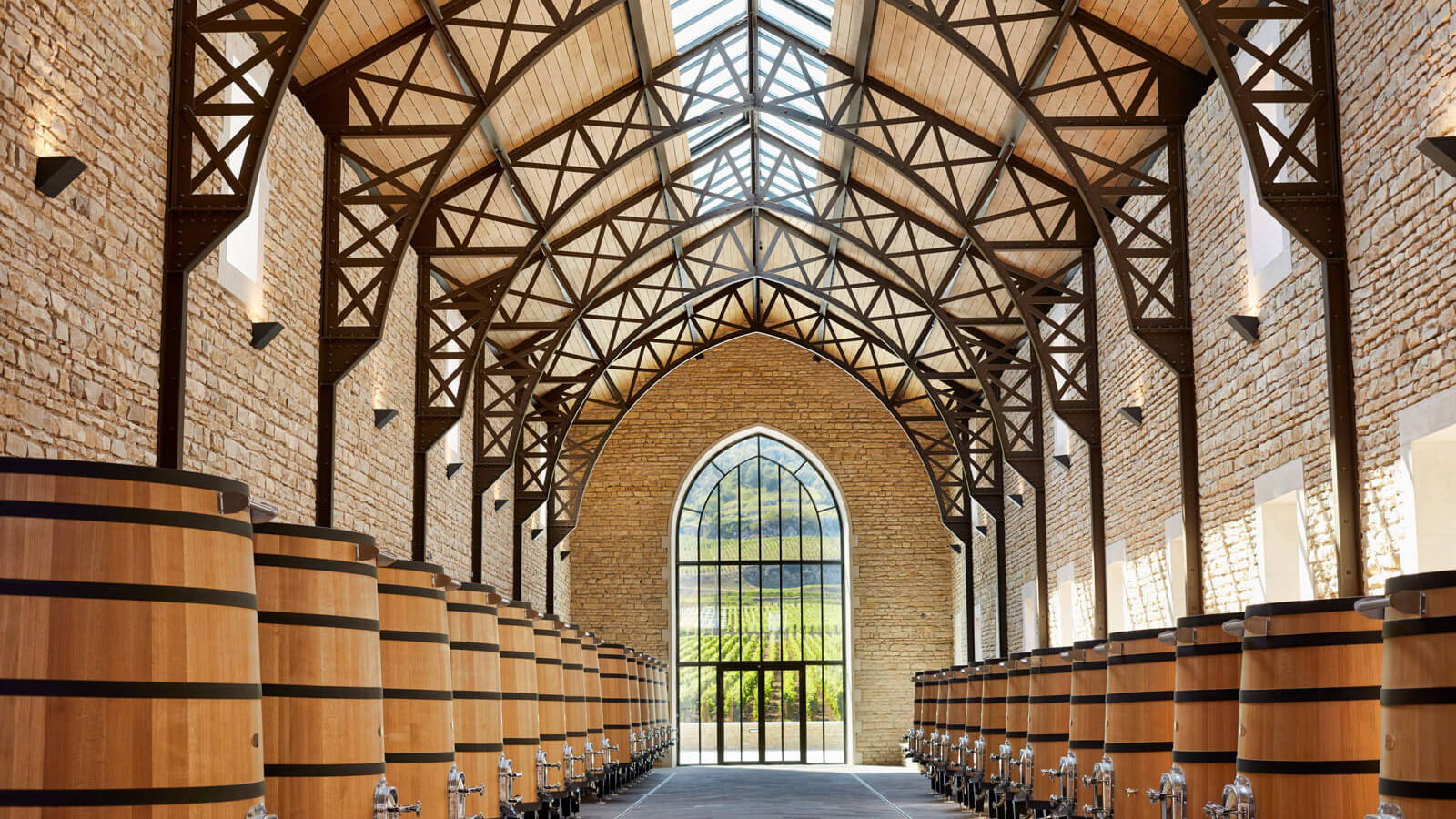
Historic 19th-century vaulted cellars provide an elegant, timeless atmosphere with deep, cool aging environments evoking Burgundian heritage.
Tags
Vibe
Best For
Experience
Sourcing
View
At the Vineyard
- Appellation
- Nuits-Saint-Georges AOC
- Varietals
- Pinot Noir, Chardonnay, Aligote
- Tour Duration
- 60-90 minutes
- Visits
- By appointment only
- Farming
- Organic
- Wine Styles
- Still Red, Still White
- Wine Club
- Not available
Know before you go
Know Before You Go
- Getting there
- 8 Rue du Tribourg, 21700 Nuits-Saint-Georges
Planning details
Location
Recognition and awards


Also consider
Also Consider
- Domaine Henri Gouges, Notable alternative
- Domaine Robert Chevillon, Notable alternative
- Domaine Jean-Marc Millot, Notable alternative
- Domaine Thibault Liger-Belair, Notable alternative
- Domaine Bertrand Machard de Gramont, Notable alternative
Winery context
How it compares in Nuits-Saint-Georges
Domaine Faiveley is the more regionally significant choice if the day needs one anchor appointment with broad Burgundy context. Domaine Henri Gouges and Domaine Robert Chevillon are better cross-shops for visitors who want a tighter Nuits-Saint-Georges focus, especially if the goal is to compare village identity rather than choose the highest-profile stop.
For a lower-pressure route, look at Domaine Jean-Marc Millot or Domaine Bertrand Machard de Gramont. They make more sense when value, intimacy, or a calmer day matters more than name recognition. Domaine Faiveley is the splurge-in-time choice: not necessarily because of a listed tasting price, but because the opportunity cost is high when Burgundy appointment slots are scarce.
Domaine Thibault Liger-Belair is the stronger alternative for travelers building a serious peer-to-peer itinerary around ambitious Côte de Nuits producers. Choose Domaine Faiveley when the brief is heritage and regional scale; choose the smaller peers when the brief is a more focused grower comparison inside Nuits-Saint-Georges.
Explore Nuits-Saint-Georges
Around this place
Discover more on Pearl
Unlock the full Domaine Faiveley guide in Pearl, including awards, comparisons, FAQs, planning details, and nearby places.
Compare Domaine Faiveley
| Venue | Location | Awards |
|---|---|---|
| Domaine Faiveley | Nuits-Saint-Georges | 2026 Falstaff Winery Guide2026 Michelin 1 Grape - Burgundy2025 World's 50 Best Vineyards · #592025 Pearl 4 Star Prestige |
| Domaine Henri Gouges | Nuits-Saint-Georges | No published awards |
| Domaine Robert Chevillon | Nuits-Saint-Georges | No published awards |
| Domaine Jean-Marc Millot | Nuits-Saint-Georges | No published awards |
| Domaine Thibault Liger-Belair | Nuits-Saint-Georges | 2026 Falstaff Winery Guide |
| Domaine Bertrand Machard de Gramont | Nuits-Saint-Georges | No published awards |
How Domaine Faiveley Nuits-Saint-Georges compares with similar nearby venues.
FAQ
Frequently Asked Questions
When is the best time to visit Domaine Faiveley?
Does Domaine Faiveley serve food?
Does Domaine Faiveley ship wine?
Is the wine club at Domaine Faiveley worth joining?
The main reasons to note Domaine Faiveley are its Nuits-Saint-Georges location, Erwan Faiveley, smart casual dress code, Pearl 4 Star Prestige recognition for 2025, and World's 50 Best Vineyards #59 placement for 2025.
What other wineries are near Domaine Faiveley?
For a Burgundy comparison day, consider Domaine Henri Gouges, Domaine Robert Chevillon, Domaine Jean-Marc Millot, Domaine Thibault Liger-Belair, and Domaine Bertrand Machard de Gramont alongside Domaine Faiveley. Keep geography and current visit details confirmed directly when planning.
What is the flagship wine at Domaine Faiveley?
The main draw is Domaine Faiveley in Nuits-Saint-Georges, associated with Erwan Faiveley and recognized with Pearl 4 Star Prestige in 2025 and World's 50 Best Vineyards #59 in 2025.