
Winery in Napa, United States
Napa Valley Reserve
750ptsPrivate Estate Access
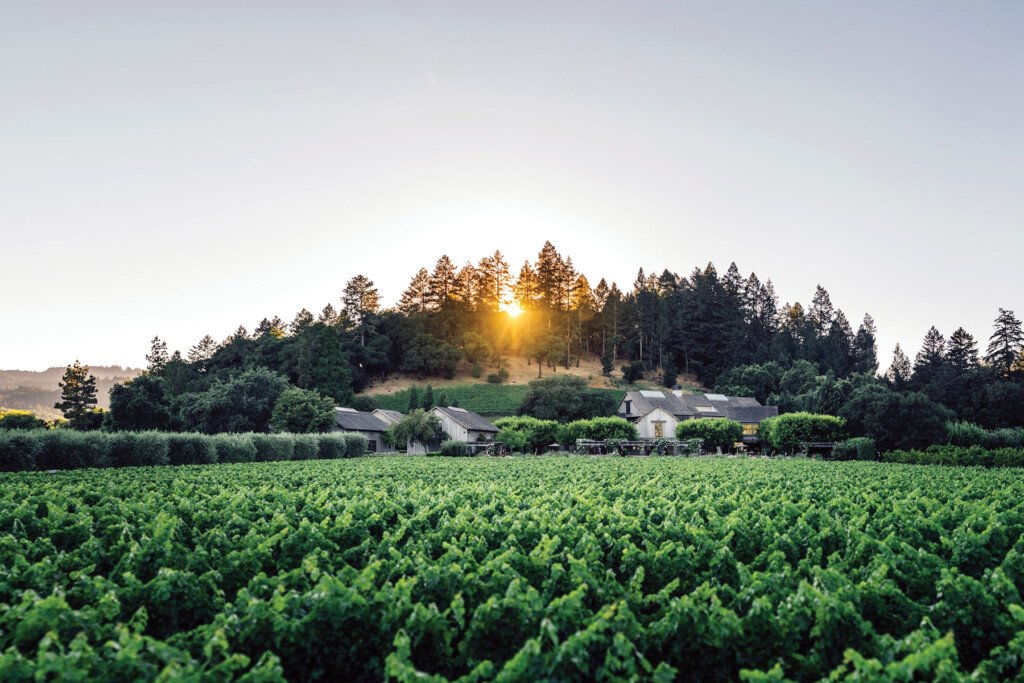
About Napa Valley Reserve
Napa Valley Reserve sits on Silverado Trail North in St. Helena, placing it within one of Napa's most closely watched wine corridors. The property holds a Tier 3 award designation, positioning it among a selective group of estates where allocation access and membership structures define the experience as much as the wine itself. Visitors should plan around the estate's private format before arriving.
Silverado Trail and the Private Estate Tier
Along Silverado Trail North, the vineyards that attract the most attention tend to operate outside the standard tasting-room economy. Napa's upper tier has increasingly bifurcated: on one side, destination wineries with walk-in hospitality infrastructure and high visitor volumes; on the other, reservation-only or membership-gated estates where access itself signals quality. Napa Valley Reserve, at 1000 Silverado Trail North in St. Helena, belongs to the latter category. Its positioning on this stretch of road places it in direct company with some of the valley's most allocation-driven producers, where the conversation is less about drop-in tourism and more about relationships built over vintages.
St. Helena as a sub-address carries its own weight within Napa's geography. The town sits at the valley's mid-section, flanked by mountain appellations on both sides and close to the benchland soils that have historically produced some of California's most age-worthy Cabernet Sauvignon. Estates in this corridor tend to price and position against a peer set that includes Accendo Cellars in St. Helena and Darioush Winery, both of which operate with similar emphases on controlled access and curated hospitality rather than volume throughput.
What the Award Tier Signals
Napa Valley Reserve holds a Manual Tier 3 seed award designation within the EP Club framework. In practical terms, that classification places the estate inside a cohort of properties whose critical standing derives from consistent peer recognition rather than single-season momentum. Tier 3 designations in the EP Club system are reserved for venues where reputation has been stress-tested across time and verified against broader industry benchmarks, not simply flagged by volume of visitor reviews.
For a Napa estate, award positioning of this kind functions as an entry point into a specific competitive conversation. The valley has no shortage of properties with marketing-heavy recognition, but the tier structure within serious wine criticism tends to separate estates that perform across vintages from those that generate attention during strong growing years. Properties like Blackbird Vineyards and Ashes and Diamonds Winery operate in a similar register, where editorial credibility and allocation scarcity reinforce each other. Napa Valley Reserve's award classification positions it inside that register.
The Broader St. Helena Wine Corridor
Understanding where Napa Valley Reserve sits requires some mapping of the corridor itself. Silverado Trail runs parallel to Highway 29 but draws a distinctly different type of estate. Where Highway 29 carries the valley's most commercially visible names, Silverado Trail has historically been home to producers whose orientation is toward the farming side of the equation: soil blocks, elevation differentials, and canopy management over brand-building. The estates that line this stretch tend to be quieter in their public presence and more deliberate in how they manage visitor contact.
This pattern extends across several of the valley's most discussed sub-regions. Alpha Omega Winery in Rutherford and Artesa Vineyards and Winery each represent different points on the Napa hospitality spectrum, from the architecturally dramatic to the deliberately restrained. Napa Valley Reserve, based on its Silverado Trail address and award classification, reads as closer to the restrained end: an estate whose draw is rooted in what's in the glass and how access to it is structured, rather than in visitor experience programming for its own sake.
Placing Napa Valley Reserve Against California's Wider Premium Scene
Napa does not operate in isolation as a premium wine region. California's broader fine wine geography includes producers whose critical standing rivals the valley's most discussed names. Alban Vineyards in Arroyo Grande built its reputation through Rhône varietal work at a time when that approach was far outside California's mainstream. Adelaida Vineyards in Paso Robles and Andrew Murray Vineyards in Los Olivos each demonstrate that serious production credentials extend well beyond Napa's county line.
But Napa's Cabernet identity remains the reference point against which all California premium positioning is measured. An estate on Silverado Trail North in St. Helena is, by address alone, making an implicit claim about where it sits in that hierarchy. The Manual Tier 3 designation attached to Napa Valley Reserve suggests that claim is substantiated by something beyond geography: a track record that has registered with the kind of critical attention that feeds into formal award structures.
For readers exploring the St. Helena end of the valley, Clos Selene Winery and Alexander Valley Vineyards in Geyserville offer useful comparative frames for how award-recognized California estates structure their hospitality and position their allocations. The full Napa restaurants and winery guide maps the valley's major tiers in detail.
Planning a Visit
Given the private, membership-oriented model common to estates at this level on Silverado Trail, arriving without prior contact is unlikely to be productive. The standard approach for properties in this tier is to initiate contact through the estate's website or direct inquiry well in advance of any intended visit. Phone and online booking details were not available at time of publication, which itself suggests a model where access is managed through existing relationships or formal membership channels rather than open online reservations. Visitors who have not previously engaged with the estate should budget lead time accordingly, particularly during harvest season from September through November, when appointment availability at Napa's more allocation-focused estates tends to compress significantly.
For those building a wider St. Helena itinerary, Adelsheim Vineyard in Newberg offers a useful study in how Oregon's Willamette Valley handles the same kind of premium, low-volume production model, providing useful contrast for readers interested in how different regions approach the access question. Within Napa itself, Aberlour and Achaia Clauss in Patras represent international reference points in how awarded producers across different categories manage heritage and critical standing over long timelines.
Frequently Asked Questions
- What should I taste at Napa Valley Reserve?
- The estate's Silverado Trail North address in St. Helena places it within Napa's Cabernet-dominant premium corridor, and the Manual Tier 3 award designation suggests the core wines have registered with serious critical attention. Without confirmed tasting menu details available at publication, the safest approach is to contact the estate directly and ask which current releases are being poured, as allocation-tier estates in this sub-region typically offer access to library or limited-production bottlings not available through retail channels.
- What is the standout thing about Napa Valley Reserve?
- The combination of a Silverado Trail North address in St. Helena and a Manual Tier 3 EP Club award places Napa Valley Reserve in a small cohort of Napa estates where critical standing and location reinforce each other. Price details were not confirmed at publication, but estates at this award tier and in this sub-region typically operate in Napa's higher allocation brackets, where the access model itself is part of what distinguishes the experience from the valley's more commercially open properties.
- Can I walk in to Napa Valley Reserve?
- Based on the estate's positioning within Napa's private-access tier and its Silverado Trail North location, walk-in visits are unlikely to be accommodated. Phone and website details were not confirmed at publication, which is consistent with a model where access is managed through membership or prior arrangement rather than open-door hospitality. Contacting the estate in advance is the appropriate first step.
- Is Napa Valley Reserve suitable for wine collectors looking to access allocation-only bottlings?
- Estates at the Manual Tier 3 award level in St. Helena frequently operate allocation programs where the most sought-after bottles are reserved for members or established customers rather than distributed through retail. Napa Valley Reserve's positioning on Silverado Trail North, combined with its award classification, is consistent with that model. Collectors interested in allocation access should initiate contact with the estate well ahead of any vintage release window, as these programs typically have waitlists that operate on a vintage-by-vintage basis.
Related editorial
- Best Fine Dining Restaurants in ParisFrom three-Michelin-star icons to the next generation of Parisian chefs pushing boundaries, these are the restaurants that define fine dining in the world's culinary capital.
- Best Luxury Hotels in RomeFrom rooftop terraces overlooking ancient ruins to Michelin-starred hotel dining, these are the luxury hotels that make Rome unforgettable.
- Best Cocktail Bars in KyotoFrom sleek lounges to hidden speakeasies, Kyoto's cocktail scene blends Japanese precision with global influence in ways you won't find anywhere else.
Save or rate Napa Valley Reserve on Pearl
Keep this venue in your Pearl passport, rate it after you visit, and track it alongside every other place you collect.