

Tahbilk
Nagambie Lakes
Winery in Nagambie Lakes, Australia
 Book with Pearl
The Read
Soil Continuity Viticulture
Why go
Tahbilk is worth prioritising if the plan is a serious Nagambie Lakes cellar-door visit, not just a quick tasting stop. Go for a wine-first experience with a calmer, heritage-led feel; if lunch or a formal food pairing is central, confirm current food options before building the day around it.
About Tahbilk
Tahbilk is a Nagambie Lakes venue with Pearl 3 Star Prestige recognition for 2025 and a casual dress code. For planning, confirm details such as format, food, drinks, hours, pricing, and reservations directly with the venue.
Use this as a grounded starting point rather than a complete itinerary. Tahbilk is a recognised Nagambie Lakes venue, and travellers should check the current menu, service style, group capacity, tasting structure, and visitor offer before building plans around them.
Who should put this first in Nagambie Lakes
Tahbilk is most relevant for travellers who are specifically considering recognised venues in Nagambie Lakes. Its Pearl 3 Star Prestige status for 2025 gives it a clear reason to be on the shortlist, while the casual dress code makes formal attire unnecessary.
Use broader Nagambie Lakes planning guides to place it within the wider region, including Our full Nagambie Lakes hotels guide. Keep the planning flexible unless the venue has directly confirmed the details you need.
Food-pairing expectations should stay practical
Do not assume a cuisine style, menu format, food-pairing program, hours, pricing, or dining service without checking directly. If food is important to the visit, confirm the current offer before you go.
For broader trip planning, you can also compare Tahbilk with Animus Distillery, Bindi Wines, Cobaw Ridge, Jasper Hill, and Syrahmi. Treat those as separate options to research on their own terms, especially for service format, availability, travel time, and location details.
Planning details
- Location
- 254 Oneils Road, Nagambie VIC 3607
- Website
- tahbilk.com.au
- Phone
- +61357942555
The take
The Take
The Vibe
Tahbilk reads like a quietly authoritative estate that foregrounds place over flash. The vineyard landscape and adjacent wetlands shape both the scenery and the wines, and that sense of terroir gives the property a historic, measured character. Recognition as a Pearl 3 Star Prestige estate reinforces a sophisticated undercurrent, but the tone remains pastoral rather than ostentatious: river red gums, floodplain soils and long‑established Marsanne plantings create a serene, considered atmosphere where the land itself does most of the talking.
Best For
Tahbilk is best for visitors who care about provenance and the story of place: couples seeking a thoughtful wine‑focused escape, small groups exploring regional varieties, and anyone interested in the technical side of viticulture and winemaking. The cellar door sits in an estate setting shaped by the Goulburn River and Nagambie Lakes, making it a natural stop for wine education and cellar‑door tastings rather than loud social gatherings. Family visits also work well when the aim is to experience the landscape and long‑term expression of varieties like Marsanne.
Tasting Tips
Focus your tasting on the whites and estate bottlings that make the terroir case here: the text highlights Marsanne as the variety that most clearly expresses Tahbilk’s soils and climate. Look for wines that emphasize structure and acidity, and consider bottles with age potential—Marsanne here is described as austere in youth and evolving into layered, waxy, honeyed forms over a decade. The estate’s Pearl 3 Star Prestige recognition is a useful signal when weighing flagship or reference wines.
Venue details
Ambiance
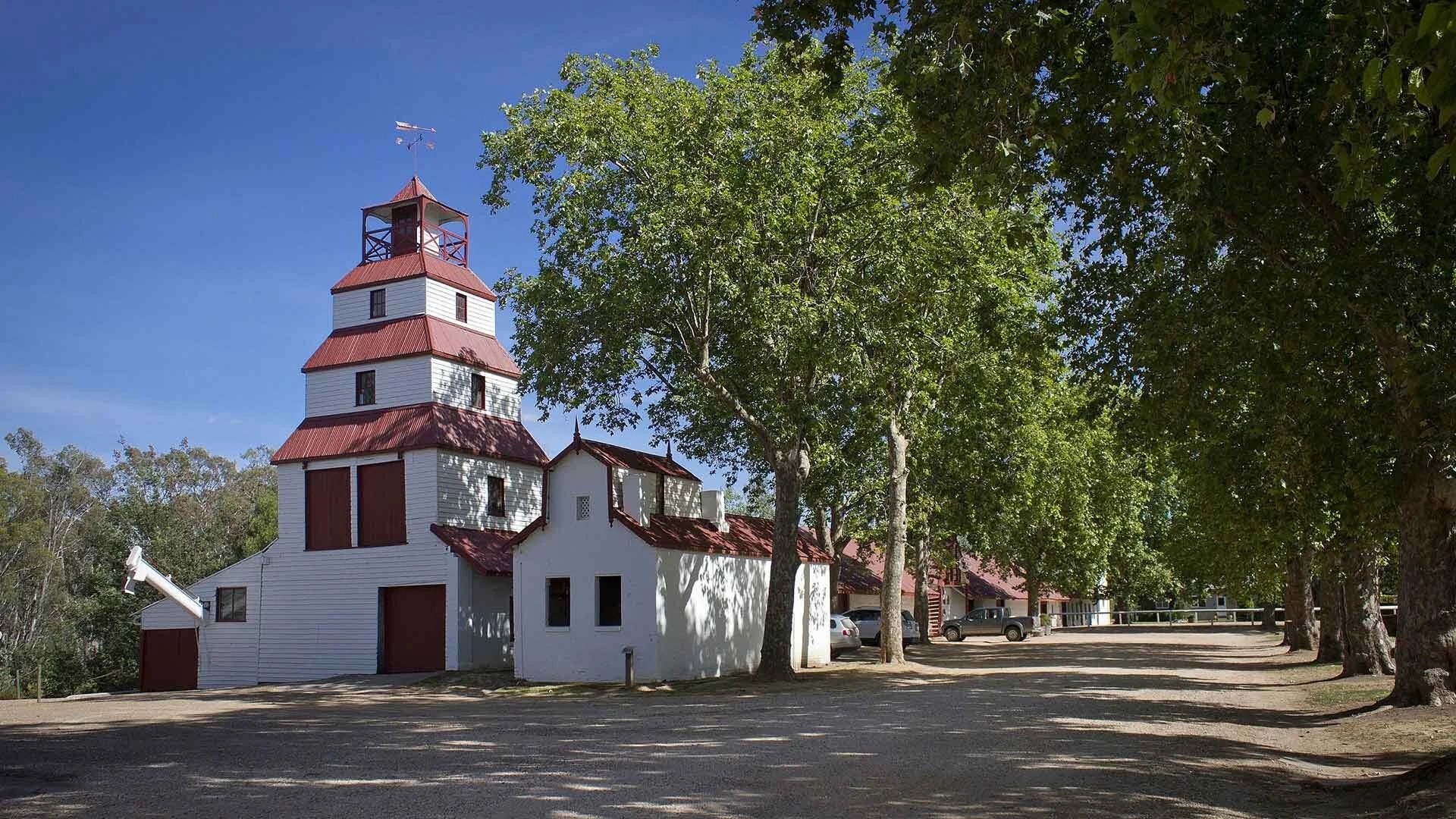
Tranquil and relaxing with dappled sunlight filtering through gum trees, overlooking the billabong with gentle sounds of birds and frogs; heritage buildings create a timeless, peaceful atmosphere.
Tags
Vibe
Best For
Experience
Sourcing
View
At the Vineyard
- Appellation
- Nagambie Lakes
- Varietals
- Marsanne, Shiraz, Cabernet Sauvignon, Viognier, Roussanne
- Tour Duration
- 90-120 minutes
- Visits
- Walk-ins welcome
- Farming
- Sustainable
- Wine Styles
- Still Red, Still White
- Food Pairing
- Offered
- Shipping
- Available
- Wine Club
- Available
Know before you go
Know Before You Go
- Getting there
- 254 Oneils Road, Nagambie VIC 3607
Planning details
Location
Also consider
If you cannot get the timing you want
Try Syrahmi or Cobaw Ridge if the priority is still wine. Choose Animus Distillery if the group wants a more flexible drinks stop rather than a winery-led visit.
Winery context
How Tahbilk compares in Nagambie Lakes
Choose Tahbilk when the priority is a wine-focused visit with a quieter, more deliberate feel. Jasper Hill, Syrahmi, Cobaw Ridge, and Bindi Wines are better cross-shops for drinkers who want smaller-producer energy or a more targeted tasting itinerary, while Tahbilk is the safer first stop for visitors who want a region-defining cellar-door anchor.
For booking difficulty, treat Tahbilk as the one to plan around rather than leave to chance. If availability is tight, Animus Distillery is the sharper alternative for a spirits-led stop with a different mood, while Syrahmi and Cobaw Ridge make more sense for wine drinkers who want a narrower, more producer-specific comparison. Jasper Hill and Bindi Wines skew more serious for collectors and enthusiasts, so they are not casual substitutes for the same kind of visit.
On value, Tahbilk works when the experience quality comes from the overall cellar-door context rather than a long meal or elaborate pairing. If food is the deciding factor, do not force the booking; use the visit as the wine anchor and place lunch elsewhere in the day.
Explore Nagambie Lakes
Around this place
Discover more on Pearl
Unlock the full Tahbilk guide in Pearl, including awards, comparisons, FAQs, planning details, and nearby places.
Compare Tahbilk
| Venue | Location | Awards |
|---|---|---|
| Tahbilk | Nagambie Lakes | No published awards |
| Jasper Hill | Heathcote | No published awards |
| Syrahmi | Heathcote | No published awards |
| Cobaw Ridge | Macedon Ranges | No published awards |
| Animus Distillery | Kyneton | No published awards |
| Bindi Wines | Macedon Ranges | No published awards |
How Tahbilk Nagambie Lakes compares with similar nearby venues.
FAQ
Frequently Asked Questions
What other venues can I compare with Tahbilk?
For comparison planning, the relevant names in this set are Jasper Hill, Syrahmi, Cobaw Ridge, Bindi Wines, Animus Distillery, and Tahbilk. Research each option separately for distance, travel time, service format, and current availability.
Do I need a reservation at Tahbilk?
Contact Tahbilk directly before relying on a walk-in or a planned visit, especially for hours, availability, and booking requirements.
Does Tahbilk offer delivery or shipping?
Do not assume delivery or shipping unless Tahbilk confirms it directly. Tahbilk is a Nagambie Lakes venue with a casual dress code and Pearl 3 Star Prestige recognition for 2025.