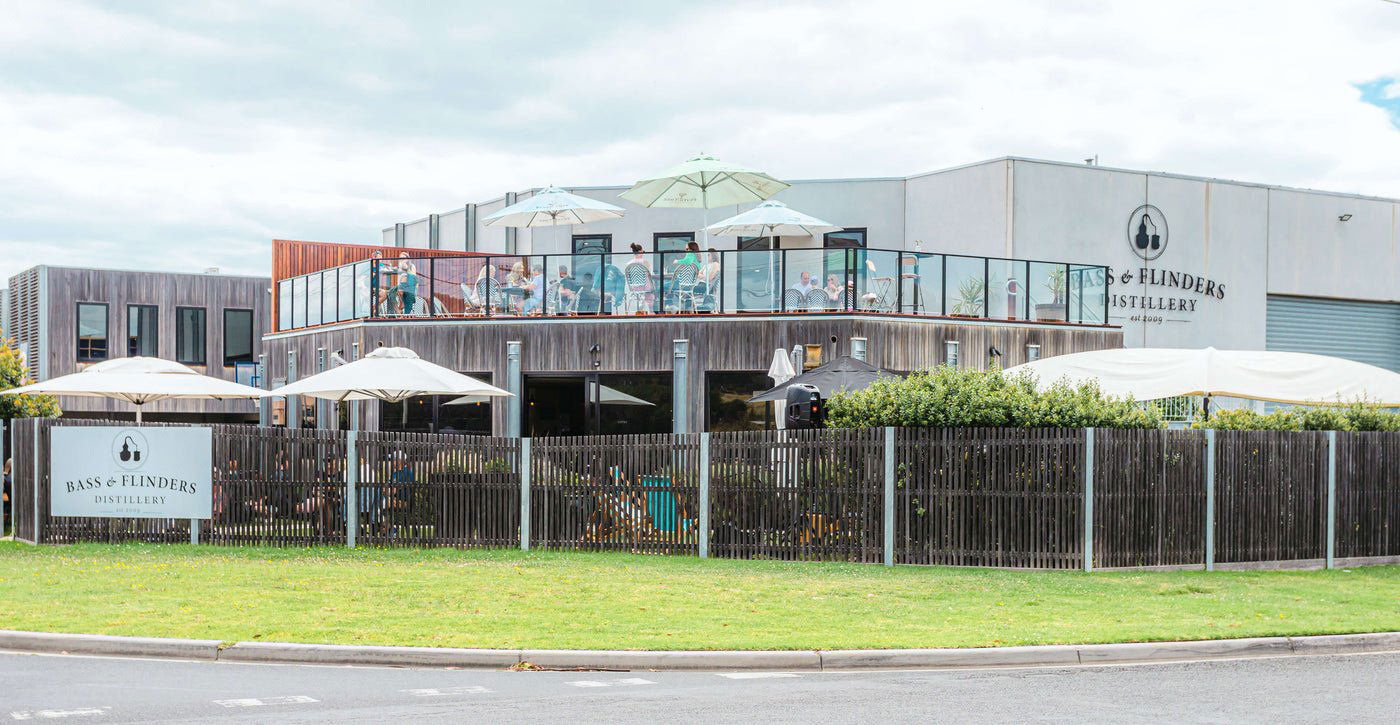
Winery in Mornington Peninsula, Australia

    Bass & Flinders Distillery

    500pts

    Cool-Climate Grape Distillation

    Bass & Flinders Distillery, Winery in Mornington Peninsula

    About Bass & Flinders Distillery

    Bass & Flinders Distillery sits at 40 Collins Rd, Dromana, where the Mornington Peninsula's cool maritime climate shapes every spirit produced on site. A Pearl 2 Star Prestige rating in 2025 places it among the region's most recognised craft producers. For visitors tracing the Peninsula's artisan trail, it represents the distilling complement to the area's established wine culture.

    Where the Peninsula's Climate Meets the Still

    The Mornington Peninsula has spent decades establishing itself as one of Australia's most closely watched cool-climate wine regions. What distinguishes it from warmer inland zones is a persistent maritime influence: Bass Strait air pushes across the land, moderating temperatures and extending growing seasons in ways that reward patience over yield. That same climate logic applies to the craft spirits emerging from the region's distilleries, where slow production and local terroir shape the final product just as they do in the vineyards surrounding them.

    Bass & Flinders Distillery operates from 40 Collins Rd, Dromana, on the northern edge of the Peninsula where the land begins its descent toward the bay. Dromana sits below the Arthurs Seat escarpment, a positioning that keeps it close to both the coastal moderation of Port Phillip Bay and the refined cool-air drainage of the ranges above. For a distillery whose work involves grape-based spirits, that geography is not incidental. The same conditions that allow Crittenden Estate and Montalto to produce Pinot Noir with genuine tension and aromatic precision also define the character of the base material available to distillers working in this corridor.

    Distilling in a Wine Region

    The Mornington Peninsula is predominantly a wine destination. Producers like Ten Minutes by Tractor and Paringa Estate have built reputations on Pinot Noir and Chardonnay that trade in restraint rather than weight, and the region's critical identity is tied closely to those two varieties. Within that context, a distillery occupies an interesting position. Rather than competing with the region's winemakers, a grape-based distillery draws on the same raw material in a different technical register, converting the Peninsula's fruit character into brandies, eau-de-vie, and aged spirits that carry a geographic signature the same way a well-made Pinot does.

    This is the tradition in which Bass & Flinders operates. Across Europe, the great brandy-producing zones developed precisely where wine regions had both the fruit quality and the agricultural infrastructure to support distillation. Cognac and Armagnac are the obvious parallels, but Australia's cooler southern regions have increasingly provided the conditions for similar logic to apply. In that broader pattern, the Peninsula's climate argues for spirits production with as much conviction as it does for viticulture.

    The distillery stands in the same peer conversation as Chief's Son Distillery, the other prominent craft spirits producer operating from the Peninsula. Together, they represent a small but increasingly credentialed tier of local spirit makers whose work is evaluated against national benchmarks rather than only regional ones. For comparison at a national scale, Archie Rose Distilling Co in Sydney has helped set the standard for how Australian craft distilleries compete internationally, and Bass & Flinders sits in that same serious, production-focused category.

    Recognition and the 2025 Pearl Rating

    In 2025, Bass & Flinders Distillery received a Pearl 2 Star Prestige rating, the strongest trust signal currently available for this venue. Within the EP Club framework, a Pearl 2 Star Prestige designation reflects a level of consistent quality and production seriousness that separates a distillery from the broader field of boutique Australian producers.

    That kind of recognition matters in context. Australia's craft spirits sector has expanded significantly over the past decade, and the signal-to-noise ratio has become harder to read. A rated producer offers visitors a firmer navigational anchor than marketing copy alone. Bass & Flinders sits in the company of other credentialed producers rather than in the long tail of hobbyist operations, a distinction that becomes relevant when planning a Peninsula itinerary around quality rather than novelty.

    For comparison, the Peninsula's wine tier has long demonstrated that cool-climate seriousness extends from established names down to smaller producers willing to do the unglamorous work of low yields and patient viticulture. The same discipline is visible in how the distillery approaches its craft.

    The Terroir Argument for Grape Spirits

    Grape-based distillation is one of the oldest forms of terroir expression in European drinking culture, but it remains a relatively young category in the Australian context. The argument runs like this: the flavour compounds that define a wine region's character, the acidity structure, the aromatic profile, the sugar-acid balance at harvest, do not disappear when the liquid enters a still. They concentrate, transform, and in the hands of a careful distiller, they emerge on the other side carrying a geographical signature that is traceable back to the land.

    The Mornington Peninsula provides a particularly coherent case for this argument. Its Pinot and Chardonnay identity is built on fruit that ripens slowly, retains freshness, and carries natural acidity that survives into the bottle. Those same properties translate into base material for distillation that is structurally different from what a warm-climate zone would produce. The spirits that result, whether aged brandy-style expressions or younger eau-de-vie, carry the cool-climate imprint in ways that distinguish them from grape spirits made in warmer Australian wine regions.

    Visitors who have worked through the Peninsula's wine estates, from the clay soils favoured by producers in the Red Hill sub-region to the sandy loam sites closer to the bay, will find that the distillery extends the same geographic conversation into a different glass format. It is the same land, the same maritime air, a different technique.

    Planning a Visit to Dromana

    Bass & Flinders Distillery is located at 40 Collins Rd, Dromana, accessible by car from Melbourne via the Mornington Peninsula Freeway in approximately an hour under normal conditions. Dromana sits roughly midway along the western Peninsula corridor, which places it within easy reach of the main cluster of wine estates and a logical stop when combining a distillery visit with the wider Peninsula itinerary covered in our full Mornington Peninsula restaurants guide.

    Hours and booking details are leading confirmed directly through the distillery before visiting, as production-focused venues in this category sometimes operate cellar door access on specific days rather than seven days a week. Visiting on a weekday typically means a quieter floor and more time with staff, a practical advantage when the goal is understanding the production process rather than simply tasting through a range. Weekend visits attract higher foot traffic, particularly during the warmer months when Peninsula tourism peaks between October and April.

    The broader Dromana area provides enough complementary stops to build a full day: the wine estates within the immediate vicinity, the escarpment views from Arthurs Seat, and the bay foreshore below. The distillery fits naturally into a circuit that might also include a lunch stop or cellar door visit at any number of Peninsula producers.

    Positioning Within the Australian Spirits and Wine Spectrum

    For readers who follow craft spirits across Australian regions, Bass & Flinders sits in a distinct geographic niche. The Peninsula's cool-climate credentials place it in a different conversation from warm-interior producers. By contrast, All Saints Estate in Rutherglen operates in a warmer, fortified-wine tradition, and Angove Family Winemakers in Renmark works in a continental climate that produces a structurally different base material for any spirits work. The Peninsula's particular conditions, the fog, the bay influence, the diurnal temperature variation, produce something that cannot simply be replicated elsewhere in the Australian map.

    Wine-region producers further afield, from Bass Phillip in Gippsland to Bird in Hand in Adelaide Hills and Leading's Wines in Great Western, each demonstrate how distinct regional climates produce distinct product identities. Bass & Flinders sits firmly within the cool, maritime southern tier of that national picture, and the 2025 Pearl 2 Star Prestige rating confirms that its position is recognised beyond the Peninsula itself.

    For those drawing comparisons to international benchmarks, the closest structural parallel is a small Cognac or Armagnac house working single-region fruit: the geographic specificity is the point, not merely the process. Readers interested in how that same logic plays out in a Scottish context will find an instructive contrast at Aberlour in Aberlour, where terroir expression works through barley and water rather than grape. And for those approaching from a New World wine investment angle, the discipline visible at Accendo Cellars in St. Helena offers a useful reminder of what rigorous, place-specific production looks like at the premium end, regardless of category. Blue Pyrenees Estate in Pyrenees further extends the Victorian cool-climate reference set for context.


    Frequently Asked Questions

    What's the leading wine to try at Bass & Flinders Distillery?

    Bass & Flinders is a distillery rather than a winery, so the focus sits on grape-based spirits rather than table wine. The regional context is important here: the distillery draws on Mornington Peninsula fruit grown in the same cool-climate conditions that produce the Peninsula's recognised Pinot Noir and Chardonnay. The Pearl 2 Star Prestige rating awarded in 2025 reflects consistent quality across the production range. For visitors wanting to understand the spirit-wine relationship in this region, comparing a Bass & Flinders expression against the still-wine output of nearby estates like Ten Minutes by Tractor or Crittenden Estate provides a useful frame for understanding how the same terroir translates across different production methods.

    What should I know about Bass & Flinders Distillery before I go?

    The distillery is located at 40 Collins Rd, Dromana VIC 3936, on the Mornington Peninsula roughly an hour from Melbourne by car. It holds a Pearl 2 Star Prestige rating for 2025, which places it in the recognised tier of Australian craft spirit producers rather than the broader boutique category. Confirm opening hours and cellar door access directly before visiting, as production-focused venues in this category do not always operate daily. Price details are leading checked at the time of booking. The distillery fits naturally within a wider Peninsula day that includes wine estates and the Dromana foreshore.

    Keep this place

    Save or rate Bass & Flinders Distillery on Pearl

    Keep this venue in your Pearl passport, rate it after you visit, and track it alongside every other place you collect.