

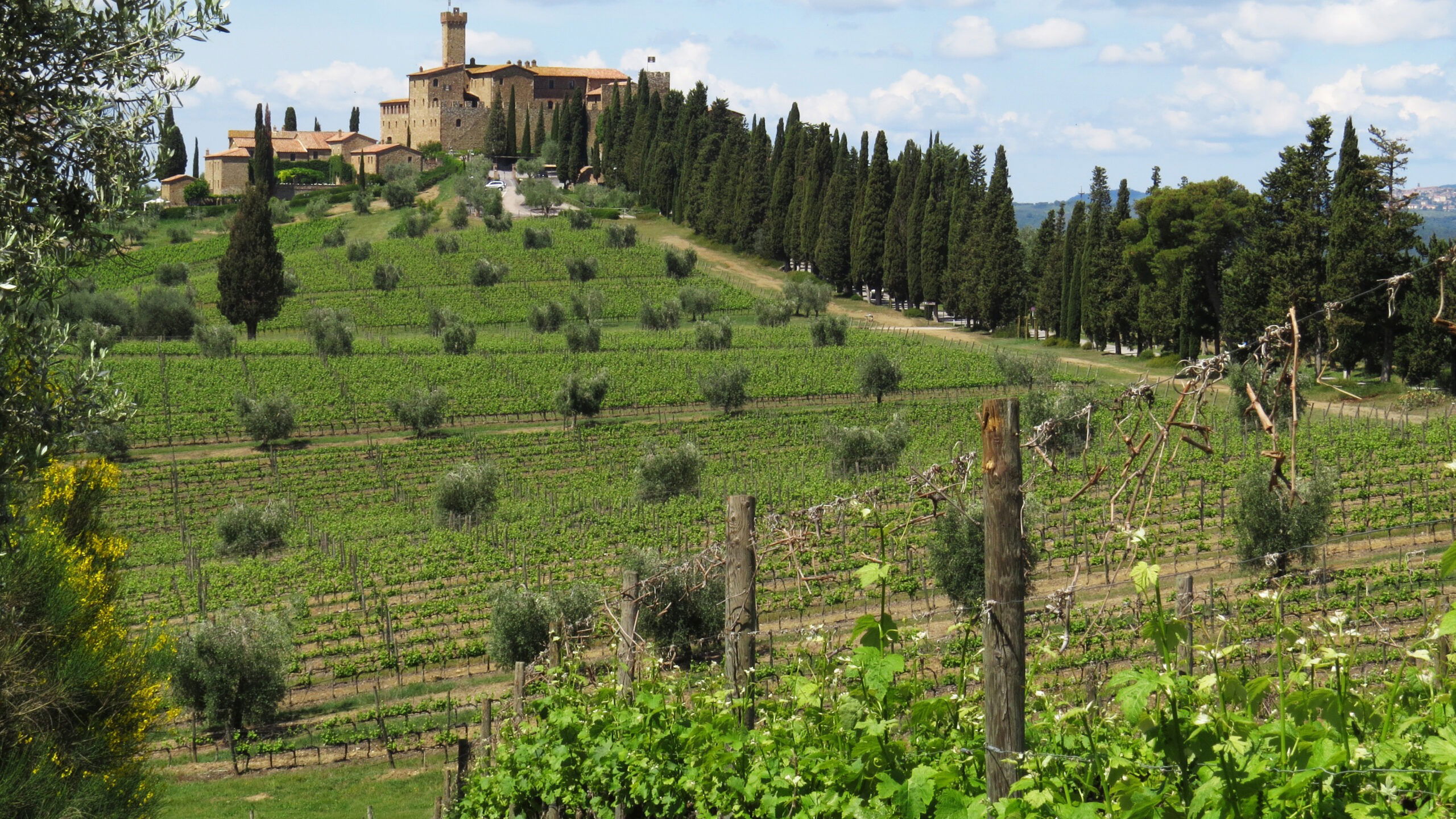


Castello Banfi
Tuscan Italian · Montalcino
Winery in Montalcino, Italy
 Book with Pearl
The Read
Fortress-Estate Viticulture
Price
$500+tasting
Why go
Castello Banfi is a winery at Poggio alle Mura near Montalcino.
About Castello Banfi
Use Castello Banfi as a planned Montalcino stop where the context is limited but meaningful: the venue is in Montalcino, carries Pearl 4 Star Prestige for 2025, and was listed at #22 in World's 50 Best Vineyards in 2024. Beyond those points, specific details such as visit format, pricing, opening hours, menus, booking requirements, shipping, and on-site services should be confirmed directly before you build a day around it.
The safest way to plan is to treat Castello Banfi as a recognized Montalcino venue rather than assume a particular type of experience. Smart casual dress is the dress code, so it is a better fit for travelers who prefer to arrive polished without treating the stop as formal. If your plans depend on timing, transportation, tastings, meals, or purchases, verify those details in advance.
A recognized Montalcino venue for context
The grounded value case rests on recognition rather than specifics: Castello Banfi has Pearl 4 Star Prestige for 2025 and a #22 placement on the 2024 World's 50 Best Vineyards list. That makes it a reasonable name to consider when planning a Montalcino itinerary, especially if you want a venue with clear recognized visibility. If you are comparing options, cross-shop Argiano, Il Poggione, or Poggio di Sotto before committing.
For travelers trying to understand Montalcino in one trip, Castello Banfi can work as one recognized anchor, while other Montalcino venues can provide different perspectives. Comparisons with Biondi-Santi Tenuta Greppo, Argiano, Il Poggione, L'Enoteca Banfi, or Poggio di Sotto should be made on the basis of current availability, location logistics, and the kind of visit each venue is presently offering. Avoid assuming details such as tasting format, cellar access, meal service, pricing, or shipping unless they are confirmed before you go.
Who should prioritize it
Prioritize Castello Banfi if you want a Montalcino venue with recognition and are comfortable confirming the practical details yourself. The confirmed dress code is smart casual, which makes it suitable for a polished but not formal plan. Travelers who need exact hours, appointment rules, food options, accessibility details, or purchase logistics should check those points directly before finalizing the itinerary.
If Montalcino is only one leg of a broader trip, use Castello Banfi as a recognized local reference point rather than building assumptions around services. For broader planning around town, keep Our full Montalcino wineries guide, Our full Montalcino restaurants guide, Our full Montalcino hotels guide, Our full Montalcino bars guide, and Our full Montalcino experiences guide open before locking the day.
Planning details
- Location
- Poggio alle Mura, 53024 Montalcino SI, Italy
- Website
- banfi.it
- Phone
- +39 0577 840111
The take
The Take
The Vibe
Castello Banfi reads like a place where history, high‑altitude terroir, and large‑scale estate hospitality coexist. A medieval tower anchors the hilltop property and frames long views over vineyards that march up and down Val d'Orcia slopes. The writing emphasizes agronomic seriousness — particularly how altitude and temperature swings shape Sangiovese Grosso — alongside the estate’s modern role in premium wine tourism. The result is a ceremonious, historically rooted atmosphere: less boutique rusticity than an imposing, well‑resourced wine destination where production, landscape, and hospitality are presented as an integrated whole.
Best For
This is a visit for people who want to understand Brunello within its landscape and institutional context. The estate’s scale, noted cellar depth, and recognized accommodation quality suit travelers combining tastings with a stay, and they make the property an easy choice for special occasions and celebratory visits. Because the narrative of the place revolves around history and agronomy as much as hospitality, it also attracts guests interested in wine education — those who want to connect vineyard siting, altitude, and winemaking choices with what ends up in bottle.
Tasting Tips
When tasting here, orient your focus around Sangiovese Grosso and Brunello di Montalcino: the text highlights how altitude and diurnal swings push the variety toward concentration and structure rather than early softness. Ask about the estate’s cellar holdings and how sites at Poggio alle Mura influence style; references to “cellar depth” and agronomic seriousness suggest worthwhile vertical or comparative tastings. Treat the visit as layered — history, viticulture, and production — and leave room to taste wines that illustrate those different strands.
Venue details
Ambiance
Refined and atmospheric with elegant stone architecture, sunlit countryside views, and refined dining settings on shaded terraces overlooking vineyards.
Tags
Vibe
Best For
Experience
Sourcing
View
At the Vineyard
- Appellation
- Brunello di Montalcino
- Varietals
- Sangiovese, Cabernet Sauvignon, Merlot, Pinot Grigio, Moscato
- Tour Duration
- 60-150 minutes
- Tour Languages
- English, Italian
- Visits
- By appointment only
- Farming
- Sustainable
- Wine Styles
- Still Red, Still White, Sparkling, Dessert
- Food Pairing
- Offered
- Wine Club
- Not available
Know before you go
Know Before You Go
- Getting there
- Poggio alle Mura, 53024 Montalcino SI, Italy
Planning details
Location
Recognition and awards


Also consider
Also Consider
- L'Enoteca Banfi, Notable alternative
- Argiano, Notable alternative
- Il Poggione, Notable alternative
- Poggio di Sotto, Notable alternative
- Biondi-Santi Tenuta Greppo, Notable alternative
Winery context
How it compares in Montalcino
Choose Castello Banfi over L'Enoteca Banfi when the visit itself matters more than a retail-led wine stop. The castle setting and larger estate feel make it the stronger choice for a planned half-day, while L'Enoteca Banfi is the more practical fallback if the goal is a focused Banfi tasting or purchase without building the schedule around the estate.
Argiano and Il Poggione are better cross-shops for travelers who want a producer visit that feels more directly tied to Brunello's vineyard and cellar conversation. Castello Banfi wins on scale and visitor polish; those two are stronger if the value equation depends on depth, restraint, and a less destination-style atmosphere.
For serious Brunello context, Poggio di Sotto and Biondi-Santi Tenuta Greppo are the sharper comparisons. Prioritize them if the trip is built around benchmark producers and cellar credibility. Prioritize Castello Banfi if the group includes casual wine drinkers, design-minded travelers, or anyone who wants Montalcino to feel like a complete countryside experience rather than a technical appointment.
Around this place
Discover more on Pearl
Unlock the full Castello Banfi guide in Pearl, including awards, comparisons, FAQs, planning details, and nearby places.
Compare Castello Banfi
| Venue | Location | Awards |
|---|---|---|
| Castello Banfi | Montalcino | 2025 World's 50 Best Vineyards · #612025 Relais Chateaux Award2024 World's 50 Best Vineyards · #22 |
| L'Enoteca Banfi | Montalcino | 2025 Pearl 3 Star Prestige |
| Argiano | Montalcino | 2026 Falstaff Winery Guide2025 Pearl 4 Star Prestige |
| Il Poggione | Montalcino | 2026 Falstaff Winery Guide |
| Poggio di Sotto | Montalcino | 2025 Pearl 4 Star Prestige |
| Biondi-Santi Tenuta Greppo | Montalcino | 2026 Falstaff Winery Guide2025 Pearl 5 Star Prestige |


How Castello Banfi Montalcino compares with similar nearby venues.
FAQ
Frequently Asked Questions
When is the best time to visit Castello Banfi?
The data does not specify the best time, hours, or season to visit. Plan around confirmed availability, and allow enough time in Montalcino if you want the stop to feel considered rather than rushed. Castello Banfi has Pearl 4 Star Prestige for 2025 and was ranked #22 in World's 50 Best Vineyards in 2024.
What is the flagship wine at Castello Banfi?
The data does not identify a flagship wine or specific bottle. Confirm current wines and any tasting or purchase options directly with Castello Banfi before you go.