



Biondi-Santi Tenuta Greppo
Montalcino
Winery in Montalcino, Italy
 Book with Pearl
The Read
Brunello Origin Point
Why go
Biondi-Santi Tenuta Greppo is a wine estate in Montalcino, Tuscany.
About Biondi-Santi Tenuta Greppo
Biondi-Santi Tenuta Greppo is a Montalcino venue with Pearl 5 Star Prestige recognition for 2025. Federico Radi is listed as chef/owner, and the dress code is smart casual. Together, those details establish a concise profile: a recognized Montalcino stop with a polished-but-not-formal baseline for dress.
Plan with a little flexibility rather than treating it as a complete service guide. For menu format, tastings, prices, hours, reservations, group capacity, or other visit logistics, contact the venue directly before building an itinerary around it. This is especially important in Montalcino, where travelers often plan tightly around meals, tastings, transfers, and overnight stays. Let direct communication with the venue determine the final shape of the visit.
A Montalcino stop with Pearl recognition
The strongest hook is the Pearl 5 Star Prestige (2025) recognition. Beyond that, the safest way to approach Biondi-Santi Tenuta Greppo is as a Montalcino venue whose practical details are best settled directly before visiting. In editorial terms, the recognition establishes why the venue belongs on a shortlist, while the need to pin down logistics explains why it should not yet be treated as a fully mapped stop.
For dining program, menu, pairing structure, tasting format, or service schedule, contact the venue directly. If you need a meal plan around the visit, use Our full Montalcino restaurants guide and keep the booking details separate until the venue confirms what is available. That separation matters: a venue can be worth attention because of its recognition, while still requiring another restaurant, bar, winery, or experience to anchor the day. Until the specifics are clear, avoid assuming whether the visit is brief, extended, food-led, wine-led, or structured in another way.
How to use it in a Montalcino itinerary
If you are comparing Montalcino options, consider Biondi-Santi Tenuta Greppo alongside Altesino, Cerbaiona, Poggio di Sotto, Valdicava Az Agr, or Azienda Agricola Casanova di Neri di Giacomo Neri. The best comparison is practical: confirm what each venue offers on the date you want, then choose the stop that fits your schedule. This keeps the comparison grounded in usable facts rather than assumptions. One venue may work better for a flexible day, another may be easier to fit between confirmed reservations, and another may simply provide clearer logistics at the moment you are planning.
The practical verdict is simple: prioritize Biondi-Santi Tenuta Greppo if its Montalcino location, smart-casual standard, and Pearl 5 Star Prestige (2025) recognition match the kind of stop you want. The smart-casual note is useful because it sets a baseline expectation without implying a more formal or more relaxed experience. If you need meals, detailed visit timing, or other logistics before deciding, settle those details directly first. For the surrounding stay, use Our full Montalcino hotels guide, Our full Montalcino bars guide, Our full Montalcino wineries guide, and Our full Montalcino experiences guide to round out the trip.
Planning details
- Location
- Villa Greppo, 183, 53024 Montalcino SI
- Website
- biondisanti.it
- Phone
- +39577848023
The take
The Take
The Vibe
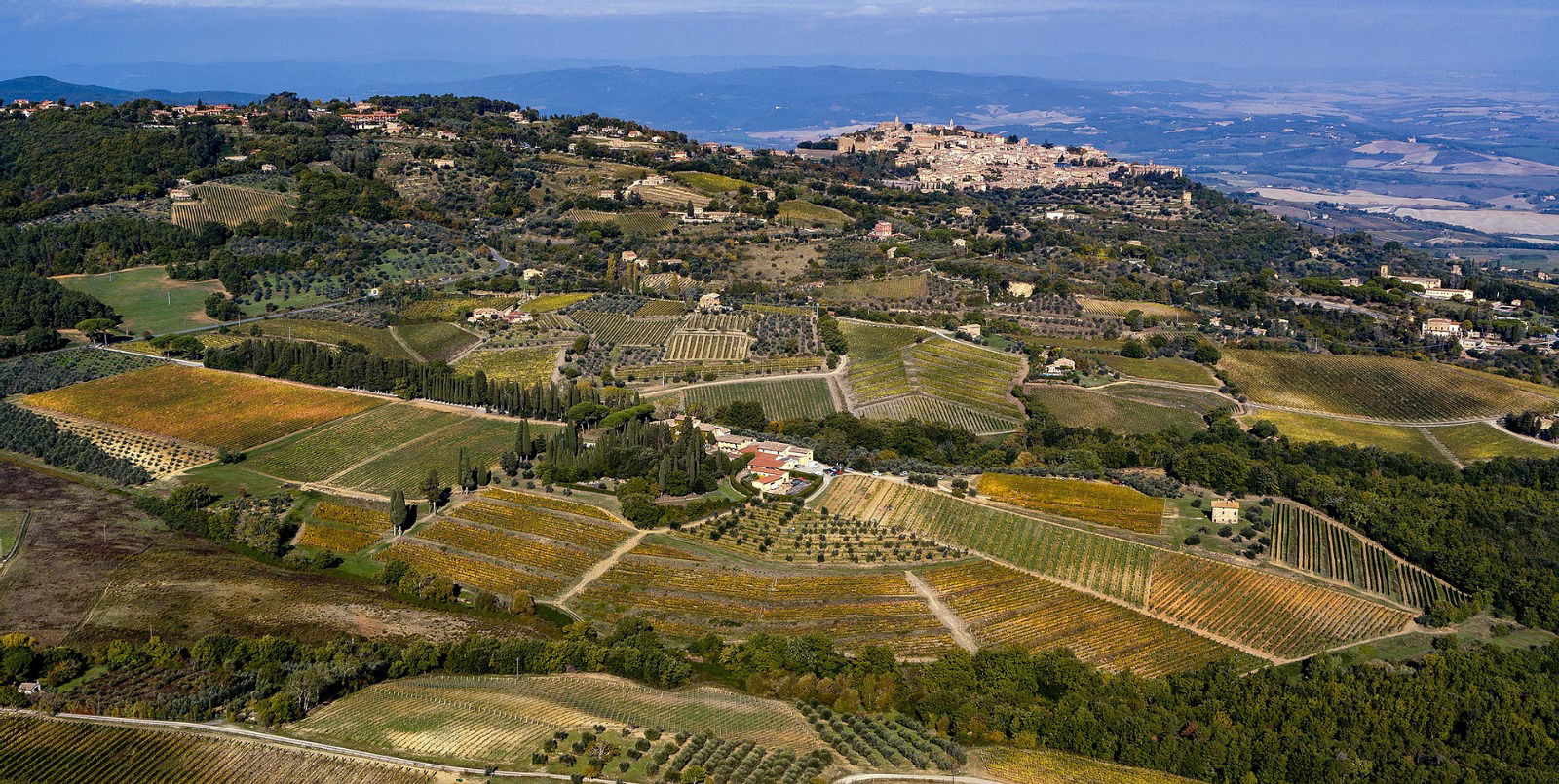
Tenuta Greppo presents a restrained, historically charged atmosphere that emphasizes provenance over flash. The estate reads like a living archive: Villa Greppo and the slope that bears its name are the origin point for the Brunello category, and the cellar houses Riserva bottles measured in decades rather than years. Visiting feels less like a commercial tasting and more like a pilgrimage for collectors and students of Sangiovese Grosso — quiet, deliberate and rooted in place. The setting on the hills south of Siena reinforces a scenic, contemplative mood where the past remains very much present in every pour.
Best For
This estate is best for guests who come to study and experience Brunello in depth. The property suits wine-education visits where verticals and archival comparisons matter, and it naturally lends itself to special-occasion tastings that hinge on older bottles and historical context. Solo visitors seeking a focused, contemplative encounter with one of Montalcino’s origin estates also find the format rewarding. The emphasis on the estate’s own archive and long-lived Riservas rewards deliberate tasting rather than a rapid hospitality-first stop.
Tasting Tips
When you visit, center your tasting on the estate’s long-lived Riservas and ask about the archive as the point of comparison — the property explicitly frames its benchmark against its own historical releases. Prioritize samples that illustrate age and development so you can track how the estate’s Sangiovese Grosso evolves over decades. Treat the tasting like a study: request vertical comparisons where available and listen for the cellar context that the text highlights. Expect a measured, provenance-driven experience rather than a quick, hospitality-focused flight.
Venue details
Ambiance
Timeless and elegant historic estate with rustic charm, surrounded by ancient vineyards at high altitude.
Tags
Vibe
Best For
Experience
View
At the Vineyard
- Appellation
- Brunello di Montalcino DOCG
- Varietals
- Sangiovese
- Visits
- By appointment only
- Wine Styles
- Still Red
- Wine Club
- Available
Know before you go
Know Before You Go
- Getting there
- Villa Greppo, 183, 53024 Montalcino SI
Planning details
Location
Recognition and awards

Also consider
Where to Look if This Is Hard to Arrange
Try Altesino first if the group wants a less high-pressure Montalcino winery stop. Choose Cerbaiona instead if the priority is a serious producer visit with a more compact feel.
Winery context
How It Compares in Montalcino
Biondi-Santi Tenuta Greppo is the pick for Brunello context and producer lineage. Cerbaiona is the sharper alternative for travelers who prefer a smaller, more intimate producer feel, while Azienda Agricola Casanova di Neri di Giacomo Neri is better for a polished, modern counterpoint within the same Montalcino orbit.
For value and ease, Altesino is the safer cross-shop, especially for mixed groups or travelers who want a less high-stakes visit. Valdicava Az Agr and Poggio di Sotto make more sense as second bookings if the trip is focused on comparing Brunello styles rather than checking off one historical reference point.
The ambience decision is clear: choose Biondi-Santi Tenuta Greppo when the room matters less than the wine's place in Montalcino history. Choose Altesino for a smoother general-interest winery day, Cerbaiona for a more concentrated producer visit, and Casanova di Neri when the group wants a stronger contemporary contrast.
Around this place
Discover more on Pearl
Unlock the full Biondi-Santi Tenuta Greppo guide in Pearl, including awards, comparisons, FAQs, planning details, and nearby places.
Compare Biondi-Santi Tenuta Greppo
| Venue | Location | Awards |
|---|---|---|
| Biondi-Santi Tenuta Greppo | Montalcino | 2026 Falstaff Winery Guide2025 Pearl 5 Star Prestige |
| Cerbaiona | Montalcino | 2026 Falstaff Winery Guide2025 Pearl 4 Star Prestige |
| Azienda Agricola Casanova di Neri di Giacomo Neri | Montalcino | 2026 Falstaff Winery Guide2025 World's 50 Best Vineyards · #87 |
| Valdicava Az Agr | Montalcino | No published awards |
| Poggio di Sotto | Montalcino | 2025 Pearl 4 Star Prestige |
| Altesino | Montalcino | 2026 Falstaff Winery Guide |

How Biondi-Santi Tenuta Greppo Montalcino compares with similar nearby venues.
FAQ
Frequently Asked Questions
When is the best time to visit Biondi-Santi Tenuta Greppo?
Do I need a reservation at Biondi-Santi Tenuta Greppo?
Before going, contact Biondi-Santi Tenuta Greppo directly to confirm whether advance booking is needed.
How long should I plan for a visit to Biondi-Santi Tenuta Greppo?
Ask the venue for the expected visit length. If you are pairing Biondi-Santi Tenuta Greppo with Cerbaiona or Poggio di Sotto, confirm timing directly with each venue before setting the day's schedule.
Is there a dress code at Biondi-Santi Tenuta Greppo?
Yes. The dress code for Biondi-Santi Tenuta Greppo is smart casual.
Can Biondi-Santi Tenuta Greppo handle large groups?
If you are planning a group visit in Montalcino, ask the venue about capacity and compare the logistics with Valdicava Az Agr or Azienda Agricola Casanova di Neri di Giacomo Neri if you are building a broader plan.
What practical details should I know for Biondi-Santi Tenuta Greppo?
Biondi-Santi Tenuta Greppo is in Montalcino, Federico Radi is listed as chef/owner, the dress code is smart casual, and the venue has Pearl 5 Star Prestige recognition for 2025. For menus, hours, reservations, and visit logistics, contact the venue directly.