

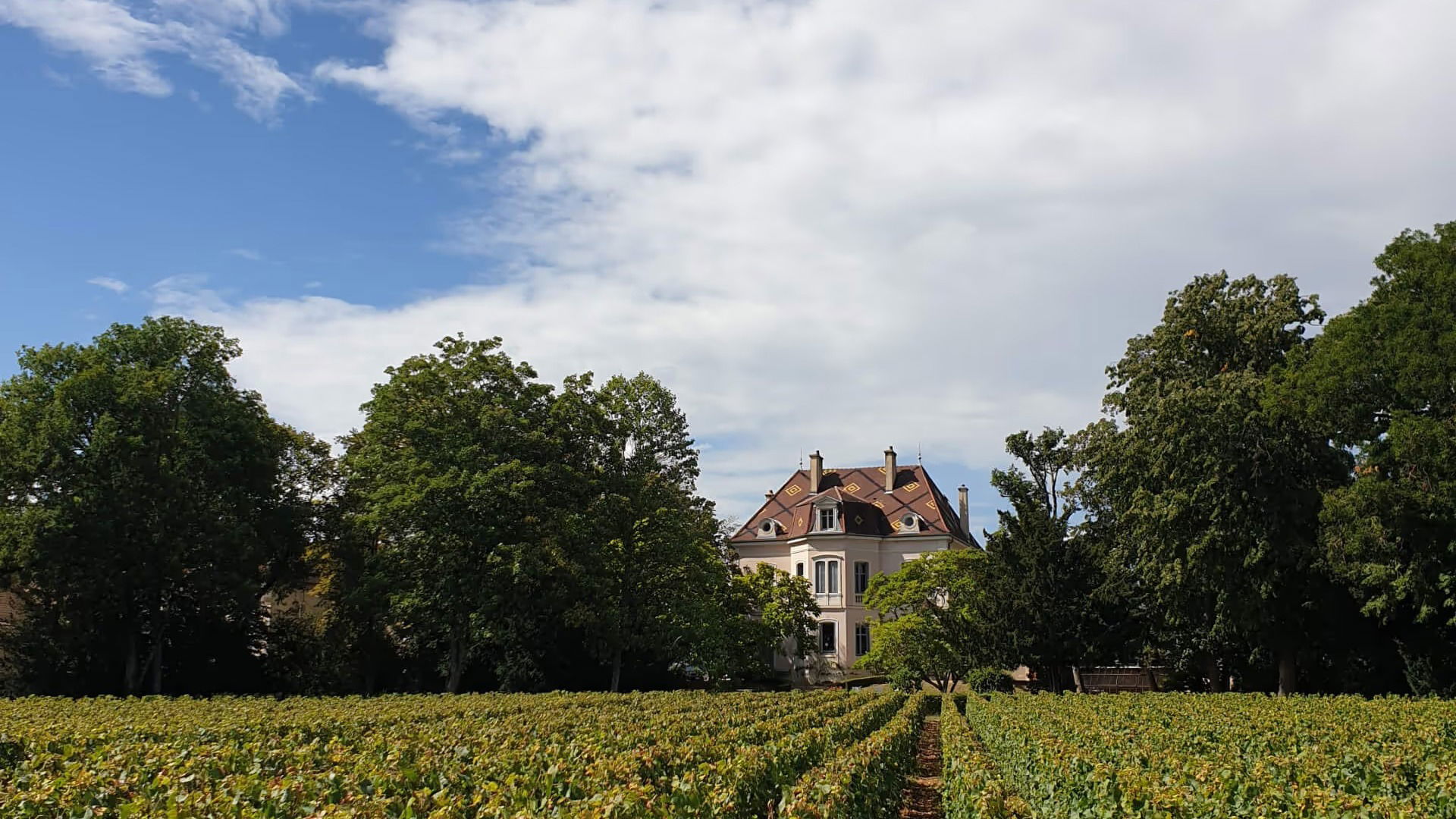



Domaine des Comtes Lafon
Meursault
Winery in Meursault, France
 Book with Pearl
The Read
Allocation-Tier Biodynamic Meursault
Why go
Domaine des Comtes Lafon is a wine estate in Meursault, Burgundy.
About Domaine des Comtes Lafon
Domaine des Comtes Lafon is a Meursault venue led by Dominique Lafon. Dress is smart casual, and the venue holds Pearl 5 Star Prestige recognition for 2025. Confirm any additional details, including format, menu, pricing, hours, services, or visit structure, directly before making plans.
For planning in Meursault, the key details are the name, the city, Dominique Lafon, the smart-casual dress code, and the Pearl 5 Star Prestige (2025) recognition. If you are arranging a broader day in town, use Our full Meursault restaurants guide for separate dining decisions rather than assuming Domaine des Comtes Lafon includes a food component.
Book this for the confirmed prestige signal, not extras
The reason to prioritize Domaine des Comtes Lafon is its standing in Meursault and its Pearl 5 Star Prestige (2025) recognition. Dominique Lafon is the chef/owner associated with the venue. Beyond that, specific claims about tastings, meal service, pairings, pricing, seating, delivery, or other logistics should be confirmed directly.
For a special occasion, plan conservatively. Keep the dress code smart casual, confirm all practical details directly with the venue, and make separate arrangements for dining, transport, and timing rather than relying on assumptions about services.
Where it fits among other relevant venues
For comparison, Domaine Antoine Jobard, Domaine Génot-Boulanger, Domaine Jacques Prieur, Domaine Marthe Henry, and Domaine Roulot are relevant names to consider alongside Domaine des Comtes Lafon. Use those comparisons to shape an itinerary, while confirming each venue's current access, format, and practical details directly.
The verdict: pursue Domaine des Comtes Lafon if the Meursault setting, Dominique Lafon association, smart-casual standard, and Pearl 5 Star Prestige (2025) recognition are enough to justify making it a priority. Skip it if you need details on food, pricing, hours, delivery, or a specific visit format before committing.
Planning details
- Location
- 5 Rue Pierre Joigneaux, 21190 Meursault
- Website
- comtes-lafon.fr
- Phone
- +33 3 80 21 22 17
The take
The Take
The Vibe
Domaine des Comtes Lafon reads as a foundational name in white Burgundy — a family-held estate that defines standards for Meursault Chardonnay. The writing stresses institutional memory, with vineyards parcelled and reprised for centuries and an address that carries weight beyond its postcode. Chardonnay is treated here as a site-expressive material rather than a commodity, and the domaine’s holdings run from village Meursaults through premier crus such as Perrières and Charmes and into Montrachet, placing it at the upper tier of the Côte de Beaune. The overall feel is stately and venerable, grounded in history and vineyard specificity.
Best For
Comtes Lafon is especially suited to serious collectors and food-oriented visitors who want to read terroir in the glass. The domaine’s parcel-focused approach makes it an instructive stop for wine education: tasting across village and premier-cru parcels reveals subtle differences in texture, lift and site expression. It also answers special-occasion sensibilities when provenance and pedigree matter, and it rewards solo exploration by anyone attentive to vineyard-driven Chardonnay. Visits are best framed around curiosity about lieux-dits and a desire to compare how individual parcels translate into wine.
Tasting Tips
When you visit, request comparative tastings that run the gamut from village Meursaults through premier-cru Perrières and Charmes and, if available, bottlings tied to Montrachet holdings — the point is to hear how parcels differ. Because the domaine emphasizes site expression over extraction or heavy new oak, ask staff to highlight flights that foreground texture and minerality. Inquire about allocations and which cuvées are linked to specific lieux-dits so you can trace provenance. Treat the tasting as a study in difference rather than a search for a single house style.
Venue details
Ambiance
Classic and elegant historic setting with cold cellars fostering slow fermentations, evoking timeless Burgundian sophistication and minerality.
Tags
Vibe
Best For
Experience
Sourcing
View
At the Vineyard
- Appellation
- Meursault AOC
- Varietals
- Chardonnay, Pinot Noir
- Tour Duration
- 60-90 minutes
- Visits
- By appointment only
- Farming
- Biodynamic
- Wine Styles
- Still White, Still Red
- Wine Club
- Available
Know before you go
Know Before You Go
- Getting there
- 5 Rue Pierre Joigneaux, 21190 Meursault
Planning details
Location
Recognition and awards

Also consider
Also Consider
- Domaine Marthe Henry, Notable alternative
- Domaine Antoine Jobard, Notable alternative
- Domaine Jacques Prieur, Notable alternative
- Domaine Génot-Boulanger, Notable alternative
- Domaine Roulot, Notable alternative
Winery context
How Domaine des Comtes Lafon compares in Meursault
For collector intent, Domaine des Comtes Lafon is the harder-edged choice: book it when the group already understands why Meursault matters and wants the visit to feel wine-first. Domaine Roulot sits in the same serious-white-Burgundy conversation, so cross-shop these two if the priority is prestige and allocation access rather than a relaxed afternoon.
Domaine Antoine Jobard is the closest practical alternative for a focused Meursault itinerary, especially if Lafon access is not realistic. Domaine Jacques Prieur is the better fit for visitors who want a broader, more polished Burgundy experience, while Domaine Génot-Boulanger is the smarter cross-shop for travelers who care about quality but do not need the visit to revolve around one famous Meursault name.
Domaine Marthe Henry is the more approachable fallback if the goal is simply to keep the day in Meursault without turning the itinerary into a chase for scarce appointments. For a celebration built around wine credibility, start with Lafon or Roulot; for a smoother day with less booking friction, look to Jacques Prieur, Génot-Boulanger, or Marthe Henry.
Explore Meursault
Around this place
Discover more on Pearl
Unlock the full Domaine des Comtes Lafon guide in Pearl, including awards, comparisons, FAQs, planning details, and nearby places.
Compare Domaine des Comtes Lafon
| Venue | Location | Awards |
|---|---|---|
| Domaine des Comtes Lafon | Meursault | 2026 Michelin 2 Grapes - Burgundy2026 Falstaff Winery Guide2025 Pearl 5 Star Prestige |
| Domaine Marthe Henry | Meursault | No published awards |
| Domaine Antoine Jobard | Meursault | 2026 Falstaff Winery Guide |
| Domaine Jacques Prieur | Meursault | 2026 Falstaff Winery Guide2025 Pearl 3 Star Prestige |
| Domaine Génot-Boulanger | Meursault | 2026 Falstaff Winery Guide |
| Domaine Roulot | Meursault | 2026 Falstaff Winery Guide2026 Michelin 1 Grape - Burgundy2025 Pearl 5 Star Prestige |

How Domaine des Comtes Lafon Meursault compares with similar nearby venues.
FAQ
Frequently Asked Questions
Is Domaine des Comtes Lafon worth prioritizing in Meursault?
Yes, if the details match your plans: Domaine des Comtes Lafon is in Meursault, is associated with Dominique Lafon, has a smart-casual dress code, and holds Pearl 5 Star Prestige recognition for 2025. Confirm any visit-specific logistics directly with the venue.
Does Domaine des Comtes Lafon serve food?
How long should I plan for a visit to Domaine des Comtes Lafon?
Does Domaine des Comtes Lafon offer delivery or other logistics services?
What specific offerings are for Domaine des Comtes Lafon?
The confirmed details are the Meursault location, Dominique Lafon as chef/owner, smart-casual dress code, and Pearl 5 Star Prestige recognition for 2025.